
Cat Lover Doesn't Want To Return Poor Animal To Owners Who Didn't Even Bother Looking For It

A 28-year-old woman refused to hand a neglected stray cat back to the people who were supposed to be taking care of it, and honestly, the internet is split. She didn’t just find any random cat either, this one looked like it had been left to fend for itself in the real world, not tucked safely into some warm home.
Here’s the messy part: OP initially felt bad and even tried to do the “right” thing by returning the cat once she found out who owned it. But then she saw the cat again, wandering around in freezing weather, and the whole situation flipped from “lost pet” to “these owners are not showing up.” Her kids had already gotten attached, and once the cat was in their lives, giving it back to neglect felt like handing over a loaded problem.
Now she’s wondering if she’s the a-hole, while the owners are acting like the bare minimum would have been enough.
The OP wonders if she's the a-hole for deciding not to return the cat to its neglectful owners.

The OP found a cat, which had signs of physical neglect, in her house.

Ethical Considerations in Pet Ownership
The decision to keep a lost pet rather than return it to its owners raises significant ethical questions about responsibility and care.
Our responsibilities as pet owners extend beyond mere ownership; they include ensuring the well-being of the animal.
Research suggests that individuals who prioritize animal welfare often experience increased emotional fulfillment, suggesting a correlation between the ethical treatment of animals and personal well-being.
Her kids grew fond of it, so she decided to buy supplies for the newest member of the family.

Although heartbroken, the OP decided to return the cat after finding out who the owners are.
But when she spotted it wandering in freezing weather, she made the decision to take it in — for good.

OP didn’t just keep the cat on impulse, she first tried to return it after she tracked down the owners.
The Dilemma of Pet Ownership
The decision to keep a found pet instead of returning it can stem from complex emotional factors. People often project their own feelings of abandonment or neglect onto animals, creating a strong bond based on empathy. Research shows that individuals who have experienced loss or trauma may feel an acute attachment to animals, viewing them as sources of unconditional love and safety.
This emotional connection can complicate the moral decision-making process, as people grapple with their sense of responsibility versus their emotional needs.
Responsible cat owners ensure their cats stay safe indoors rather than letting them wander and risk injury.
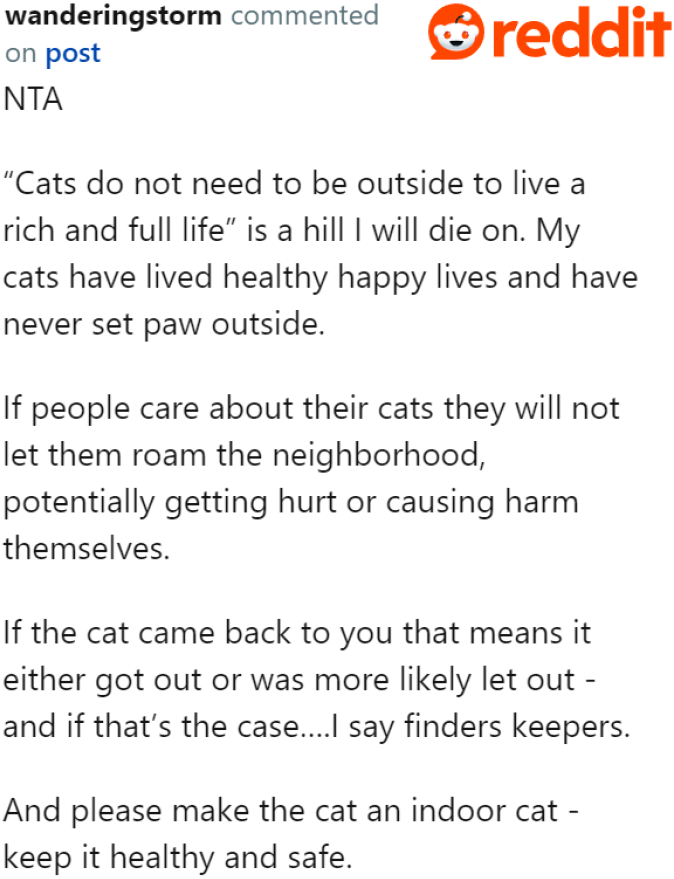
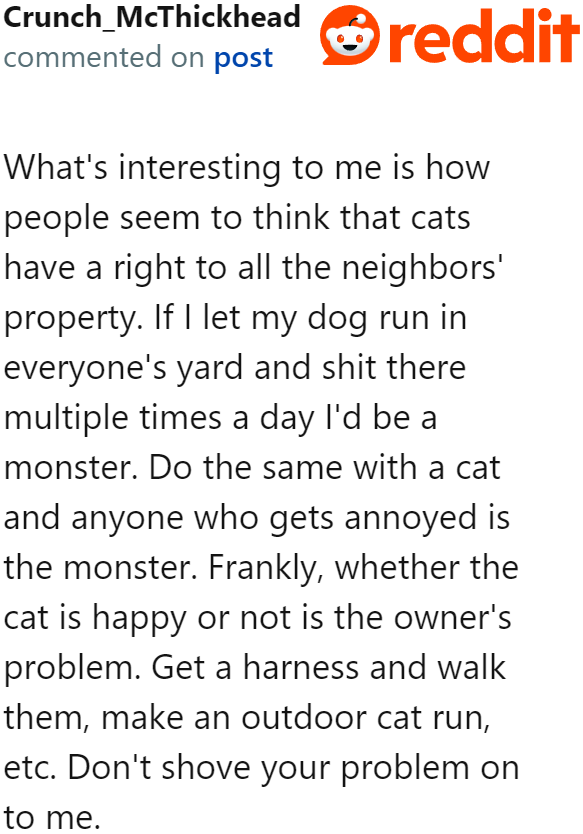
Some cat owners exhibit such a sense of entitlement that they believe it's acceptable for their cats to bother their neighbors.
The emotional turmoil surrounding the decision to return a lost cat to its owners is deeply rooted in our innate capacity for attachment. The article highlights how some individuals form strong bonds with strays, often driven by a sense of empathy for the animal's situation. This connection goes beyond mere sympathy; it fosters a profound sense of responsibility for the cat's well-being. When an owner fails to actively seek out their lost pet, it can intensify the feelings of obligation felt by those who step in to care for the animal. In this context, the reluctance to return the cat is not merely about ownership but reflects a moral stance that prioritizes the animal's welfare over the negligence of its original owners. Such dynamics underscore the complexities of human-animal relationships and the ethical dilemmas that arise when a pet is lost and not actively sought after.
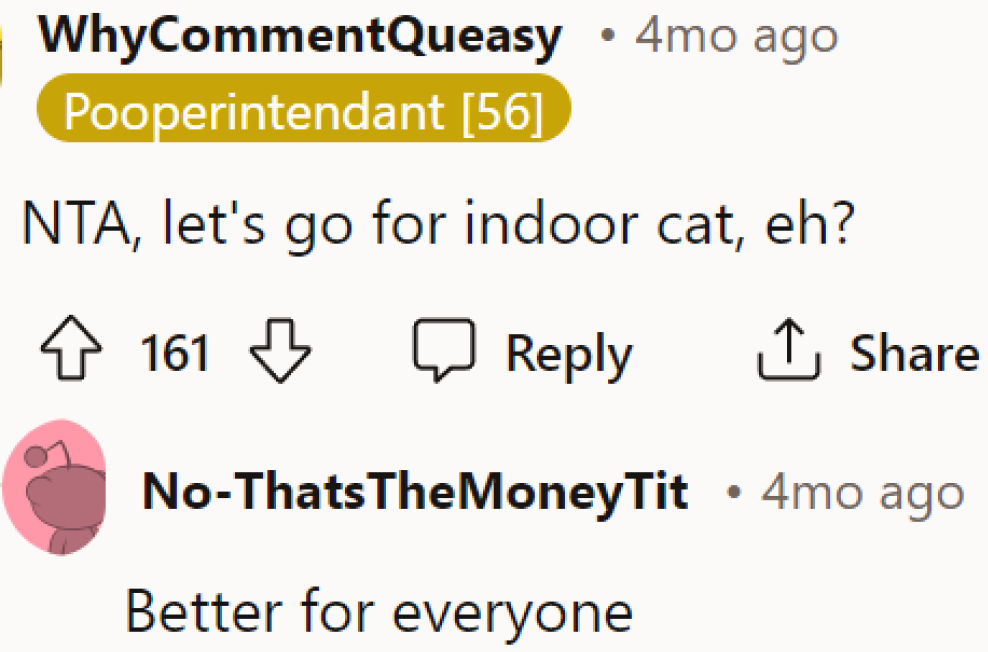
This is the best plan.
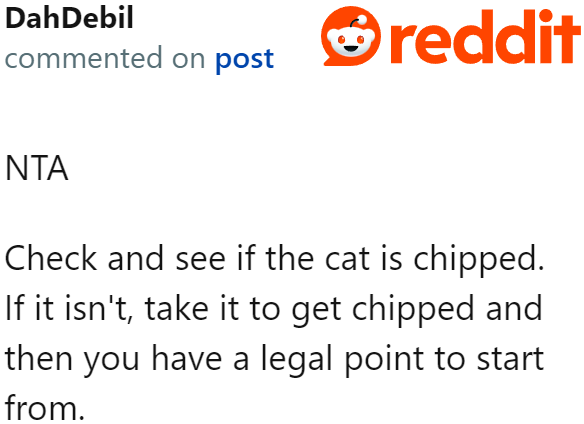
Even other cat lovers agree that felines should be kept indoors at all times.
Then the cat turned up again, wandering outside in freezing weather, and OP couldn’t pretend it was fine.
Ethics surrounding pet ownership are deeply intertwined with psychological principles. Many individuals believe they are acting in the best interest of the animal by providing a loving home, even if it means displacing the original owners. This aligns with cognitive dissonance theory, where individuals justify their actions to align with their beliefs about compassion and care.
The owners didn't even bother looking for the cat. She shouldn't be worried now that the cat is in a better place — her home.
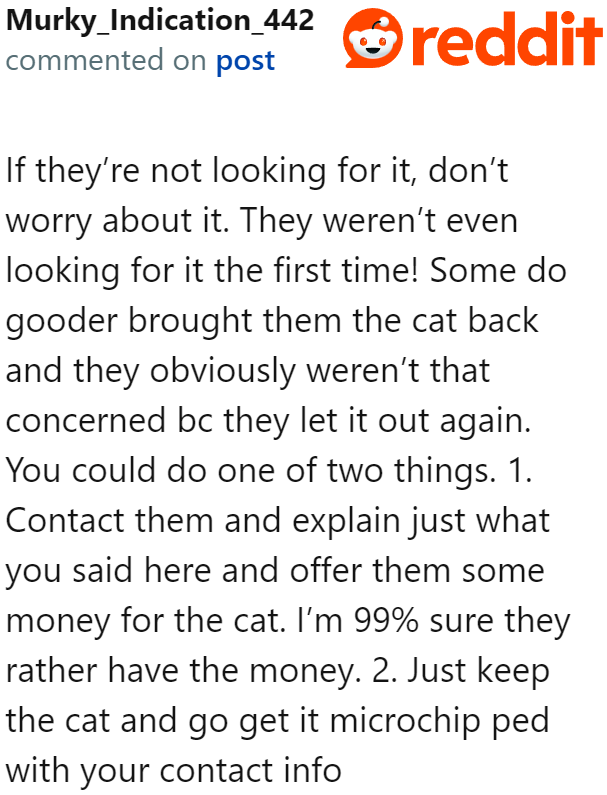
Another user suggests going with an arrangement that will be beneficial for both parties.
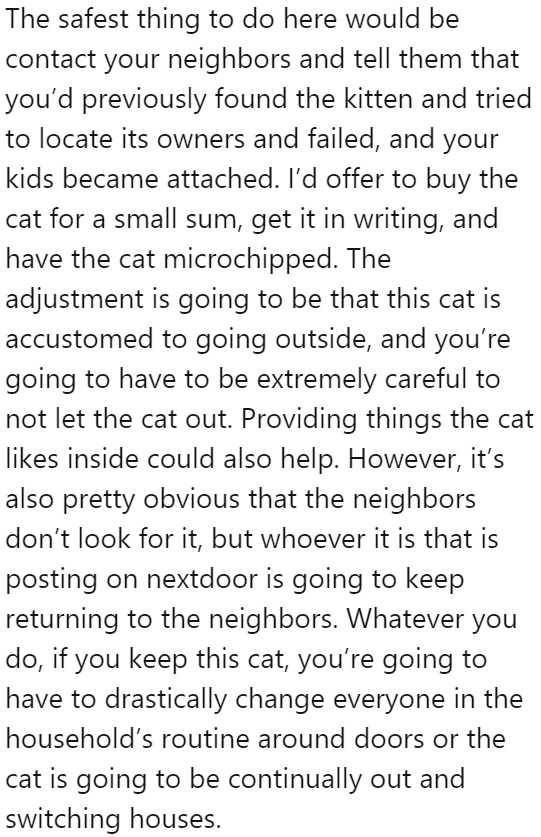
Her kids bonded with the cat and OP started buying supplies for “the newest member of the family,” not the next stop on a return trip.
The Dilemma of Abandonment
Research shows that feelings of abandonment can significantly affect both humans and animals, leading to anxiety and behavioral issues.
Studies published in the Journal of Animal Psychology indicate that pets who experience abandonment often display signs of distress that can affect their future interactions with humans.
Understanding this can help pet owners make more informed decisions about rehoming or adopting pets.
The dilemma faced by the cat lover who found the lost feline highlights a multifaceted issue that extends beyond mere preference for indoor or outdoor living. The emotional bond that develops between humans and animals plays a significant role in this narrative. While the owner’s instinct to protect and nurture the cat is commendable, it raises important ethical questions about ownership and responsibility. The article underscores the necessity of considering not just the immediate comfort of the animal but also the implications of reuniting it with its original owners, especially when those owners have not actively sought its return. This situation invites a deeper reflection on community responsibility and the moral obligations we hold towards lost pets, suggesting that the well-being of the animal should indeed lead the decision-making process.
The dilemma faced by the cat lover in this story highlights the intricate emotional and ethical landscape of pet ownership. The reluctance to return the stray cat to its owners, who seemingly showed little concern for its absence, raises pertinent questions about the responsibilities that come with caring for an animal. When pet owners fail to actively seek out their lost pets, it reflects a troubling disconnect that can lead to deeper issues regarding empathy and commitment in pet ownership.
This situation underscores the importance of fostering a sense of compassion not only towards the animals but also within ourselves as caretakers. By cultivating empathy, individuals can make more informed and humane decisions, ultimately benefiting both the pets and their owners. The narrative encourages a necessary dialogue about the ethical implications of pet care and the responsibilities that accompany it.
As this cat lover navigates their feelings towards the stray, it serves as a powerful reminder for all pet owners to consider the emotional impact of their actions and the significance of truly caring for their animals. Open discussions on these responsibilities can pave the way for a more compassionate society where the welfare of animals is prioritized.
Attachment theory plays a significant role in understanding why individuals may feel compelled to keep a found pet. Those with insecure attachment styles may seek animal companionship as a way to fulfill unmet emotional needs. Research indicates that pets can serve as attachment figures for individuals, providing comfort and reducing feelings of loneliness.
This can create a sense of loyalty towards the pet that sometimes overshadows ethical considerations regarding its original ownership.
For this cat to be given the life it deserves, it's indeed better that it stays with the OP and her family. The OP's decision not to return the cat to its owners doesn't make her an a-hole, especially since it's for the sake of the feline's well-being.
She can explore options to persuade the current owners to agree to let them keep the cat. As one user suggested, she can even offer to compensate them.
And when OP noticed the kind of entitlement that lets some cats roam and bother neighbors, the decision to keep the cat felt even more justified.
The emotional state of the person who found the cat can also influence their decision-making process. Individuals often project their feelings onto animals, interpreting the cat's vulnerability as a reflection of their own past experiences. This projection can cloud judgment and lead to decisions that may not be in the best interest of the animal or its original owners.
Practical Guidance for Pet Finders
For individuals who find lost pets, it's essential to prioritize the animal's well-being while also considering the ethical implications of their decisions. Utilizing local shelters and veterinary offices can also help reunite pets with their families.
Understanding the emotional bond people form with animals is crucial, but it should not overshadow the responsibility of returning lost pets to their rightful owners.
This includes setting time limits for how long to search for the owners before making any permanent decisions about the animal. Research shows that having a structured approach can alleviate anxiety and facilitate more ethical decision-making.
By focusing on the animal's needs and considering the original owners' feelings, individuals can find a balance between compassion and responsibility.
Community involvement is vital in situations where pets are found. Engaging with local animal rescue organizations can provide resources and support for both the finder and the original owners. Research indicates that communities that actively support lost pet initiatives foster a greater sense of responsibility and enhance the chances of reunification.
By creating a network of support, individuals can feel empowered to take the right steps for the animals in their care.
Ultimately, the psychology behind the decision to keep a found pet reflects deeper emotional needs and ethical dilemmas.
Behavioral psychology suggests that the decision to keep a lost animal can also be influenced by one's past experiences with abandonment.
Individuals who have faced abandonment themselves may unconsciously project their feelings onto the animal, leading to a desire to rescue and protect it at all costs.
This projection highlights the complexities of attachment and the need for self-awareness in making ethical decisions regarding pet ownership.
She might be fighting about a cat, but she’s really fighting about whether neglect counts as “ownership.”
Before you judge the OP, see how an old woman got yelled at over a missing cat.
Share this article:





