This Woman Tried To Ban Them From Walking Their Dog in “Her” Neighborhood — And It Did Not Go Well

A woman tried to ban a Redditor from walking their dog through “her” neighborhood, and it turned into a full-on street feud faster than anyone could say “off leash.” It’s one of those stories where everyone thinks they’re being reasonable, and somehow both people end up acting like the villain.
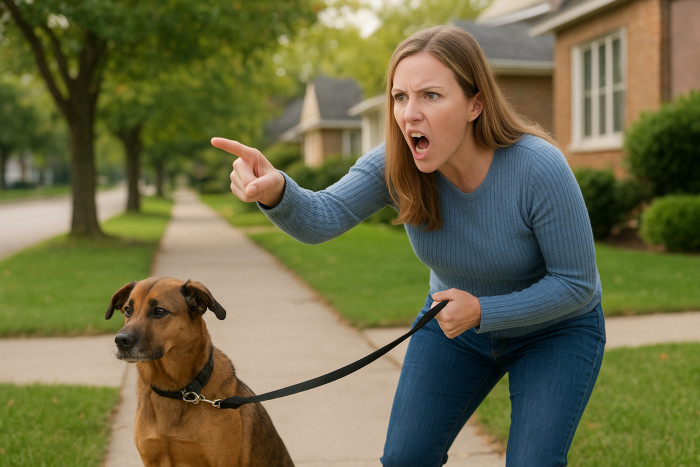
Years earlier, the Redditor’s first dog nipped another dog that was off leash, and the owner shrugged it off. Then the Redditor got a new dog, walked through the same area once in a while, and the woman came out screaming that her dog was traumatized and changed by that original encounter, even though this was a different dog.
What starts with a request not to walk there spirals into flipping birds, refusing to back down, and a neighborhood that definitely won’t forget.
She confronted the Redditor and told them not to ever walk their dog through “her” neighborhood again.
Original Post
A few years back I was walking my dog in a nearby neighborhood and a dog that lived in that neighborhood who was off leash came running up to my dog and my dog nipped him. I apologized to the owner and she shrugged it off and didn't seem upset.My dog then passed away and I got another similar looking dog. When I walked that dog through the neighborhood the woman was angry and told me not to bring my dog into her neighborhood ever again since her dog was traumatized and changed by the encounter with my previous dog.I told her this is a new dog that I've got so her dog shouldn't be traumatized by him. She told me to walk my dog in my own neighborhood and stay out of her neighborhood. For the most part I will walk my dog in my own neighborhood, but I will sometimes (maybe once a month) walk through her neighborhood.When she saw me walking by she came out of the house screaming at me and said I was an asshole for continuing to walk through her neighborhood even after she told me I can't. I flipped her the bird and told her she doesn't own the streets and I will walk whatever street I want.I suppose it is kind of passive-aggressive of me to continue to walk in her neighborhood since I have many options regarding where I can walk my dog, but I feel she is wrong to tell me I can't walk on the street in front of her house. Am I being an asshole? What would you do?
Training and consistent social exposure are integral to developing a well-adjusted dog that can engage positively with others in the community.
Here’s how the Reddit community reacted.
Might be time to start a dog walking business.
The whole mess begins when the woman shrugs off the first incident, then later decides the new dog somehow counts as the same threat.
Understanding dog behavior is crucial for maintaining peace in shared spaces. A dog trainer emphasizes that owners must recognize the signs of anxiety or aggression in their pets. For example, a dog showing a stiff posture or raised hackles may need more space, while a relaxed body indicates comfort. By reading these body language cues, owners can intervene before situations escalate into conflict.
Implementing basic commands, like 'leave it' or 'come,' can also be beneficial. It empowers owners to manage their pets effectively during unexpected encounters.
Just enjoy your life and your pooch.
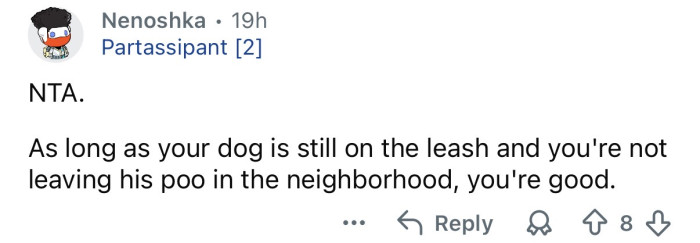
NTA.
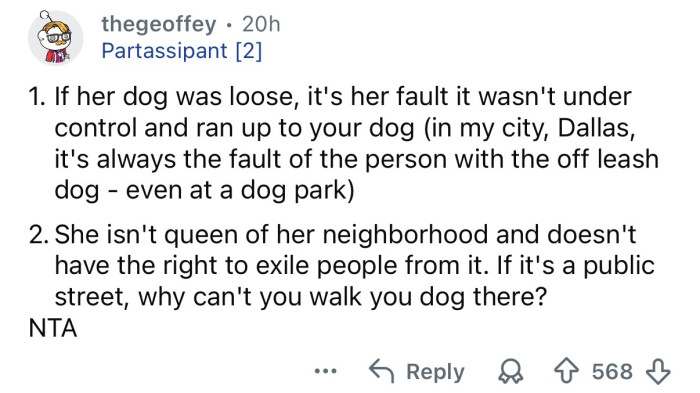
She has no say.
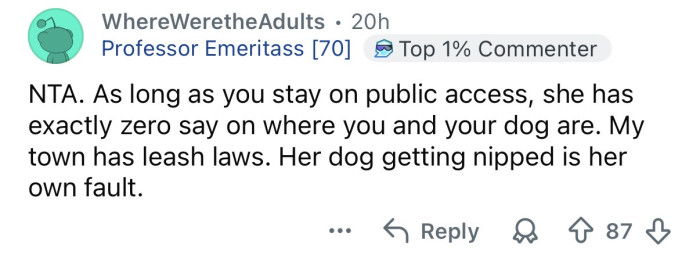
That’s when she starts demanding the Redditor walk only in “their” neighborhood, like the street outside her house comes with a personal deed.
Understanding the underlying motivations for these behaviors can help owners navigate conflicts.
Just steer clear of her house.
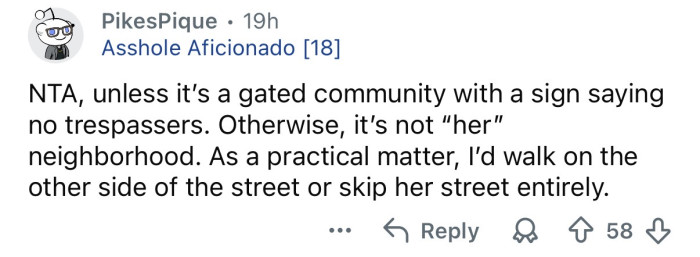
Let her contact animal control if she wants to complain.
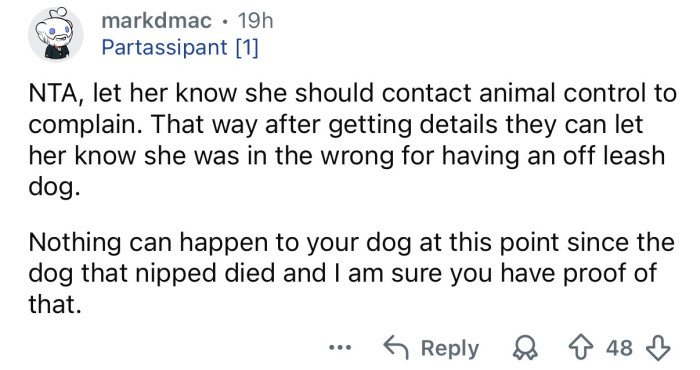
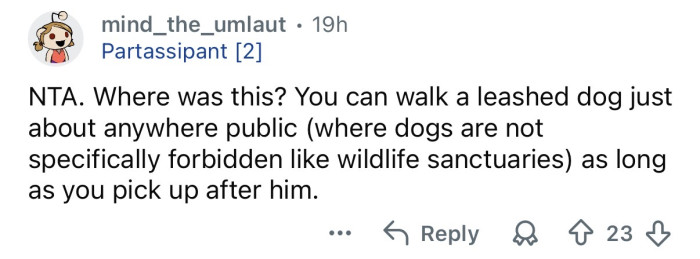
You can walk your dog pretty much anywhere.
Preventive measures can significantly improve the relationship between dog owners and their neighbors.
This is similar to the woman who faced an irresponsible owner after their deaf dog was unleashed.
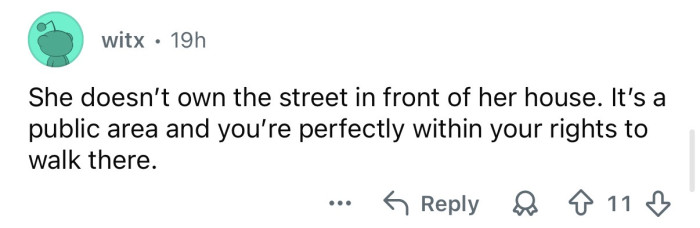
She doesn’t own the street.
If the dog is on a leash, you’re fine.
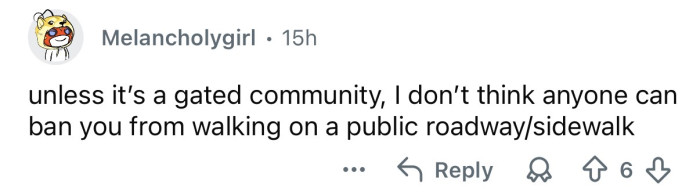
No one can ban you from walking on a public street.
When she spots OP again and starts screaming, the Redditor returns the energy with a bird flip and the blunt “you don’t own the streets” line.
By encouraging owners to consider how their dogs perceive interactions, conflicts can be reduced. Teaching compassion towards animals enhances overall community dynamics, creating a more supportive environment for both pets and their owners.
It’s a public area.
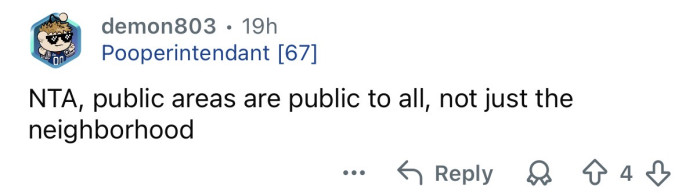
She’s the one whose dog was off leash.
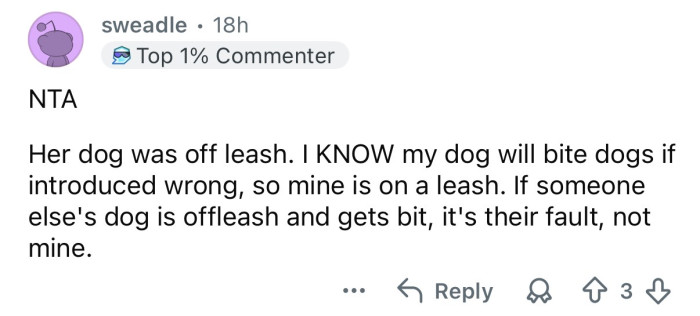
It’s her own fault.
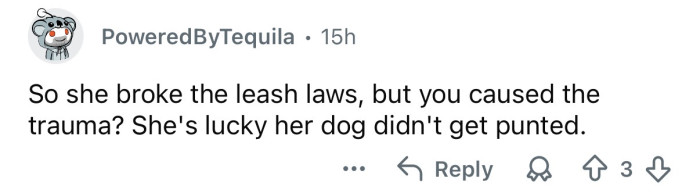
By the time the Reddit community weighs in, it’s basically OP versus the woman who thinks one nip years ago gives her permanent control over everyone’s leash plans.
Addressing neighborhood conflicts effectively involves communication and understanding.
In the end, it’s a story about control, boundaries, and how a small moment years ago can spiral into neighborhood drama no one asked for. Because sometimes, the real leash people need to hold onto — isn’t for their dog.
This incident underscores how previous encounters can significantly influence our actions and attitudes, particularly regarding our pets.
In the unfolding drama of a neighborhood dog dispute, the incident highlights the critical need for responsible pet ownership and community cooperation. The Redditor's experience emphasizes the unpredictable nature of dog interactions, particularly when one is off-leash. It is essential for dog owners to understand their pets' behavior and body language, as this awareness can prevent misunderstandings and conflicts. The escalation of the situation, where a simple walk turned contentious, underscores the importance of proactive communication among residents.
Encouraging local initiatives like community workshops could foster better relationships between dog owners and non-dog owners alike. By prioritizing dialogue and education, neighborhoods can cultivate an environment where all residents feel safe and respected, ultimately ensuring a peaceful coexistence for everyone involved.
Now she’s not just banning dog walking, she’s basically auditioning for “most memorable neighbor of all time.”
For another dog-walking blowup, see how a neighbor yelled at someone on a common grassy area.
Share this article: