New Neighbors Let Their Cat Roam And It Turns Another Family’s Home Into A Battleground

A 28-year-old woman didn’t think her downstairs neighbors would turn cat life into a full-blown siege, but that’s exactly what happened. Her household had a peaceful routine, complete with a cat flap and roof access, like the apartment came with its own little wildlife preserve.
Then the new kitten moved in next door. This fearless, zero-fear little menace didn’t just roam, it started treating her gentle indoor cats like personal targets. Family time became defensive mode, and the attacks even spilled indoors when the kitten slipped through windows and kept going.
When one of her cats got so terrified she hid on the roof and refused to come home, she finally asked the neighbors to keep their cat indoors, and now she’s stuck wondering if she crossed a line.
A cat owner introduces the calm routine her pets enjoyed before a new complication arrived.
They built a little paradise for their pets, complete with a cat flap and roof access.

Things shifted when the downstairs neighbors adopted a bold little kitten with zero fear.
Family time turned into a defensive mission as they tried to shield their gentle cats from nonstop attacks.
The situation escalated when the kitten started breaking into their flat and attacking their cats indoors.
One of their cats became so terrified after an attack that she hid on a nearby roof and refused to come home.
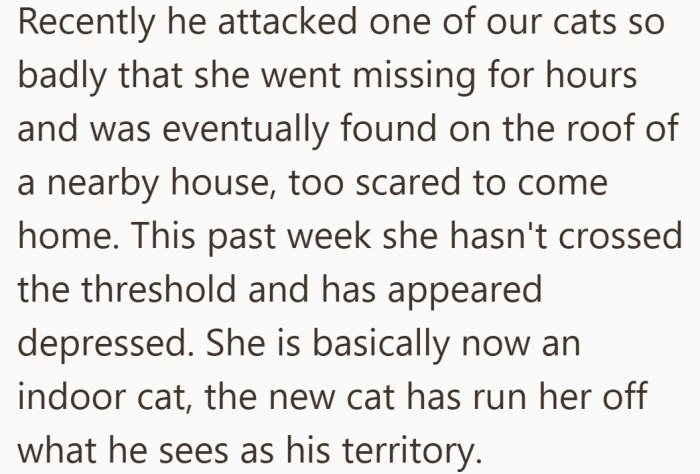
What was supposed to be a lively, enriching life for their pets has turned into fear and confinement.

She finally asked the neighbors to keep their cat indoors, but now she fears she crossed a line.

She feels like her entire household is adjusting their lives so one aggressive kitten can roam freely.
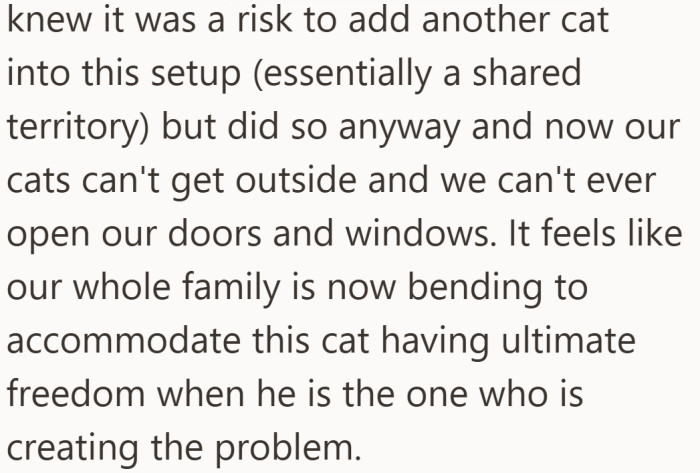
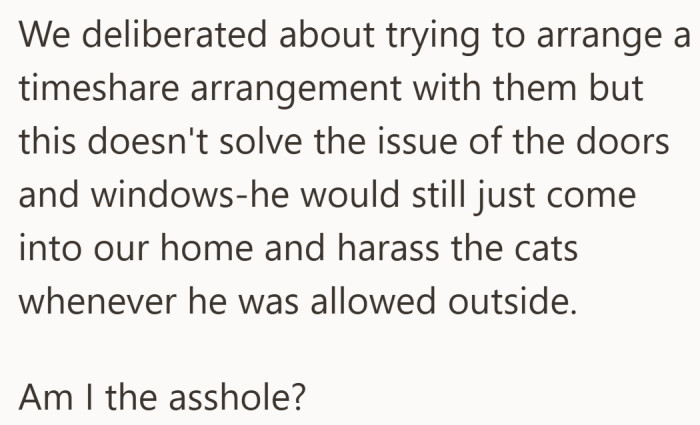
Even a shared schedule would not stop the kitten from slipping in and terrorizing their cats through open windows.
This is similar to the girlfriend who confronted her boyfriend after he left the door cracked and their cat kept escaping.
Nothing pulls the conversation wider than someone pointing out that every outdoor cat is basically a tiny apex predator.

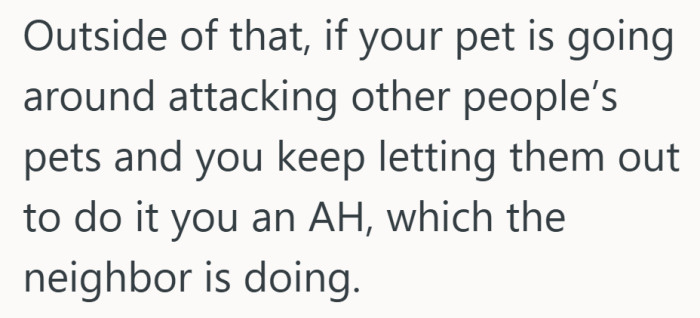
The point lands hard. Once a pet is harming others, choosing to ignore it becomes its own decision.
Territory is simple for cats but complicated for humans. No one gets to reserve the whole outdoors.

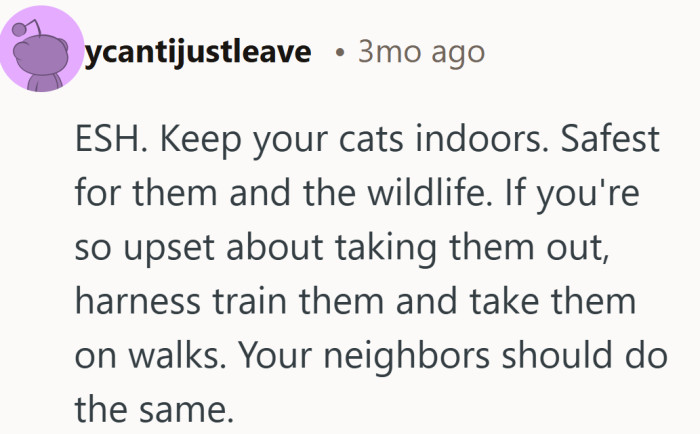
In all the back and forth, one idea cuts through. Controlled outdoor time might spare everyone a lot of stress.
Another angle in the mix. Outdoor time is not a seniority system, even if one cat family settled in first.

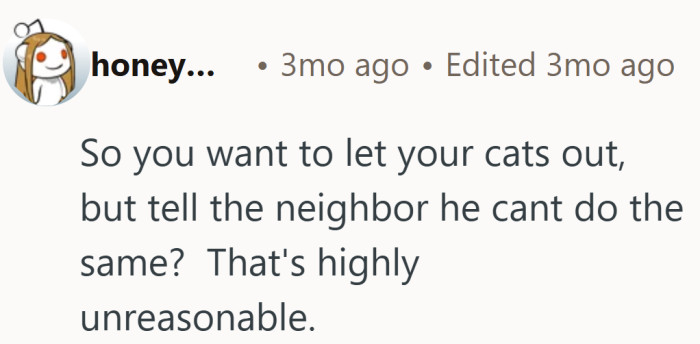
It is the classic double standard callout. If one cat gets outdoor time, the neighbor’s does too.
This take shifts the focus to prevention. Screens, locked doors, and a little detective work might block the tiny intruder.
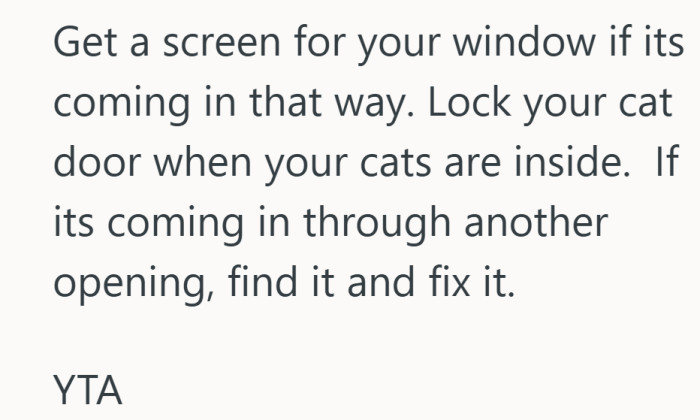
The warning is blunt. If the door swings both ways, you cannot be shocked when an unfamiliar cat walks in.

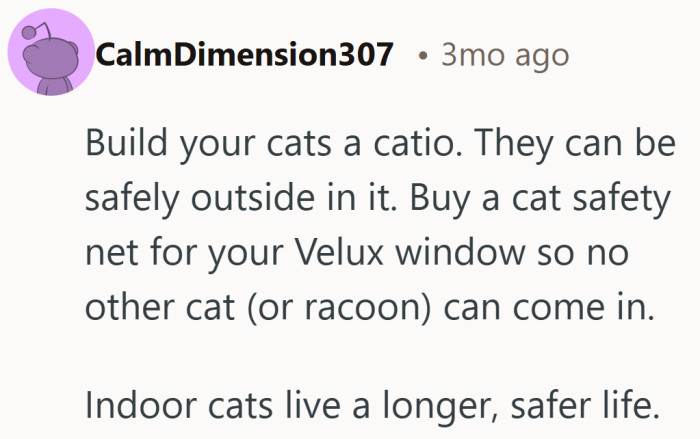
It is the gentlest solution offered. Create protected outdoor time so the cats stay happy and the battles stay outside the realm of possibility.
A global perspective slips in, noting that outdoor cats are viewed very differently once you cross a few borders.

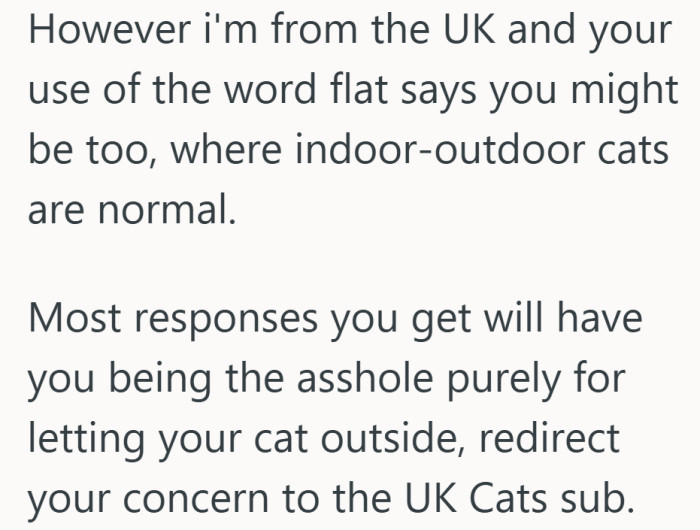
A little cultural context enters the chat. Outdoor cats may be normal in the UK but that does not soften the backlash elsewhere.
The calm setup, cat flap and roof access included, lasted until that bold downstairs kitten with zero fear started showing up like clockwork.
That’s when “shared space” turned into a defensive mission, because her cats weren’t just bothered, they were attacked nonstop, including indoors.
After her cat vanished onto the roof and wouldn’t come back, she asked the neighbors to keep the kitten inside, and the argument got personal fast.
Even the talk about schedules and “everyone gets outdoor time” fell apart when the kitten kept slipping in through open windows anyway.
Stories like this linger because they touch on a simple truth: home is supposed to feel safe. When that safety cracks, even a little, it’s natural to wonder who should adjust and who should take accountability. Some people argue that outdoor cats will always act on instinct, while others believe owners have a duty to manage the chaos those instincts create. That gray area is exactly why this debate hits so hard.
What do you think responsibility looks like when two pets share a territory they never agreed on? Would you ask the neighbors for help or stay silent to keep the peace? Share this with someone who’d have thoughts of their own.
Nobody wants their living room to feel like a battleground because a neighbor’s kitten won’t stay put.
Still dealing with cat boundaries, like the woman who refused a child’s request to pet her cat.
Share this article: