
Woman Doesn't Allow Her Nephew To Play With Her Dog Out Of Fear For Its Safety, Gets Called Out By Her Sister

A 28-year-old woman refused to let her 6-year-old nephew, Luke, play with her 6-month-old puppy, Pepper, and it instantly turned into a family fight. Pepper is basically her emotional lifeline, the dog who has “been there” for everything, so the idea of anything going wrong feels personal, not just practical.
At the center of it all is Luke’s diagnosis of Intermittent Explosive Disorder, plus a track record of sudden outbursts, including throwing things and hitting people. So when Luke got near Pepper at OP’s apartment, OP drew a hard line, not because she hates kids, but because she’s terrified Pepper could get hurt in the chaos.
And of course, her sister did not take it well.
OP asks:
OP has a 6-month-old puppy named Pepper. Pepper is like a child to OP and has helped her through a lot, as she loves her more than herself
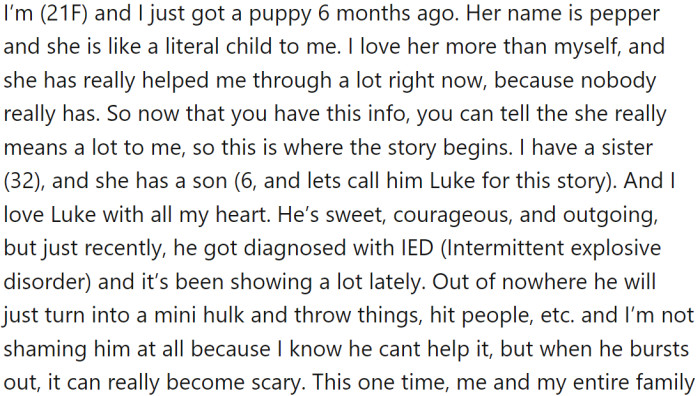
OP has a sister who has a 6-year-old son, Luke, who was recently diagnosed with Intermittent Explosive Disorder (IED). Luke has had several incidents of sudden outbursts, including throwing things and hitting people, which can be very scary.
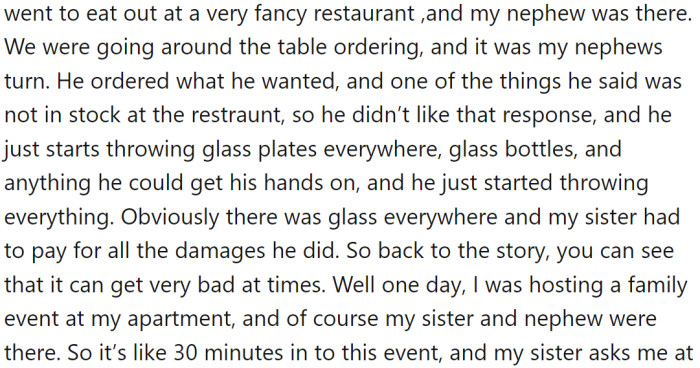
The dynamics of family relationships can become particularly complex when it comes to the safety of pets. In this case, the woman’s reluctance to let her nephew play with her dog stems from a deep-seated concern for the animal's welfare. This protective instinct highlights how a pet's safety can sometimes take precedence over familial bonds.
When family members express anxiety about children's interactions with pets, it can often lead to a ripple effect that fuels fear and misunderstanding. The woman’s decision may reflect a broader trend where individuals project their worries onto their loved ones, particularly when past experiences with animals inform their perceptions. This situation raises important questions about the balance between safeguarding a pet and fostering healthy family relationships.
OP’s sister watched Luke get closer to Pepper at the family event, and you could tell the tension was already brewing.
The situation described highlights a complex interplay between protective instincts and family dynamics. The woman's reluctance to let her nephew interact with her dog suggests a deep-seated concern for the pet's safety, which may not be unfounded. Her behavior reflects a strong desire to shield her beloved animal from potential harm, revealing how past experiences can shape one's perceptions of risk.
Such fears often transcend personal anxieties, pointing to broader psychological patterns that prioritize the well-being of pets over maintaining familial relationships. In this case, the woman's protective stance raises important questions about the boundaries we set to safeguard those we love, even when it leads to conflict within the family.
At a family event at OP's apartment, her sister asked if Luke could play with Pepper, to which OP said no. Her sister became angry
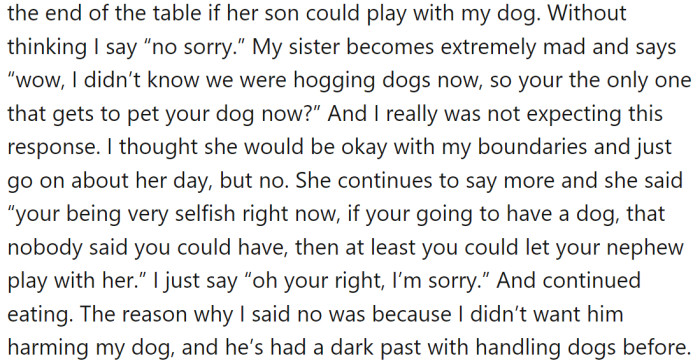
OP continues to think about the incident and wonders if she was wrong

OP has offered the following explanation for why they think they might be the a-hole:

This protective instinct can lead to overprotectiveness, which may inadvertently limit children's opportunities to learn and grow through safe interactions with pets.
In the unfolding family drama surrounding the woman's decision to restrict her nephew's interaction with her dog, we see a classic clash between protective instincts and familial expectations. The woman's fears, while perhaps viewed as excessive by her sister, stem from a deep-seated desire to safeguard her pet. Pets, often treated as family members, are vulnerable to perceived threats, even from those closest to us. This scenario highlights the complexity of emotional responses, where protective behaviors can stem from past experiences. As family members grapple with these dynamics, it is essential to recognize that the woman's actions are rooted in a sincere concern for her dog's safety, rather than simple overprotectiveness. Understanding this perspective may help bridge the gap in communication and foster a more compassionate dialogue within the family.
If the nephew has a history of violence...
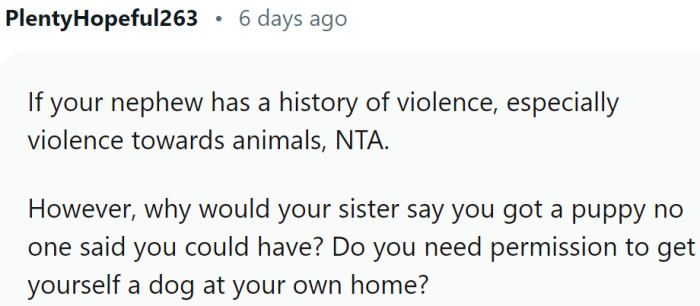
Why do some people think they’re entitled to access to other people's pets?
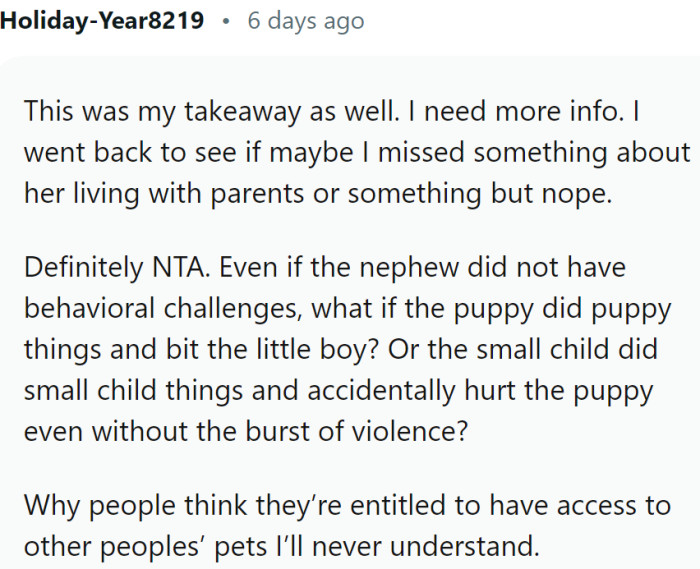
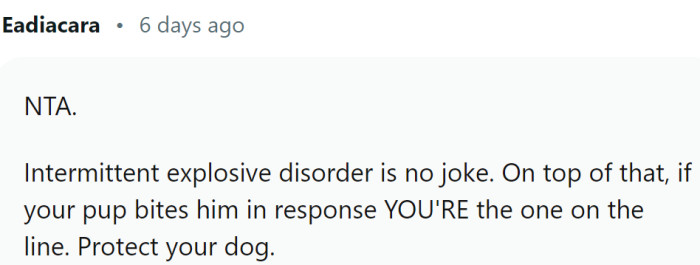
What happens if the dog bites in self-defense?
Pepper’s safety became the main topic, while Luke’s sudden outbursts were the elephant in the room nobody wanted to talk about.
Fostering Safe Interactions
Such approaches can help mitigate parental anxiety while providing children with valuable experiences.
Trauma specialists assert that past experiences with animals can profoundly influence current perceptions of safety and risk.
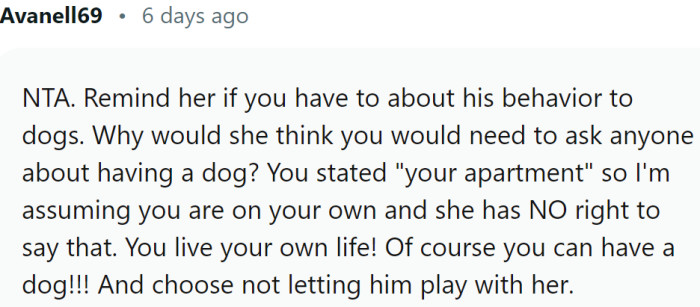
"You live your own life!"
OP responded:

Pepper is not a toy for her son.
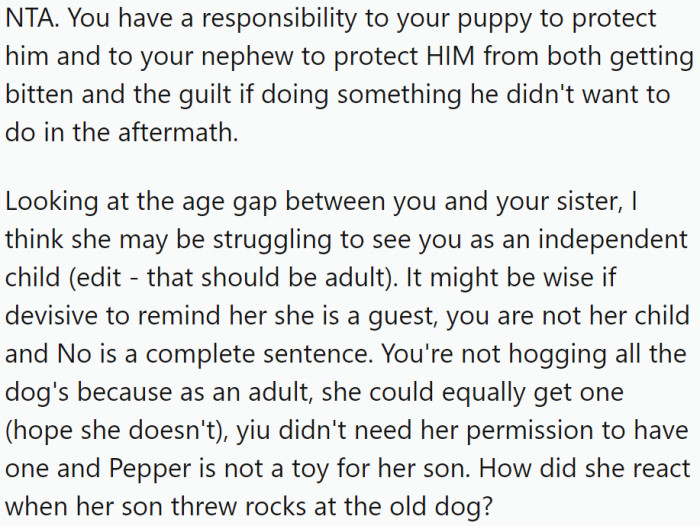
When OP kept Luke away from Pepper, her sister took it as a personal insult instead of a safety boundary.
Additionally, engaging in open discussions with children about safety and respect for animals can foster a sense of responsibility and understanding.
Teaching children how to read animal body language can also enhance their ability to interact safely with pets.
Practical steps can be taken to address these fears in a healthy manner.
OP added:
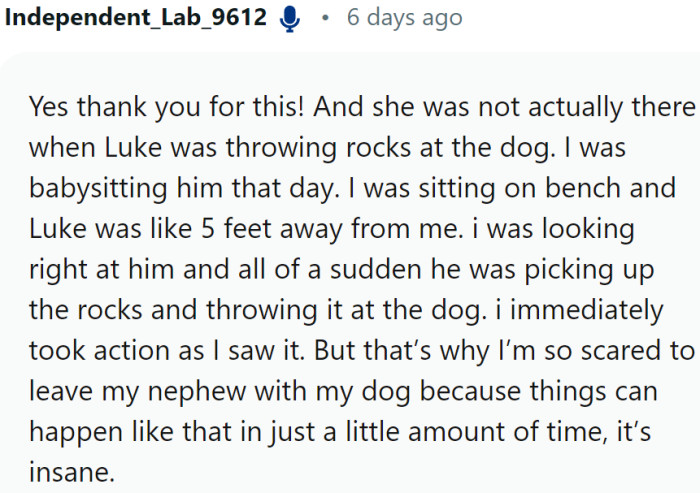
The nephew needs to learn coping mechanisms. But if his mom doesn't accept the truth...
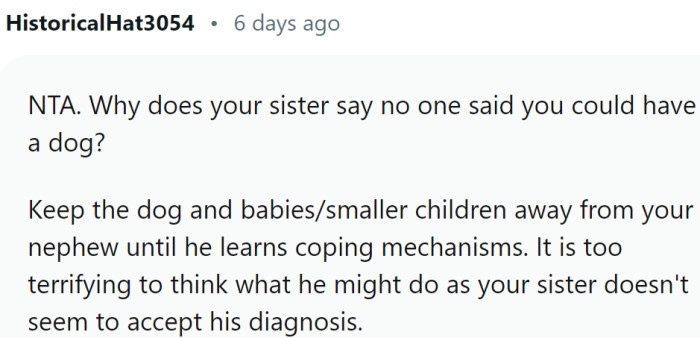
The bottom line is:
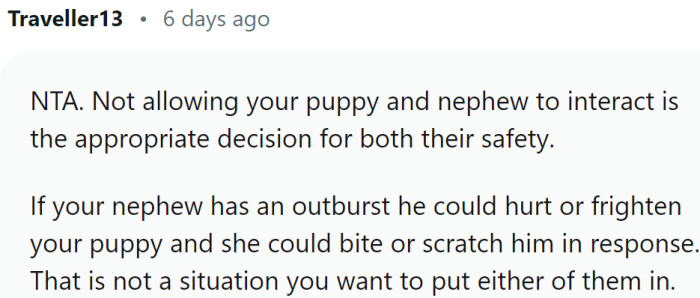
By the time Luke’s hits and thrown objects came up again, the whole apartment vibe had turned sour fast.
Communication plays a crucial role in addressing concerns related to pet interactions within families.
Understanding the emotional dynamics at play can foster empathy and communication within the family.
Encouraging open dialogue about fears and concerns can help bridge understanding, making it easier for the sister to support her sibling’s protective instincts.
Family therapy can also be a useful avenue to explore these issues together, promoting healthier relational patterns.
OP was faced with a challenging situation, as she wanted to protect both her puppy and her nephew. She made the difficult decision not to let Luke play with Pepper out of concern for Pepper's safety.
It's important to remember that each situation is unique and requires a careful evaluation of the circumstances. By being honest and open about the reasons for not allowing someone to interact with a pet, owners can help others understand their perspective and hopefully find a solution that works for everyone involved.
The situation presented in this article highlights the complex dynamics of family relationships and the protective instincts of pet owners. The woman's decision to prevent her nephew from playing with her dog stems from a genuine concern for the animal's safety, reflecting a deep sense of responsibility that many pet owners experience.
This protective behavior may be rooted in past experiences that have shaped her views on safety and trust, emphasizing the need for empathy within the family. Rather than merely condemning her actions, it is crucial for family members to engage in open dialogue that explores these underlying fears.
By fostering an environment of support and understanding, families can not only address the concerns related to the pet's safety but also strengthen their bonds, paving the way for healthier interactions in the future.
The intersection of parental anxiety and pet safety is a delicate balance that many families struggle to navigate.
The family dinner did not end well, because nobody agreed on what “protecting Pepper” really meant.
Wait until you see how a woman got bashed after refusing to give her dog to her boyfriend’s autistic nephew.
Share this article:





