
Lifelong Friendships Are In Jeopardy After A "Dog Mom" Felt Like An Outcast When Those Who Have Kids Didn't Invite Her During Their Joint Annual Mother's Day Outing

Some friendships can survive almost anything, but a yearly tradition can still expose old fault lines. In this Reddit story, one woman says her friend Leila felt shut out when the group’s annual Mother’s Day outing focused on the moms and their kids.
The friend group has spent years handling the holiday one way, with dads and children taking over brunch while the moms exchange gifts and stories. Leila, who is childless by choice and now fully committed to her role as a dog mom, wants her dog Lemon included in the celebration too, and that is where everything starts to unravel.
Now the group is stuck between keeping the tradition they built and dealing with Leila’s growing frustration. Read on.
OP thinks this is absolutely adorable but admits that Leila can go overboard at times
For example, she threw a birthday party for Lemon and invited everyone, including the friends she made at the dog daycare. She forgot to tell the moms that there would be dogs everywhere; this was unfortunate because some of the kids have dog allergies and had to leave.
Leila was upset that her friends left the party early, but once OP explained the situation, Leila eventually let it go. This year's Mother's Day rolled around, and Leila went to OP upset and wanting to vent.
She said she was upset that she was left out of the Mother's Day outing just because she's a dog mom. OP listened to her, but she stopped Leila once she started getting actually mad at their other friends.
OP said their friends are right not to invite them, and the two of them should be okay not attending two of the celebrations of the year dedicated to families. Leila asked OP if she didn't think of her cats and dog as family.
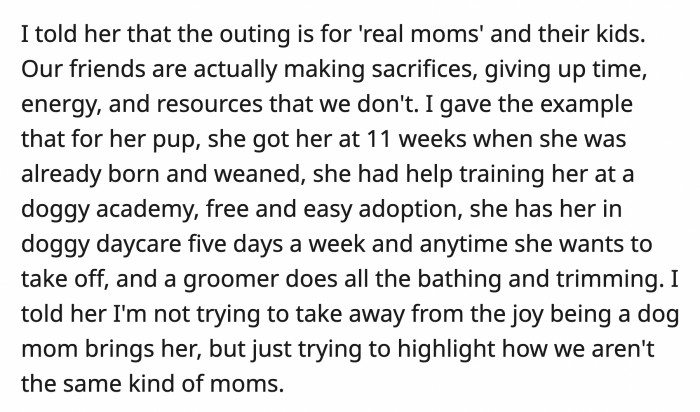
OP said she did, but it's not the same as having kids. They had a long conversation where OP had to explain to Leila the difference between raising children and taking care of animals.
The patient friend told Leila that she's not trying to minimize the happiness Leila feels with Lemon. She's simply highlighting that they are different kinds of moms.
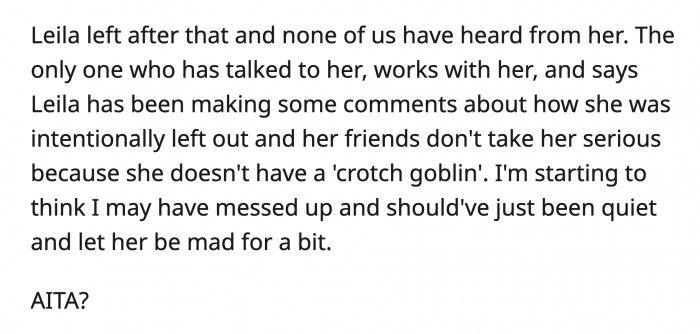
Leila left, and no one has heard from her except for one friend who happens to work with her. Apparently, Leila has been saying that she has been intentionally left out of the group and the celebration because she doesn't have a "crotch goblin."
Did OP stoke the fire further? Read her full post below:

The recent story of a "dog mom" feeling like an outcast during a Mother's Day outing with friends highlights the painful reality of social exclusion. This situation is particularly poignant as it underscores how friendships can be tested by life transitions, such as the shift from being child-free to parenting. For Leila, the sting of exclusion from an annual gathering that once included her is more than just a fleeting moment of hurt; it speaks to deeper feelings of loneliness and diminished self-worth. The emotional fallout from being left out by close friends can be significant, potentially leading to fears of abandonment and insecurities about one's place in the social fabric. As Leila grapples with these feelings, the risk of developing maladaptive coping strategies becomes evident. Withdrawing from social interactions or feeling anxious about future gatherings could create a cycle that further alienates her from the very friendships she values. This scenario serves as a reminder of the fragility of social bonds and the importance of nurturing connections, especially when life circumstances change.
Research shows that transitions into parenthood can significantly alter social dynamics among friends. A study conducted by the University of Michigan found that new parents often experience a shift in their social circles, as their priorities and daily experiences change. This transition can lead to feelings of isolation for those without children, as they may find it challenging to relate to the new experiences and concerns of their parent friends. The concept of 'role strain' becomes particularly relevant here, as individuals navigate the competing demands of their evolving identities, whether as parents or as friends.
Understanding this phenomenon can help friends like Leila recognize that her feelings of exclusion might stem not just from intentional neglect, but from the natural shifts that occur in relationships during major life changes.
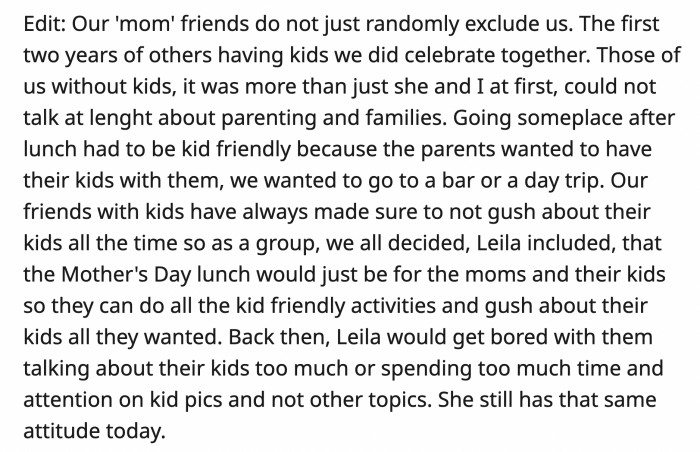
OP explained further how the joint celebration came about and Leila's general attitude towards kids
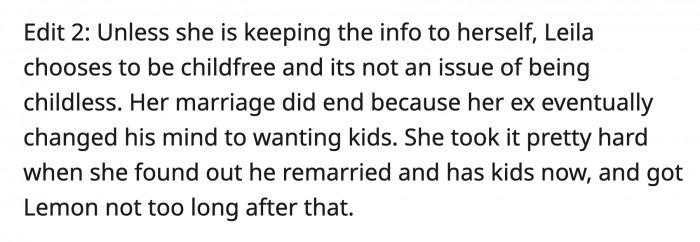
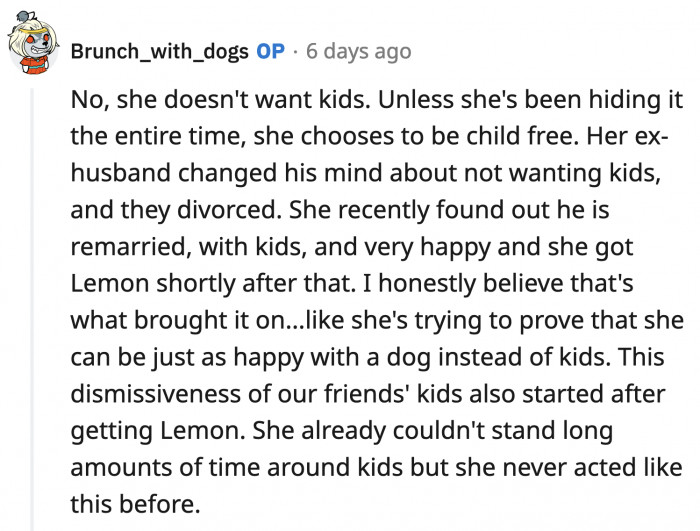
From what she knows, Leila is childless by choice, but due to her ex-husband having a new kid, OP thinks there's more to this Mother's Day issue than Leila is willing to admit.
In examining the emotional aftermath of being excluded, it's essential to consider the principles of emotional intelligence. Emotional intelligence encompasses the ability to recognize, understand, and manage our own emotions, as well as the emotions of others. By fostering these skills, Leila and her friends could potentially bridge the gap that has formed. For instance, engaging in open conversations about feelings, expectations, and the importance of inclusivity could help repair and strengthen their friendship.
Research indicates that groups that practice emotional intelligence tend to have higher levels of satisfaction and cohesion, suggesting that addressing these feelings directly could lead to healthier relationships moving forward.
OP provided an update: the friend group got together and went about finding a compromise
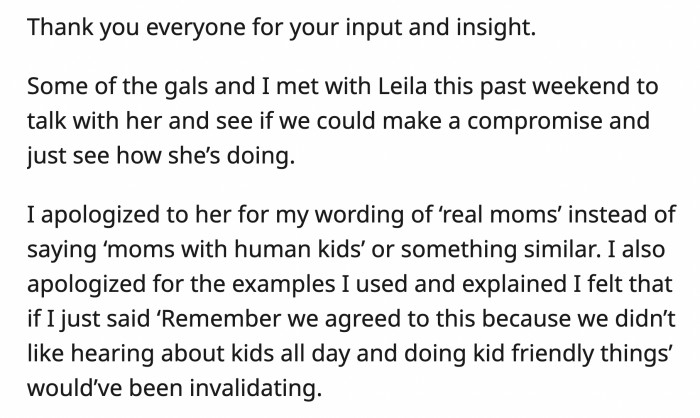
They wanted to see if Leila would be on board if they celebrated Pet Mom's Day / Dog Parent Day
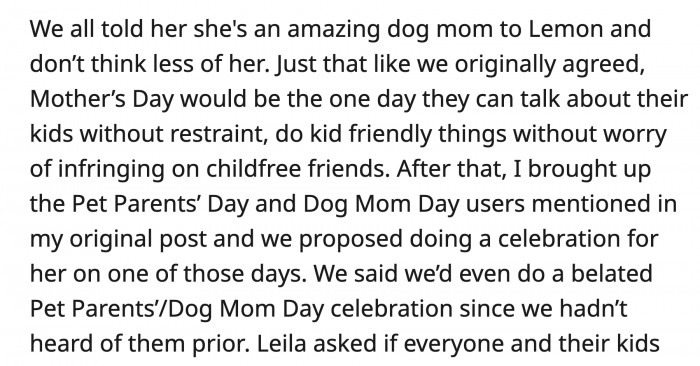
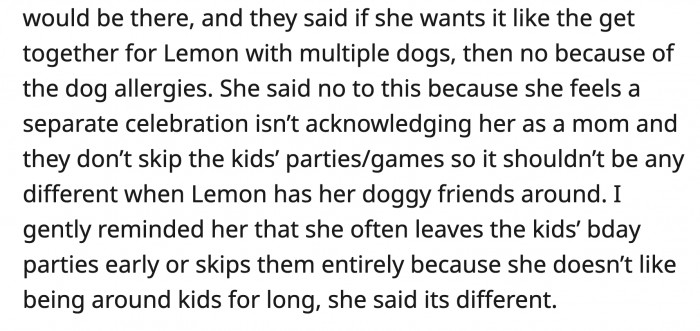
Leila wasn't receptive because a separate celebration from the actual Mother's Day does not count
To address feelings of exclusion, it’s crucial to implement practical strategies that encourage inclusivity within friendships. One effective approach is to establish a ‘check-in’ routine where friends regularly discuss their feelings and experiences. This can create a safe space for expressing concerns and desires openly.
Additionally, planning inclusive activities that cater to diverse interests, such as pet-friendly outings, can help bridge the divide between parents and non-parents, ensuring everyone feels valued and included.
Leila’s “dog mom” tension feels similar to the mom of three who became a scapegoat after the dog-mom vs real-mom argument.
They asked her how she wanted to celebrate Mother's Day in the future, and Leila said she wants to celebrate it in dog-friendly places so Lemon can come, too.
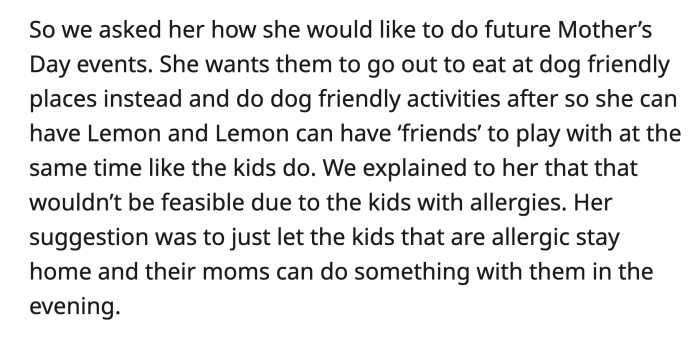
They said that would be impossible since some of the kids have dog allergies and they already do monthly activities where Leila brings Lemon along.
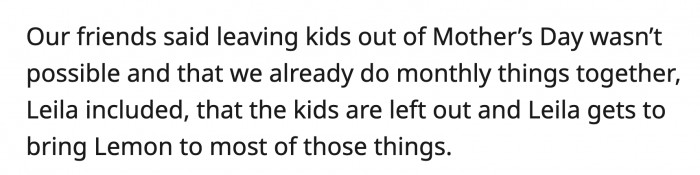
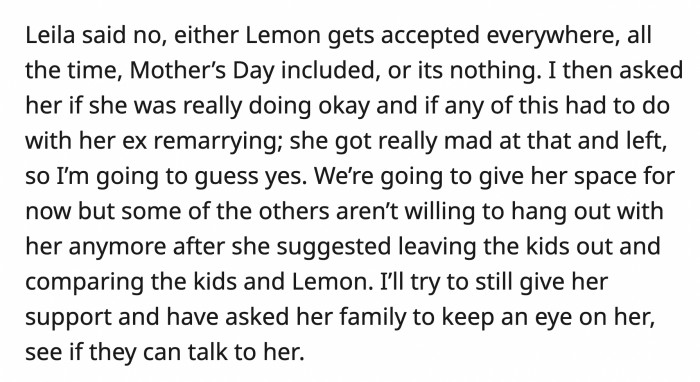
Leila still refused because she wants Lemon to be accepted at all the places and celebrations they do all the time, or they shouldn't celebrate at all.
The emotional repercussions of exclusion can also be understood through the lens of attachment theory.
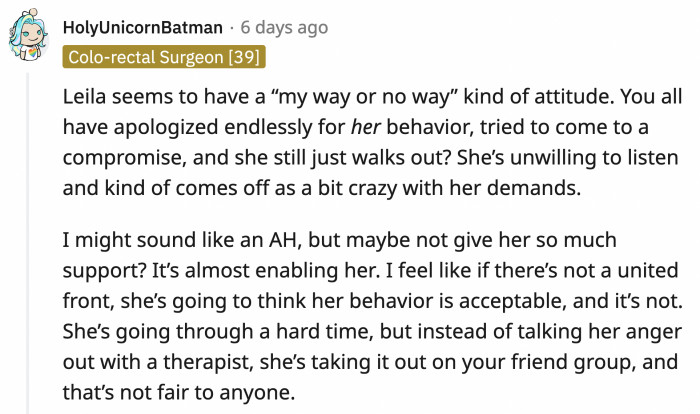
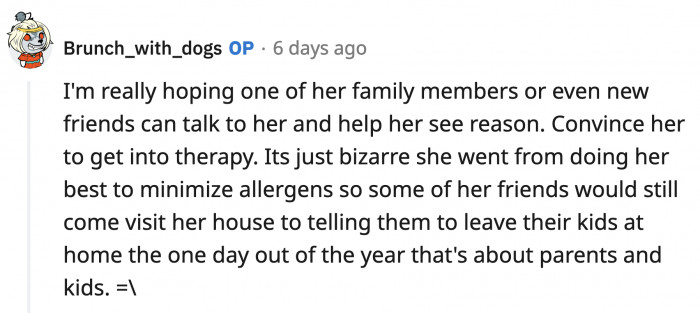
Correct, Leila needs therapy to deal with her actual problems and not force her friends into what she wants.
Leila's new attitude towards Lemon was influenced by the new friends she made at the dog daycare who treat their dogs like people.
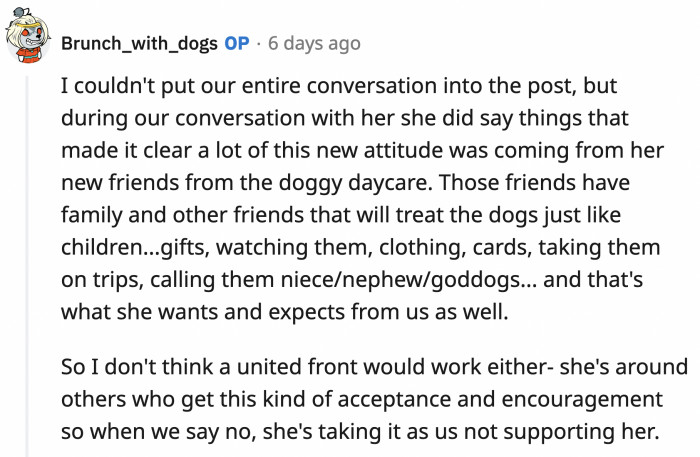
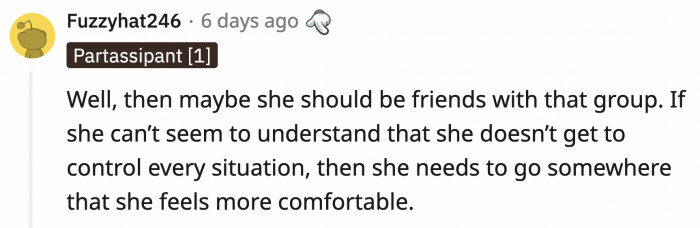
Maybe Leila should keep hanging out with her new friends if she's this unmoving about having Lemon everywhere.
Social support plays a crucial role in emotional resilience, particularly during challenging times. For Leila, actively seeking out supportive friendships and networks outside of her current group may provide her with the emotional validation she needs while her core friendships adjust.
Engaging in activities that foster new connections, such as community groups for pet owners, can also reinforce her sense of belonging and enhance her overall well-being.
Looks like she has found them.
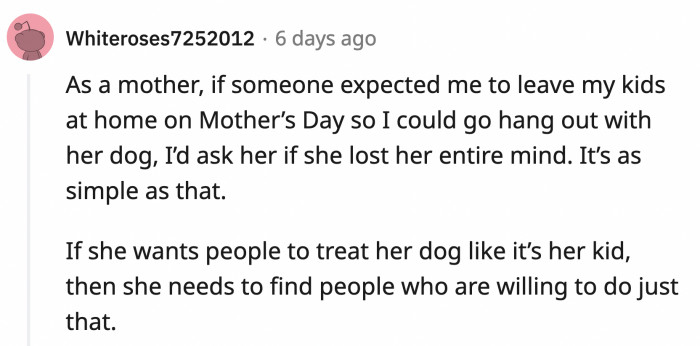
Leila is definitely going through something because if her friends are willing to work this hard to find a compromise, then her stubbornness is not her normal behavior.
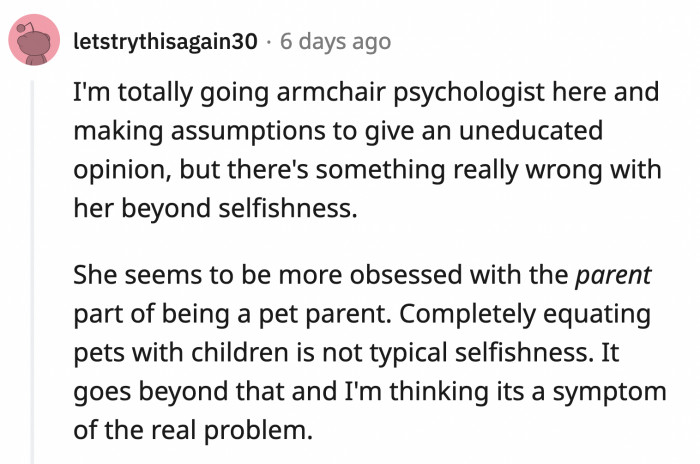
Leila is trying to prove to herself and her ex that she isn't missing out on anything by not having a kid.
It's essential to consider the role of empathy in friendship dynamics.
She's being so unreasonable, but she doesn't care.
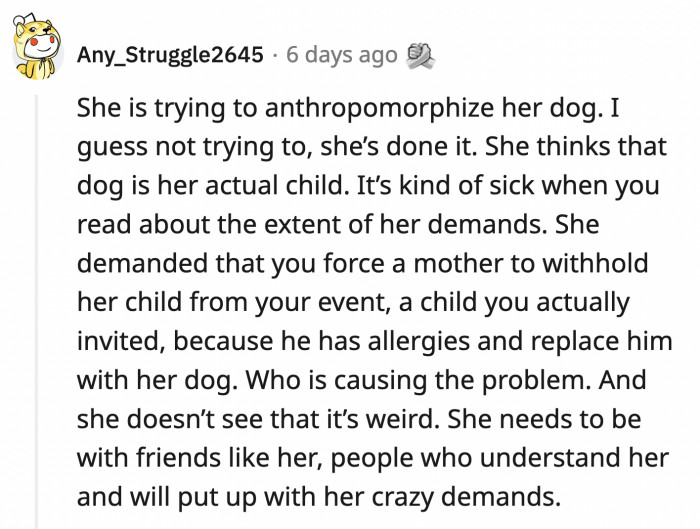
It's unlikely that Leila will change her mind about this.
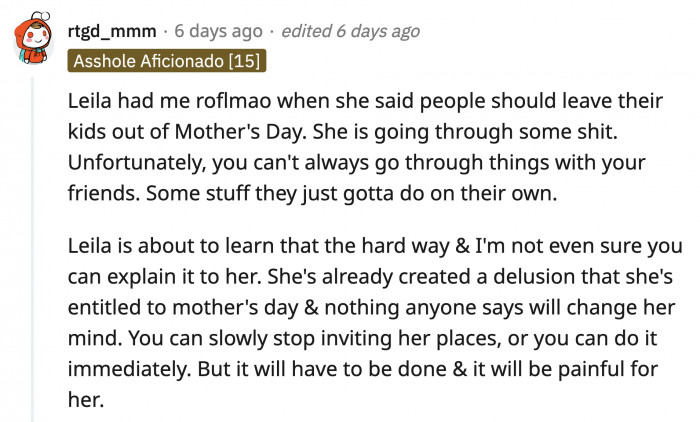
Leila needs an intervention.
Life transitions, like parenthood, often necessitate adjustments in social relationships. These transitions can evoke a sense of grief for the changes that come with them. For those like Leila who are not experiencing similar life milestones, it’s important to acknowledge these feelings of loss and isolation. Engaging in reflective practices, such as journaling or seeking therapy, can provide Leila with insights into her emotional landscape and help her navigate these feelings constructively.
By understanding that such feelings are a normal response to relational shifts, she can approach her friendships with greater compassion and openness.
It could be time to let Leila go.
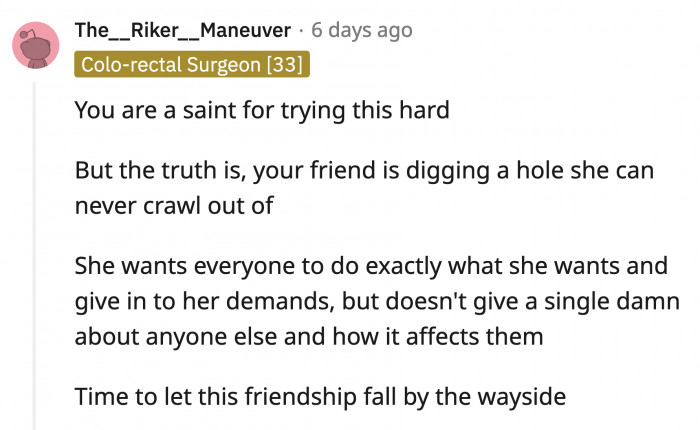
OP says she will not cut off Leila because she wants to be available if Leila ever changes her mind and becomes more open to discussion. For now, they are letting her dig in her heels.
It doesn't look like the dedicated "dog mom" is budging on this issue anytime soon. I'd also like to acknowledge OP's and her friends' patience and emotional intelligence throughout this situation; raising kids and taking care of animals has obviously taught them a few lessons.
The situation surrounding the "Dog Mom" highlights how the transition to parenthood can create rifts in longstanding friendships.
For more “my house, my rules” drama, see how a lady got roasted over dogs at Friendsgiving.
Share this article:





