Woman Vetoes New Pet As Boyfriend Plans Replacement For Dying Cat

A 28-year-old woman vetoed a new pet idea, and it turned into a relationship stress test fast, right while her boyfriend was already talking about a replacement for his dying cat.
They’ve been together two years, and the cat wasn’t some random add-on. It became part of their daily routine, the kind of shared rhythm that makes the “what happens after” conversation feel heavy before the goodbye ever arrives.
When vet bills, long work shifts, and past emergencies stack up, her no stops being about fur and starts being about survival.
Two years of living together and a shared pet history already shape the stakes here. This is not a casual idea, it’s tied to how they handle what comes after goodbye.
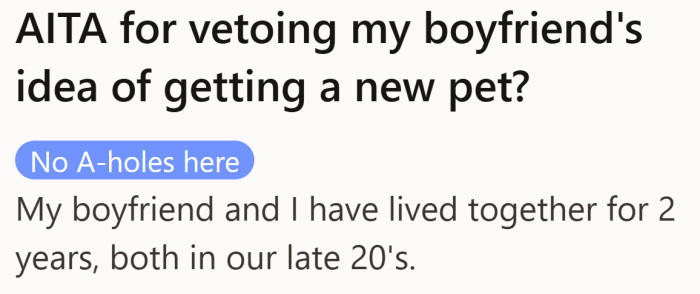
What started as his cat slowly turned into a shared routine of feeding, cleaning, and showing up every day. That history matters more than it seems.

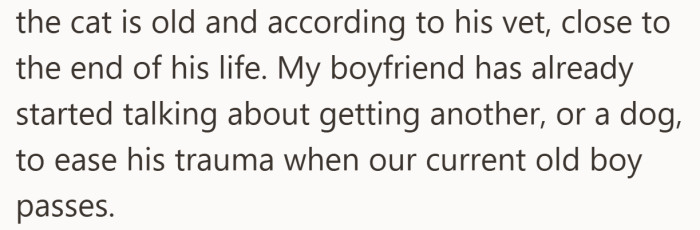
While the cat is still here, the conversation has already shifted to what comes after. Grief is entering the relationship early.
The fear is practical as much as emotional. Vet bills, unknown illnesses, and financial limits are doing the talking here.
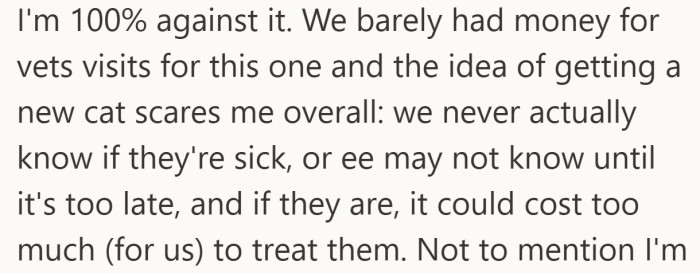
This is the part she cannot switch off. When something goes wrong, there may be no way to fix it in time.
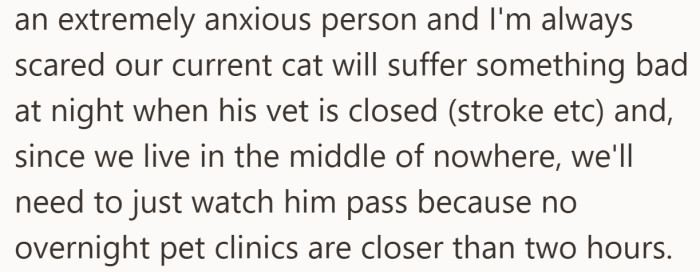
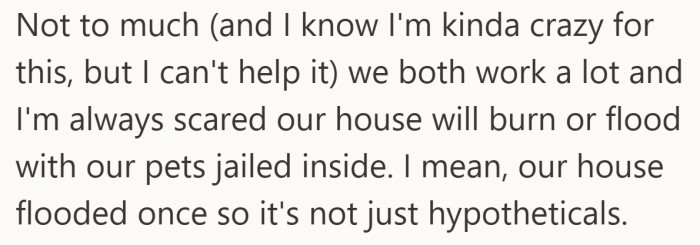
Working long hours means leaving the house and the pets alone. Past emergencies make that absence feel dangerous instead of routine.
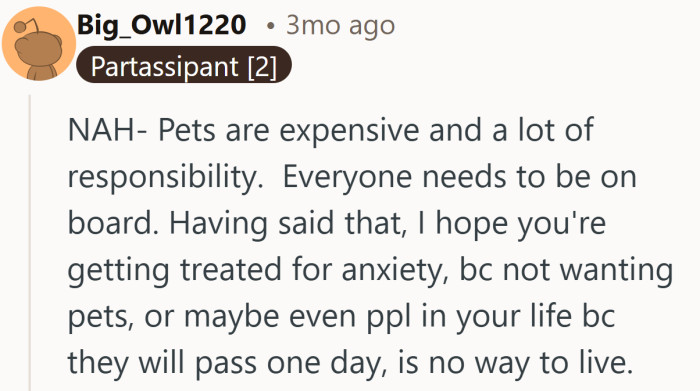
Supportive, but not hands-off. It acknowledges the stress while gently suggesting that anxiety might be shaping more than just this one choice.
When a future pet turns into a potential relationship ender, it suddenly feels a lot bigger than cats or dogs.
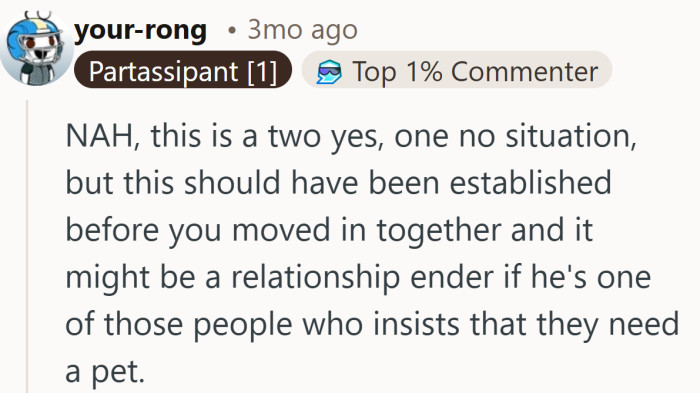
It draws a clean line between money worries and lifestyle fit. At that point, the pet question starts to look like a compatibility test.
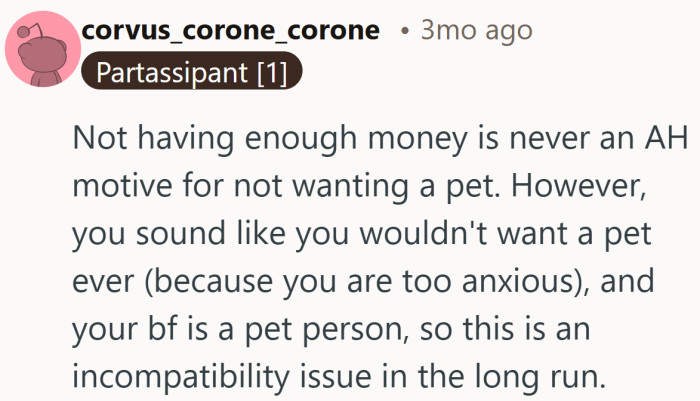
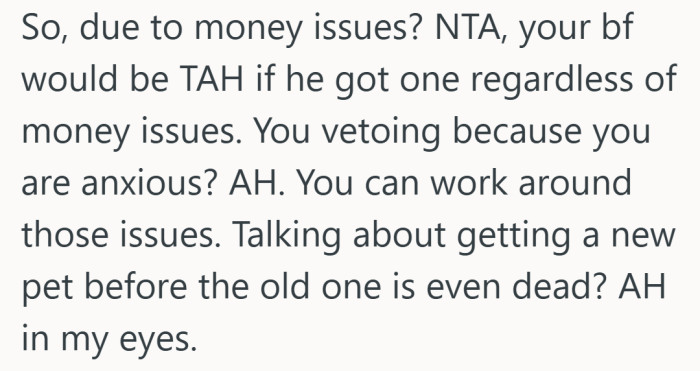
Budgets get a pass, anxiety gets a side-eye, and the early replacement talk earns the biggest raised eyebrow of all.
It’s the same tug-of-war as the AITA fight over prioritizing a cat over a relationship.
Less judgment, more problem-solving. It treats the fear as something to work with, not something to dismiss.
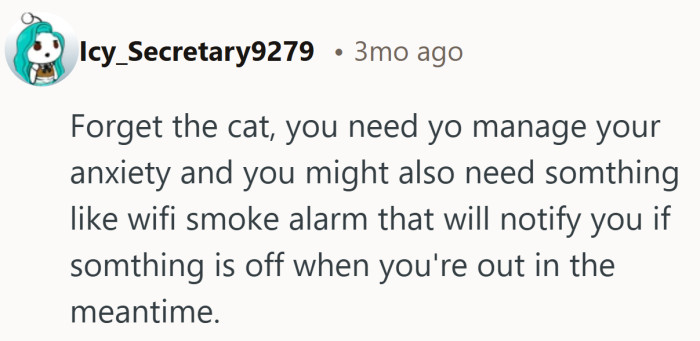
When money is tight and the nearest night vet is hours away, the answer feels less emotional and more logistical.
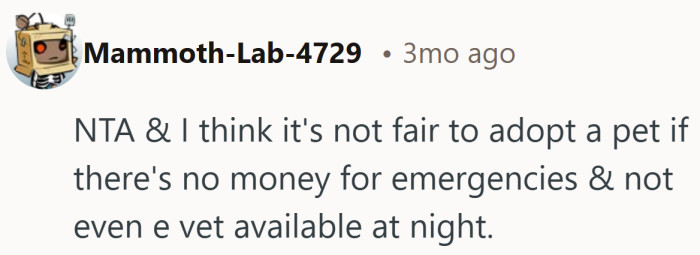
A gentle reminder that vetoes only work if both people honor them. Otherwise, the real choice shows up afterward.
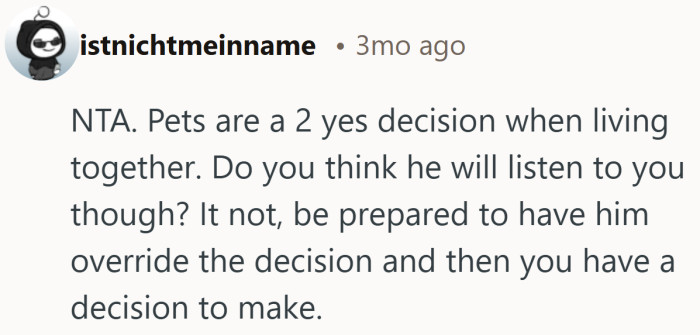
Yes, pets get a veto. Apparently, so does the future if no one likes how that veto lands.

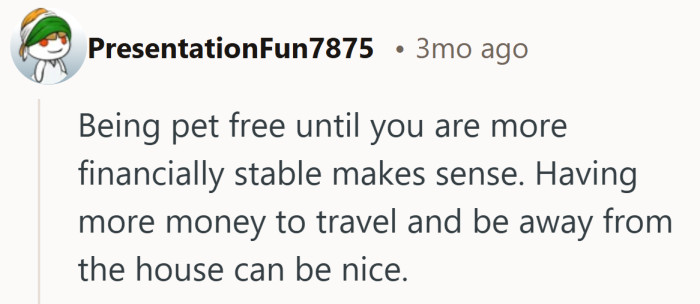
Less vet bills, more flexibility, and a little breathing room. For now, that tradeoff sounds pretty appealing.
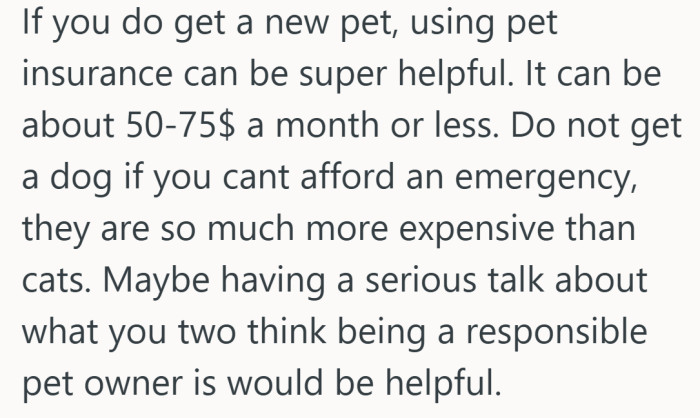
It treats the fear seriously and offers structure instead of judgment. Planning ahead becomes part of caring, not a lack of it.
Short-term cuddles, long-term flexibility. For some couples, that math actually works.
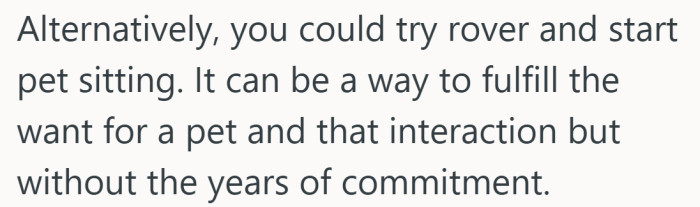
Short, direct, and not interested in overthinking it. Sometimes the simplest answer is the clearest one.

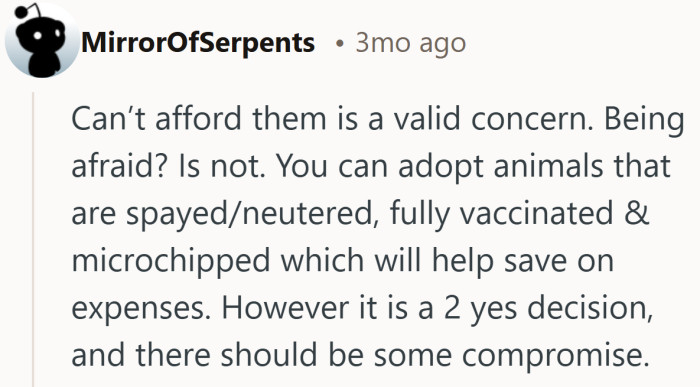
A checklist solution meets the two-yes rule. Less panic, more planning, and a reminder that agreement still matters.
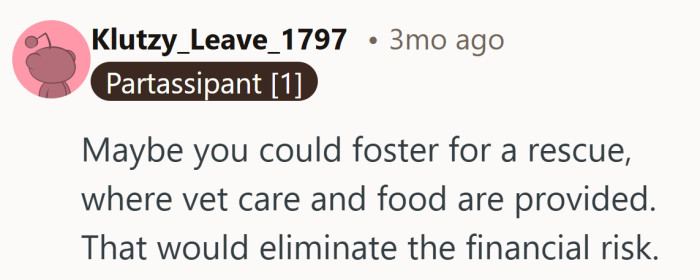
Another compromise enters the mix. Pet companionship, minus the financial panic.
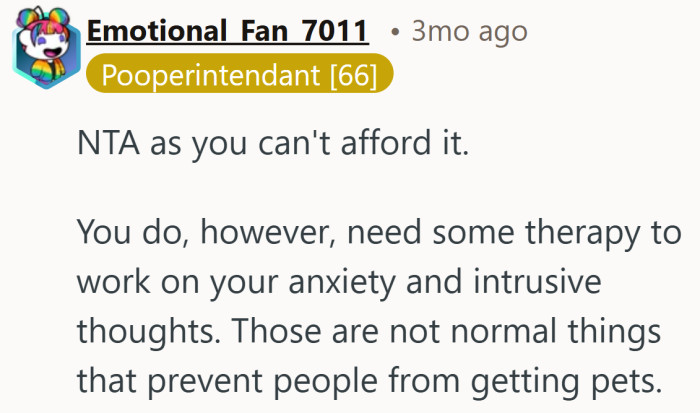
Money says no, the brain says panic, and the advice says therapy first. A very online way of calling it a mixed verdict.
The boyfriend’s “we’ll get another one soon” plan lands like a slap in the face because the cat has been their shared feeding-and-cleaning routine for years.
While the cat is still alive, the talk about what comes next drags grief into the relationship early, and she cannot treat it like a casual topic.
When long hours mean leaving the pets alone, her fear turns practical, because their last emergency showed how fast things can go sideways.
So when she vetoes the replacement, the money worries and lifestyle fit suddenly look like a compatibility test, not a pet preference.
At its core, the conversation circles around what support really looks like when loss feels inevitable. Is it making space for grief before it arrives, or protecting each other from more potential hurt down the line? Some see planning a new pet as an act of love; others see restraint as the only responsible choice.
Neither approach is neat, and both come from a place of care. Where would you draw the line when anxiety, money, and grief all pull in different directions? Share this story with someone who has strong feelings about pets, boundaries, or how couples should handle loss together.
He’s starting to wonder if the real issue is the cat, or the fact that their “after” plans don’t match.
Want another relationship breaking point, see how a woman kicked out her boyfriend after her 23rd rescue.
Share this article: