Man Buys His Kids Pets Without Asking His Ex and Triggers a Custody Fallout

Some people don’t realize a “small win” can turn into a custody disaster the second it involves the other parent. In this Reddit story, a divorced dad thought he was doing something sweet for his kids, so he bought them pets without looping in his ex first.
On paper, their setup sounds almost smooth: divorced for years, remarried, and the kids bouncing back and forth in a coordinated routine. The twist is that the kids had been talking about getting pets, and the dad even framed it as part of earning them through research and responsibility. Then the logistics hit, the conversation shifted, and suddenly what the kids expected and what he planned were not the same thing.
Once the pets were treated like a “yes” that traveled with visitation, the whole thing stopped being cute and started turning into a boundary fight.
The background sounds calm on paper, divorced for years, remarried, kids going back and forth, which makes what comes next feel all the more tense.
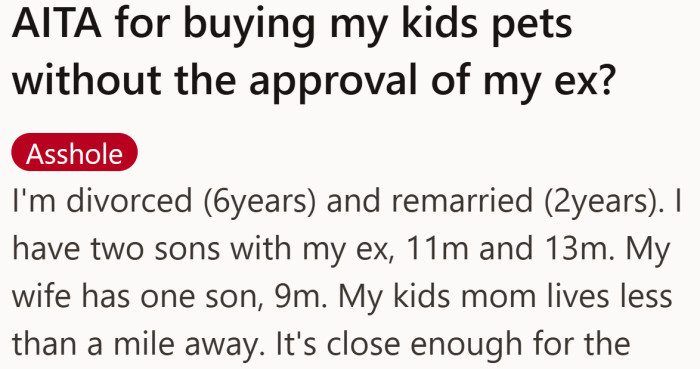
He emphasizes how close and coordinated their lives already are, which makes the coming disagreement feel harder to avoid.
The timing matters here, this wasn’t sudden, it was something the kids had been anticipating for a while.
The kids didn’t just want pets, they were asked to earn them through research and responsibility.

The conversation shifts from excitement to logistics, and the cracks begin to show.
This is the point where responsibility shifts, and communication becomes part of the test.
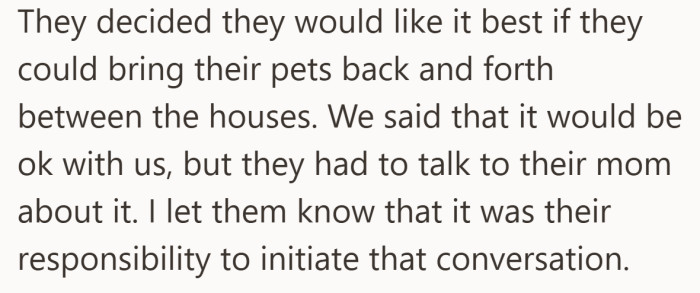
What the kids said and what he intended stop lining up, and the tension quietly spikes.
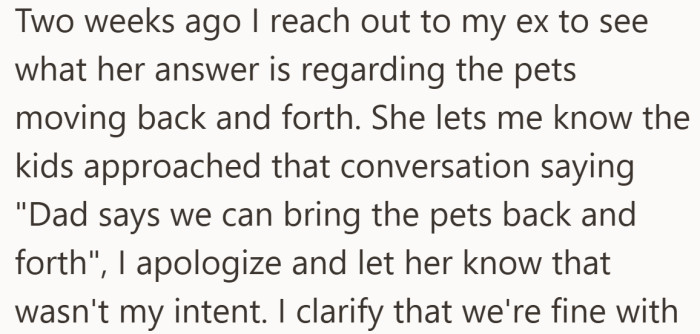
He walks away reading between the lines, assuming noninvolvement is the clearest answer.
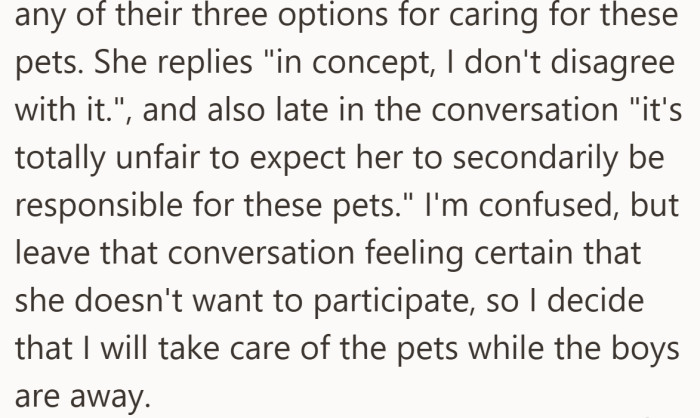
What felt like a happy milestone for the kids immediately turns into a flashpoint between co-parents.
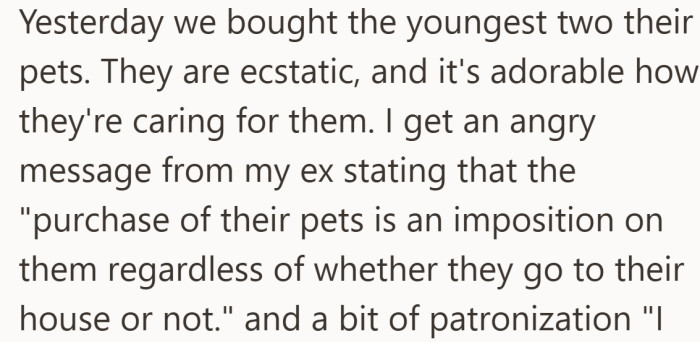
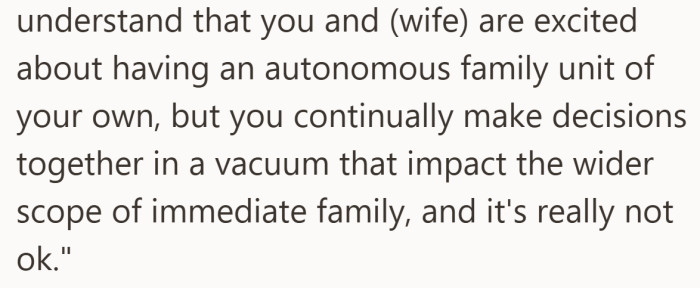
This is where the conflict stops being about pets and turns into a deeper accusation about boundaries and control.
This is similar to when she kicked her boyfriend out after bringing home her 23rd rescue animal.
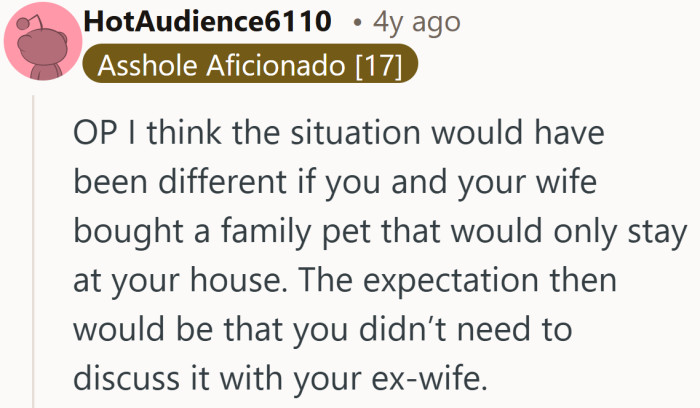
A family pet is simple. A pet with visitation rights is where things get complicated fast.
Turns out pets count as a big decision, not an accessory you add at checkout.
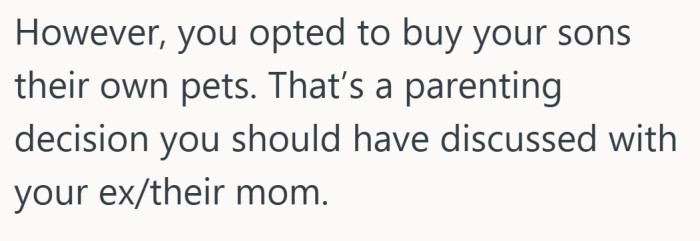
It circles back to assumptions, good intentions don’t always count as communication.

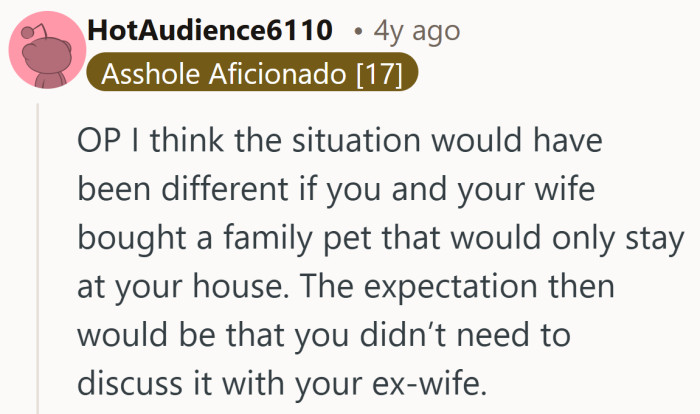
It all hinges on one detail. A pet that stays put feels simple. A pet that travels turns into a group project.
That’s the pivot point. Once it’s the kids’ pets, it stops being casual and starts needing consensus.

Good intentions don’t cancel out skipped conversations, especially in co-parenting.

Once the kids hear yes first, someone else gets stuck delivering the no.

It reflects how easily a missing conversation can snowball when kids are caught in the middle.

That lands hard, especially the part about kids getting stuck as messengers instead of just being kids.

It reflects a desire for clean boundaries and fewer shared decisions after a split.

It underscores how much of the tension came from timing and order, not the pets themselves.
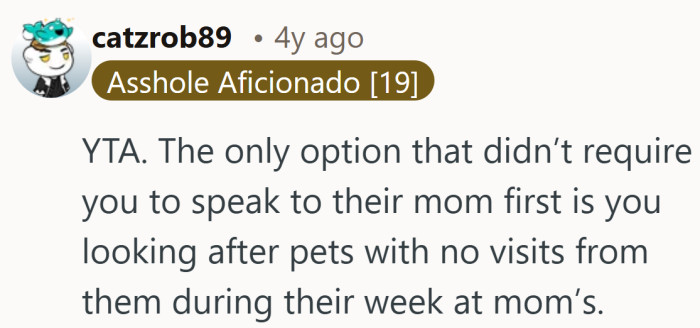
The dad walks away assuming noninvolvement is the clearest answer, even though the kids were already expecting the plan to be shared and agreed on.
That’s when excitement turns into logistics, because the moment pets enter the picture, the custody schedule stops being theoretical and starts being negotiated.
When the kids hear yes first and someone else has to deliver the no, the pet purchase becomes a message about control, not responsibility.
The family pet stays simple, but the “pet with visitation rights” gets messy fast, and that’s where the whole group project mindset blows up between co-parents.
What this situation ultimately surfaces is a familiar question for blended families. How much autonomy should each household have, and where does shared decision-making still apply years after a divorce?
Some view the choice as a harmless extension of one home’s rules. Others see it as a move that quietly shifts responsibility and expectations without consent.
It raises a bigger issue about co-parenting in practice versus theory. When kids are involved, can any decision truly stay contained to one house?
Where would you draw the line in this situation? Share this story with someone who has navigated blended family boundaries and see where they land.
Now he’s stuck wondering if buying the kids pets without asking was the sweetest thing he could do, or the fastest way to prove he wasn’t listening.
For another boundary fight, see how a woman refused to rehome her rabbit after a scratch.
Share this article: