Woman Refuses to Rehome Her Beloved Rabbit After Stepdaughter Gets Scratched

A 28-year-old woman refused to rehome her beloved rabbit after her stepdaughter got scratched, and it instantly turned a pet argument into a full-blown family standoff. This was not one of those “it was just a phase” situations, the rabbit had real routines, real space, and a real place in her home.
Here’s what made it messy fast: it wasn’t just a scratch, it was a broken rule, a child who already had baggage, and a marriage where everyone felt like they were stepping into the middle of a past that never fully went away. The stepdaughter’s injury sparked the demand to get rid of the rabbit, while the woman insisted the rabbit was not the problem, the moment was.
By the time the fallout hit, the question was no longer about a rabbit, it was about who gets to decide what “protection” looks like in that house.
A single sentence that quietly sets the stakes. One marriage, one child, and a pet that already feels like family.

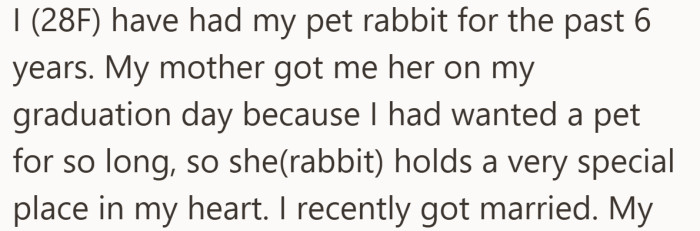
Right away, it’s clear the rabbit is not an afterthought. It is part of her life story, not a recent addition.
From the start, there are higher stakes. Custody, past neglect, and a child who has already been through a lot.

Before any argument about a pet, there is a list of decisions rooted in care and restraint.
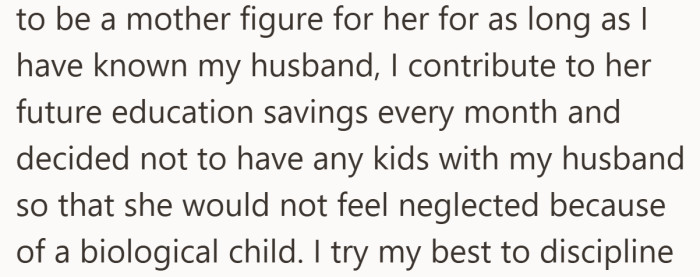
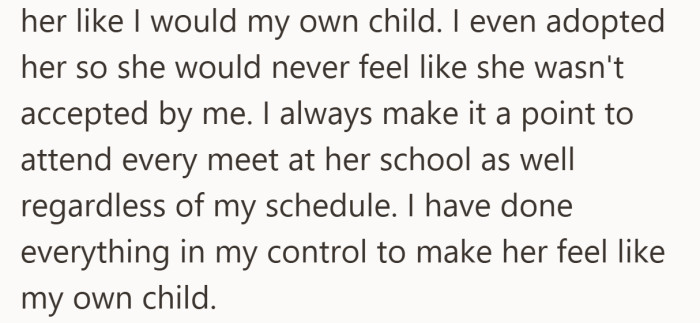
By this point, it is clear she already considers herself the parent, not a placeholder.
This rule is framed as protection on both sides, even if it does not feel that way to everyone.
This was not a casual setup. The rabbit had space, care, and one clear rule attached.
This is the moment everything tips. A clear rule is broken, and the fallout is immediate.
She tries to slow the moment down, explaining that what looked alarming was not medically serious.
What started as a parenting issue turns into a direct challenge about love and priorities.
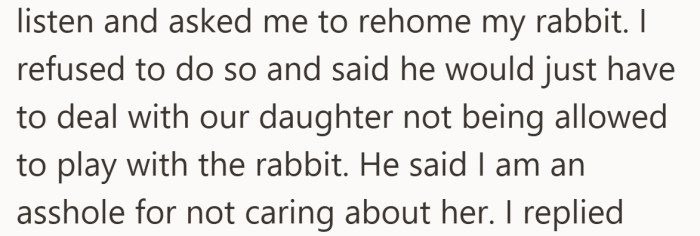
Also like the man who bought pets for his kids without asking his ex, sparking custody fallout, this argument becomes about control, not care.
She stands firm, and the silence sets in. The conflict stops being loud and starts being heavy.
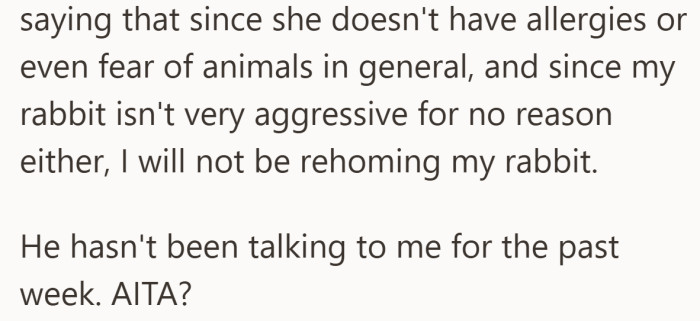
She ends not with anger, but uncertainty, looking for a way forward without giving something up.
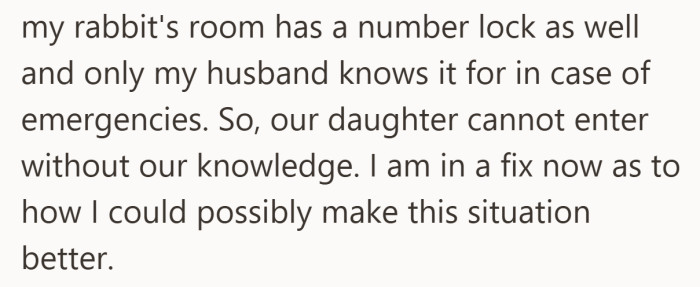
The quiet fear here is not the argument, it’s what happens when no one is watching.
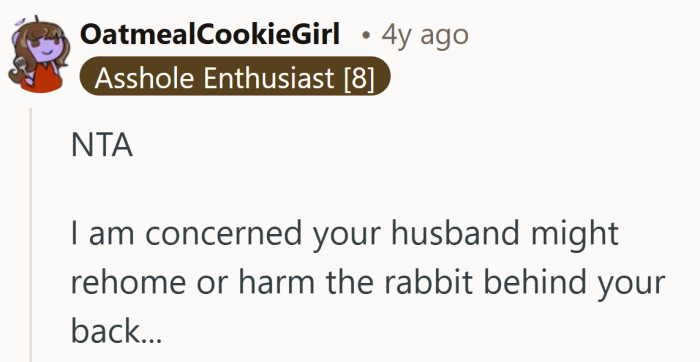
When someone spells out the risk and it still gets brushed off, the outcome feels painfully predictable.

Suddenly the debate is not about a rabbit at all, it’s about who counts as an expert on kids.
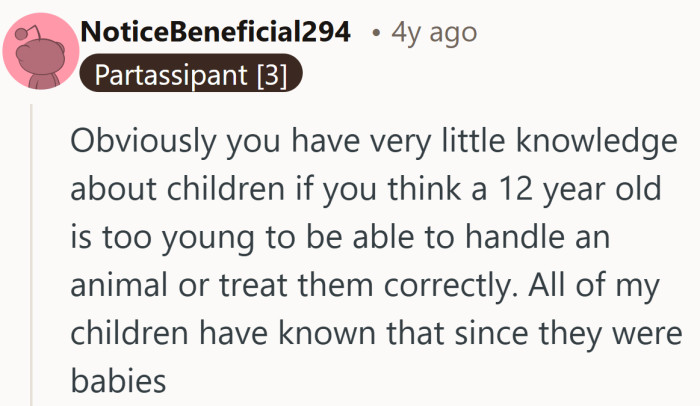
Every heated debate eventually attracts the one person who zooms out and rewrites the rulebook.

It leans into the idea that protection and teaching should happen at the same time, even when timing goes wrong.

It raises a fair question about teaching versus protecting, even if the conclusion feels heavy handed.
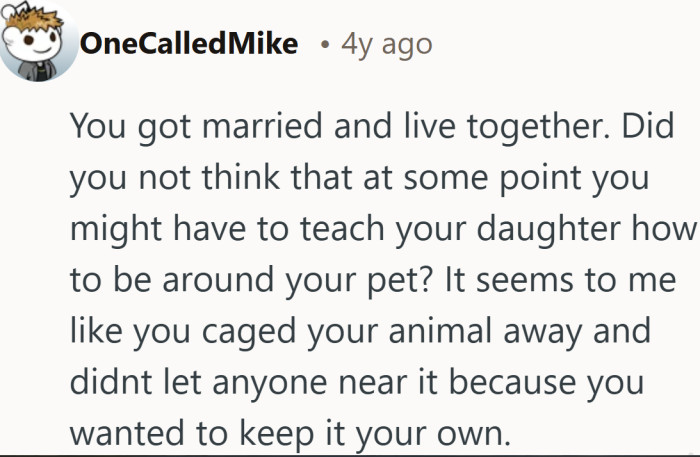
It spreads the blame evenly and calls the standoff unrealistic from the start.

The solution sounds simple on paper, which is usually how family conflicts get more complicated.

Once it gets a capital letter, you know the rule has become a symbol.

The second the stepdaughter got scratched, the woman tried to slow everything down and explain it wasn’t medically serious, but the demand to rehome the rabbit didn’t pause for her side of the story.
When she stood firm, the argument stopped sounding like a debate and started sounding like a test, especially with custody and past neglect hanging over every decision.
That’s when the conflict shifted from “keep the rabbit” versus “get rid of the rabbit” to a fight about who counts as the authority on kids in this blended family.
The moment the other person zoomed out and tried to rewrite the rulebook, the whole situation got framed as teaching and protection at the same time, and it still didn’t feel fair to anyone.
At its core, this situation is less about a rabbit and more about consent, safety, and respect inside a shared home. Some people see protecting a child from disappointment as the top priority. Others see honoring clearly stated boundaries as nonnegotiable, especially when an animal’s well-being is involved.
It raises a hard question many families face quietly. When care for a child and care for something deeply personal collide, who decides where the line sits?
Should compromise always mean giving something up, or can it mean enforcing limits more clearly? What would you have done in this situation, and why?
The rabbit wasn’t the thing being replaced, it was the woman’s trust, and the family dinner did not end well.
For another rabbit-and-family blowup, read how a severe allergy forced a heartbreaking stepchild choice: Dad remarries and moves everyone in, then the stepson’s allergy changes everything.
Share this article: