Refusing to House-Sit Due to Allergic Reaction: A Fair Move or Overreaction?

A 28-year-old man agreed to house-sit for his friend Alex for a week, thinking it would be an easy, wholesome favor. He even took time off work because he wanted to give Alex’s dog the attention it deserved.
Then, right when he went to pick up the keys, Alex casually dropped the bomb that they had “got a cat.” The problem, though, was that the sitter is very allergic to cats, and Alex knows it, because he’s had to leave gatherings early before.
What makes it messy is that he tried to offer a compromise, but Alex wouldn’t budge, and now everyone is arguing over whether he should have just powered through.
Original Post
I (28M) agreed to house-sit for my friend Alex (30M) while they went on a week-long vacation. Alex has a dog that I’ve always loved, and I thought it would be nice to help them out.
I even took some time off work to make sure I could give the dog plenty of attention. A few days before Alex left, I went over to get the house keys and a rundown of what needed to be done.
That’s when Alex casually mentioned, “Oh, by the way, we got a cat!” This caught me off guard because I’m very allergic to cats. Alex knows this—I’ve had to leave gatherings early before because of my allergies.
I asked why they hadn’t told me earlier, and Alex said they forgot because they’d only had the cat for about a month. I told Alex I couldn’t stay in their house if they had a cat.
Even if I avoided it, the dander would still trigger my allergies. I suggested they ask someone else or hire a sitter.
Alex got defensive, saying I was leaving them in a lurch right before their trip. I felt bad, but I didn’t think it was fair for Alex to spring this on me last minute.
I offered to check in on the dog daily (if they could isolate the cat in another room), but Alex said that wouldn’t work. They ended up scrambling to find someone else and left for their trip angry at me.
A mutual friend later told me I should’ve sucked it up for a week because Alex really needed the break and probably just forgot to mention the cat. I’m starting to feel like I might’ve overreacted.
AITA?
Allergies can serve as significant stressors in relationships, particularly when they unexpectedly complicate social obligations. Research from the Journal of Allergy and Clinical Immunology indicates that allergic reactions can trigger anxiety and feelings of vulnerability in individuals.
This situation highlights the importance of understanding physical health impacts on emotional well-being, particularly in the context of friendships and commitments.
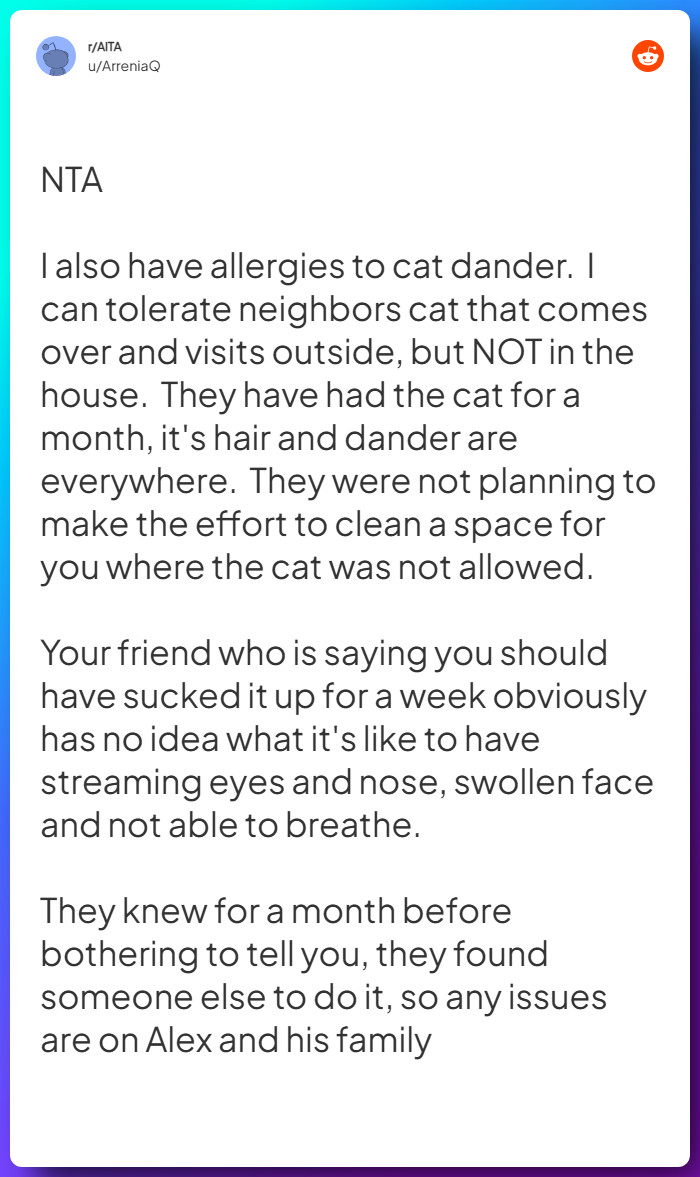
Comment from u/ArreniaQ
Comment from u/StAlvis
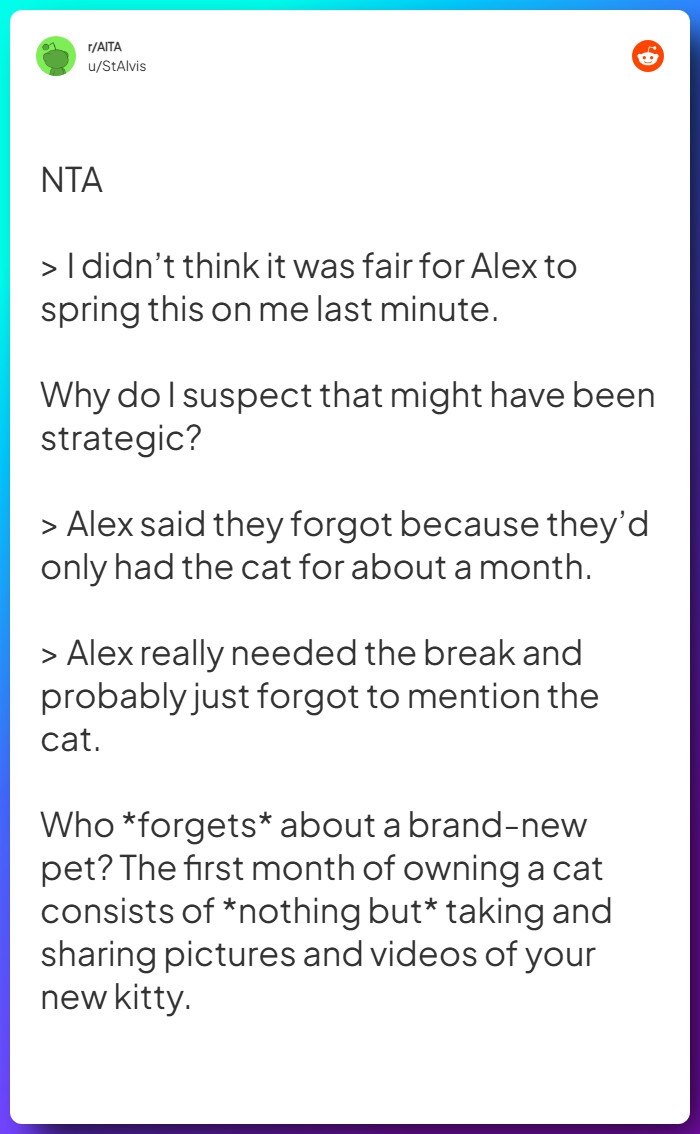
OP didn’t just “forget,” he went over for the keys and got hit with the cat news from Alex at the worst possible moment.
It's crucial to recognize that allergies are not merely inconveniences but can significantly affect a person’s quality of life.
Furthermore, this anxiety can be compounded by the fear of disappointing friends or being perceived as overreacting, which may result in avoidance behaviors or feelings of isolation.
Comment from u/KaliTheBlaze
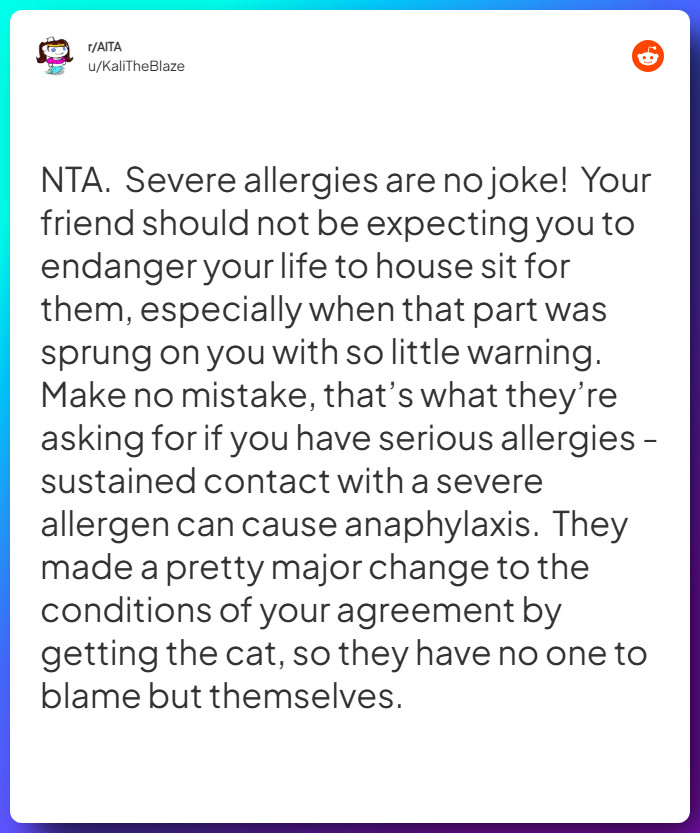
Comment from u/Full_Pace7666
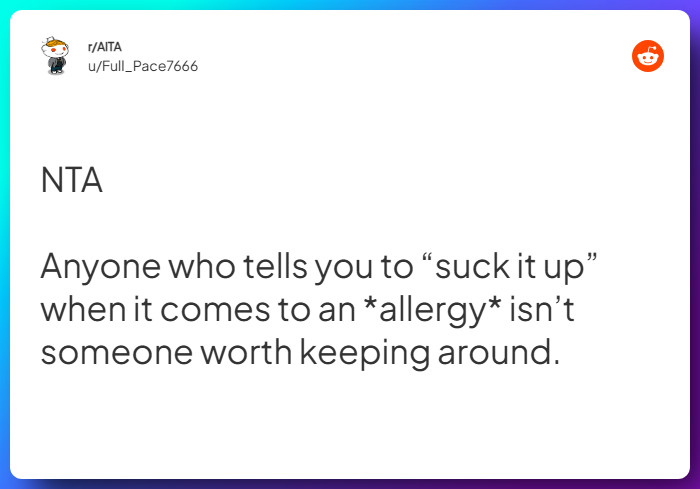
Alex got defensive when OP said he couldn’t stay in a cat house, and the dog check-in plan immediately fell apart.
This mirrors the AITA fight over refusing to leave a cat for a friend’s party, and the backlash that followed.
Communicating Health Needs Effectively
Setting boundaries regarding health issues is essential for maintaining healthy relationships.
Comment from u/Main_Asparagus3375
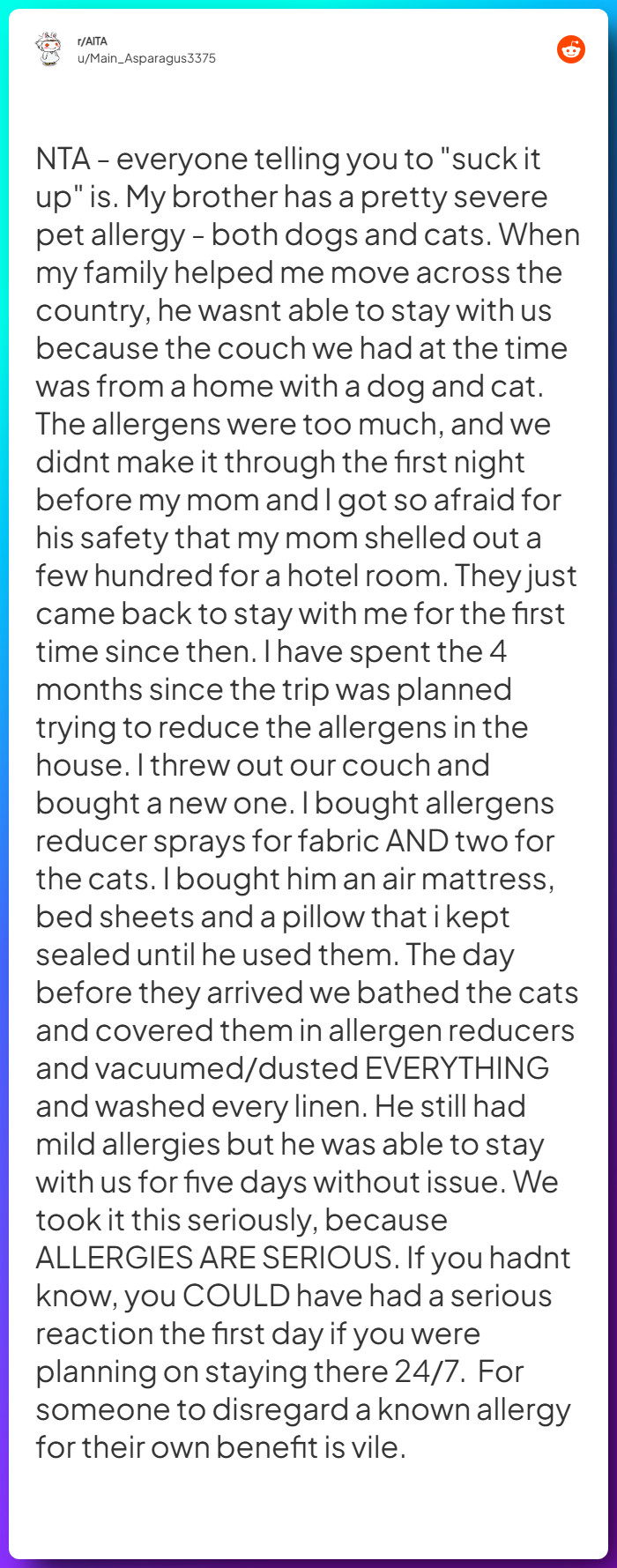
Comment from u/CommunityDefiant4292
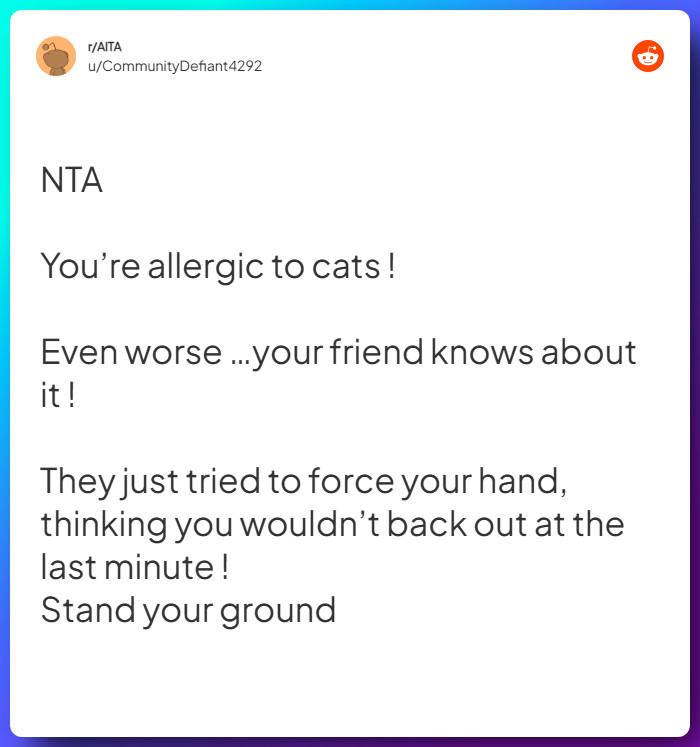
OP even offered to isolate the cat in another room while still watching the dog, but Alex said that solution “wouldn’t work.”
It's also beneficial to discuss alternative solutions that can accommodate both parties.
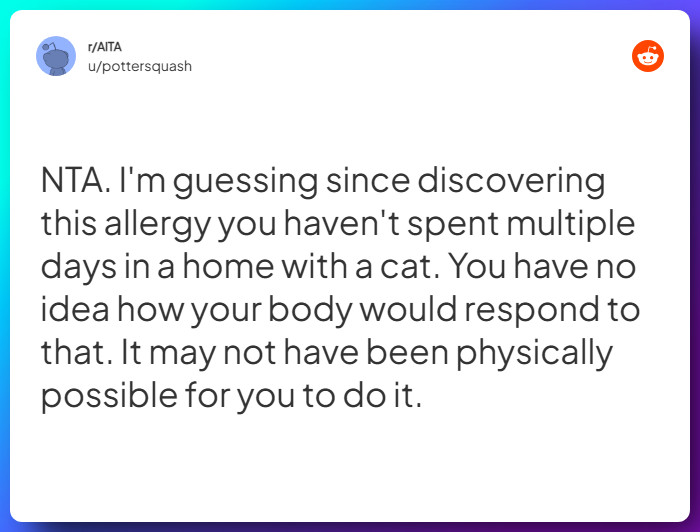
Comment from u/pottersquash
Comment from u/lnsertRandomUsername
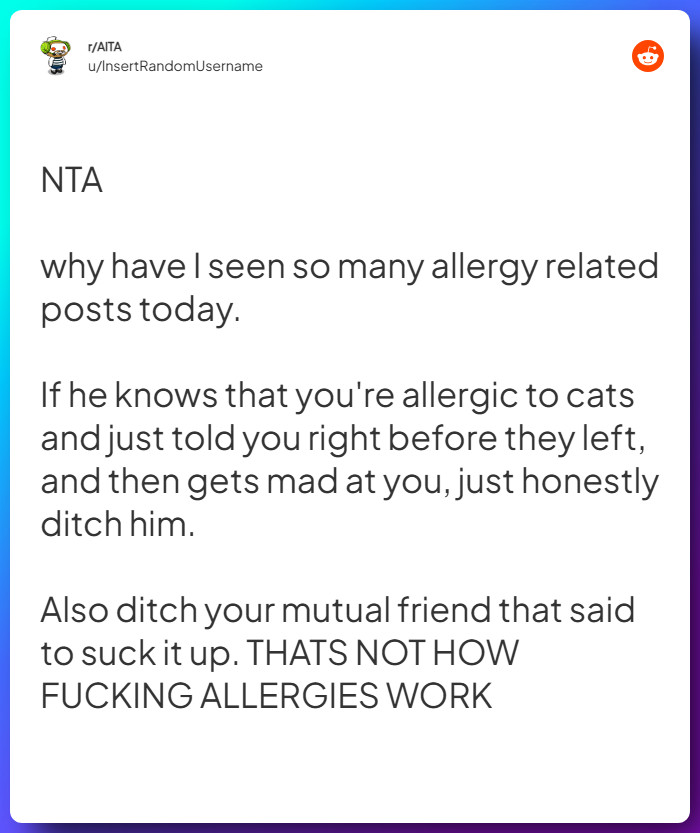
After Alex scrambled to find someone else and left for vacation angry, the mutual friend later told OP he should’ve sucked it up for the week.
We'd love to hear your take on this situation. Share your thoughts below.
Comment from u/Rare-Cheesecake9701
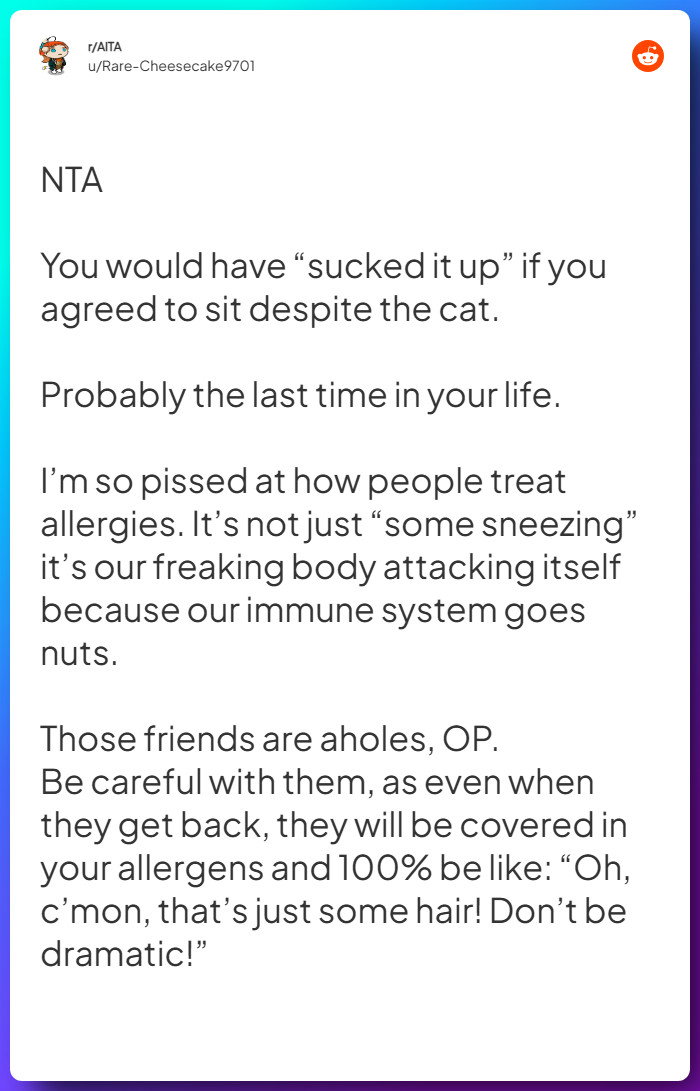
The user faced a genuine dilemma, as the sudden inclusion of a cat posed a significant health risk due to allergies, which the friend may not have fully considered. Addressing such issues openly could pave the way for understanding and compromise, ultimately strengthening their relationship.
Friendships tend to flourish when both individuals feel acknowledged and respected, especially during challenging moments like this. The decision to decline house-sitting due to an allergic reaction is not merely an overreaction but a valid concern that deserves consideration and dialogue.
Now OP is stuck wondering if refusing the cat-triggered disaster made him fair, or just the villain in Alex’s vacation story.
Wait, it gets worse, see how a roommate tried to force allergy pills after getting a cat.
Share this article: