
Man’s Refusal To Puppy-Sit For His Girlfriend Sparks Breakup

A 28-year-old man’s refusal to puppy-sit turned into a full-blown breakup, and it all started with a dog his girlfriend’s MIL “got on a whim.” The request seemed small, but the timing and the context made it feel loaded, like one more ask stacked on top of everything else.
OP’s girlfriend usually stays with him for almost a week at his place, and he only gets a couple of days to decompress when she goes back home. Then, less than a day after she leaves, she messages him asking if the puppy can stay overnight at his place. He says no, she tells him he doesn’t care about her or her family, and suddenly the relationship is over.
Now he’s stuck wondering if he was selfish, or if he just finally hit his limit.
Let’s dig into the details

OP’s girlfriend regularly spends almost a week with him at his place. Her MIL got a puppy on a whim and is now stressed out by it.
The refusal to puppy-sit highlights deeper dynamics in the relationship, often linked to attachment styles. Understanding one's attachment style can clarify how individuals respond to requests and emotional needs in relationships.
In this case, the girlfriend’s reaction points to a need for consideration and emotional support, which she may perceive as lacking. Research supports that individuals with secure attachment styles tend to communicate needs effectively, while those with anxious or avoidant styles may struggle, leading to conflict.
As an introvert, OP enjoys his space. However, with his girlfriend being around the whole time, he gets to relax for only two days after he goes back home.
Less than a day after OP’s girlfriend heads home, she contacts him asking if the dog could come to stay overnight at his place.
The whole thing gets tense because OP is used to having his space back for only two short days after she leaves.
It's crucial to recognize that relationship conflicts often stem from unmet needs.
OP declines the request, and his girlfriend tells him he does not care about her or her family.
OP is uncertain if he is being a pushover and does not know if his decision was wrong.
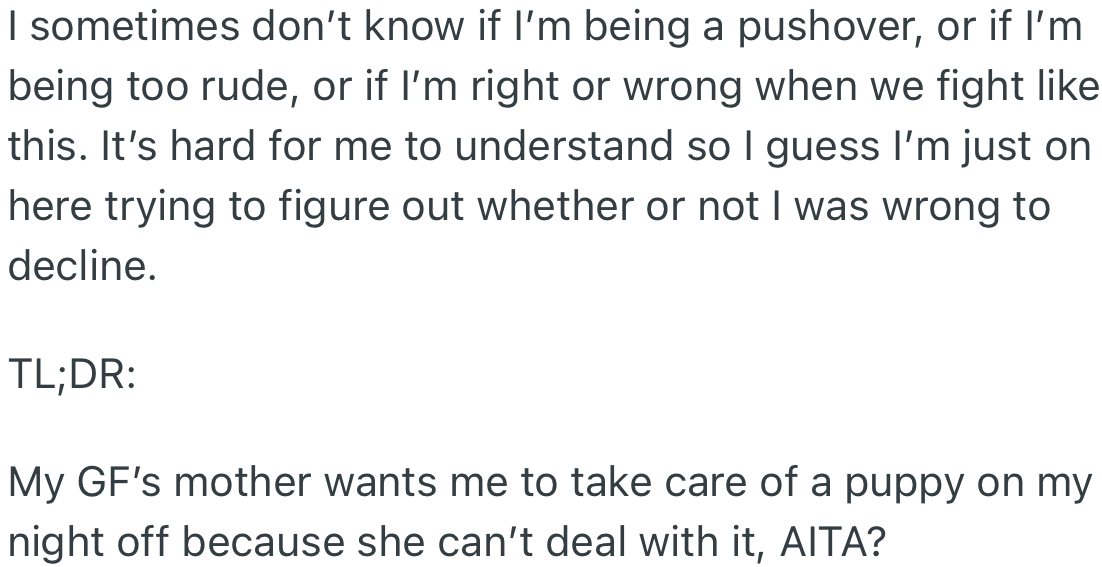
And just when he thinks the week is over, his girlfriend asks him to take the puppy overnight after her MIL’s latest stress-inducing impulse.
It also echoes the Redditor worried his girlfriend was jealous of their puppy, then wanted to re-home it.
Practical Communication Strategies
To navigate such conflicts, couples should adopt open communication strategies.
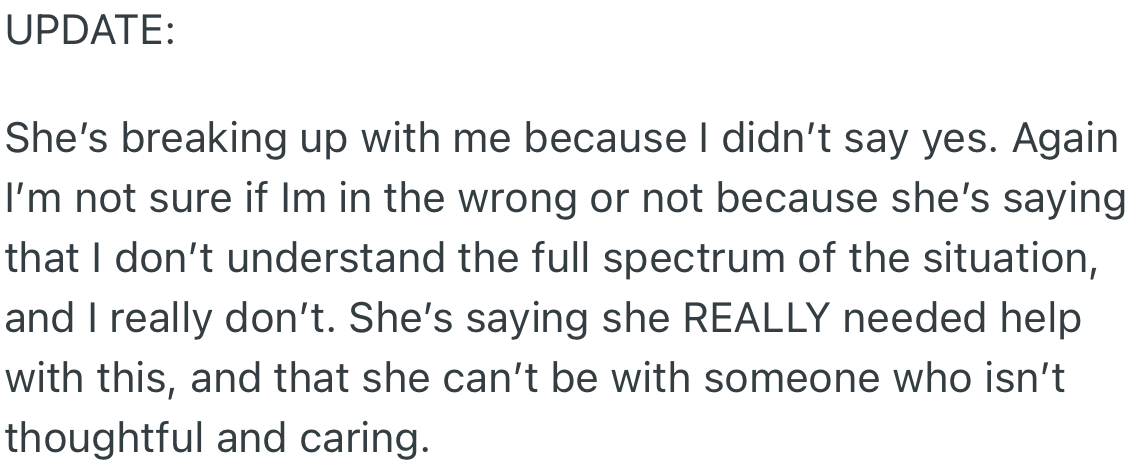
OP’s girlfriend decides to break up with him for the reason that she needed help with the dog situation and he wasn't there for her.
We gathered the most interesting upvoted comments below
When OP refuses, it instantly turns into a character attack, with her saying he doesn’t care about her or her family.
Furthermore, establishing regular check-ins about each partner's emotional needs can preempt potential conflicts.
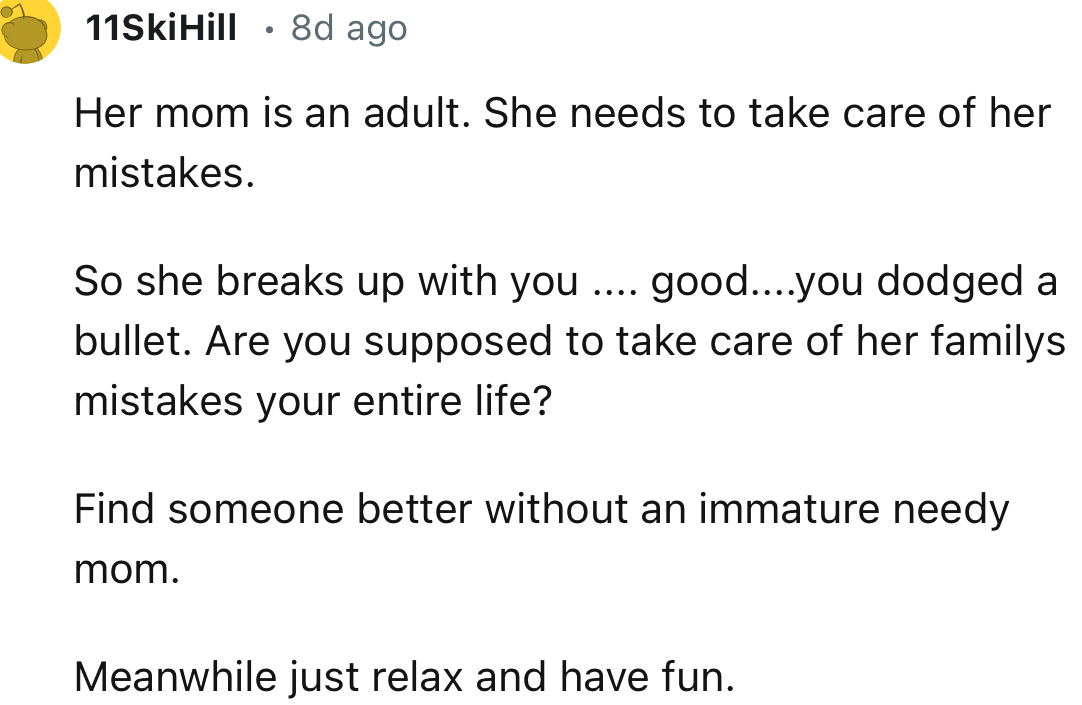
“So she breaks up with you... good... you dodged a bullet. Are you supposed to take care of her family's mistakes your entire life?”
“Whoever takes a pet should take care of it. Period. Not relatives, life partners, or neighbors. The owner.”
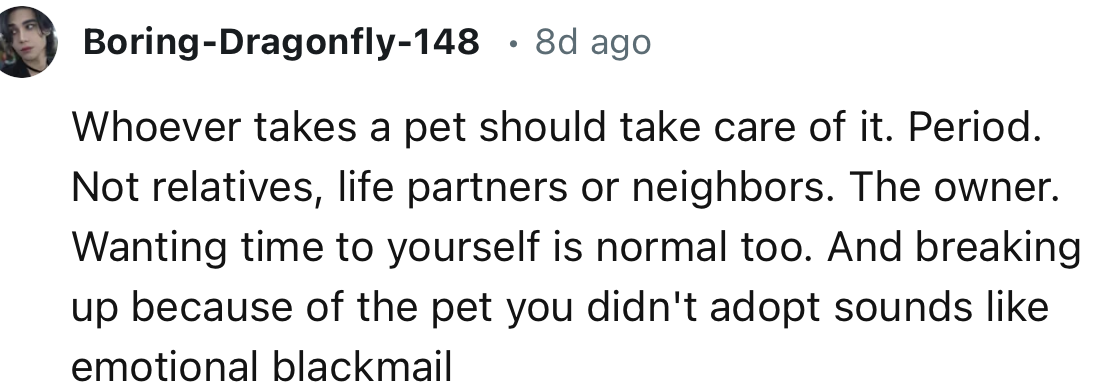
By the time she breaks up with him over the dog situation, Redditors are already weighing in on whether he dodged a bullet.
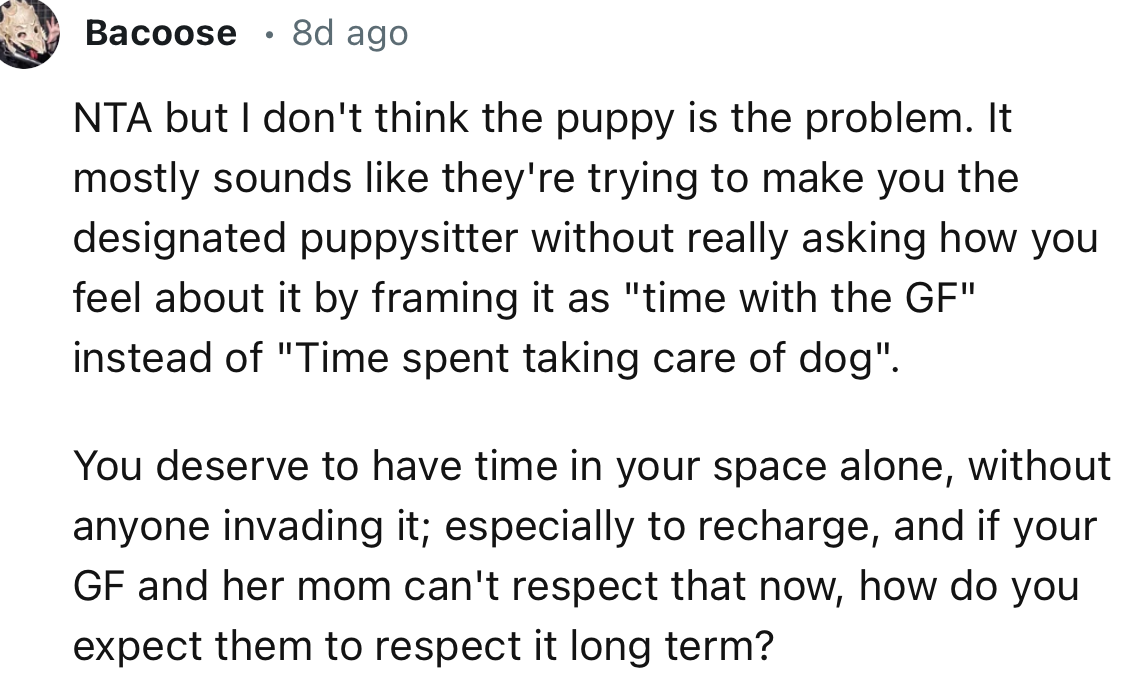
Redditors weighed in with a solid NTA verdict. To them, if the girlfriend and her mom couldn’t respect OP’s need for personal space now, it was a red flag for the future.
The consensus? OP deserved a relationship where his needs were valued, not one where emotional manipulation was used to get what they wanted.
We’d love to get your thoughts on this story. Join the conversation in the comments.
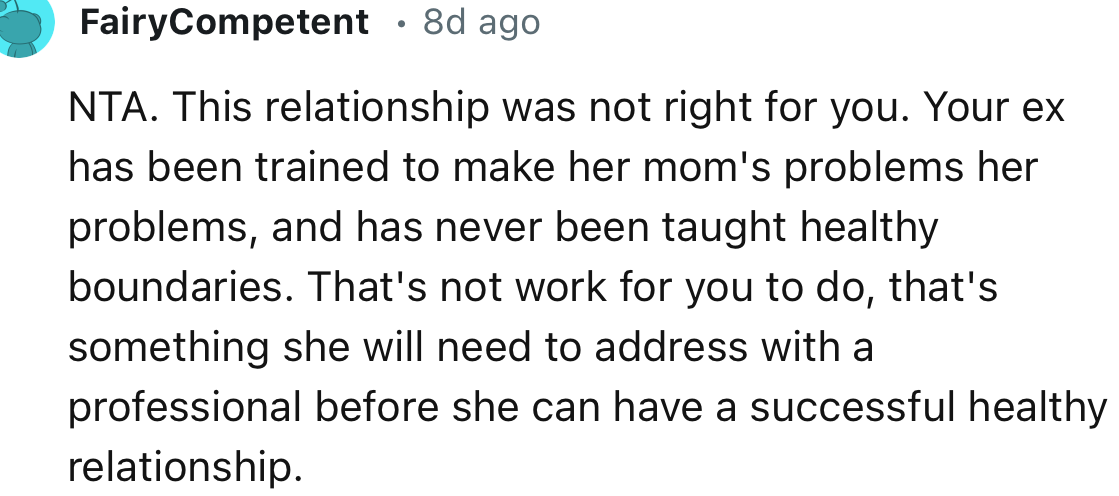
“Your ex has been trained to make her mom's problems her problems and has never been taught healthy boundaries.”
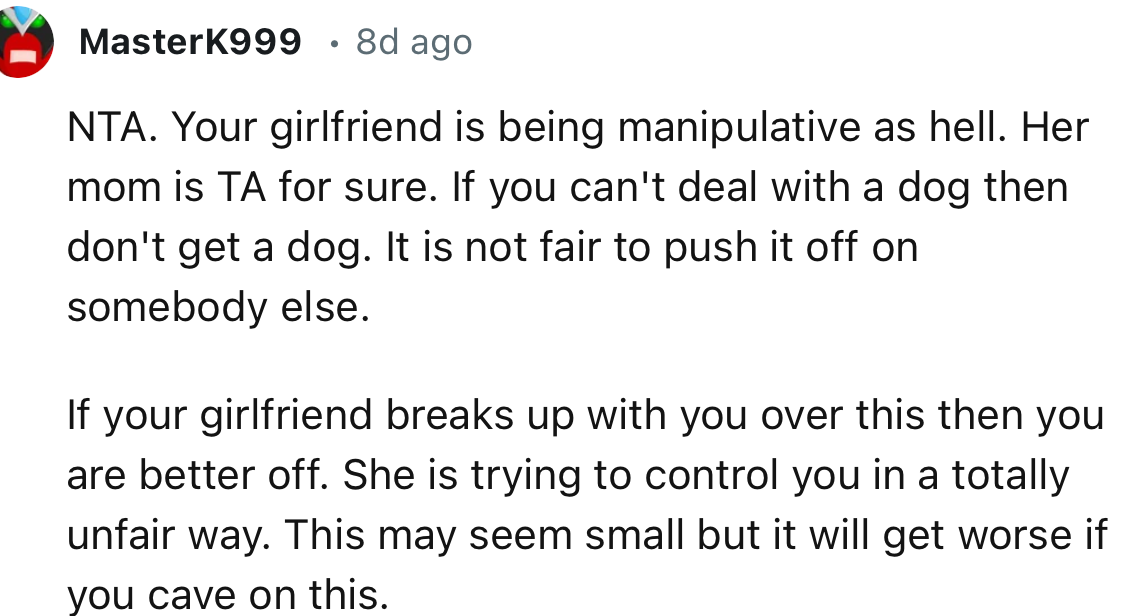
“If you can't deal with a dog, then don't get a dog. It is not fair to push it off on somebody else.”
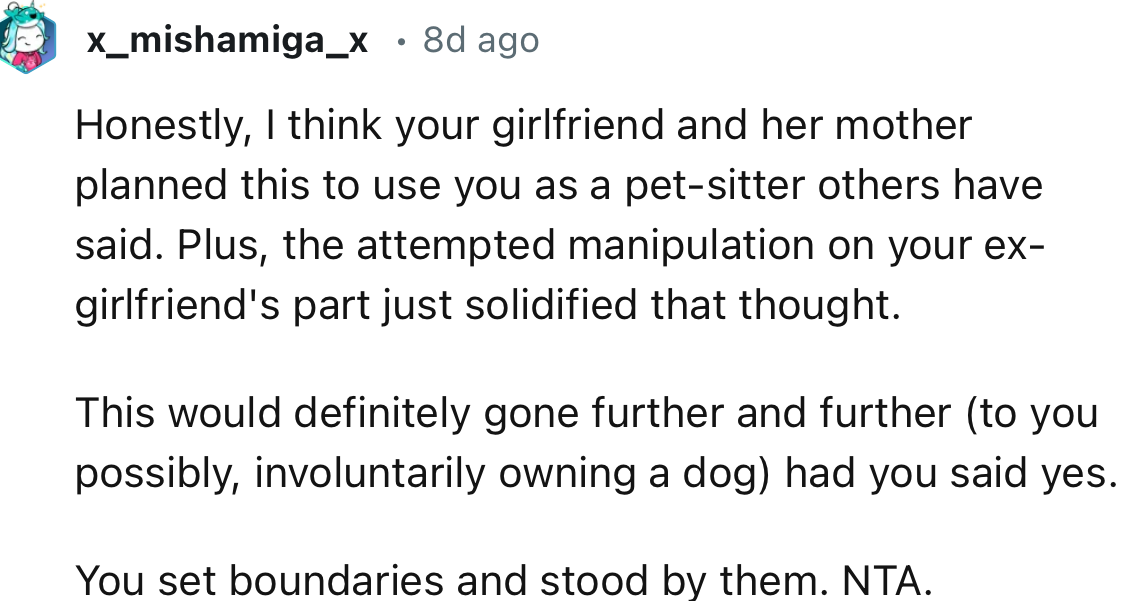
“This would definitely have gone further and further (to you possibly, involuntarily owning a dog) had you said yes. You set boundaries and stood by them.”
The situation faced by the 23-year-old narrator highlights the complexity of emotional needs within romantic relationships. When his girlfriend's mother impulsively decides to adopt a puppy, it inadvertently places a heavy burden on him. This situation illustrates how unresolved conflicts regarding responsibilities and emotional expectations can lead to significant strain. By not being willing to puppy-sit, the narrator inadvertently triggers underlying issues about support and partnership.
He might be happier dating someone who doesn’t treat “overnight puppy care” like a relationship test.
For a bigger family blowup, read how a woman got blamed after refusing to care for five dogs.
Share this article:





