Woman Kicks Boyfriend Out After Bringing Home Her 23rd Rescue Animal

A 28-year-old woman refused to let her boyfriend treat her rescue life like a casual hobby, after she brought home her 23rd animal. The first red flag was not the barking or the paperwork, it was the way he reacted when her “home rules” started sounding like, well, rules.
In her Reddit telling, she laid out the deal early, she pays, she decides, and her rescue routine is non-negotiable. Then the conflicts stacked up fast, a new pet appears without a heads-up, and suddenly the relationship feels less like partnership and more like him freeloading on her boundaries, her money, and her space.
By the time rescue number 23 hits, she is done negotiating, and he is left staring at the line she drew.
From the very first line, the tension is obvious. This is less about a single animal and more about control, consent, and shared space.

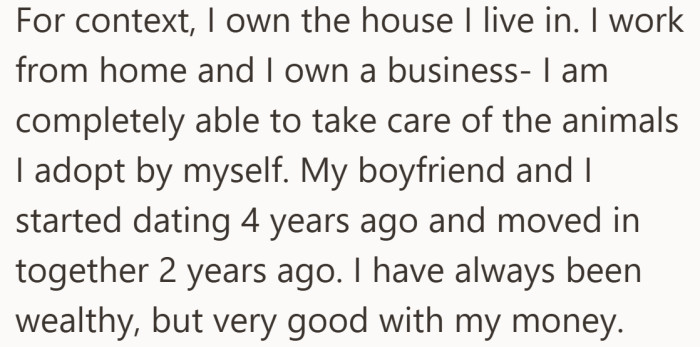
She lays out the power dynamics early, emphasizing ownership, income, and independence before the conflict even starts.
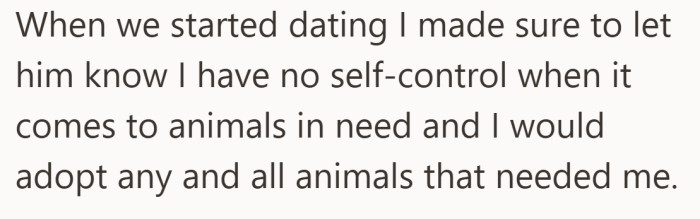
In her telling, this was always part of the deal, clearly stated long before they shared a home.
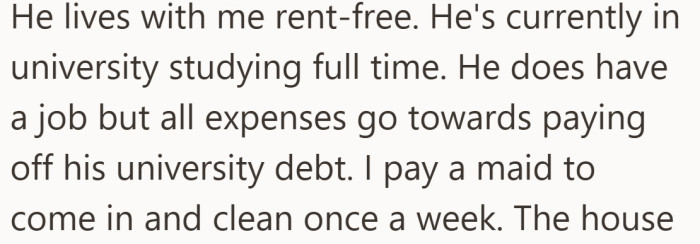
By detailing his situation and her contributions, she frames the conflict as one happening on unequal footing.
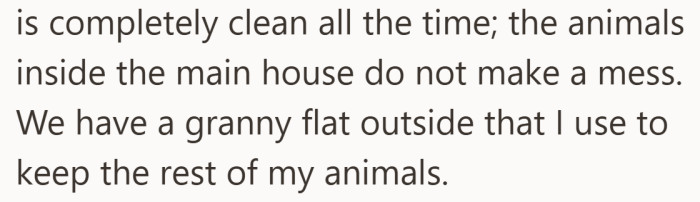
By stressing order and boundaries, she frames the situation as organized care, not chaos.
Rescue number 23 is where the disagreement stops being abstract and turns deeply personal.

Once ultimatums enter the conversation, the argument stops being about the pet and starts being about the relationship.

This is where the conflict shifts from numbers and logistics to personal limits and revulsion.
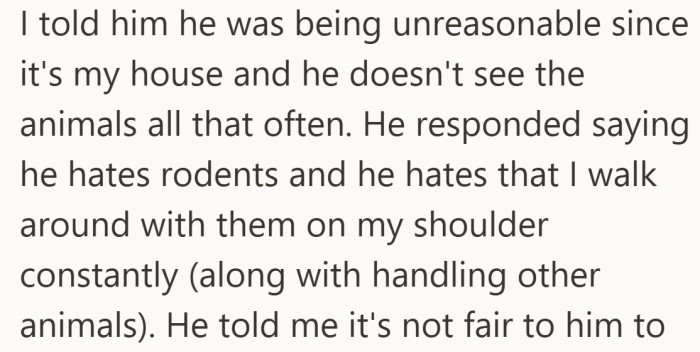
In her mind, this is no longer a discussion. It is a line being drawn.

For her, these animals are not hobbies. They are a responsibility she refuses to abandon.
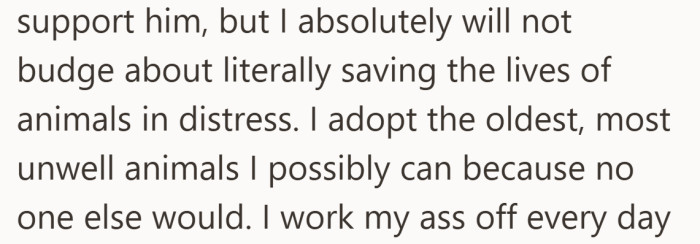
At this point, the question is no longer about the animals. It is about the future of the relationship.

Money might pay the bills, but it cannot buy equality. Once finances become leverage, the partnership already feels uneven.

A new pet without a heads-up is one thing. Realizing the relationship has deeper cracks is another.

Once the space never becomes “ours,” the ending almost writes itself.

Turns out cohabitation comes with opinions, even if they are not listed on the paperwork.
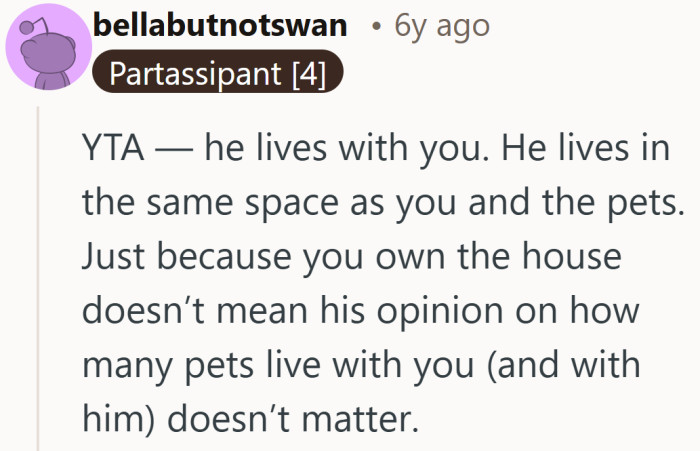
Apparently the mortgage may be solo, but the shared space is not.
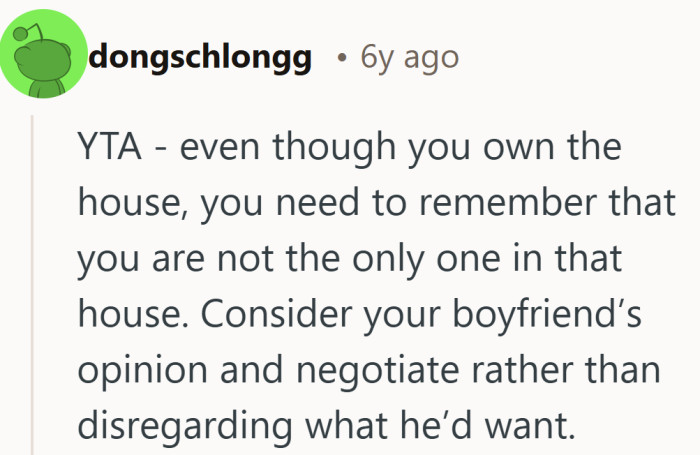
It draws a clear line between ownership and partnership, and how easily the two can collide.
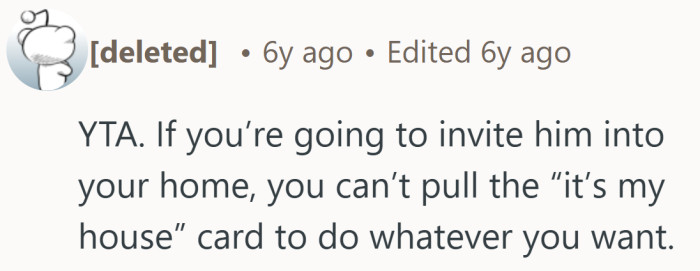
It reads less like judgment and more like genuine confusion about how this relationship even works.

Paying the bills does not automatically cancel out the fact that someone else calls it home.
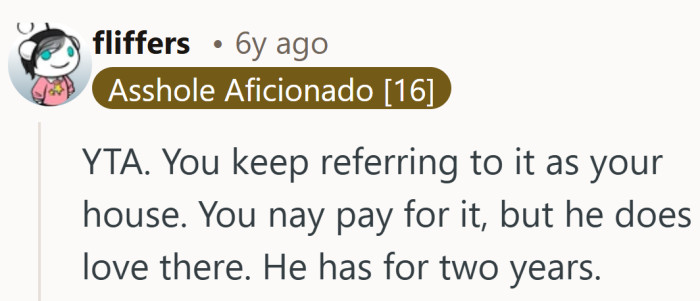
When the same point keeps getting made, it starts to feel less explanatory and more pointed.

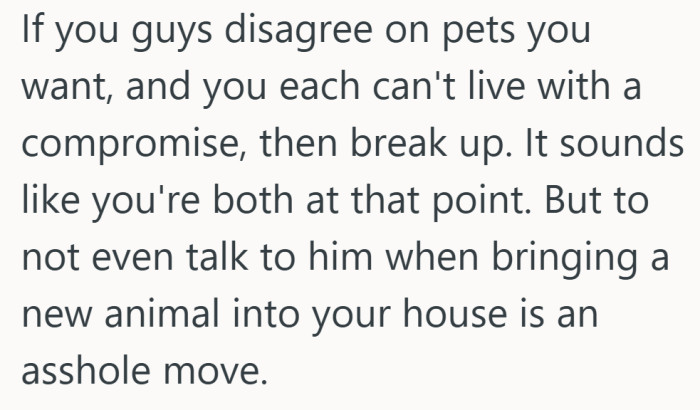
At this point, the advice stops circling the issue and lands squarely on the exit.
When she brings up the 23rd rescue and the “deal” they supposedly agreed to, you can feel how quickly this stops being about an animal and starts being about control.
The argument sharpens the moment ultimatums enter, because it is no longer “should we discuss this,” it is “you are crossing my limit.”
Once she starts pointing out that the mortgage is solo but the space is shared, his money talk starts sounding less like support and more like leverage.
And when the cohabitation never becomes “ours,” the eviction-level decision practically lands on the table by itself.
Some see devotion and consistency in standing firm for what matters most. Others see a breakdown in communication and shared decision-making that was bound to explode eventually. It raises a bigger question about modern relationships. When partners live together but contribute differently, who truly gets final say, and at what cost to the relationship itself?
Is love about adapting to your partner’s nonnegotiables, or about finding someone whose values never force that choice in the first place? Where would you have drawn the line here?
Share this with someone who has strong feelings about pets, boundaries, or both.
Now he is wondering if he really is the problem, or if he just got kicked out for ignoring the rules that came with rescue number 23.
Next, see what happened when a man collapsed after 60-hour work weeks, but she still demanded equal chores.
Share this article: