
Roommate Asks for Cats Apology After Room Invasion: AITA for Setting Boundaries?

A 27-year-old woman refused to treat her roommate’s “cat apology” like a get-out-of-jail-free card, and honestly, I get it. Her roommate, Lily, has a cat named Muffin, and Muffin has been doing more than just being cute, he’s been sneaking into OP’s room and wrecking stuff.
It started with a puzzle OP spent hours on, only for Muffin to somehow get inside and scatter pieces everywhere, chew some up, and lose one entirely. Lily promised Muffin would stay out after OP snapped, then the next day OP got a note on her desk that said, “I’m sowwy - Muffin,” plus a cat treat. Since then, Lily’s been pushing “supervised visits” like it’s a trust-building exercise, while OP is stuck dealing with the same boundary problem again.
Now OP has to decide if she’s “heartless” for refusing to let Muffin back into her room.
Original Post
I (27F) share an apartment with my roommate, Lily (26F), who has a cat named Muffin. Muffin is adorable but has a habit of sneaking into my room and knocking things over.
Last week, I came home to find Muffin had somehow gotten in and destroyed a puzzle I had spent hours working on. Pieces were scattered everywhere, some were chewed up, and one was lost entirely.
I was furious. I told Lily that Muffin needed to stay out of my room, and she agreed, but she also said Muffin felt bad and wanted to apologize.
I laughed it off, assuming she was joking. The next day, I found a little note on my desk written in Lily’s handwriting that said, 'I’m sowwy – Muffin.' Along with it was a cat treat.
I thought it was funny but didn’t change my stance. Since then, Lily has been passive-aggressively saying things like, 'Muffin’s just trying to make things right,' or 'You’re holding a grudge against a cat.' She even suggested that I let Muffin into my room supervised so she can 'earn back my trust.' I told her no and that I wasn’t interested in giving her cat another chance to destroy my stuff.
Now she’s calling me heartless for not accepting Muffin’s 'apology' and is acting like I’m being unreasonable. aita here?
Behavioral boundaries are essential in shared living environments to maintain harmony and respect among roommates.
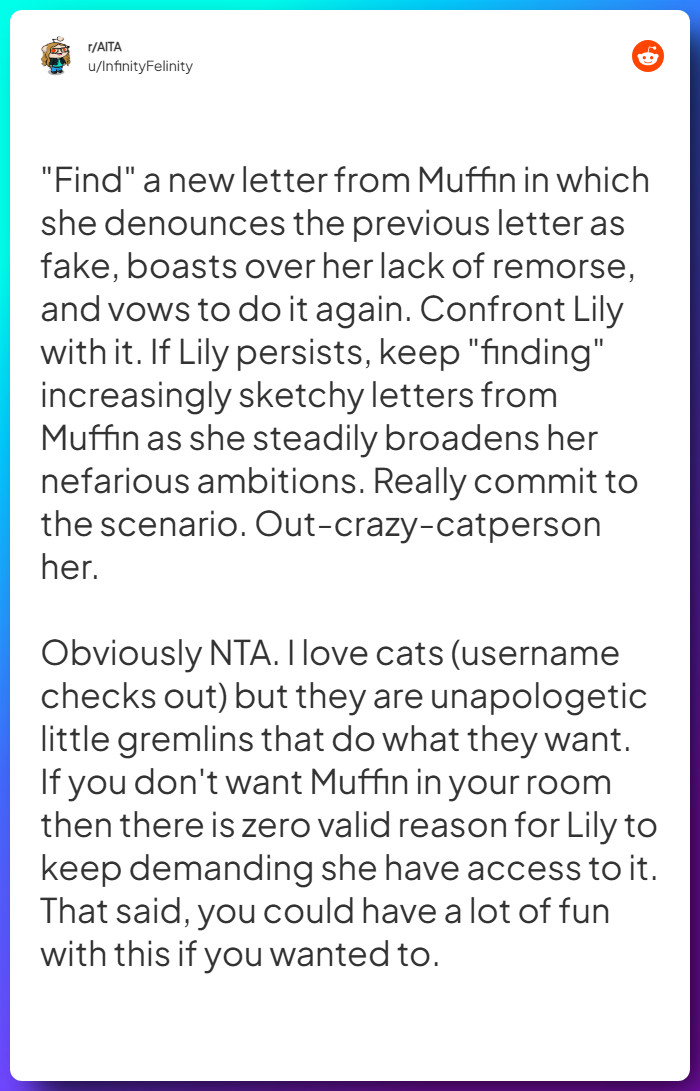
Comment from u/InfinityFelinity
Comment from u/[deleted]
![Comment from u/[deleted]](https://static.pupperish.com/posts/comments/comment_67e02448e1cc7.jpg)
That “I’m sowwy - Muffin” note would be funny once, but OP had just found her chewed-up puzzle pieces first.
The situation with Muffin the cat highlights the intricate dynamics that can arise between roommates, especially when a pet is involved. The chaos unleashed by Muffin's uninvited visits to the room serves as a reminder of how pets can complicate shared living arrangements. In this case, the emotional turmoil faced by the roommate is not just about the mess but also about boundaries and respect within the shared space.
Addressing the frustrations stemming from this feline invasion requires a thoughtful approach. Rather than reacting impulsively to the disruption caused by Muffin, engaging in open and honest dialogue can pave the way for a more harmonious living environment.
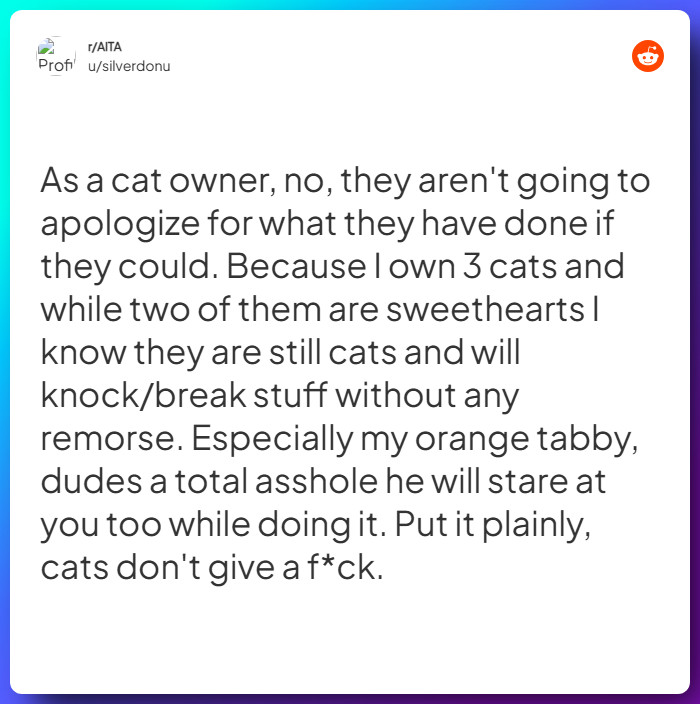
Comment from u/silverdonu
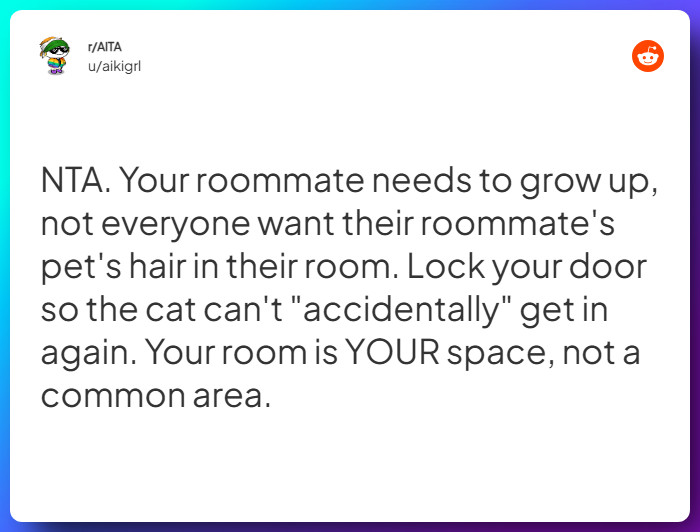
Comment from u/aikigrl
Lily agreed Muffin would stay out, then immediately turned the whole thing into a guilt trip instead of an actual fix.
This also echoes the Redditor whose roommate threatened to “confess” their cat’s weight to building management.
In the context of roommate dynamics, apologies are often seen as a vital tool for mending fences.
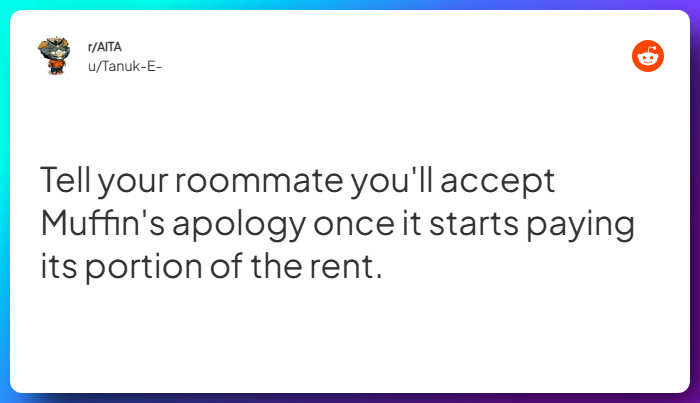
Comment from u/Tanuk-E-
Comment from u/WhatanAsh
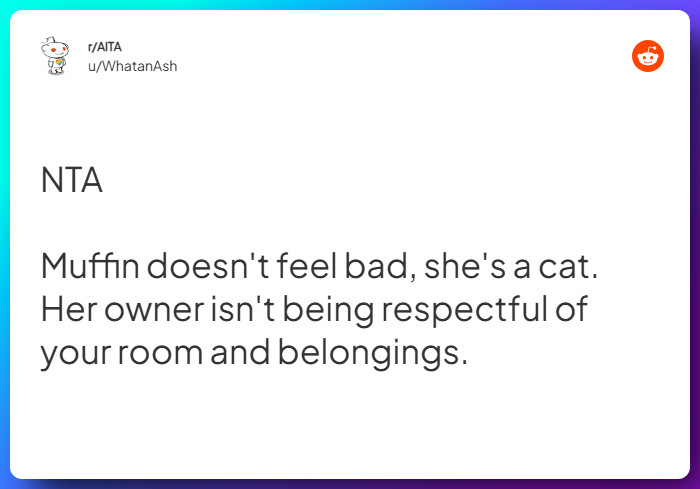
When Lily suggests supervised room time so Muffin can “earn back” trust, OP hears the same promise that already failed.
For practical conflict resolution, establishing a dialogue about the incident can be beneficial.
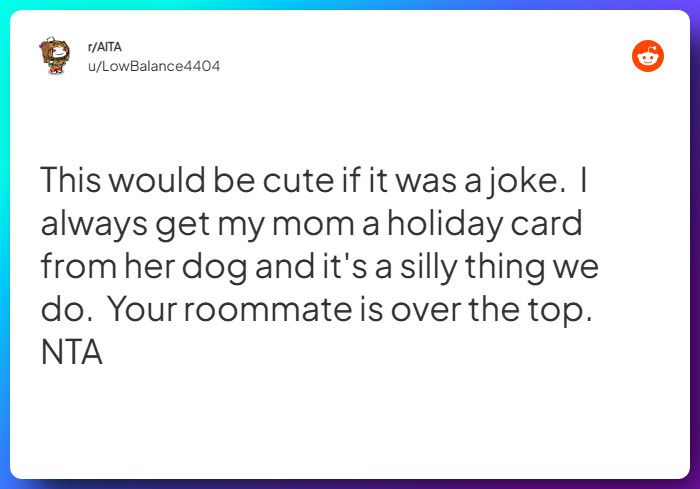
Comment from u/LowBalance4404
Comment from u/StAlvis
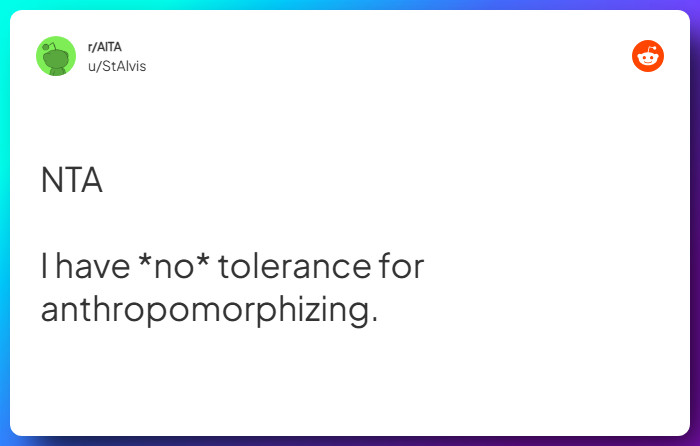
Now Lily’s calling OP heartless over boundaries, after Muffin treated OP’s room like an all-you-can-tear-up buffet.
Share your thoughts and experiences in the comments section.
Comment from u/ThisGirlIsFine
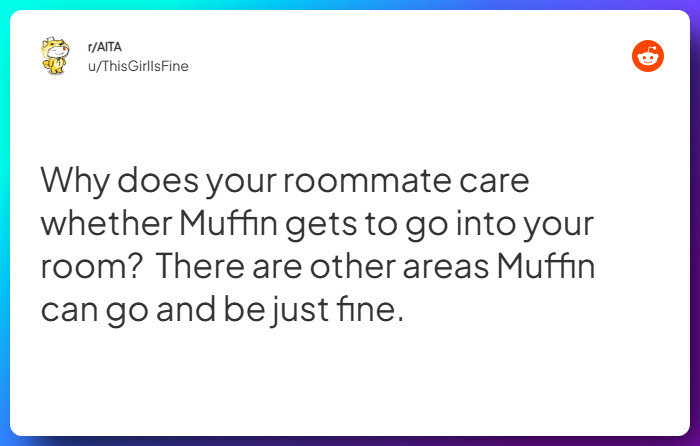
The ongoing issue with Muffin sneaking into the room illustrates a common challenge in shared living situations.
Muffin can say “sowwy” all day, but OP is still the one cleaning up the chaos.
Before you judge Lily, read how one woman had to physically move a roommate’s stubborn cat off her desk, then got warned.
Share this article:





