Cat’s Overly Playful Behavior Gets Tagged “Dangerous”, As Roommate Demands Owner Lock It Away Whenever She’s Around

A six-month-old kitten just wanted to play, but OP’s roommate was already treating it like a tiny threat. The cat’s “overly playful behavior” escalated fast, to the point where it got tagged “dangerous,” and suddenly everyone in the apartment was walking on eggshells.
Here’s the messy part: OP’s roommate doesn’t want to be around the cat at all, and she wants it locked away in her own room whenever she’s home. She also accused the kitten of being aggressive, claiming it attacked her multiple times, even though the whole situation started with normal kitten energy and chaos in a shared space.
And when you mix a new kitten, a roommate who feels unsafe, and a shared house that can’t agree on what “play” looks like, things get ugly fast.
Let’s dig into the details

OP’s roommate made it clear that she doesn’t want to be around her cat, and it should be kept in her own room
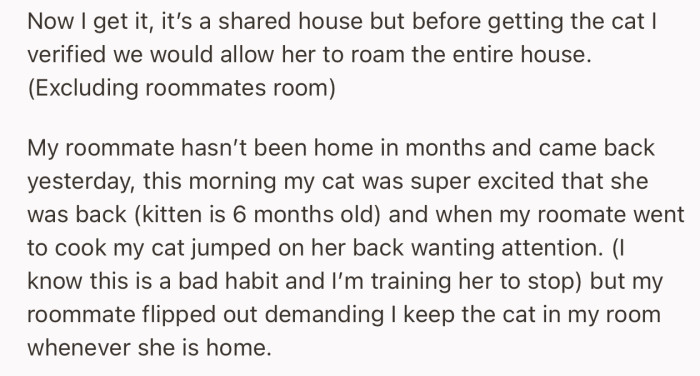
OP’s roommate further accused the cat of being agressive and attacking her multiple times
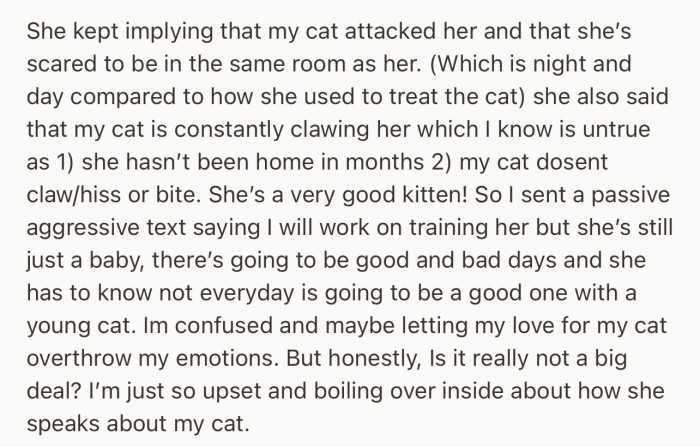
That’s when OP’s roommate made it a rule, saying the kitten should stay in her own room whenever she’s around.
The recent tensions in the shared house highlight a common issue many pet owners face: the misinterpretation of a kitten's playful behavior. As the six-month-old kitten thrives in its new environment, it is essential to recognize that energetic play is a normal and necessary part of its development. Kittens naturally express their energy through play, honing vital skills for both hunting and socialization. However, in a stressful atmosphere, such exuberance can be perceived as aggression, particularly by those unaccustomed to feline antics.
To bridge the gap between the kitten and the concerned roommate, a deeper understanding of feline behavior is crucial. By educating those sharing the space about the motivations behind the kitten's actions, it is possible to foster a more harmonious living situation. Open dialogue about the kitten's playful nature could help mitigate the misunderstandings that have arisen, allowing everyone in the household to coexist more peacefully.
Future Preventative Strategies
To prevent similar conflicts in the future, potential pet owners should consider their lifestyle and living arrangements before adopting a pet. Understanding the energy levels and needs of kittens can help ensure compatibility with household dynamics.
Additionally, implementing a trial period for new pets allows roommates to gauge their comfort levels and adjust accordingly. This proactive approach can establish a foundation for a balanced and peaceful coexistence in shared living spaces.
We gathered some interesting comments from the Reddit community

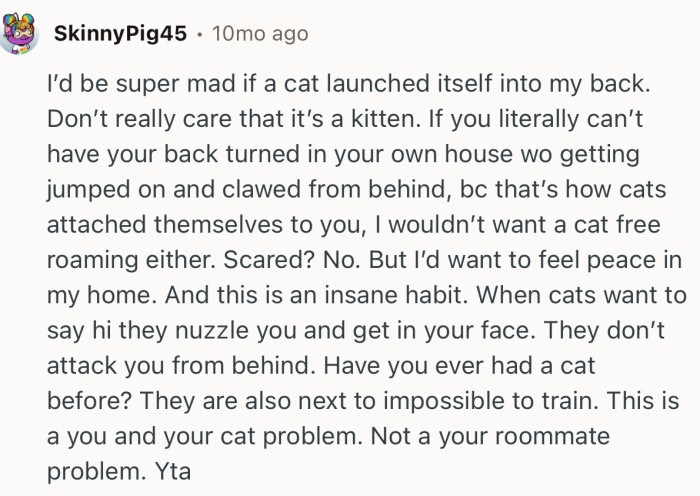
“I’d be super mad if a cat launched itself into my back. Don’t really care that it’s a kitten.”
“YTA. I’m sorry but if I feel unsafe from a car jumping on me I’m going to let my room mate know.”

The tension really flared after she accused the six-month-old cat of attacking her multiple times, not just zooming around like a kitten does.
Establishing a safe space for both the pet and the roommates is important. Using positive reinforcement techniques can teach the kitten appropriate play behaviors.
Creating a separate area for the kitten with toys can help manage its energy levels and reduce conflicts. Research indicates that when pets have designated spaces, it often leads to more peaceful cohabitation.
“Maybe your roommate has never had a kitten and didn't know how destructive they are.”

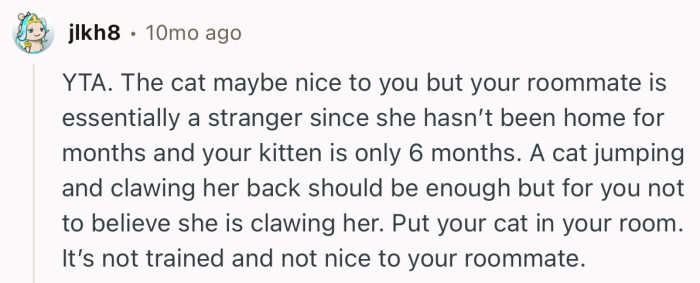
“Put your cat in your room. It’s not trained and not nice to your roommate.”
“YTA You really shouldn't have a pet in shared accommodation.”

Meanwhile, OP is trying to live with a cat that’s thriving in its new home, but the roommate keeps seeing “danger” every time it gets playful.
The conflict brewing between the roommates, ignited by the overly playful behavior of a six-month-old kitten, reflects a deeper issue of differing expectations and stress levels in shared living situations. The article highlights the importance of open communication as the key to resolving these tensions. Establishing a dedicated time for both roommates to express their feelings and set shared guidelines for the kitten’s behavior could pave the way toward a harmonious living environment.
Utilizing 'I' statements during these discussions may help reduce defensiveness and encourage a more constructive dialogue. The emphasis on empathy and understanding is crucial, especially when navigating the complexities of cohabitation and the introduction of a new pet into the household dynamic.
“I get you love your little kitten, but your roommate doesn't have to.”

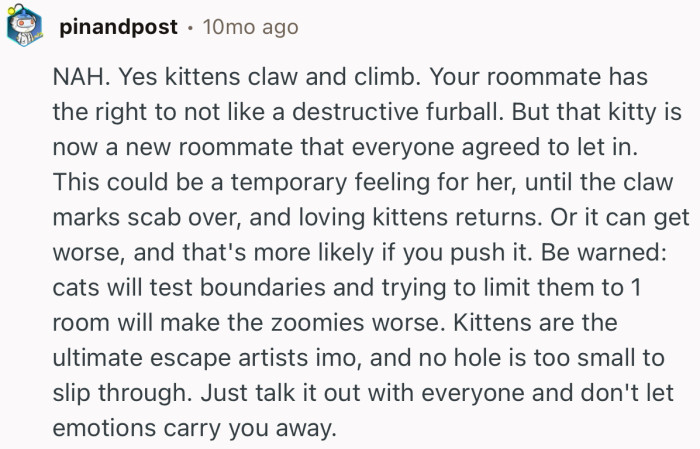
“Your roommate has the right to not like a destructive furball.”
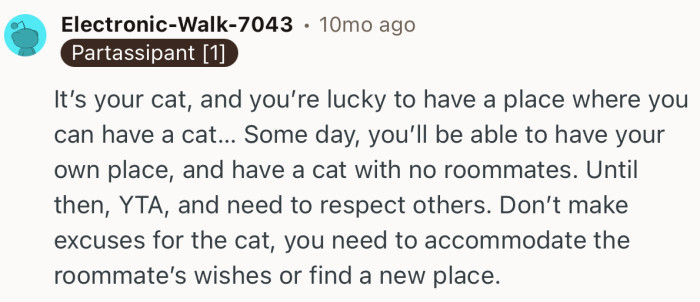
“Don’t make excuses for the cat, you need to accommodate the roommate’s wishes or find a new place.”
Even the comments got heated, with one person saying they’d be mad if a cat jumped on their back, and another bluntly calling OP the asshole for not taking the fear seriously.
Engaging kittens in interactive play can channel their energy positively, reducing the likelihood of overly boisterous behavior.
The story captures that fine line between shared living and personal boundaries.
Pets can bring joy and comfort, but they can also spark unexpected conflicts when rules shift or comfort zones clash.
Situations like this often need calm conversations, not accusations. Hopefully, they can talk things out and find a middle ground that suits both parties.
What do you think: was the roommate justified, or did she take things too far after being gone so long?
Share your thoughts in the comments.
This situation highlights how easily misunderstandings can arise in shared living spaces, especially when boundaries and expectations aren’t clearly communicated. The roommate’s strong reaction may stem from a combination of anxiety, unfamiliarity with the kitten's behavior, and possibly a sense of loss of control over her environment. Meanwhile, OP’s frustration suggests a clash of values around pet ownership and respect for personal agreements, emphasizing how critical it is to have open dialogues about comfort levels and boundaries in shared settings.
In the context of shared living arrangements, the interplay between pet behavior and roommate dynamics can quickly become complicated. The article illustrates how OP's playful kitten, while a source of joy, has also led to friction with the roommate, who feels uncomfortable with the cat's exuberance. This situation underscores the critical need for open dialogue about individual comfort levels regarding pets in communal spaces. For example, OP may need to consider the roommate's request to keep the kitten confined during her presence, which highlights the necessity of compromise in shared living situations. By acknowledging and addressing these emotional and social needs, both the kitten and the roommates can coexist more peacefully, ensuring a vibrant home atmosphere while respecting each other's boundaries.
Nobody in that apartment is going to feel relaxed until the kitten and the roommate are finally on the same page about what “play” means.
Ready for more litter-box fallout, read how a pet parent ordered her roommate to keep her kitten away from their cat’s mess.
Share this article: