
Curious Online User Wonders How Service Dog Owners Handle Their Dogs That Need To Potty While On The Bus

A Reddit user stumbled into a very specific “how does this work?” moment after noticing something that seems impossible until you’ve seen it in real life. Service dog owners get their dogs onto buses and into buildings every day, and the internet can’t stop wondering what happens when nature calls mid-ride.
The post zeroes in on adult service dogs, the kind that can hold it for a long time, but also the kind that still need to poop and pee like everyone else. Then it gets personal fast, because the story includes a real memory from when the poster’s dog was just a 4-month-old puppy, stuck waiting through a Jerusalem travel delay that turned into a full-on “we’re about to walk you NOW” emergency.
And that’s where the answer gets way more practical than the original question.
Adult service dogs are good at holding their poop and pee in.
In most cases, the dog will wait. Adult dogs can normally hold their water for very long periods.
When our first dog was 4 months old, we were invited to a wedding in Jerusalem. We walked him before we left in the mid-afternoon and hoped we’d get a ride home afterwards.
The ride didn’t pan out, and we stayed overnight in Jerusalem.
We took an early bus home and arrived at midday. I turned to my husband and said, “I expect we’ll find a mess in the house.
It’s been too long.” When we opened the door, the poor dog was dancing with need.
He had waited the whole time.
Zev took him out immediately, and he waited until he got to a suitable place before he relieved himself.
I searched the apartment and found nothing. He had waited. There were no puddles or piles in the apartment.
They are taught to potty on command.
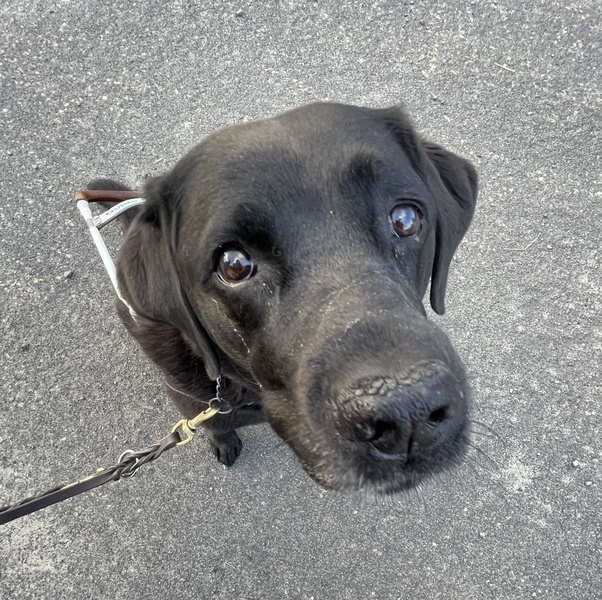
Image: Leif, my black Labrador guide dog, looks up into the camera.
I have worked with Leif, my black Labrador guide dog, for over ten years now.
Believe it or not, there is a very simple solution to this problem, speaking in terms of guide dogs used by blind handlers.
From a young age, the puppies and dogs are trained to relieve themselves on command. They may take a minute or three to actually settle down to relieve, but before we get on a bus or enter a building, we find a convenient place to relieve our dogs and give the command “Business.”
The dog then goes about doing whatever it needs to do. If we need to, we clean up after the dog.
Since the dog has—or should have—been relieved before one gets on a bus or goes to a place where it might be difficult to allow it to relieve, it can be three or four hours for a medium to large dog to be desperate to go.
On a longer journey, there might be bathroom breaks for the humans on board the bus. These might be fifteen or twenty minutes or so every couple of hours. The handler should take all such opportunities to relieve their dog at such stops.
Of course, there may be absolute emergencies. The dog may have an upset stomach. Sometimes one can hear such conditions; if I can hear Leif’s belly grumbling for any reason and suspect a stomach upset, he will be staying at home, and I will use my long white cane for a day or two.
But in the case where that emergency does happen, I sit close enough to the bus driver to be able to ask if they can make an emergency stop because I think my dog is having a stomach problem. Most bus drivers I have found are very happy to allow a guide dog handler to exit the bus quickly in order to avoid the problem of having to clean up a pile of dog mess back at the garage.
That happened only once to Leif and me, and some of the other passengers took that unplanned break to pop into a nearby orange grove and avail themselves of some windfalls.
The whole thread starts with the OP saying adult service dogs are good at holding it, then immediately undercuts that with the Jerusalem trip where the dog waited way too long.
Service dogs play a crucial role in the lives of individuals with disabilities, and understanding the etiquette surrounding them is essential.ada.gov'>Americans with Disabilities Act, service animals are trained specifically to assist individuals with disabilities, making it imperative that the public respects their working status. This includes allowing service dogs to focus on their tasks without unnecessary distractions, such as engaging them when they are performing a necessary function.
For instance, while on public transport, a service dog should be allowed to wait patiently, as they are trained to remain calm and focused, which is vital for their handler's safety and comfort.
It's also the owner's responsibility to find opportunities for potty breaks.
Most dogs can go a minimum of four hours between eliminations, so it would be unlikely they would need to go before deboarding. Anyone owning a dog, especially someone with a service dog, should use proper opportunities for those breaks.
The ones with potty issues are mostly the very young canines and the old ones.
Unlike us people who can’t wait one second past the urge to go (just kidding), dogs can wait a while if there is a need to wait. Service dogs are well-trained adult dogs.
My two dogs, both of whom are 7 years old, never have accidents in the house. If I know I’m leaving, I take them out right before I leave.
In my experience, the little dogs are the most difficult to get completely and 100% accident-free. It’s the very young and old dogs that have the potty urgency issues.
Once the early bus ride lands them back home in the middle of the day, the poster opens the apartment door expecting a mess, but finds nothing, because the dog held it until they got a suitable spot.
Service animals play a crucial role in supporting individuals with disabilities, including emotional and psychological conditions.
Dogs are able to hold for long periods. Service dogs are especially trained when to relieve themselves.
Real service dogs are trained to go at certain times when it is suitable to do so. At the office building where I worked, we had an area just outside in the garden arranged for this, with a drain and a hard paved area that was easy to clean, which was cleaned and hosed down by the company every day. The owners took their dogs (mainly guide dogs) out at set times to a routine.
Dogs can go for long periods without needing to relieve themselves, and they are trained to do so. A service dog will wait until the journey is over.
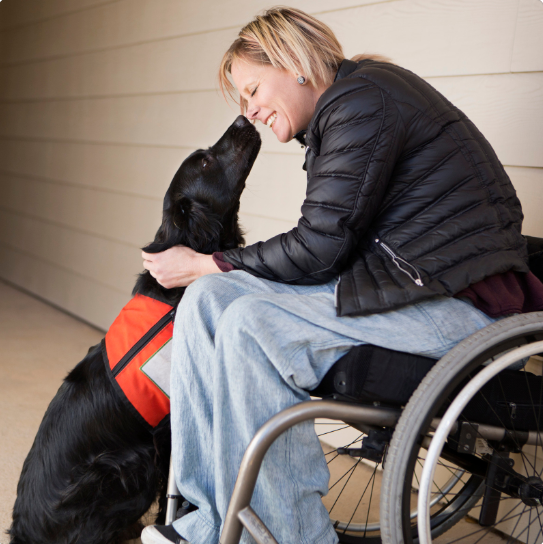
Practical Recommendations for Public Awareness
To enhance public understanding of service animals, community education programs can be implemented to inform people about the role and rights of service dogs. Additionally, promoting stories of successful service animal partnerships can humanize the experience, encouraging a culture of respect and inclusion.
Service dog handlers could also benefit from training on how to navigate public situations effectively, including how to advocate for their needs while ensuring their dog's well-being.
It’s like the airplane seat debate, where passengers wanted to sit near the service dog anyway.
That’s when the story shifts from “can dogs hold it” to “how do they get trained,” pointing to the command “Business” and the quiet routine that happens before the bus doors even open.
In the context of service dogs managing their bathroom needs while out in public, it is vital to cultivate an environment where understanding and empathy prevail. The article highlights the importance of these skills for service dogs, as relieving themselves indoors can result in their handlers being asked to leave public areas. By increasing public awareness about the challenges faced by service dog owners, we can create a more supportive atmosphere. This shift in perception can enhance the experience not just for those with disabilities but for everyone who shares these communal spaces, fostering a culture rooted in respect and consideration.
In summary, grasping the nuances of service dog etiquette is essential for creating a supportive atmosphere for individuals with disabilities. By acknowledging the unique needs of service dogs, especially their bathroom training as highlighted in the article, we can improve the public's interaction with these vital animals. This understanding not only benefits the service dogs but also enriches the experiences of their handlers, ensuring a more inclusive community for all.
How often the dog goes potty depends on their owner. Generally, these working canines can potty twice a day.
The owner can even create a schedule, and the dog will eventually learn it. In the end, it's really up to what's best for the owner and their service dog.
Then it lands on the real-world logistics, like humans getting their own stops every couple of hours, while the handler has to use those moments to give the dog a chance to go.
These interactions can be particularly beneficial in stressful environments like public transport, where individuals may feel overwhelmed.
Balancing Rights and Responsibilities
The presence of a service dog on public transport also raises questions about the rights and responsibilities of both the handler and other passengers. Legal frameworks, such as the Americans with Disabilities Act (ADA), outline these responsibilities, but public understanding can vary greatly. This discrepancy can lead to uncomfortable situations for service dog handlers, who may feel scrutinized or judged by others.
Education and awareness campaigns can help bridge the gap between legal rights and public perception, fostering a more inclusive atmosphere for individuals with service animals.
This situation also highlights the importance of empathy in public spaces.
Moreover, the responsibilities of a service dog owner extend beyond just the dog’s training; they must also ensure that their pet is well-behaved in public settings. Research from the Journal of Applied Animal Behavior Science indicates that well-trained service dogs contribute to a positive public perception of service animals, which can enhance acceptance and understanding within the community. This highlights the importance of responsible ownership and public education about the role of service dogs.
Educating the public about service dog etiquette can promote inclusivity and reduce misunderstandings, ultimately benefiting both the service dog and their handler.
The dog wasn’t “fine,” it was trained, timed, and waiting for the exact moment the handler could make it happen.
Wait, the sitter refused to keep the dog inside, and it wasn’t housetrained, either.
Share this article:





