
Mother Dismissive Of Autistic Teenager's Feelings About Getting A Puppy, Thinks That It's Bratty Of Her To Disagree

A teen wanted a simple win, but her mom heard “no” as “attitude.” In a Reddit post, the OP lays out why adding a new puppy to the household is a nightmare for her current situation, especially with her existing Cockapoo and her autism-related sensory needs.
Here’s the messy part, her mom brushes it off as bratty, not valid. The OP says her Cockapoo is not good with other dogs, and she also worries about the puppy’s shedding because her allergies already make life hard. Then her mom and boyfriend keep pushing the idea anyway, turning what should be a family discussion into a full-on feelings vs. control showdown.
And once the mom labels her concerns as disrespect, the whole dog plan stops being about the puppy and starts being about whether the OP’s voice even counts.
The teenager wants to be judged by online users after disagreeing with her mom about getting a new dog.
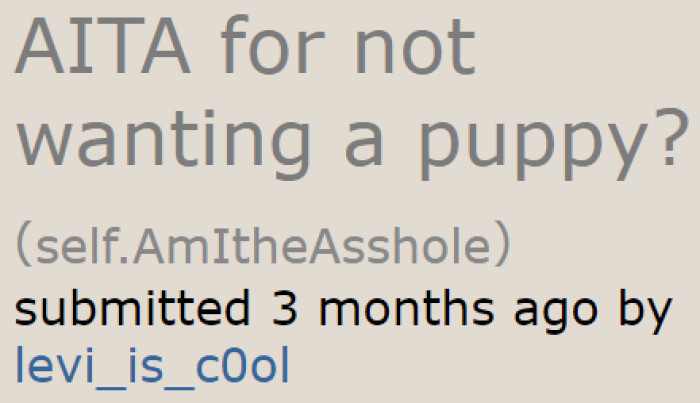
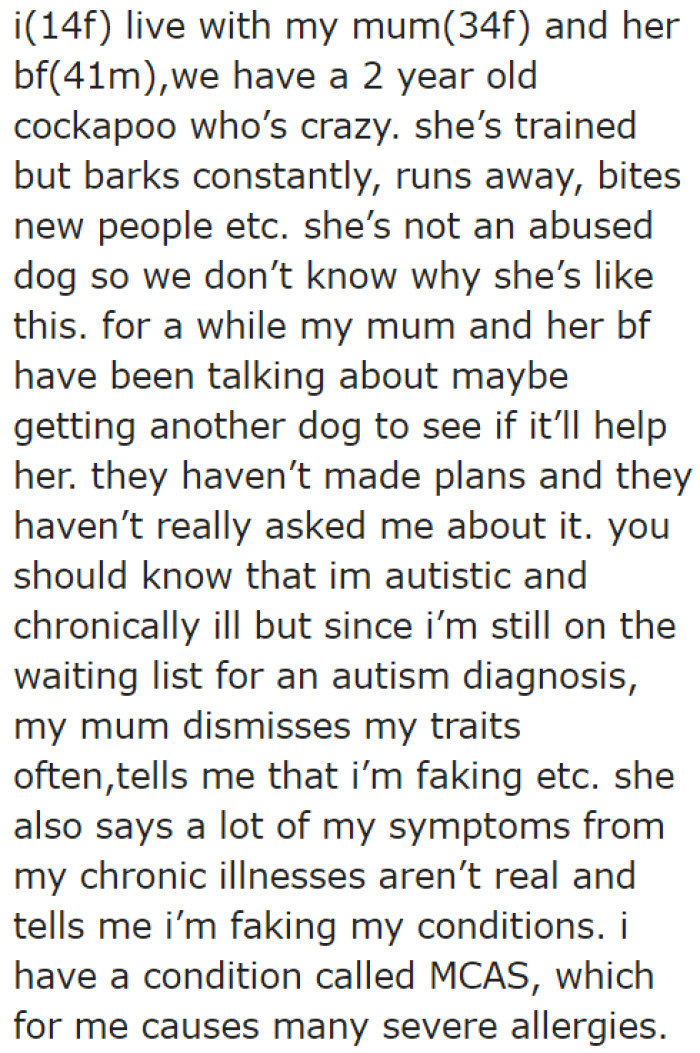
She explains why it's a bad idea to get another dog. Her pet Cockapoo is not good with other dogs.
The OP also explains her condition.
She thinks that she can't handle a dog that molts because of her allergies.
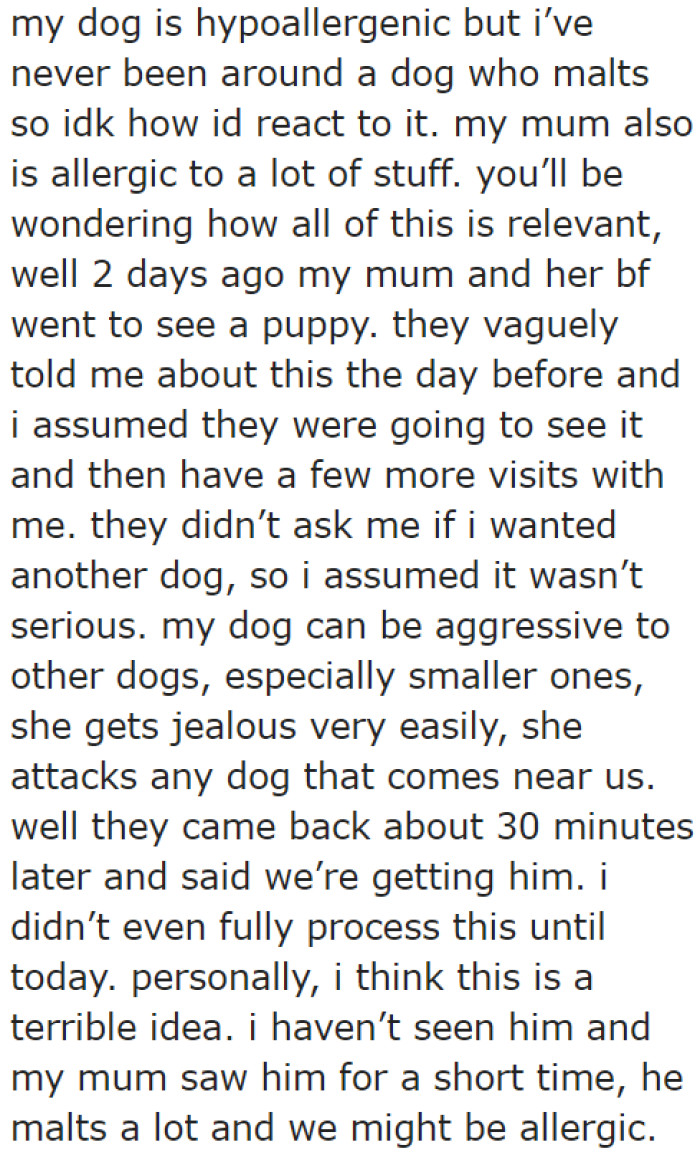
The OP kicks things off by explaining why her current Cockapoo struggles around other dogs, and why that matters before a new puppy even enters the picture.
This scenario underscores the intricate dynamics of parental expectations and their profound effect on a teenager's emotional well-being. The conflict arises when the mother dismisses her daughter's feelings about the prospect of getting a puppy, viewing her objections as bratty rather than valid expressions of concern. This reaction is emblematic of a broader issue where parents may inadvertently impose their desires onto their children, resulting in significant misunderstandings.
The teenager's struggle to assert her feelings in this situation is especially critical as adolescents are navigating their quest for autonomy. Ignoring or belittling these feelings can lead to a sense of invalidation, which is detrimental during such a formative period. The choice to welcome a new pet into the home should involve the input of all family members, particularly those who may have reservations, as their voices deserve to be heard and respected.
The mom, unfortunately, is dismissive of the OP's sensory issues. She thinks that her daughter is just being a brat.
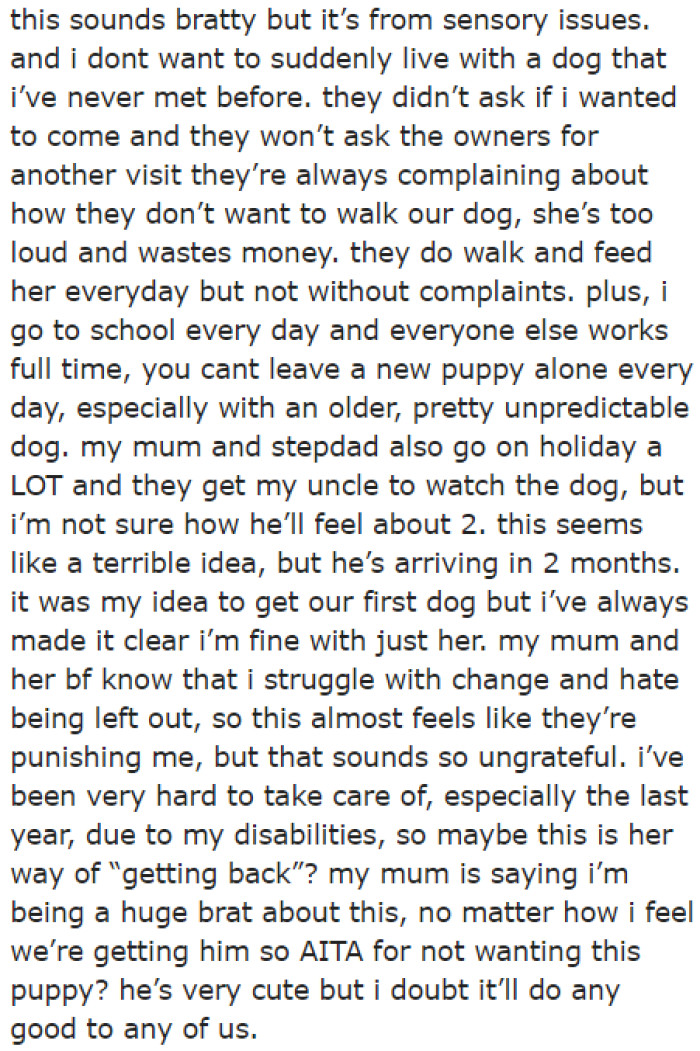
No matter how young a family member is, they need to have a say when it comes to having a dog.
A Redditor thinks that the OP's mom and her boyfriend are being selfish.
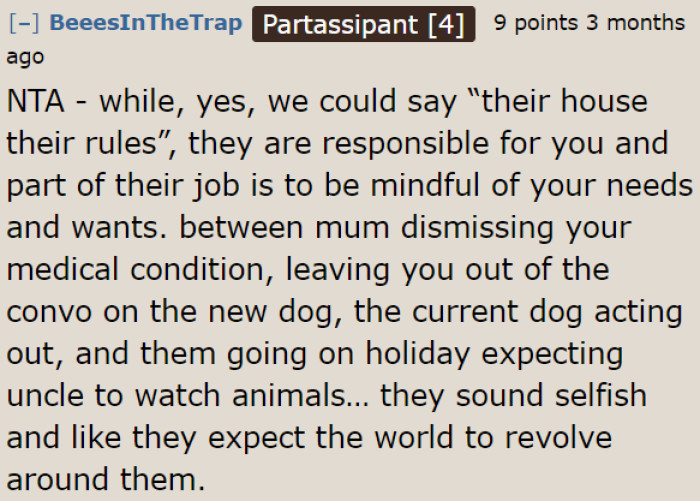
Why is the mother not considering their aggressive dog?
Then the sensory and allergy issues come up, and it’s clear the mom is hearing “I can’t” as “I’m being difficult.”
This is similar to the woman who told her mom she can’t handle her untrained dog anymore and sought a second opinion.
A study published in the Journal of Abnormal Psychology found that children who feel their emotional experiences are minimized by their parents are more likely to develop anxiety and depression. This underscores the importance of validating children's feelings, especially when they express concerns about their environment.
By recognizing and addressing these feelings, parents can foster healthier emotional development.
A mother understands the OP's sensory issues. Unfortunately, the OP's mom doesn't.
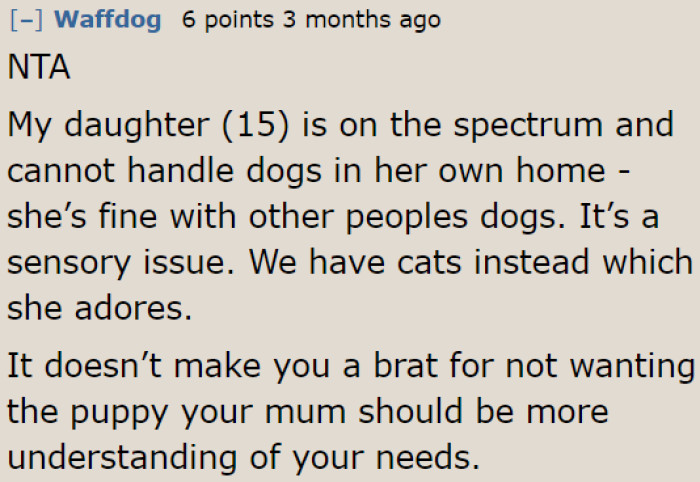
The dog probably lacks socialization; hence, the aggression.
One Redditor isn't on the OP's side, though. He thinks that the mom has the final say, whether she wants a dog or not.
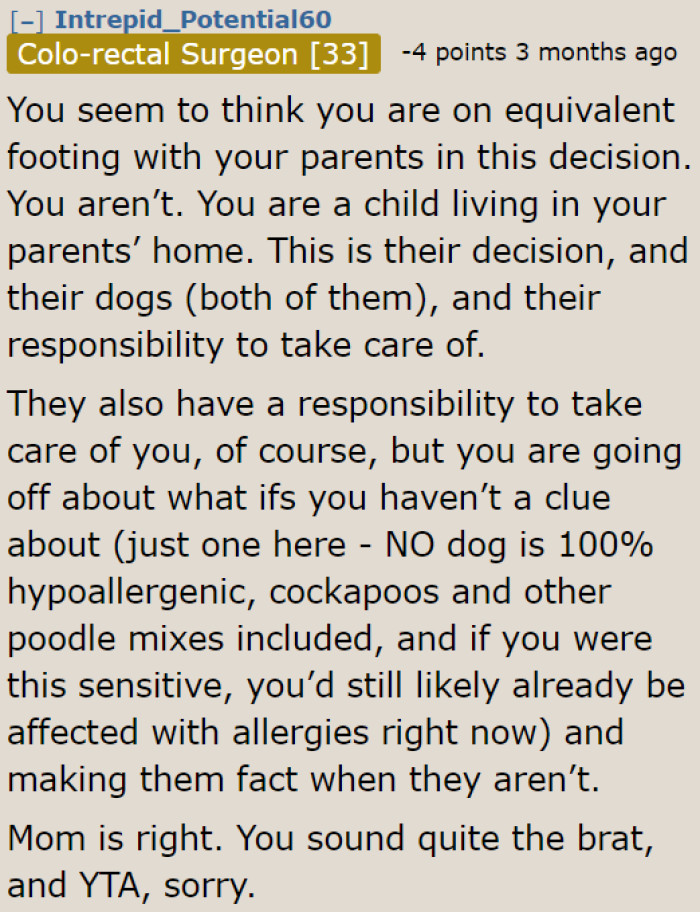
When the OP’s mom calls her disagreement bratty, the argument shifts from pet logistics to whether the teen’s feelings get dismissed or respected.
A Redditor steps in with the harsh take that OP’s mom and her boyfriend are being selfish, especially while they ignore how the household’s dog situation could go sideways.
When a family member has autism, it can complicate emotional exchanges significantly.
A user thinks the OP is the most responsible one in this situation because she's considering other factors in their home aside from her condition.
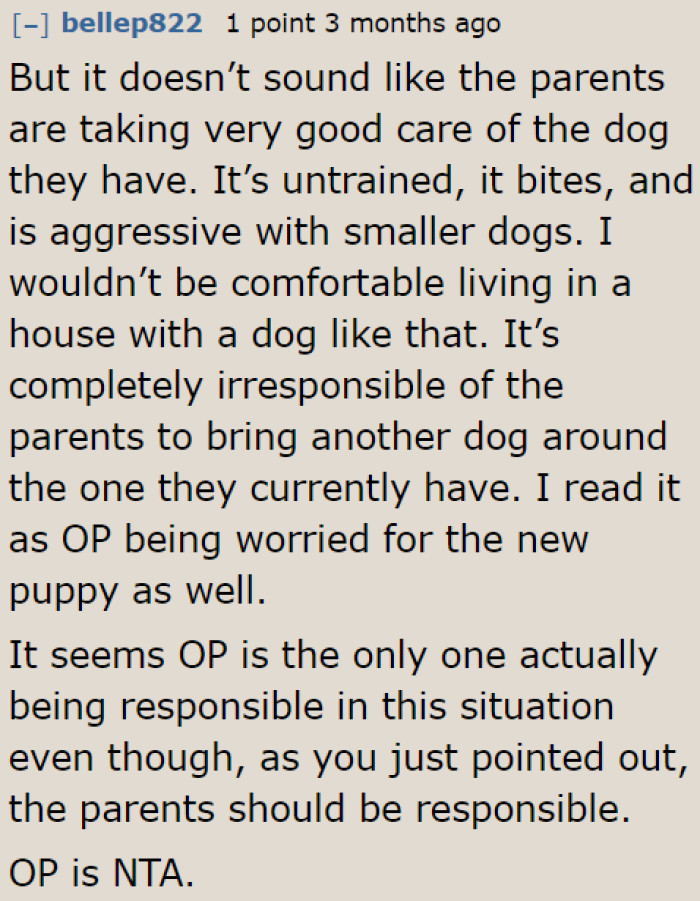
Encouraging open communication about feelings can help bridge the gap between family members.
The tension between the mother and her autistic teenager over the decision to get a puppy underscores the critical need for parents to validate their children's feelings. Dismissing the teenager's concerns as bratty not only stifles open communication but also risks damaging the emotional well-being of family members. The article highlights how the OP's feelings about the chaotic nature of their current dog are brushed aside, which can lead to deeper misunderstandings within the family.
As families grapple with such complexities, it becomes evident that fostering an environment where every member feels heard is essential. This approach not only promotes a healthier dynamic but also encourages personal growth and mutual respect, crucial elements for nurturing relationships in any household.
The puppy debate isn’t really about the puppy, it’s about who gets to decide what happens next in OP’s home.
See why this teen refused to take no for an answer about adopting.
Share this article:





