
Dad Tricks His Son Into Believing Made-Up Facts About Birds, Receives A Phone Call From Son's Teacher Because Of It

One dad turned a quick joke about birds into a full-blown school call, and the whole thing somehow got even funnier from there.
In this Reddit story, a father tells his son that birds in different places have different accents, then keeps the bit going until the boy brings it up at school. What starts as harmless trolling turns into an awkward moment with a teacher, a confused kid, and a dad who realizes he may have gone a little too far.
Then the joke takes an unexpected turn, because the made-up bird fact is not entirely made up after all.
It all started with a call home from OP's son's teacher about him being told that birds have different accents
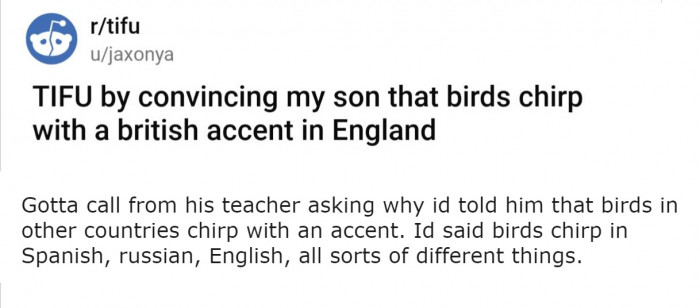
Though OP's story didn't just stop at birds, he totally went with it being applicable to all animals

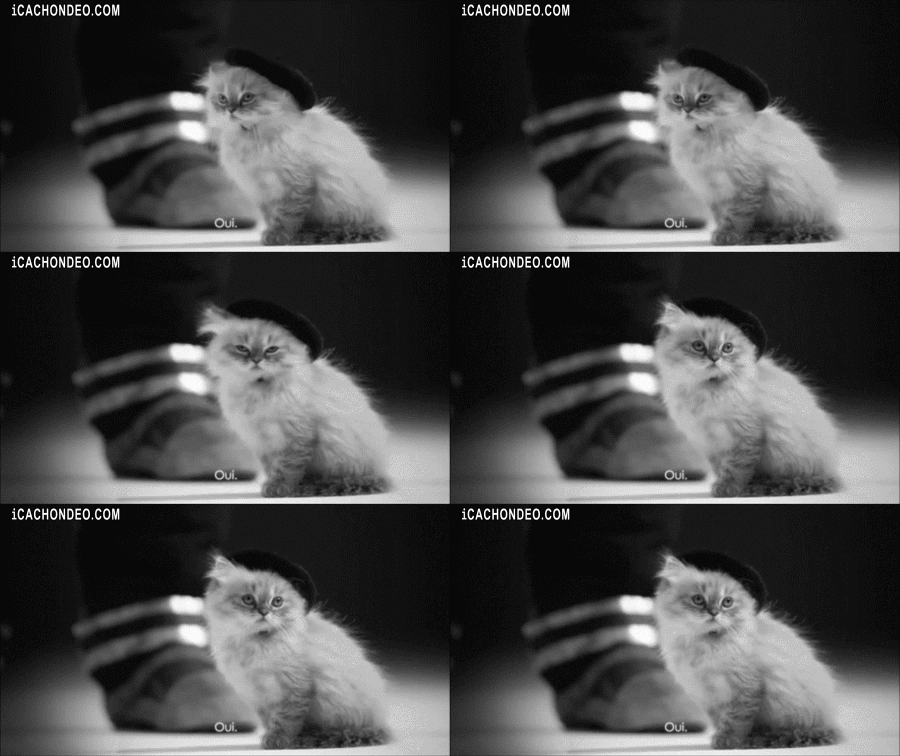
Oui, oui, meow-nsieur.
The recent incident involving a father tricking his son into believing false facts about birds underscores the profound impact of parental influence on a child's perception of reality. Such playful deception, while often intended to amuse, can inadvertently sow seeds of confusion and mistrust in a young mind.
When children absorb made-up information from their parents, they may accept it as truth without question. This highlights their impressionability and the potential long-term consequences of such interactions. If the child later uncovers the truth, it can lead to a dissonance that challenges their trust in parental guidance.
This scenario serves as a reminder of the responsibility that comes with parenting. The line between playful storytelling and misleading information can be thin, and navigating it requires awareness of the lasting impressions we leave on our children.
Though OP points out his daughter (son's twin) knew he was full of himself

If there are multiple kids, at least one is a little genius.
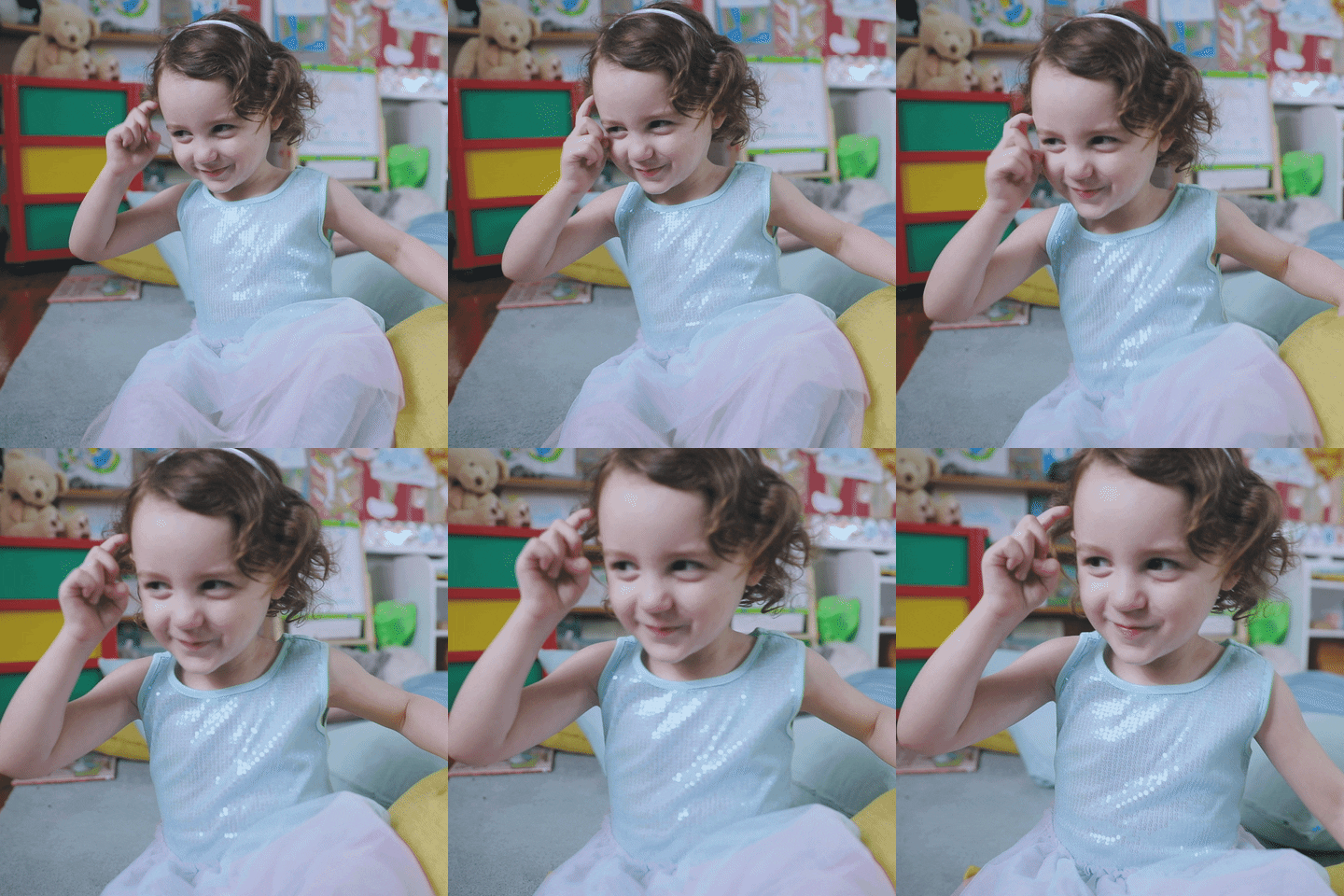
OP loves "trolling" his kids, and had forgotten about this specific joke

This situation illustrates the concept of cognitive dissonance, where conflicting beliefs can create discomfort for both the parent and the child.
When confronted by his son’s teacher...

At least he owned up to it.
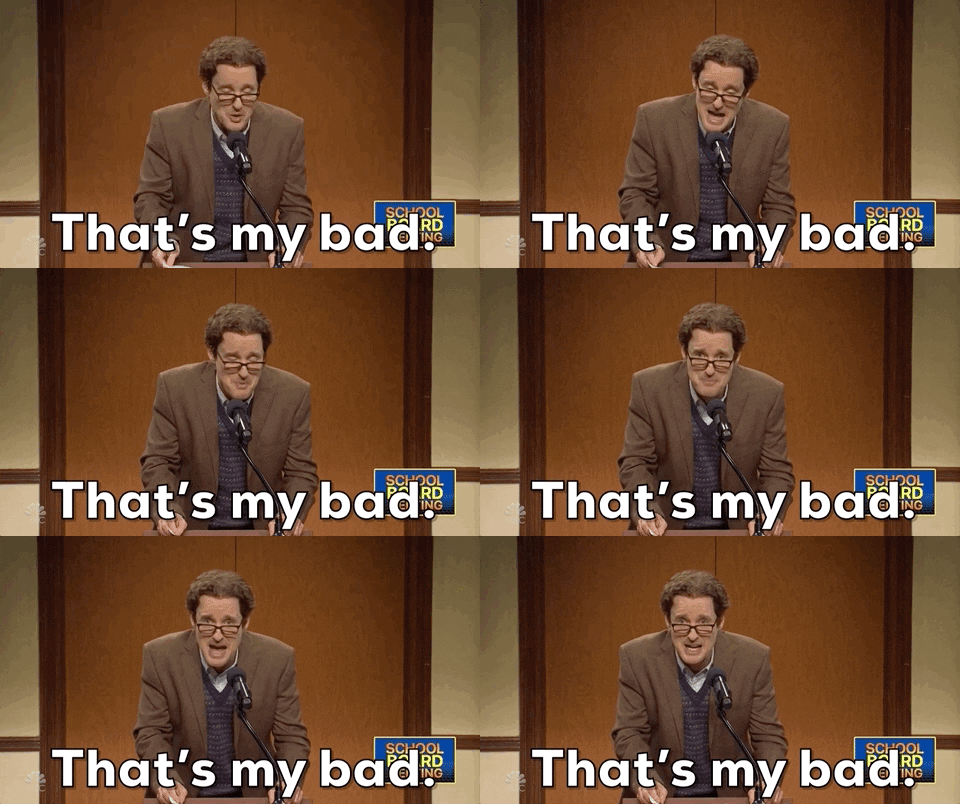
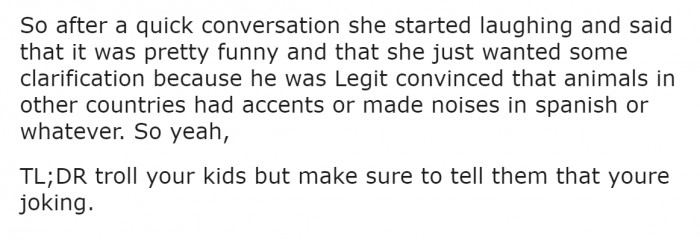
Luckily, the teacher seemed to find the whole thing funny and had only called for clarification
Incorporating educational components into playful narratives can enhance learning while fostering a sense of trust.
Up until a certain age, you gotta be sure the kid knows when you're joking.
But as it turns out, OP wasn't completely off base
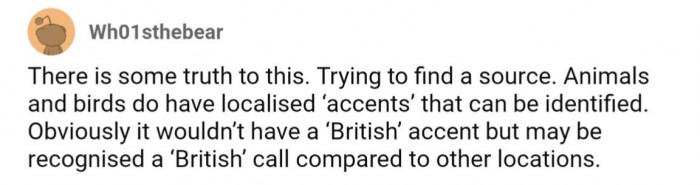
Technically, he wasn't wrong.
This approach not only nurtures a child's creativity but also builds critical thinking skills, encouraging them to question and seek out truths.
As research suggests, fostering an environment where children feel safe to explore ideas promotes healthy cognitive development and autonomy.
This is also like the Redditor who proved their mom wrong with a PowerPoint full of facts.
An eff-up turning into a literal learning experience
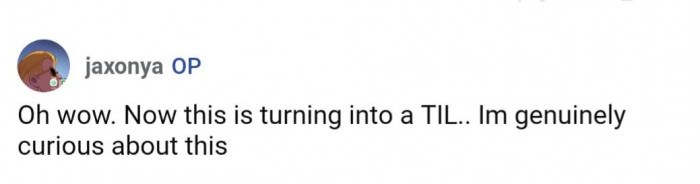
Not like, *that* British
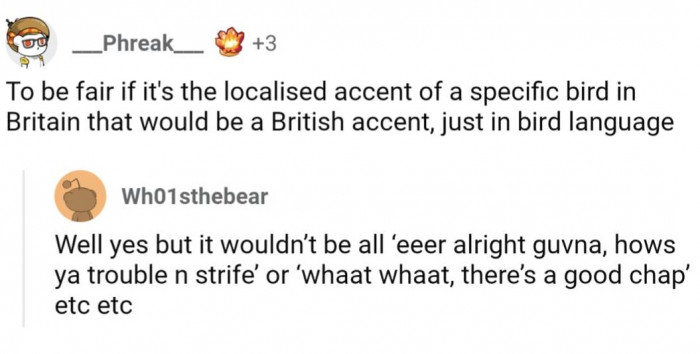
Unless...
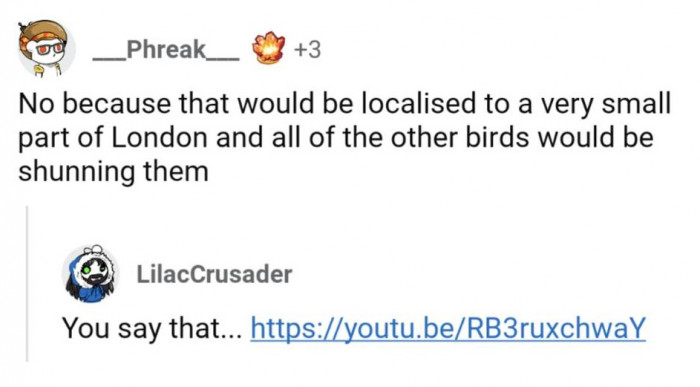
The video that's linked above.
Apparently, it's not just birds that have accents
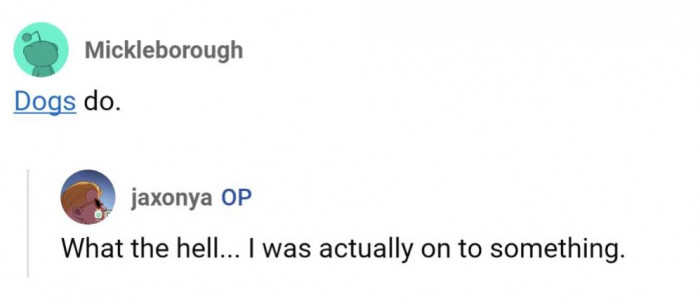
OP's mind is getting blown.
Dogs and cats have accents, too

And COWS!?
I really hope there are cows with stereotypical Minnesotan accents.
Whales even have different dialects

Hullo!
Amazing how that works
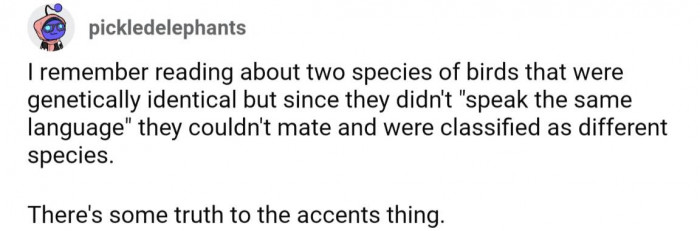
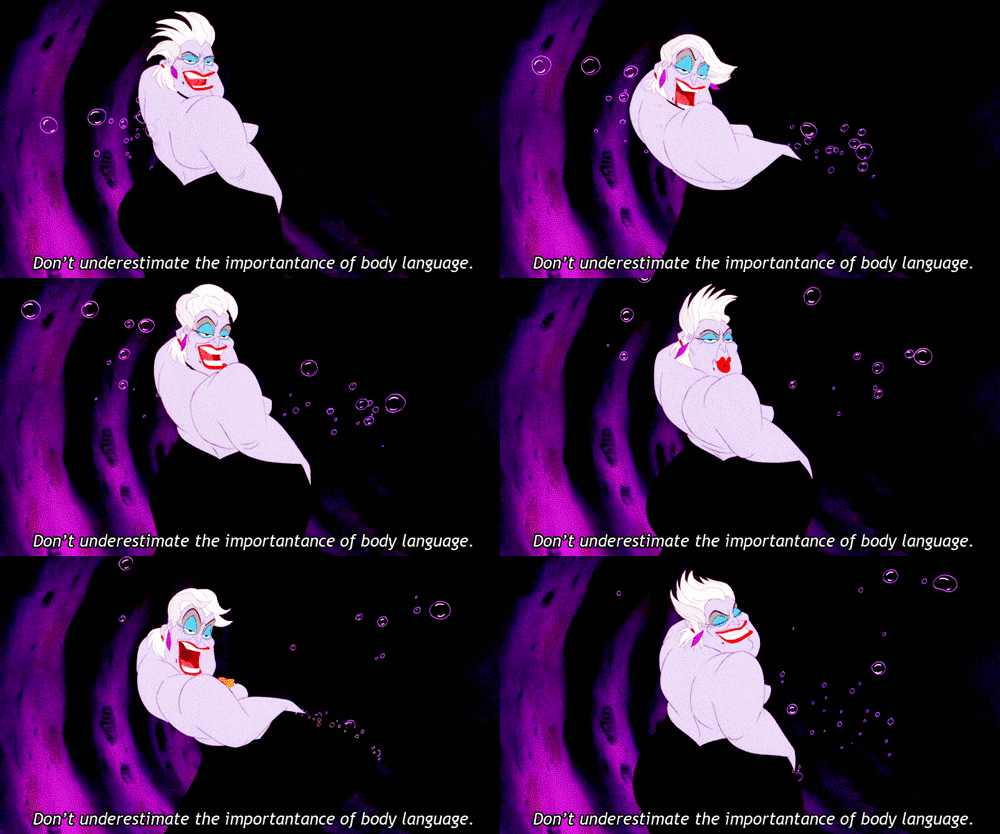
Who knew birds needed more than body language and mating dances
Cool tip!

Gonna be listening to birds today

Parents have *always* been testing the limits of what their kids will believe
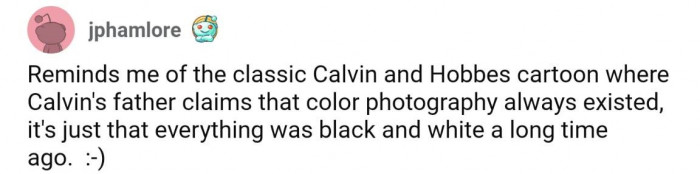
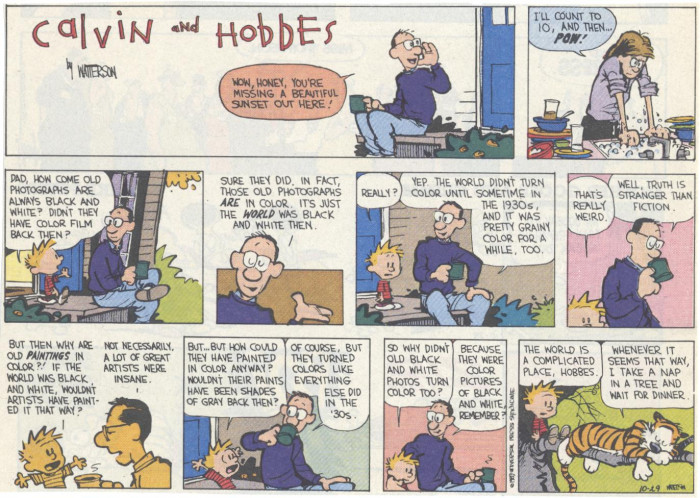
A classic
The "trolling" can cause some resentment
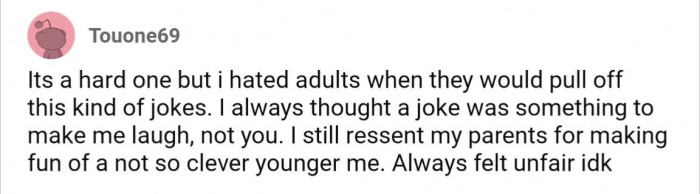
Just make sure your kid is cool with it
Have you ever been on the receiving end of silly made-up facts from your parents? What sort of nonsense were you taught, and how long did you believe it?
How did you find out you had been bamboozled by your parents, and how did it make you feel? Did it negatively affect your relationship with them?
Or on the flip side, have you yourself partaken in making absurd but easily believable “facts” to share with children? We want to hear about it, so drop your story in the comments section below!
This amusing incident highlights the delicate balance parents must maintain between creativity and honesty.
Wait until you see how MIL surprised their toddler with a pet, after a Redditor said no, and the fallout that followed.
Share this article:





