
Woman Who Has No Interest In Marriage Or Having Kids Is Left To Choose Between Parents Or Pets

Some family drama gets messy fast, and this one comes with a couch, a spare bedroom, and a pair of pets in the middle of it.
A 37-year-old woman who has no interest in marriage or kids says her parents lost their home and asked to stay with her, but she only offered the living room because the spare room is reserved for her animals. That did not go over well, and now relatives are weighing in on whether she owes her parents more space.
She turned to Reddit after the argument blew up, and the comments did not hold back.
I don't intend to have children; I don't intend to get married and live together
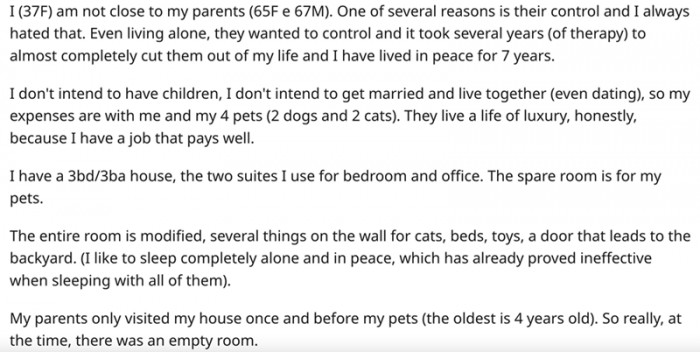
I got angry and said my house was not open to them
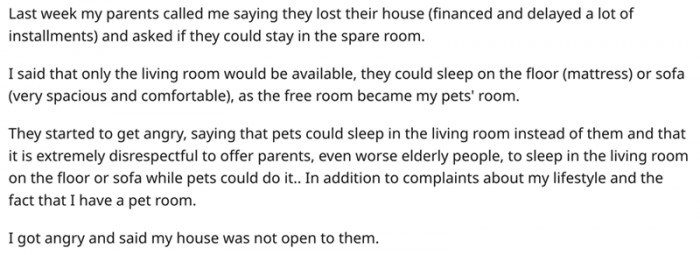
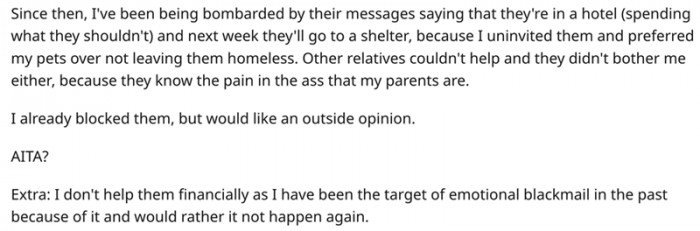
I blocked them, but would like an outside opinion
The decision to forgo traditional life paths such as marriage and parenthood can be deeply influenced by one’s upbringing and familial dynamics. Developmental psychology suggests that early relationships with caregivers significantly shape our views on attachment and commitment. This avoidance is often a protective mechanism against potential emotional pain, suggesting that the Redditor's stance might reflect her early experiences with her parents.
Understanding these attachment styles can shed light on why some individuals choose to avoid traditional roles. It’s also crucial to recognize that these patterns can be altered through therapy, where individuals can work on establishing healthier, more secure attachments.
That’s where the pet room became the real sticking point.
Interestingly, the choice to prioritize pets over traditional familial roles can also be understood through the lens of attachment theory. Research published in the Journal of Applied Animal Welfare Science confirms that pet ownership can significantly enhance psychological well-being, reducing feelings of loneliness and fostering a sense of purpose. In cases where familial relationships are strained, pets can serve as a valuable source of emotional support.
For individuals caught in the dilemma of familial duties versus personal happiness, investing time in nurturing relationships with pets or other forms of companionship can alleviate stress and promote emotional balance. It's essential to recognize that these alternative forms of attachment can be just as fulfilling and provide a robust support system.
The Reddit thread received 3.6K upvotes and garnered more than 800 comments. Redditors were of the opinion that it is the OP's house, and she absolutely has the right to call the shots.
Below are a few of their most upvoted comments, so keep scrolling and read through all of them.
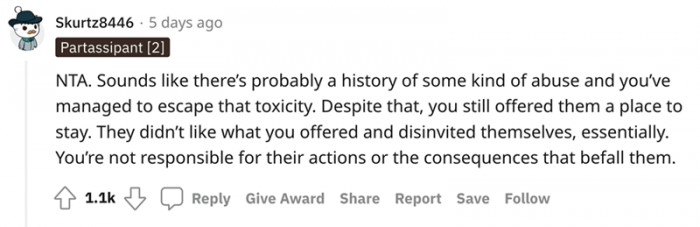
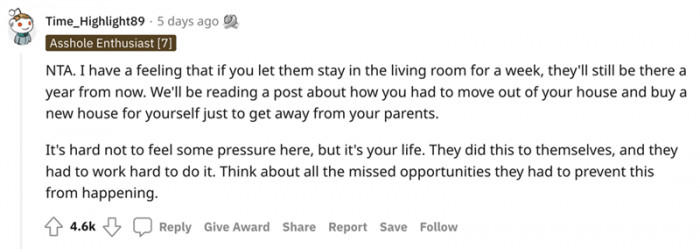
You're not responsible for their actions or the consequences
It's hard not to feel some pressure here, but it's your life
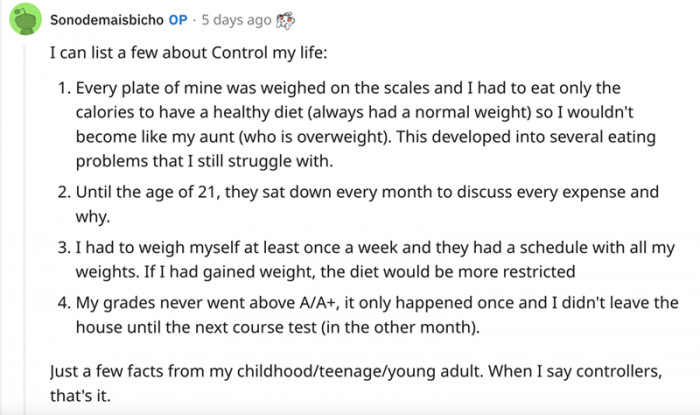
The OP went ahead to give more backstory on their parents
The story highlights the intense pressure many individuals face to conform to societal expectations surrounding marriage and parenthood. The protagonist grapples with her desire for independence against the backdrop of her parents' expectations, illustrating the emotional turmoil that arises when personal aspirations clash with familial obligations. This internal conflict is exacerbated by the inadequacy of her parents, who seem to lack the understanding and support needed for their child's choices. The narrative suggests that open communication could be a vital tool in addressing these pressures. By fostering dialogue around personal choices, the protagonist might create a more supportive environment, paving the way for healthier relationships with her family. This approach could help establish necessary boundaries while promoting a deeper understanding of her values and desires, ultimately leading to a more harmonious coexistence with her parents and her beloved pets.
It also echoes the mom cat-responsibility blowup, where the family dumped duties on a child she never wanted.
Here’s where the comments started leaning even harder in her favor.
You may or may not agree wholeheartedly with the counsel given to her, but we were deeply moved by how considerate some of the comments were.
They wanted OP to feel safe and loved, and they also wanted to ensure that OP’s dogs wouldn’t be leaving anytime soon. See more of those comments below!
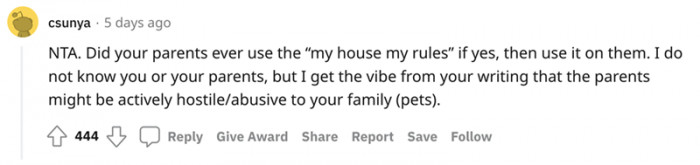
If they used it on you, use it on them
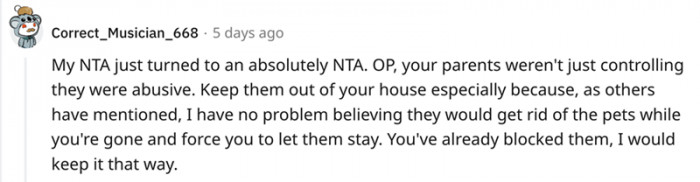
They weren't just controlling but abusive
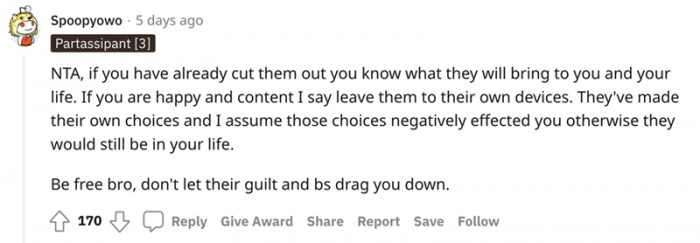
Don't let their guilt and nonsense drag you down
The psychological concept of 'identity formation' plays a critical role in the choices individuals make regarding marriage and parenthood. This stage is crucial as individuals begin to explore personal values and beliefs, often leading to divergent paths from those traditionally expected by their families. Current studies indicate that individuals who actively engage in identity exploration are more likely to make conscious choices that align with their authentic selves, rather than conforming to external pressures.
Moreover, research suggests that those who embrace their autonomy during this formative period tend to develop stronger self-esteem and life satisfaction later in life. Therefore, it may be beneficial for individuals to focus on self-exploration and understanding their unique values, which can provide clarity when faced with familial expectations.
That family pressure is doing a lot of heavy lifting here.
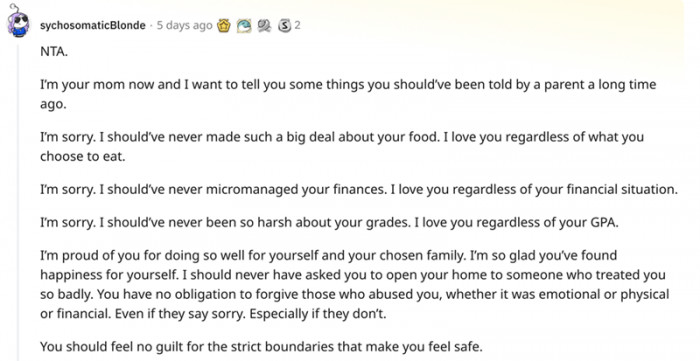
I love you regardless of your financial situation
One might say that they received a very acceptable offer from their daughter, as it’s better to stay on the couch than to be without a roof over your head. Instead, they want the OP to evict her pets.
Maybe they shouldn’t have continued pushing those installment payments forward if they desired a luxurious apartment, don’t you think? Share your thoughts with us in the comments below.
The story of a woman caught between the demands of her family and her affection for her pets highlights the intricate psychological dynamics surrounding the decisions of marriage and parenthood. The article illustrates how her relationship with her parents, who seemingly lack the necessary competence, profoundly impacts her choices. This situation raises questions about how early familial interactions shape one’s outlook on relationships and responsibilities.
Moreover, the narrative underscores the importance of exploring alternative connections, such as those formed with pets, which can serve as a vital source of emotional support. It emphasizes that in the face of societal expectations, individuals are empowered to carve out their own paths. By prioritizing personal well-being over traditional roles, this woman exemplifies the struggle many face in redefining their life choices amidst familial pressures.
For another “you can’t have it both ways” fight, see how she refused to share her dog.
Share this article:





