Inspiring Resilience: The Impact Of 2-Legged Dogs On Humans Living With Amputations

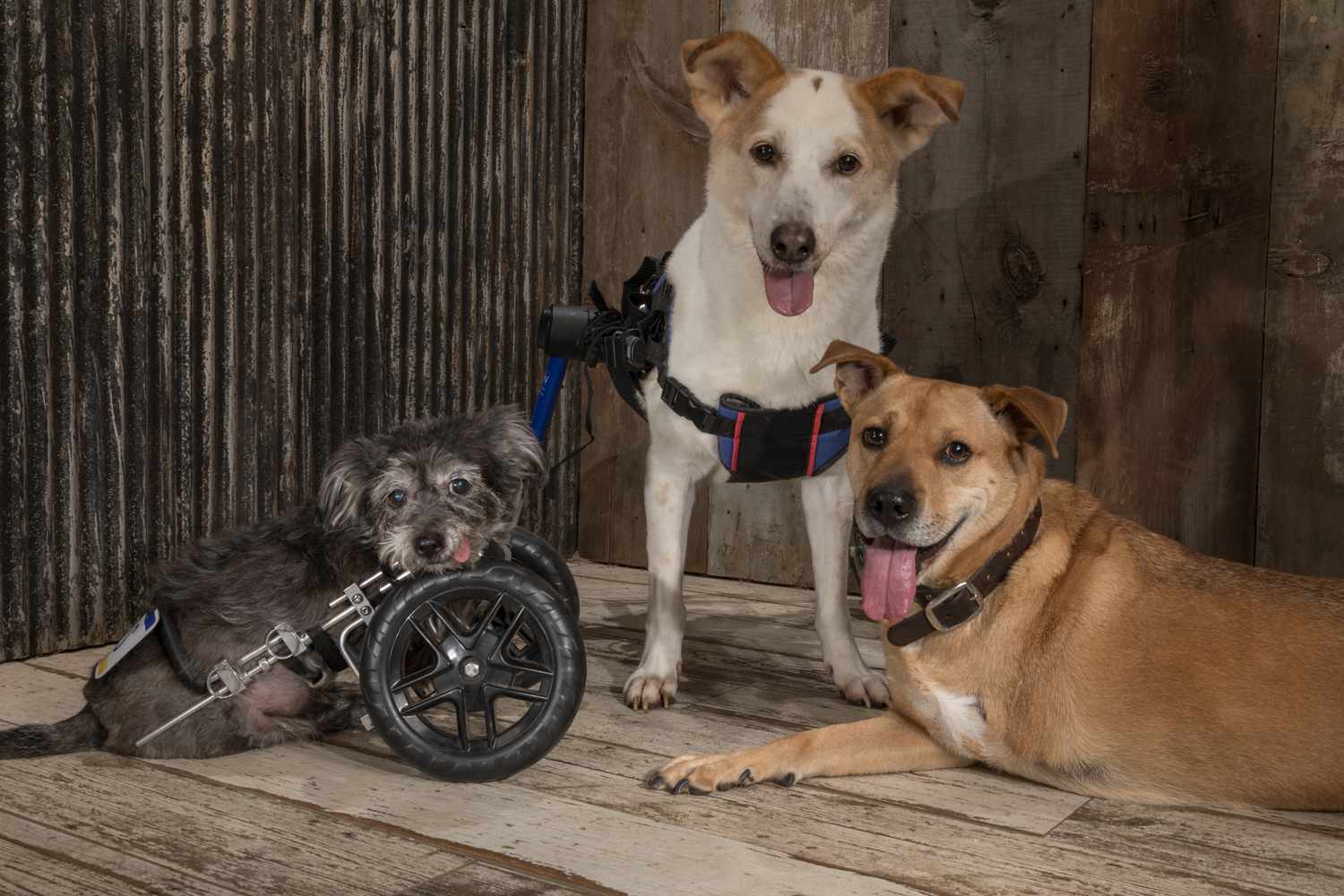
Domenick Scudera has been showing up at Bryn Mawr Rehab Hospital almost every week since 2010, and it’s not just because he likes the routine. He brings three dogs, and each one has only two legs, turning a therapy visit into something way more powerful than a feel-good moment.
Here’s the complicated part, the patients in the Amputee Treatment and Rehabilitation Program are working through their own losses at the same time these dogs are literally proving, in real time, that “impossible” is a moving target. Lucky and Deuce survived traumatic accidents, Cyrus gets by with only his back legs, and somehow the room still fills with the kind of hope that sticks.
And the wildest part is what happens when those two-legged dogs walk in, people start making the same connection out loud, “If he can do it, I can do it.”

Domenick Scudera visits Bryn Mawr Rehab Hospital almost every week, a tradition he has upheld since 2010. Accompanying him are his three dogs, each serving as therapy dogs.
While animal-assisted therapy is not new, what sets Scudera's visits apart is that each of his dogs has only two legs. Despite this, Cyrus, Lucky, and Deuce bring joy and inspiration to the patients of the Amputee Treatment and Rehabilitation Program.
With Scudera's assistance, his dogs have thrived, showcasing possibilities to the humans they encounter. "It's wonderful, and it's almost always the same," Scudera shares. "People will say the same thing. They'll say, 'If he can do it, I can do it.' They tell me that all the time."
Scudera’s weekly visits with Cyrus, Lucky, and Deuce start the whole ripple effect, right there in the Amputee Treatment and Rehabilitation Program.
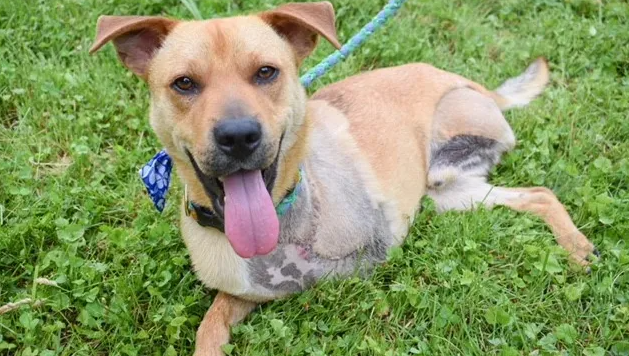
Just like some of the patients they visit, Lucky and Deuce have faced adversity head-on. Lucky, with only front legs, and Deuce, who possesses legs solely on his right side, both endured traumatic accidents that resulted in surgeries.
Meanwhile, Cyrus, the trio's eldest member, navigates life with only his back legs. Despite their challenging beginnings, these resilient dogs now play a vital role in providing comfort and inspiration to others.
Kathleen Liebsch, an occupational therapist at Bryn Mawr, witnessed a poignant moment during one of Deuce's visits. Deuce encountered a patient who had lost a leg and an arm on the same side.
"I'm working toward that, too," the patient confided to Liebsch.
"It was truly remarkable," Liebsch reflects, recalling the profound impact of the encounter.
Then Lucky and Deuce bring their own history into the room, after surgeries from accidents that could have ended the story differently.
Festus brought comfort to patients at Bryn Mawr and the Children's Hospital of Philadelphia.
As Festus aged, Scudera began searching for another dog to continue the tradition of therapy work. However, he specifically sought a dog with fewer than four legs, knowing the impact it could have on patients to see disabled dogs leading fulfilling lives.
Scudera's quest led him to Cyrus, a scruffy terrier mix abandoned at a shelter in California. After learning about Cyrus online, Scudera flew across the country to adopt him, recognizing his potential as a therapy dog.
Today, Scudera is known as a dedicated two-legged dog dad. Lucky, approximately 8 years old, was rescued from the streets of Egypt by a local named Marwa Elgebaly after sustaining injuries, likely from being hit by a car. Deuce, around 5 years old, was found in a Kentucky ditch with broken and infected left legs. Although X-rays revealed shrapnel, indicating he may have been shot, the true cause of his injuries remains a mystery to Scudera.
It also echoes Rex, finding comfort from his two best friends during crippling anxiety attacks in this rescue dog story.

Within the confines of their home, the trio of dogs exhibit their distinct personalities, blending seamlessly into the rhythms of daily life. Cyrus, the seasoned companion, clings to Scudera like a Velcro dog, relishing the moments when he is cradled in his owner's arms like a cherished football. However, Cyrus is not one to tolerate interruptions, particularly when his dad steps outside to attend to matters from a Daily Paws editor.
In contrast, Lucky exudes boundless energy, seemingly unfazed by his two-legged stature. Scudera's friends jest that Lucky's zest for life surpasses any concerns about his missing limbs. With an insatiable curiosity, Lucky eagerly explores his surroundings, leaving no stone unturned in his quest for adventure.
Meanwhile, Deuce embodies tranquility and grace, content to follow Scudera's lead with unwavering obedience. Unlike his exuberant counterpart, Deuce possesses a serene demeanor, readily complying with commands to sit or stay. Remarkably, he traverses the household with ease, his fluid movements belying his unique physicality. In fact, Deuce's seamless gait often goes unnoticed by observers, a testament to his remarkable adaptability and resilience.
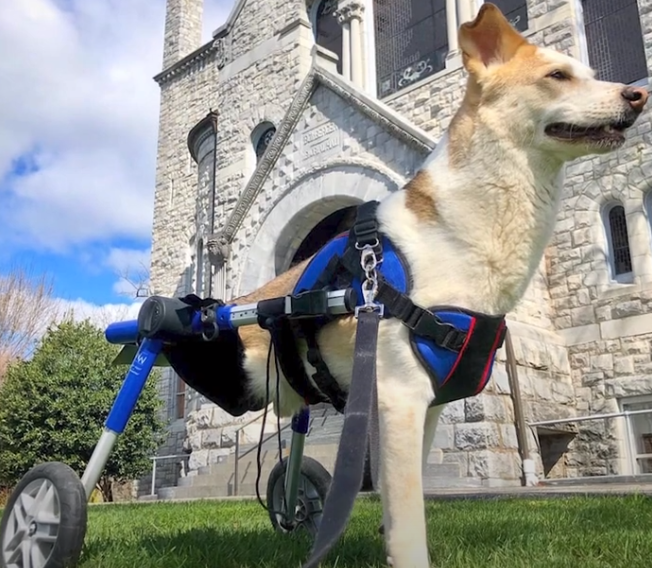
When Deuce met that patient who lost a leg and an arm on the same side, the hope in the air got painfully specific, “I’m working toward that, too.”
For Scudera, caring for his trio of dogs hasn't been markedly different from tending to typical four-legged companions. The primary distinction, he notes, lies in assisting Lucky with his bathroom needs due to his lack of sensation from the waist down. Yet, this task has seamlessly integrated into their daily routine.
"Disabled dogs are often overlooked for adoption, but the joys of having a dog that's unique far outweigh any challenges," Scudera affirms. "The experience of caring for a different dog is incredibly rewarding."
Beyond the daily doses of love and joy that come with dog ownership, Scudera finds a social dimension to his role as a dog dad. During their walks, each of his dogs becomes a celebrity in their own right, drawing attention from passersby who stop to meet them and engage in conversation with Scudera.
"It connects me with the world in a deeper way," he reflects, acknowledging the profound impact his dogs have on his interactions with others and his sense of belonging within the community.

Even the search for Festus’s replacement matters, because Scudera actively looked for a dog with fewer than four legs, and found Cyrus after seeing him abandoned in California.
The dogs' impact extends beyond the comforts of home, especially within the hospital setting. Kathleen Liebsch, who supervises a separate therapy dog program at Bryn Mawr, emphasizes the significance of having dogs present during rehabilitation. For patients undergoing weeks or even months of treatment, being away from their own pets can be emotionally challenging.
Liebsch observes that the mere presence of dogs brings immense joy to patients. "Dogs are just full of happiness," she remarks. "That might be the highlight of their day."
Scudera's dogs epitomize this sentiment. On one occasion, a patient who had lost both legs found solace in embracing one of the dogs (although Scudera cannot recall which one specifically). They remained in each other's company for an extended period, with the patient experiencing a profound sense of comfort and relief without the need for words.
Cyrus often joined Scudera on visits to the children's hospital, where they encountered a non-speaking child. During one visit, the child was provided with a talking keyboard to express their thoughts.
"He keyed in something like, 'I love Cyrus,'" recalls Scudera, reflecting on the profound impact his dog had on the young patient.
Scudera's dogs not only bring joy to patients but also inspire others to make a difference. He has received messages from individuals who, inspired by his story, have chosen to adopt dogs like his own. This heartwarming response deeply touches Scudera.
"I hate to think that there are dogs in need somewhere and no one wants them," he reflects, highlighting the importance of giving overlooked animals a chance at a loving home.
Those two-legged dogs don’t just visit the hospital, they rewrite what “progress” looks like in the most personal way.
Wait, a six-legged spaniel had surgery to remove extra limbs, restoring mobility, too. Read this story about the spaniel’s life-changing procedure.
Share this article: