Woman Wants to Call Animal Control on Neighbor Because They Are Not Taking Care of Their Dogs Properly

A 28-year-old woman is staring at the same neighbor’s mess over and over, and it’s not just “annoying noise” or “messy living.” It’s dogs that keep getting worse, then a new dog gets added to the chaos, like the situation is a revolving door instead of a responsibility.
OP says the neighbors already weren’t taking care of the dogs they had, then they somehow ended up with another one anyway. On top of that, OP’s dealing with medical issues that make handling the situation feel impossible, which turns every decision into a high-stakes gamble. She wants to call animal control because of what the dogs are doing, but she’s also worried about what it will do to her relationships, and why nobody else seems to act.
And honestly, once you hear what the dogs are doing, you start wondering why the phone call still hasn’t happened.
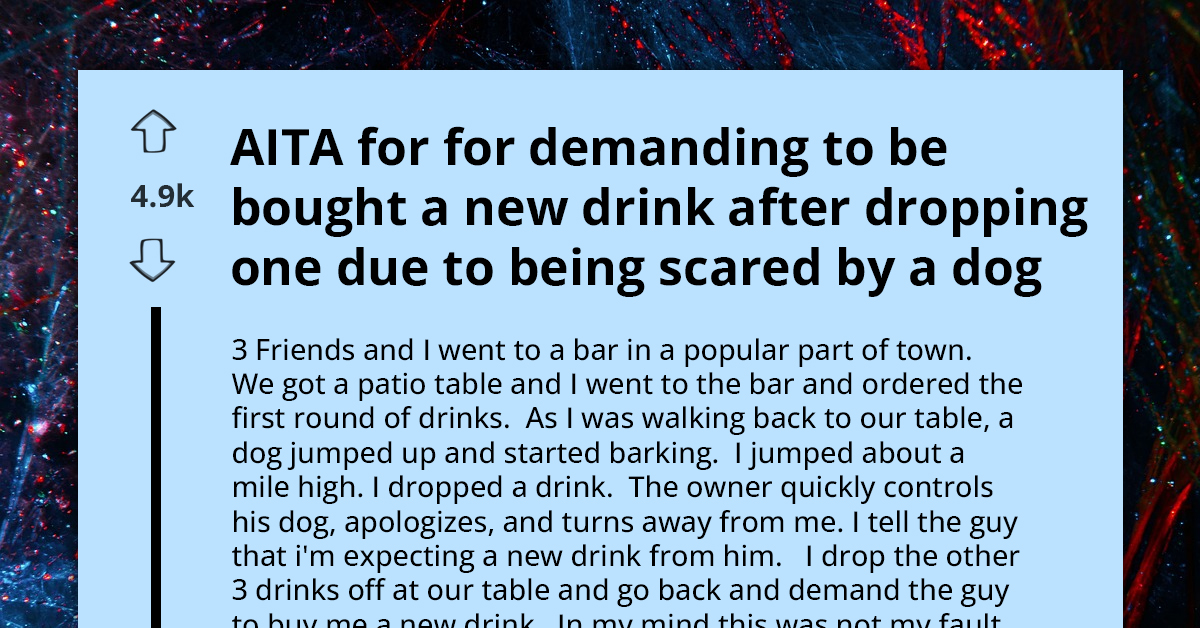
OP Starts Off with Some Background Information About the Neighbors and Their Situation with the Dogs.

She Explains That They Ended Up Getting Another Dog Despite Not Taking Care of the Ones They Already Had.

She Explains the Issues They Have Been Having with the Dogs That the Neighbor Owns.

The second OP mentions the neighbors got another dog despite the first ones already being neglected, it stops being “a misunderstanding” and starts feeling like a pattern.</p>
The Emotional Weight of Animal Welfare
Deciding to contact animal control is often fraught with emotional considerations.
Research from the American Society for the Prevention of Cruelty to Animals (ASPCA) shows that witnessing animal neglect can be distressing and evoke feelings of helplessness.
This emotional burden might lead individuals to feel conflicted about intervening, as they weigh the potential consequences for both the animals involved and their relationships with their neighbors.
She Explains That She Has Some Medical Issues, Making It Hard to Deal with the Dogs.

She Wants to Call Animal Control on Them Because of How the Dog Is Acting, but She's Unsure if That's a Good Idea.
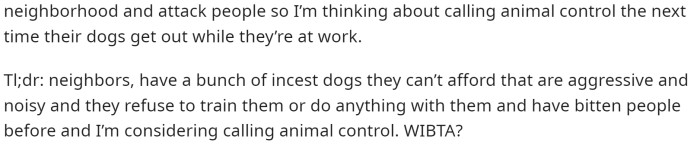
People Deemed Her NTA, but They Are Really Wondering Why They Haven't Called Animal Control Yet.

When OP brings up her medical issues, the whole plan to “just deal with it” falls apart fast, because she can’t keep absorbing it.</p>
Psychologically, this dilemma can be understood through the lens of moral distress, where individuals experience discomfort when their values clash with their actions.
Studies indicate that moral distress can lead to anxiety and feelings of guilt, particularly when the stakes involve vulnerable beings like pets.
Understanding this emotional conflict can help individuals navigate their choices more clearly.
This is similar to the Redditor who confronted her neighbor after constant refusal to pick up her dog’s mess.
People Agree That She Has Quite a Few Reasons to Call, So It Is Valid. The Concern for Her Dad Grows.

We Have to Agree That They Will Definitely Thank Her Because They're Clearly Not Being Taken Care of Properly in Their Current Environment.

Essentially, There Are Many Reasons They Could Call Animal Control, So If That's What She Wants to Do, Then She Should.
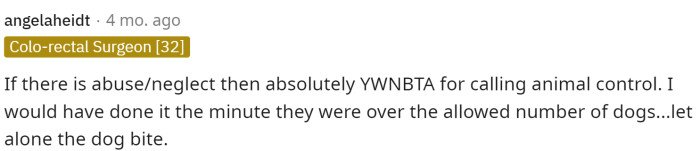
That’s when the dog behavior becomes the real stressor, because OP isn’t just upset, she’s genuinely worried something could spiral with the next incident.</p>
Community involvement in animal welfare is a powerful motivator for action.
We Understand Wanting to Mind Your Business, but It Could Be Dangerous for These Dogs to Be Loose.

Here Was OP's Response to the Comment Above, Which Helps Us Understand Why She Doesn't Want to Call.

Someone Even Suggested That They Might Be Part of a Hoarding Situation, in Which Case They Would Definitely Need Help.

Even after commenters call her NTA, the bigger shock is how many people are still asking why animal control hasn’t been contacted yet.</p>
Practical strategies for addressing animal welfare issues include documenting concerns and approaching neighbors with empathy.
This situation is unfortunate for everyone involved, but we hope that OP will do what's necessary for the dogs to be safe in their environment. Everyone in the comments encouraged her to go ahead and call animal control because the dogs could be treated poorly, and they could also pose a danger to others if left unattended.
The Psychological Impact of Neglect
Neglecting pets can have serious psychological implications for both the animals and the observers.
Research published in the Journal of Applied Animal Welfare Science indicates that animals subjected to neglect can develop behavioral issues, which in turn affects their human caretakers.
Understanding this cycle can motivate individuals to take action, recognizing that their involvement can lead to improved outcomes for both the pets and the community.
The dilemma faced by the woman considering calling animal control highlights the intricate balance between personal responsibility and community welfare. The emotional weight of witnessing neglect can compel individuals to act, yet it is essential to navigate these waters thoughtfully.
The psychological impact of neglect on both animals and the community cannot be overstated. Taking action not only addresses the immediate concern for the dogs but also serves as a catalyst for fostering a culture of empathy and support among neighbors.
By choosing to engage with understanding and a commitment to education, individuals can inspire positive change, ultimately leading to improved animal welfare and strengthened community ties.
The neighbors may call it minding their business, but OP’s done watching the dogs pay for it.
For a similar family standoff, see how a daughter tried calling animal services on her dog-neglecting parents.
Share this article: