Introducing The Chestnut-Breasted Mannikin, A Beautiful Bird With Faint Shades Of Brown And A Good-Looking Tail

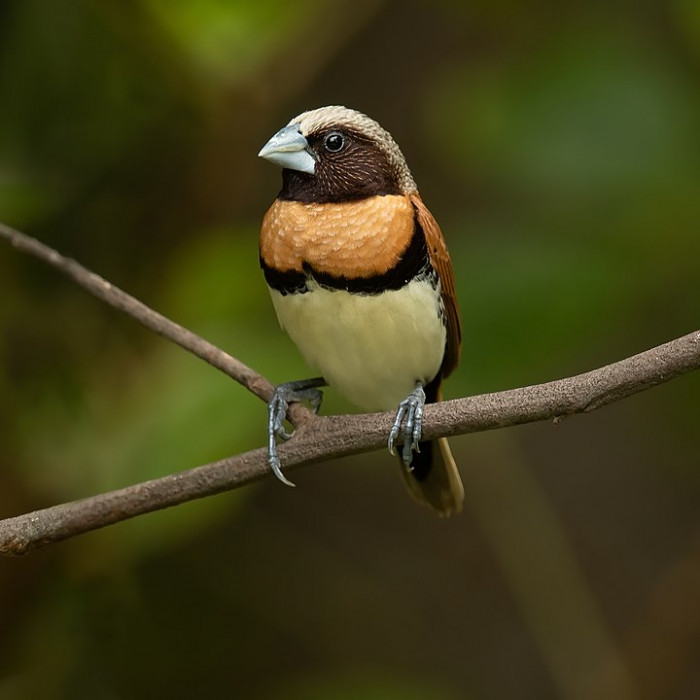
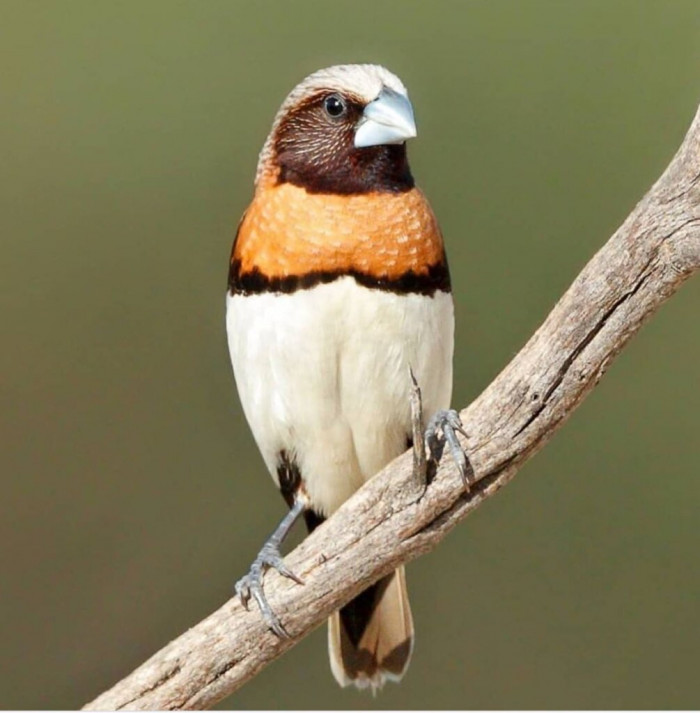
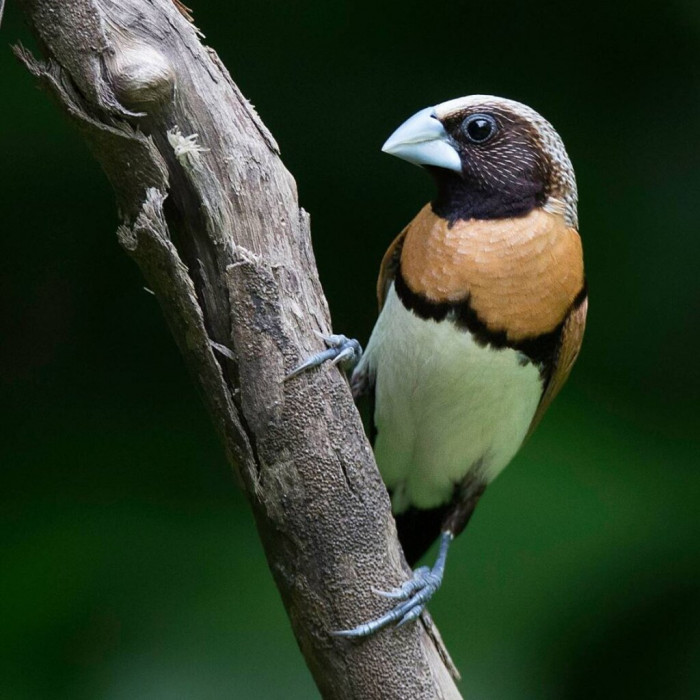
The Chestnut-breasted Mannikin is a brown finch with a black face, gray crown, and bill. The chestnut-brown chest of this bird is separated by a black bar from its white underparts.
Its tail and rump are golden orange in color, and it also has a black undertail.
Female Chestnut-breasted Mannikins are paler than males, while the young ones are evenly olive-brown on top and pale below.
Chestnut-breasted Mannikins are typically seen in Australia's northern and eastern coastal regions, flying in small groups or pairs.
During the rainy season, they are found in lowland areas with tall grasses, but during the dry season, they migrate.
These birds build their nests in tall grasses and, at times, in shrubs. When it's the non-breeding season, they may fly in flocks that can consist of hundreds of birds.
They fly with amazing coordination, fluttering quickly as they perform simultaneous turns before suddenly dropping into shrubs and vegetation.
They generally work together with other finch species, including Crimson Finches, Double-barred Finches, Long-tailed Finches, Pictorella Mannikins, Red-browed Finches, Star Finches, Nutmeg Mannikins, and Yellow-rumped Mannikins.
They forage through low grass and move up the stems to gather seeds directly from the heads, generally avoiding seeds that have already fallen to the ground.
Say hello to the Chestnut-breasted Mannikin (Lonchura castaneothorax).
Since Chestnut-breasted Mannikins have a very large range, they do not reach the Vulnerable thresholds, which are based on the range size criterion.

These birds are commonly found in long grasses, reed beds, mangroves, and swamps.
They're not just found in Australia; they can also be seen in New Guinea.

And if you love camouflage, the leaf-tailed gecko’s disguise game will feel right at home with this mannikin’s faint brown shades.
These birds feed on grass seeds from the stalk.
Winged termites are also part of their diet, which they consume during the start of the breeding season.

The Chestnut-breasted Mannikins build nests in colonies.
Their nests are close to each other in sugar cane, reeds, or grass clumps, sitting less than 2 meters above the ground.
The nests are round and made of fresh or dried grass blades, lined with fine grasses as well.
Although the nests do not have entrance tunnels, the entrance may feature a hood. Both males and females build the nest, incubate the eggs, and feed the young.
However, it's only the females that stay in the nest overnight. Birds held in captivity can breed in finch nest boxes and woven wicker nests.

These birds are very social creatures.

During the breeding season, they will join other flocks in search of food. They particularly like barley seeds, which is why locals call them "barley birds."
See the Chestnut-breasted Mannikin in action.
What makes them charming is their chirpiness and friendliness.
The magnificent patterns they have are also very beautiful.
The sounds they produce include simple and complex songs. What's even more interesting about these tunes is that specific communication occurs between pairs of birds.
This communication starts with songs meant to attract a potential mate. Through singing and peering, the male gets introduced to the female.
Just like the birds building “deluxe digs” in unexpected places, this nest surprises too: 50 people share photos of bird nests in surprising spots.
Share this article: