Woman Is Confused As Husband Refuses To Close Bedroom Door At Night Due To The Cats, Despite Having Guests

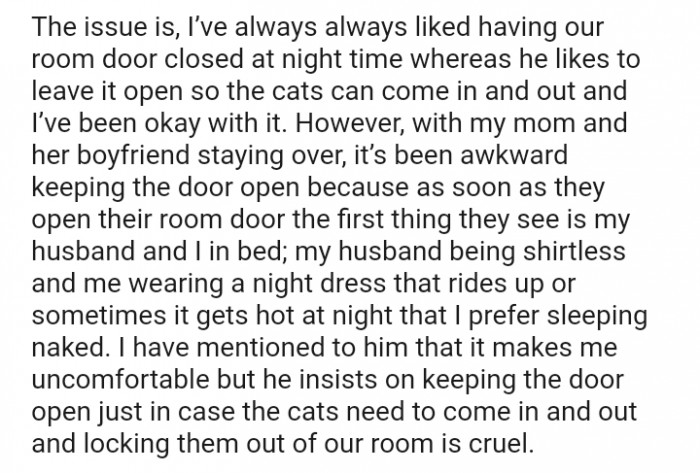
A pregnant Redditor says her husband has turned one very basic bedroom habit into a full-blown argument, and it all comes down to the cats. She and her husband are hosting her mom and her mom’s boyfriend while their house is being built, but he still refuses to close the bedroom door at night because he wants the cats to come and go freely.
That choice has left the couple’s guests seeing them naked in the morning, and the wife says her husband does not seem bothered by it at all. With a baby on the way and houseguests in the mix, the whole situation has become a weird test of priorities, privacy, and common sense.
Now the internet has plenty to say about who is being unreasonable here. Read on.
OP asks:

I'm expecting my baby soon
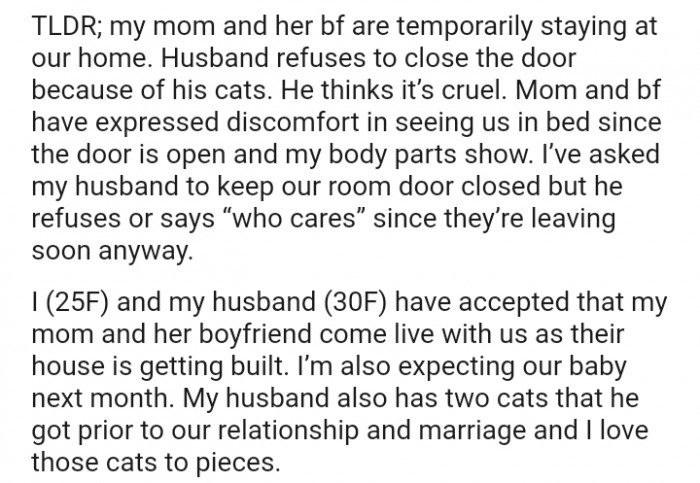
He insists on keeping the door open
The situation presented in this article sheds light on the intricate dynamics of companionship and attachment, particularly when it involves pets. The wife's frustration over her husband's reluctance to close the bedroom door due to the cats illustrates a common dilemma many face: the emotional ties we forge with our pets can sometimes overshadow human relationships. This woman's feelings of being secondary to the cats raise important questions about the balance of affection in a household. As the article suggests, navigating the emotional landscape where pets and partners coexist can be tricky, especially when both sources of affection fulfill different needs. The husband’s choice to prioritize the cats, even in the presence of guests, emphasizes the unique but sometimes conflicting loyalties that can arise in shared living spaces.
In the realm of family dynamics, the article highlights the tension between pet ownership and human relationships.
I'm coming second to his cats
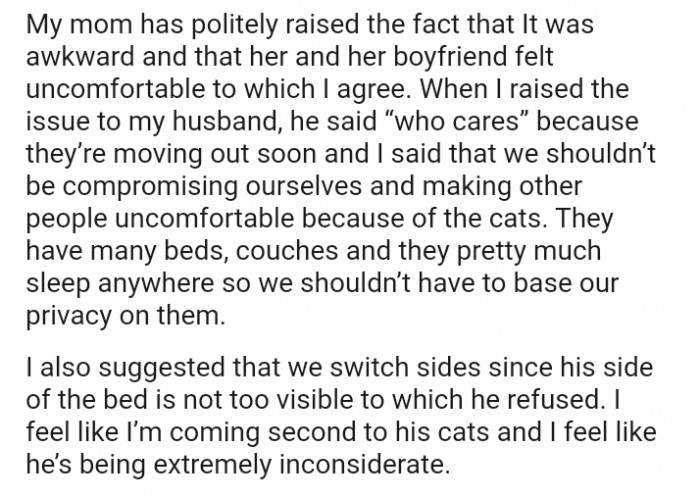
The comments started rolling in, and Redditors couldn't comprehend how the OP's husband was being so unreasonable about the situation. They shared their views, and we've gathered some of them for you to review.
This person says the husband is making a bigger deal out of the cats than he should.
1. A real issue

2. Way out of line

Moreover, the psychological concept of attachment theory suggests that individuals can develop strong emotional ties to their pets, similar to those formed with family members. A study from the University of Minnesota indicates that these attachments can influence interpersonal dynamics within families.
Addressing these feelings openly can facilitate healthier relationships between family members and their pets.
Psychological studies suggest that pets often serve as emotional anchors for families. A study from the University of Washington highlights how the emotional well-being of pets can directly affect family satisfaction.
When a partner feels sidelined by a pet's needs, it can create tension and misunderstandings, underscoring the need for open communication.
3. You can leave the door cracked enough

4. Installing a kitty door

5. It would be nice if your husband cared

Communication and Relationship Dynamics
Effective communication is crucial in navigating family dynamics involving pets.
In this scenario, discussing feelings about the cats' presence in the bedroom could help the wife express her needs without feeling marginalized.
In the scenario where a woman's husband refuses to close the bedroom door at night due to their cats, it highlights a significant issue of communication within the household. The couple's differing priorities regarding pet care and guest comfort must be addressed through open dialogue. This situation serves as a reminder that fostering a culture of transparency can greatly enhance comprehension and cooperation, especially when navigating the complexities of shared living spaces and responsibilities.
6. He needs to learn to shut the door

7. They close their bedroom door

8. This is not the way a partner talks to you

Additionally, the psychological impact of feeling secondary in relationships can lead to resentment and conflict.
Addressing these emotions through open dialogue can foster understanding and strengthen bonds between partners.
It also echoes the woman who took in 20-plus cats, then got mad her adult son wouldn’t sleep there with a baby.
When family dynamics are disrupted by competing needs, such as those of pets and partners, it can lead to emotional distress. A study from the Journal of Interpersonal Violence highlights that neglecting one’s emotional needs in favor of pet care can create a cycle of dissatisfaction.
Addressing these issues openly can mitigate misunderstandings and promote a more cohesive family dynamic.
9. Lol... This really cracked me up

10. Your husband is so weird about this

11. Buying a kitty door

Balancing Pet Care and Relationship Needs
Research from the American Veterinary Medical Association highlights the importance of considering both pets' and family members' emotional needs.
In this case, finding a middle ground where both partners feel valued and understood is vital for maintaining a healthy family dynamic.
Finding a compromise between pet care and family needs is essential for harmony.
12. He's taking it out on you

13. He doesn't like your mum and the boyfriend

14. She doesn't necessarily have an issue

Furthermore, fostering a collaborative approach to pet care can enhance relationships. A study from the Journal of Family Issues suggests that shared responsibilities can promote teamwork and strengthen family bonds.
Encouraging both partners to participate in decisions regarding pet care can help ensure that both their emotional needs are met.
Family members should reflect on their emotional needs and how these intersect with pet care responsibilities.
By acknowledging each other’s feelings and perspectives, families can create a more supportive environment.
15. I'd be willing to switch sides on the bed

16. You could get a wedge or something

17. An obvious solution

Creating Healthy BoundariesResearch suggests that boundaries can enhance emotional well-being by clarifying expectations and reducing conflicts.
In the scenario where a husband refuses to close the bedroom door at night due to the presence of their cats, it highlights the emotional dynamics at play within the family unit. The need to consider the emotional well-being of all family members, including pets, is crucial for fostering a harmonious household. This situation reflects a deeper understanding of how emotional awareness can influence family relationships, especially during significant life changes such as pregnancy. The woman's frustration may stem from a feeling of imbalance in prioritizing her needs and those of the pets. Recognizing and addressing these emotional needs can lead to improved satisfaction and cohesion within the family.
18. They asked to stay with us

19. He can compromise for a short time

20. The cats aren't mistreated if you close the door

Engaging in family discussions about pet care can help foster a sense of shared responsibility.
This engagement can lead to more balanced family dynamics and greater overall satisfaction.
It's strange that the OP's husband doesn't even want to consider her perspective. From the comments, the OP revealed that her husband is unwilling to explore options, which is somewhat suspicious.
Anyways, feel free to add your own thoughts about this story below. And do share this post as well.
That stubborn door is doing a lot of damage here.
In this scenario, the husband's refusal to close the bedroom door at night due to the cats underscores a common challenge many families face when integrating pet care into their daily lives. The woman's confusion reflects a deeper need for communication about priorities and boundaries in a household, especially with the added complexity of impending parenthood.
As the couple navigates their differing views on pet management, it becomes evident that clarity and mutual understanding are essential. By discussing their values regarding pets and guests, they can work toward a solution that respects both their needs and those of their feline companions, ultimately creating a more harmonious home environment.
In the case of the woman who feels perplexed by her husband's insistence on keeping the bedroom door open for their cats, it highlights a common challenge in balancing pet care with personal space, especially with guests around. The article illustrates how her husband's choice, while seemingly trivial, has deeper implications for their relationship and the comfort of their shared living space. By openly discussing their needs and boundaries regarding both their pets and their guests, they can work towards a compromise that respects the well-being of their cats without compromising their own privacy. This situation underscores the importance of collaboration in family dynamics, where both human and animal needs deserve consideration.
Want the same cat conflict turned even messier, read about her refusal to get rid of seven cats.
Share this article: