Dad "Steals" His Son's Dog After Finding Out He Tried To Sell The Poor Animal To Buy Gaming Equipment

One dad thought he was dealing with a typical teen phase, until he found out his son was trying to sell the family dog to fund gaming gear. That turned a messy household situation into something a lot more serious, especially since the dog had already become part of the family.
The boy had asked for a husky for his 14th birthday, but over the next two years, he barely cared for Zeus while his dad and mom handled the real work. Then came the Craigslist listing, the walk that raised suspicions, and a father who decided he was done watching it happen.
Now the internet is weighing in on whether he protected the dog or crossed a line. Read on.
The dad posted the situation on the r/AITA subcommunity. It has gathered over 5k upvotes and 800 comments.
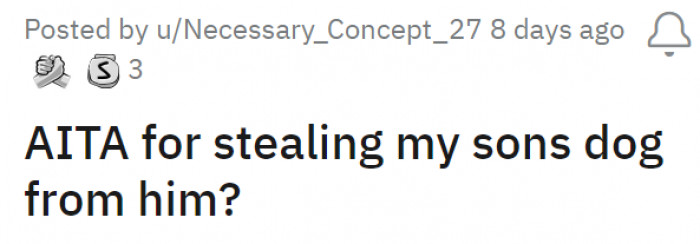
OP got his son a husky for his 14th birthday because he wanted a pet that would complement his love for the great outdoors. However, things did not end well since his son didn't seem to have any interest in caring for the dog, and he has never even taken the animal out for a walk in the two years that it has been with him.
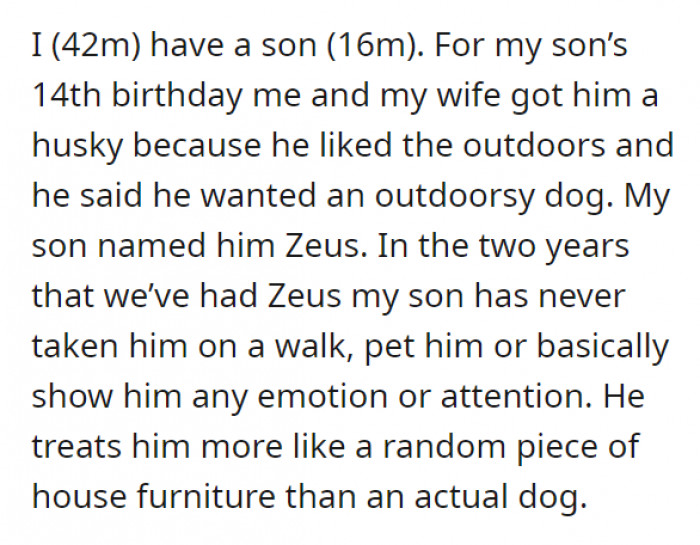
The dog was named Zeus, and OP, the dad, developed an attachment to the dog, caring for it more than his son ever did. He and his wife have paid for all the necessary needs that the dog has over time.
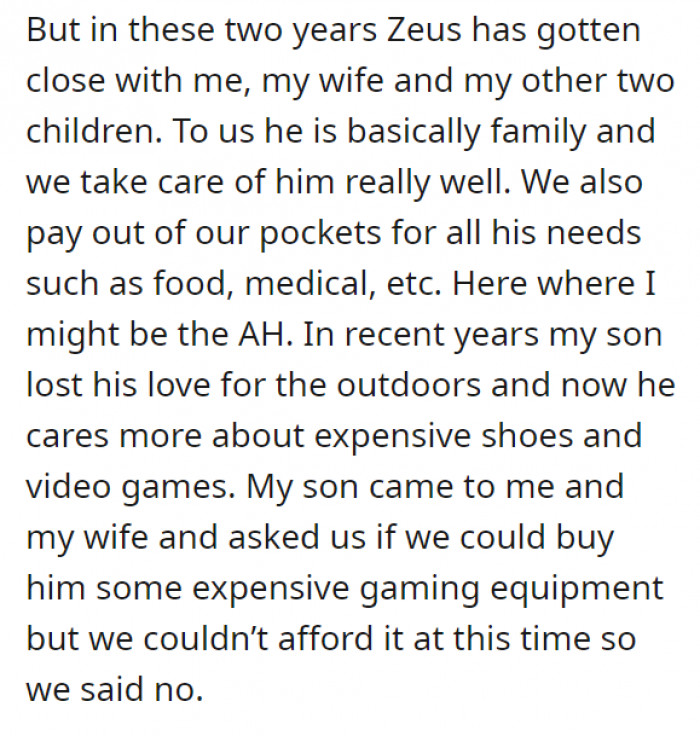
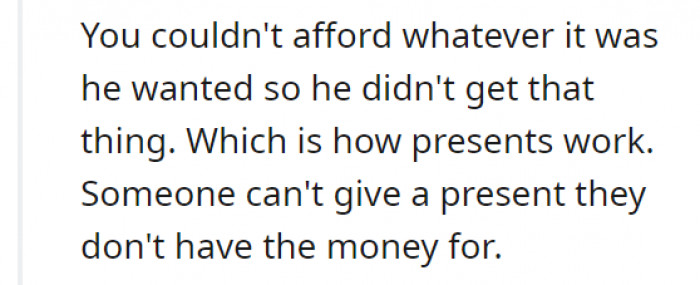
As his son grew up, he became less and less the outdoorsy person who asked for a dog years ago, evolving into the typical teenager who enjoys video games more. One time, the teen asked OP to buy gaming equipment that he wanted, but they were unable to afford it.
Original Post
The bond between a pet and its owner can evoke deep emotional responses, as evidenced by research into attachment theory. The relationships we form with caregivers significantly shape our future emotional connections. This concept extends to pets, where a child’s attachment to a dog can be profound, serving as a source of comfort and companionship.
In this case, the father's reaction to his son's attempt to sell the dog may reflect not only a protective instinct but also a recognition of the emotional stakes involved. Research shows that pets often fulfill relational needs similar to those met by human relationships, providing stability and emotional support. This emotional aspect can complicate situations where pets are treated as commodities, resulting in heightened conflict.
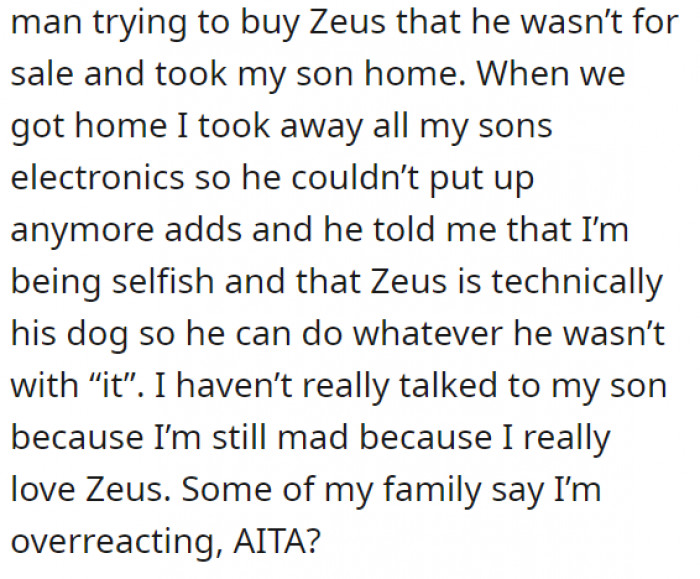
Apparently, the son took matters into his own hands by trying to sell the dog to have the money to buy the gaming equipment he needed. He caught his son putting the dog up on Craigslist—and weeks later, he suspiciously offered to take Zeus out for a walk for the first time.
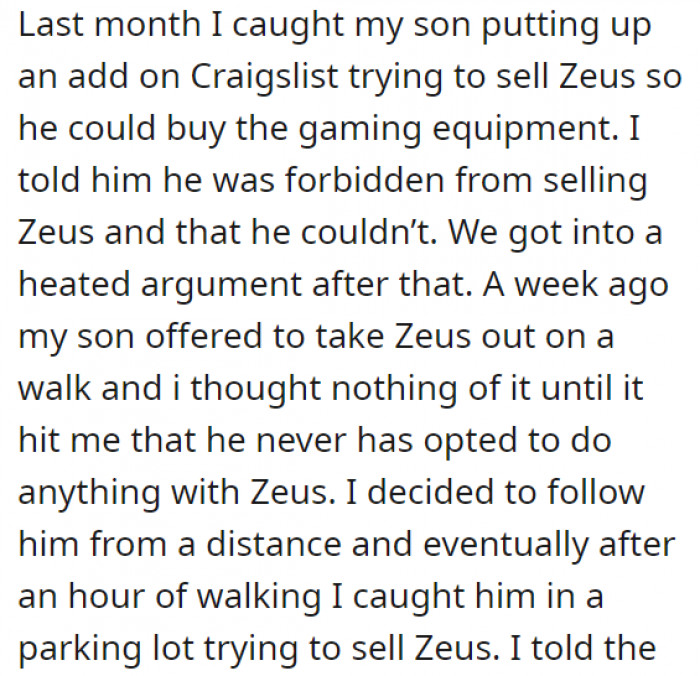
So OP followed him to find out what he was up to.
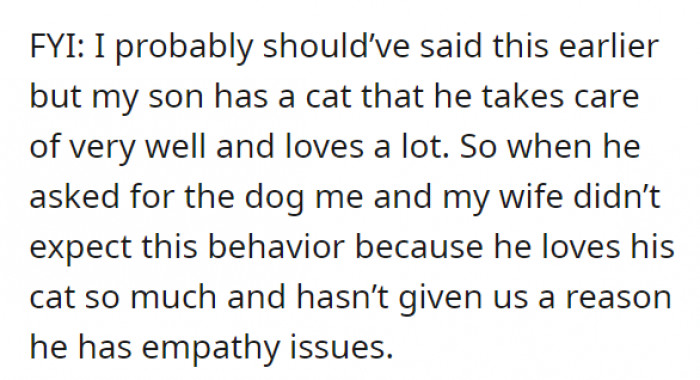
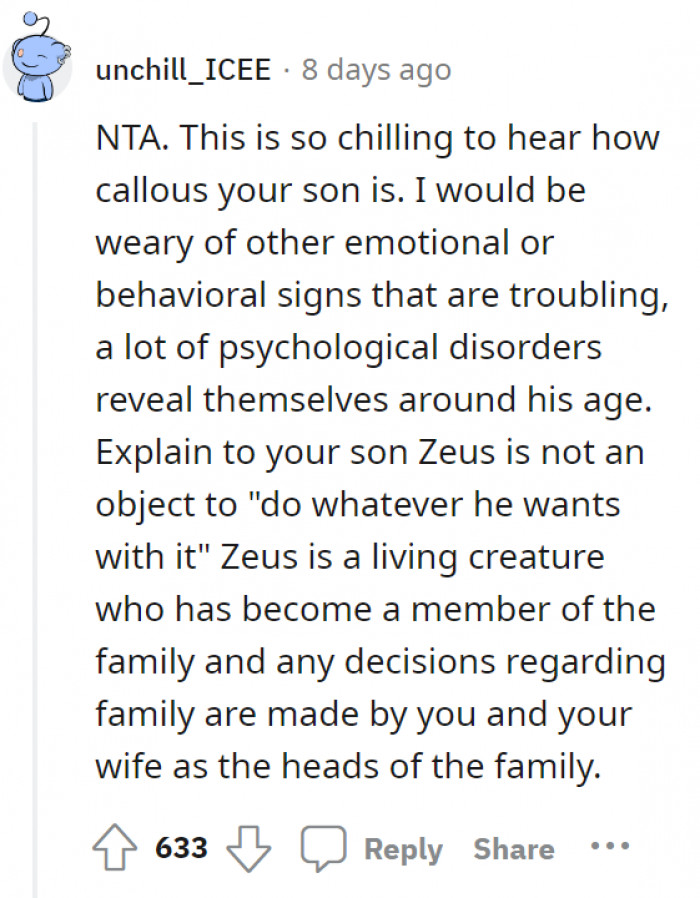
Interestingly enough, the son is actually quite affectionate toward his cat, but for some reason, he didn't like Zeus enough to even play with him.
That is where the story really starts to unravel.
For example, the heated argument between father and son could indicate deeper issues, such as differing values around responsibility and ownership. Research indicates that families who practice active listening and empathy are more likely to resolve conflicts in a constructive manner. Encouraging open dialogue where both parties can express their feelings about the situation might lead to a more positive outcome.
Here's what people have to say:
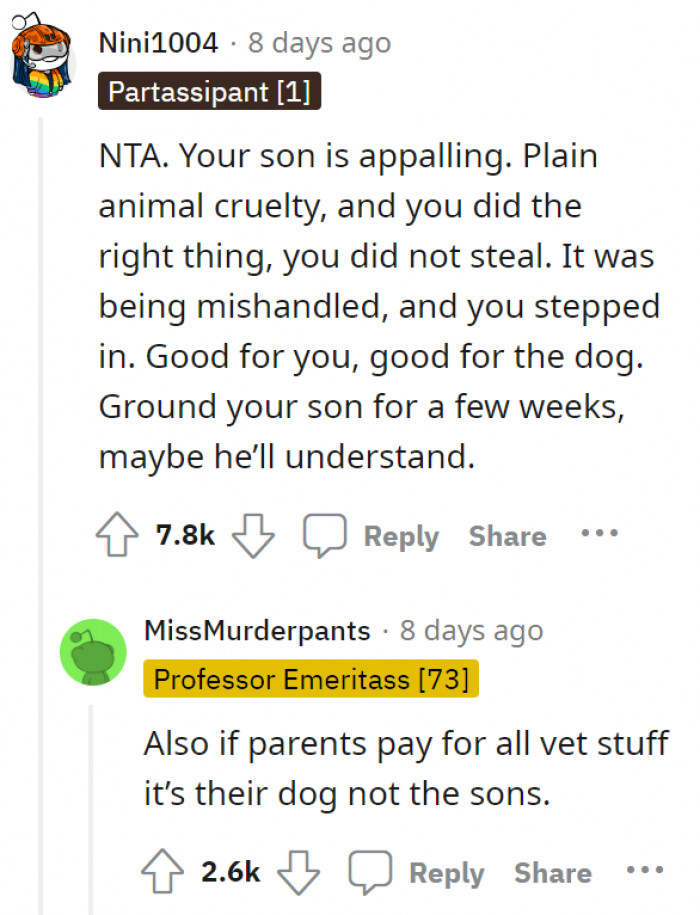
It would be ideal for OP to talk this out thoroughly with his son, given that he's just a teen and seems to need a bit more guidance in the way he's handling things.
Original Post
The son’s desire to sell the dog highlights a developmental stage where adolescents grapple with autonomy and financial independence. The need to assert independence can manifest in various ways, including attempts to make personal financial decisions.
Research suggests that adolescents often test boundaries as a way to establish their identities. The father's protective actions could be perceived as an overreaction, but they may also stem from a desire to teach lessons about responsibility and the value of relationships. This dynamic emphasizes the importance of guiding adolescents in understanding the long-term implications of their decisions.
This also feels like a father keeping the dog his daughter refused to care for, despite the conflict.
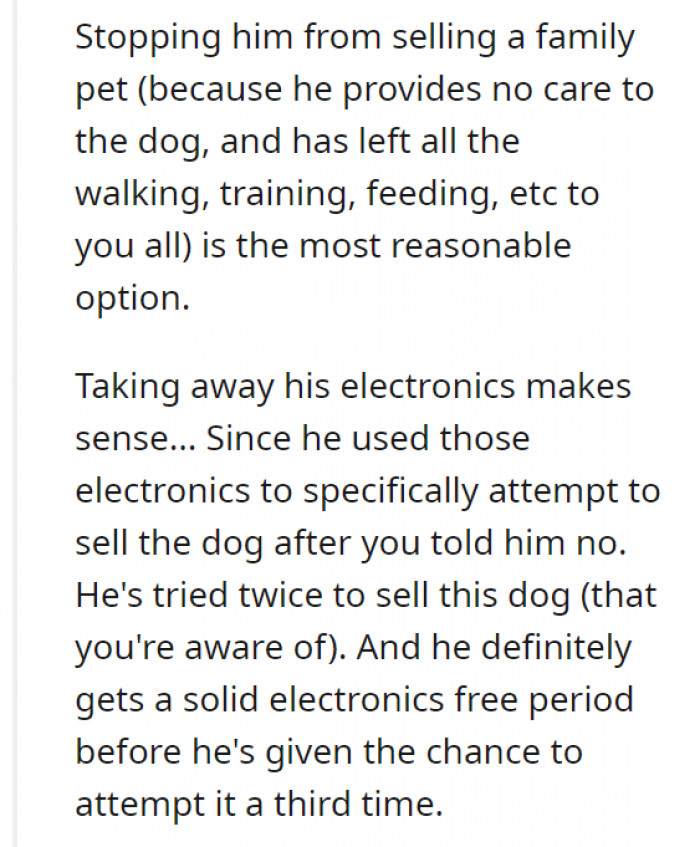
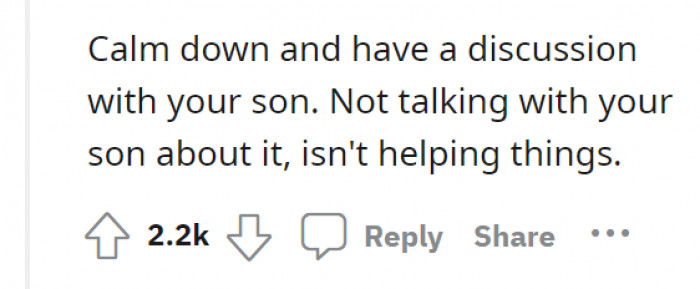
Others wanted OP to take the petty route instead.
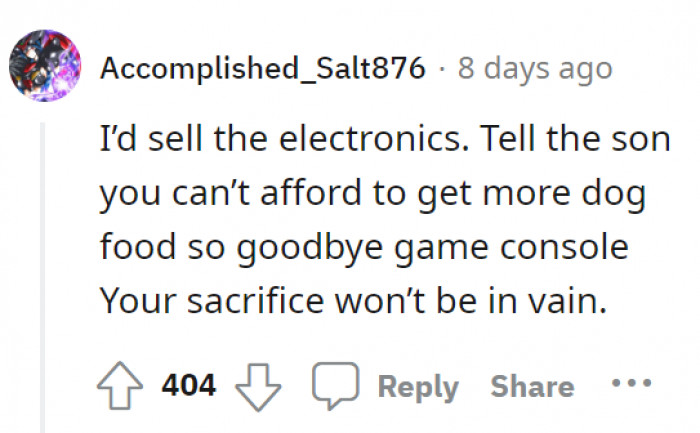
Some readers thought the dad should have handled it with a little more spite.
To navigate the complexities of parent-child conflict effectively, a family therapist might recommend implementing 'family meetings' where issues can be discussed openly in a structured setting. Research indicates that families who engage in regular communication about values and expectations tend to have healthier relationships.
During these meetings, parents could emphasize the emotional significance of family pets, teaching children about the responsibilities that come with animal care. Such discussions not only address immediate conflicts but also foster an environment where children feel heard and valued, paving the way for collaborative problem-solving.
Oh, news flash—the son actually has a job and COULD afford to take care of the dog.
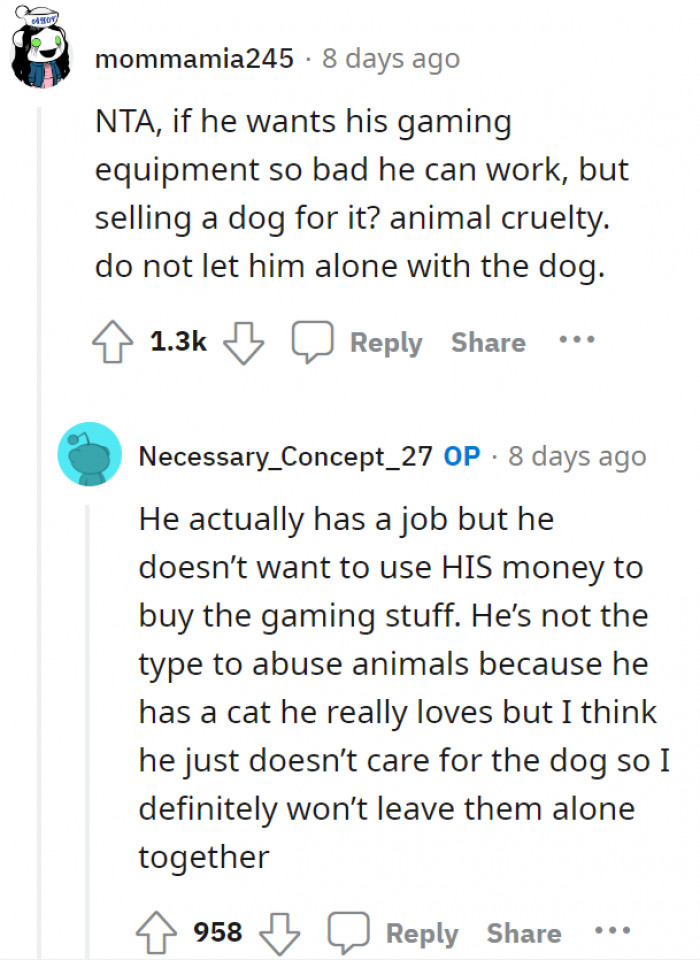
It's kind of evident that the boy somehow needs professional help.
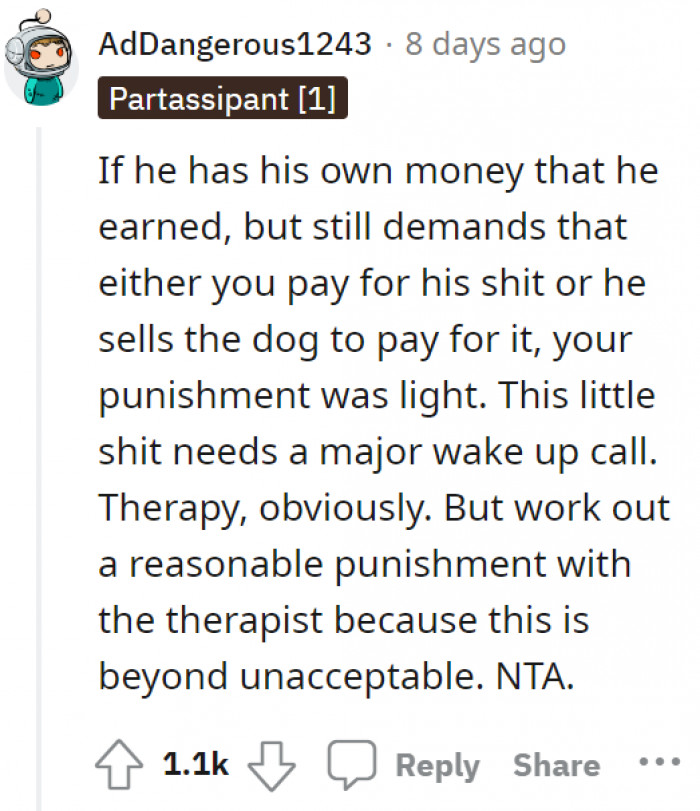
Poor, poor Zeus.
Original Post
Empathy plays a critical role in family interactions, particularly during conflicts.
There's never a right justification for blatantly neglecting dogs, though!
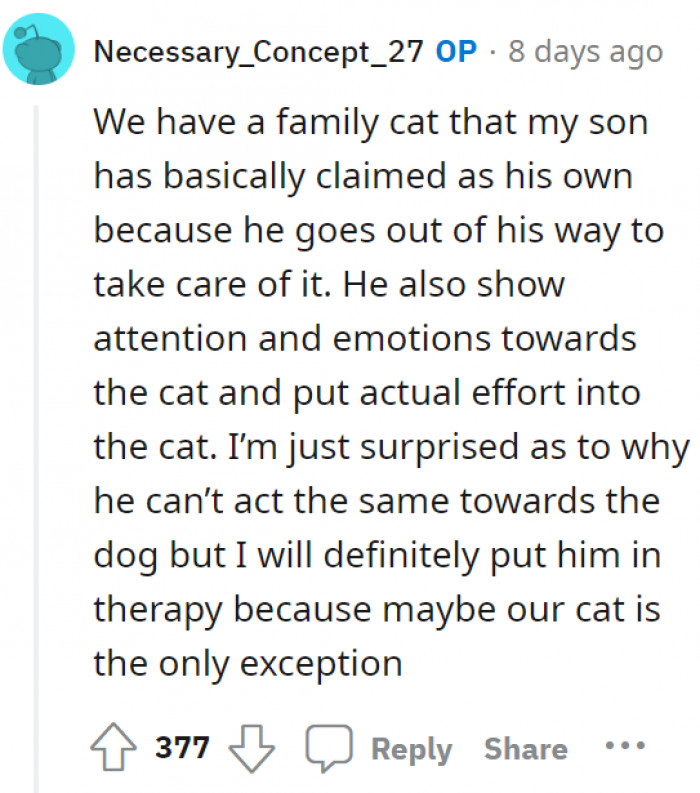
Being a cat person is also not an excuse to neglect dogs.
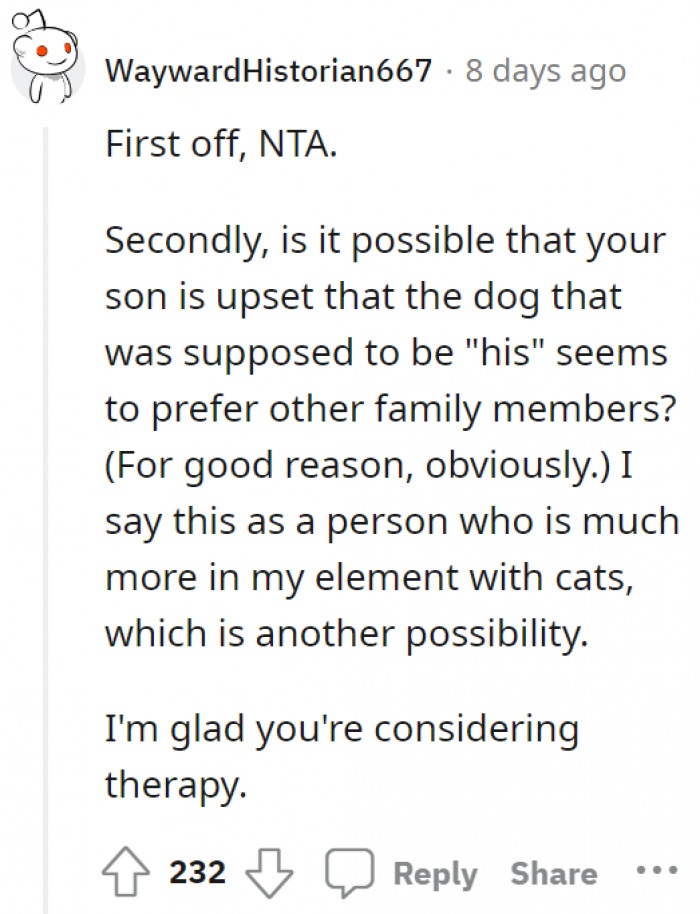
Something to think about.
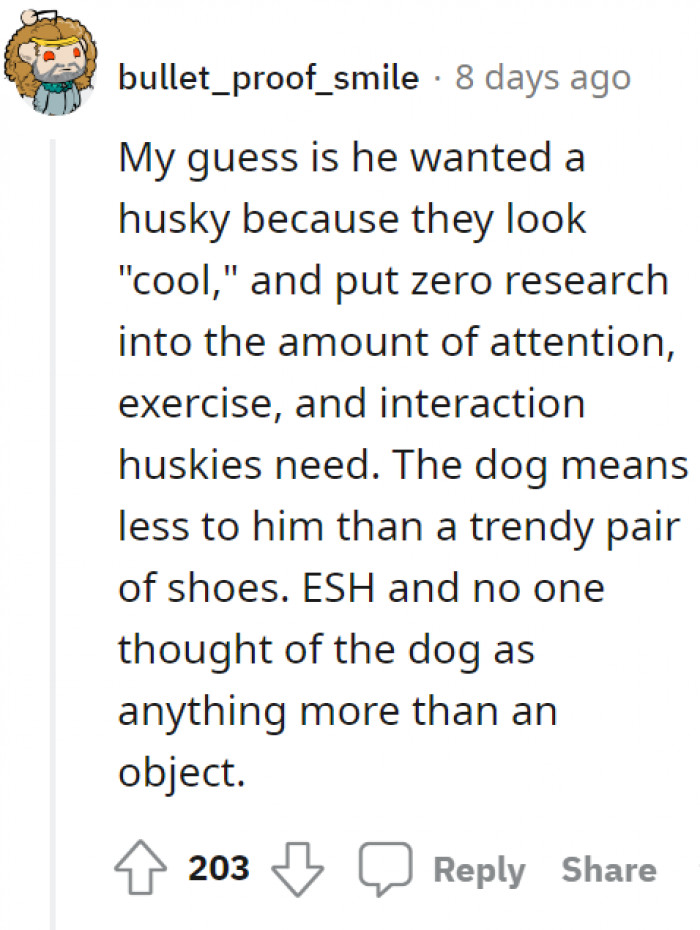
People were especially hung up on the fact that Zeus was treated like he was disposable.
The incident also raises questions about societal values regarding ownership and the commodification of pets. Research in social psychology indicates that when individuals view animals as property, it can lead to a lack of respect for their well-being. This perspective might contribute to behaviors where pets are treated as disposable goods rather than companions.
Encouraging children to view pets as family members, highlighting their needs and emotional contributions, can shift this narrative. Families can engage in discussions about the responsibilities that come with pet ownership, which can cultivate a deeper understanding of the bond shared with animals.
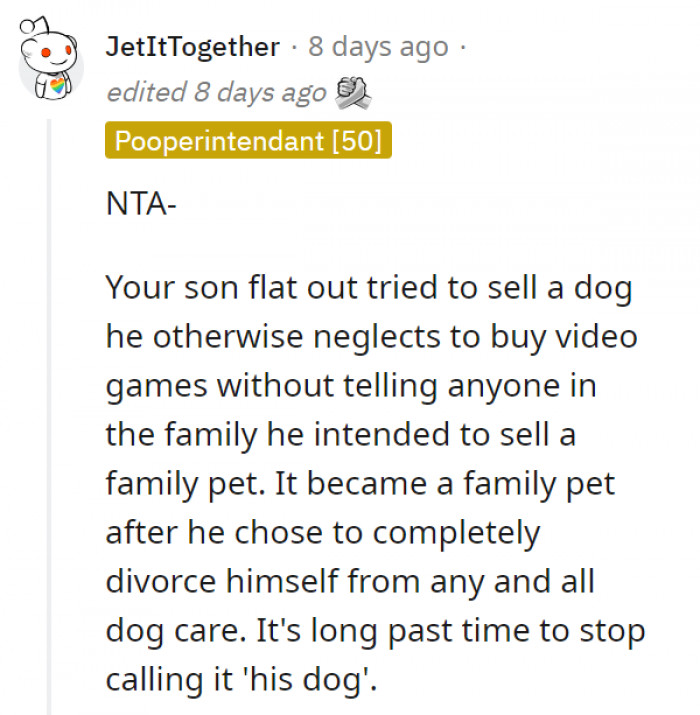
It's definitely disturbing that he tried to sell it TWICE.
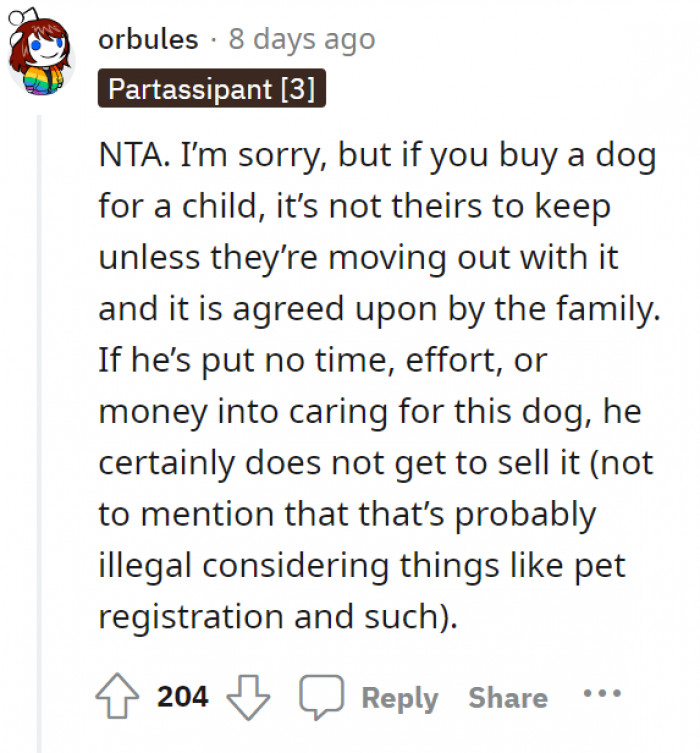
A lot of other people expressed their concerns over how the son is behaving.
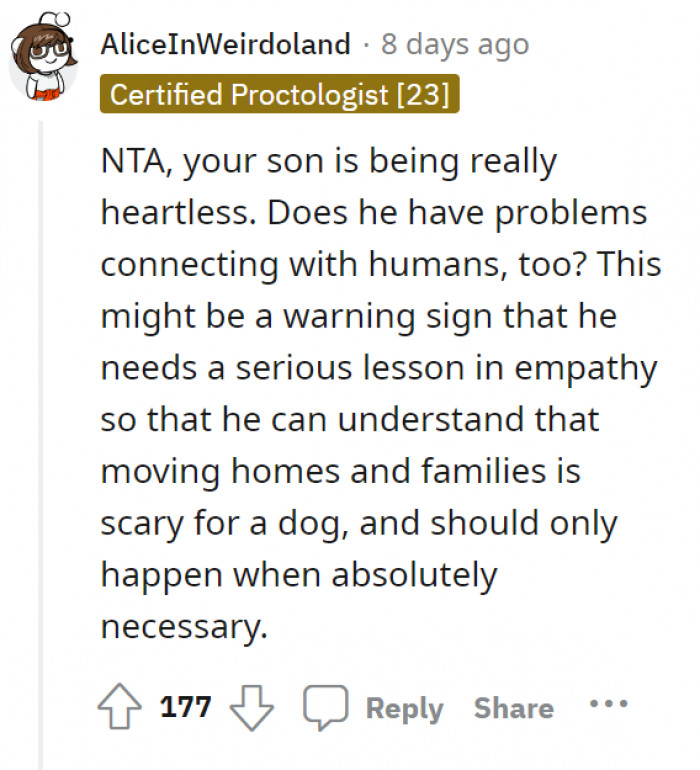
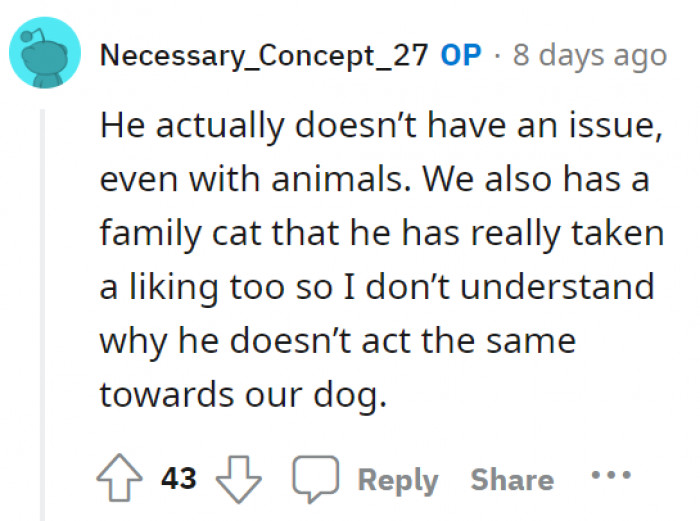
OP refutes the claims that he's having difficulty with animals since he has a cat that he loves, and it is still quite unclear why he despises the dog he asked for in the first place.
Original Post
Understanding the long-term implications of conflicts over pets can lead to healthier family dynamics.
It is hard not to feel bad for Zeus here, especially if the dad had not stepped in when he did.
Comment down your thoughts, or share this article for all your family and friends to see!
This whole mess is a reminder that pets are not just things you can trade away when you want something new.
Ready for another family dog tug-of-war, see how a negligent owner tried to claim “our dog” at cleanup time.
Share this article: