
Dad Declines to Foster Dog While His Daughter and Ex-Wife Move Out Temporarily; Daughter Becomes Distant Over His Refusal

A dad said no to fostering his daughter’s dog, and it did not just create a small family inconvenience. It turned into a full-on emotional fallout when he refused to take the dog while his daughter and ex-wife moved out temporarily.
Here’s the messy part: the daughter wanted him to step in, the ex-wife was apparently counting on him to cover the gap, and OP is blunt about it, he doesn’t even like dogs, plus his schedule and lifestyle would make real care a problem. So he declined, and instead of it being the end of the conversation, his daughter started pulling away.
Now OP is stuck wondering if his “I can’t do this” was reasonable, or if he accidentally lit the fuse on the worst possible time for family drama.
The original poster (OP) wonders if it was wrong to refuse fostering his daughter's dog.
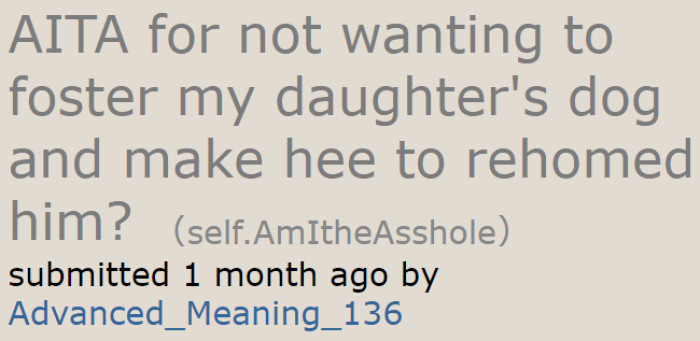
The OP isn't a fan of dogs, and since he has a lifestyle that won't allow him to care for a dog properly, he refused his daughter's request.
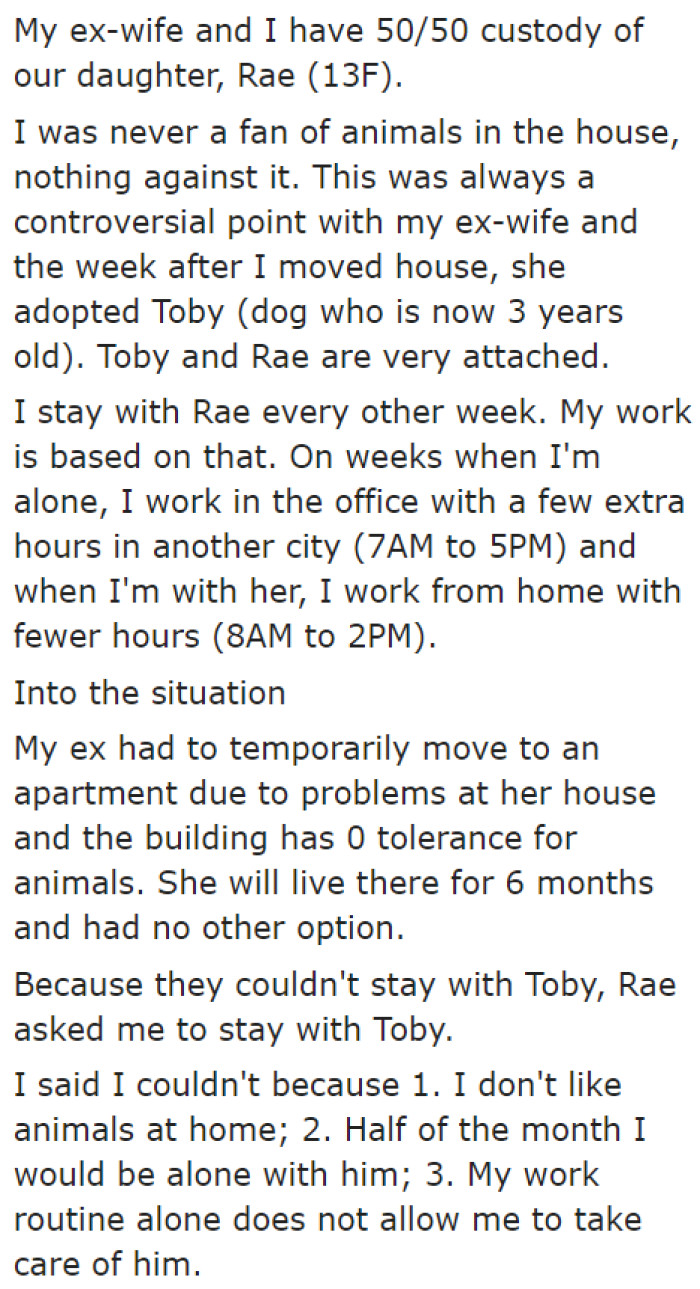
His daughter became emotionally distant from him after he refused to take care of the dog.
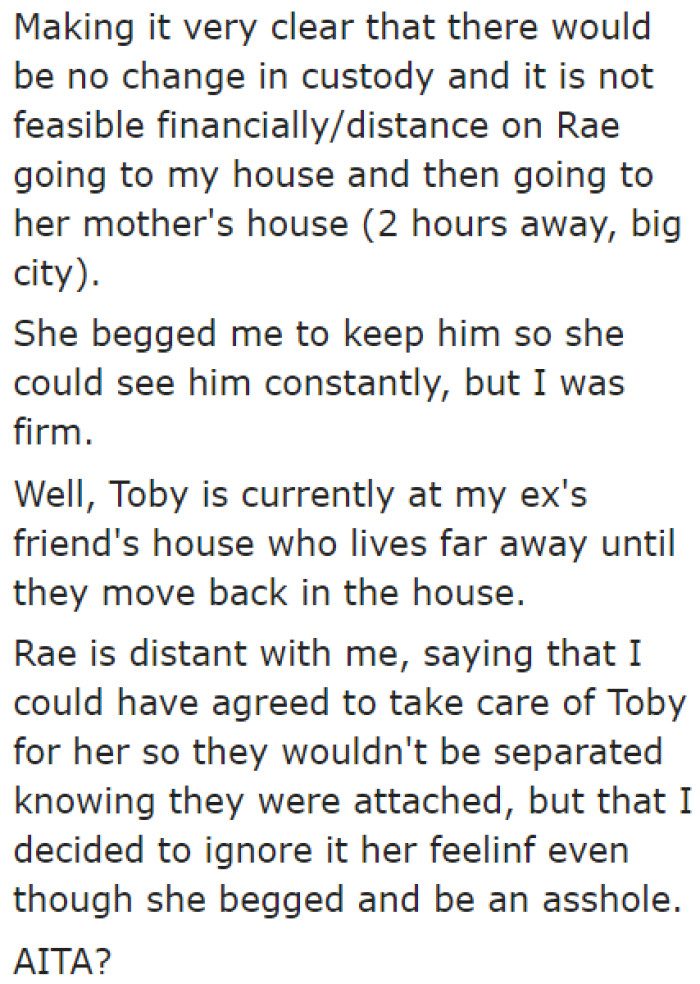
OP’s refusal came right when his daughter and ex-wife were already in “temporary move” mode, so the dog request hit at the worst possible time.
The father's decision to decline fostering a dog while his daughter and ex-wife are temporarily moving out reveals a complex interplay of personal circumstances and emotional readiness. His choice underscores a prioritization of existing family responsibilities over the potential complications that a new pet could introduce. This situation illustrates how divergent views on pet ownership can impact familial relationships, as the father's refusal may lead his daughter to feel distanced or unsupported during a transitional period. Such decisions often provoke feelings of guilt or inadequacy, especially when they clash with familial expectations regarding companionship and support.
The OP not liking dogs is a valid reason to refuse. It's better to pass the responsibility to someone else who is capable of taking care of it.
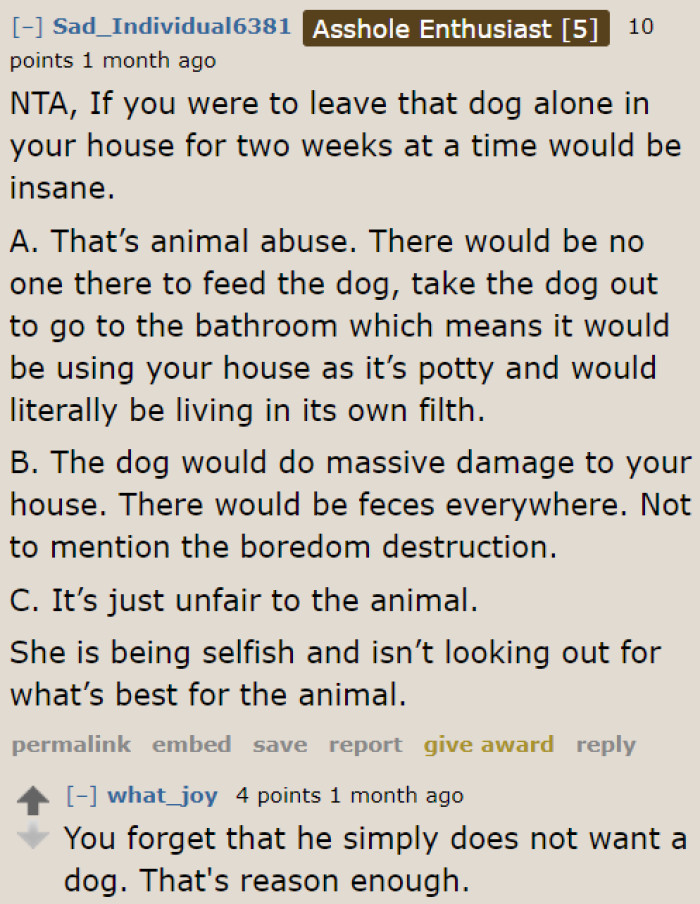
Even if he agrees, his schedule isn't ideal for dog care. It would likely end up being neglected.
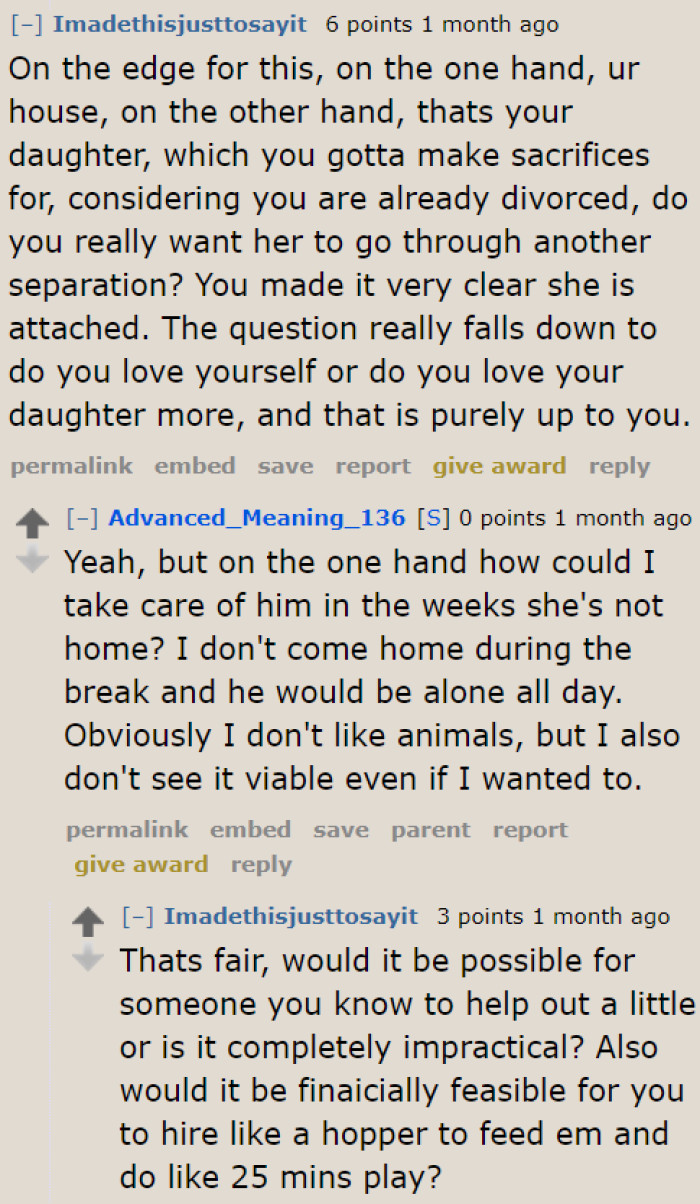
The ex-wife should have considered other options since the dog is primarily her responsibility. She can't just dump it on the OP.
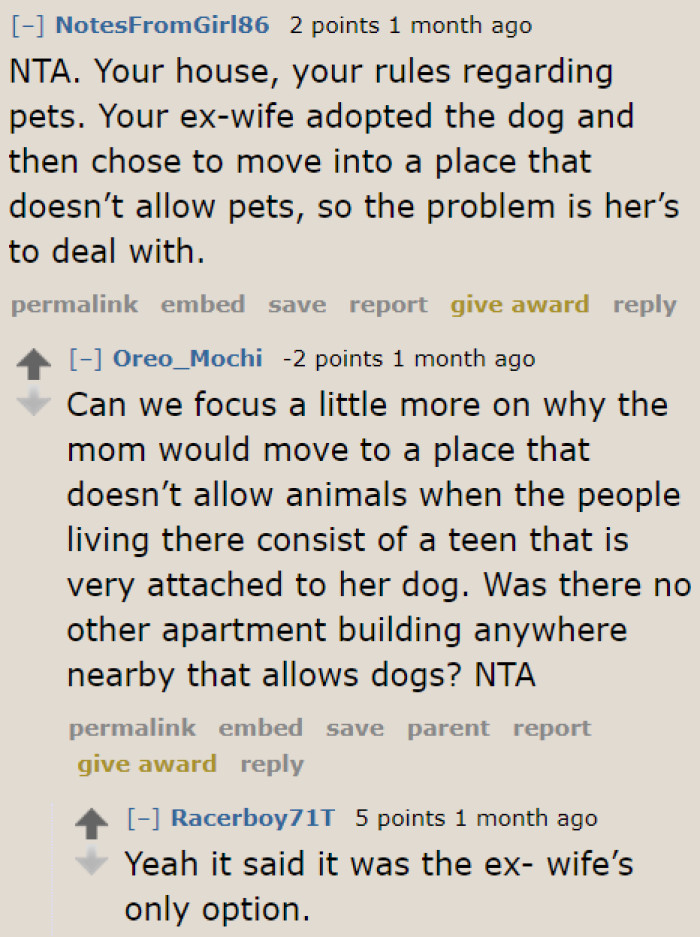
The daughter didn’t just hear “no,” she watched her dad say it while admitting he’s not a dog person and probably wouldn’t be able to follow a proper care routine.
This matches the ex who pressured a mom to rehome her daughter’s pets due to his son’s allergies.
Research in family dynamics highlights the challenges of balancing caregiving responsibilities.
It was a poor decision for the ex-wife to get a dog. She can't manage it properly during times like this.
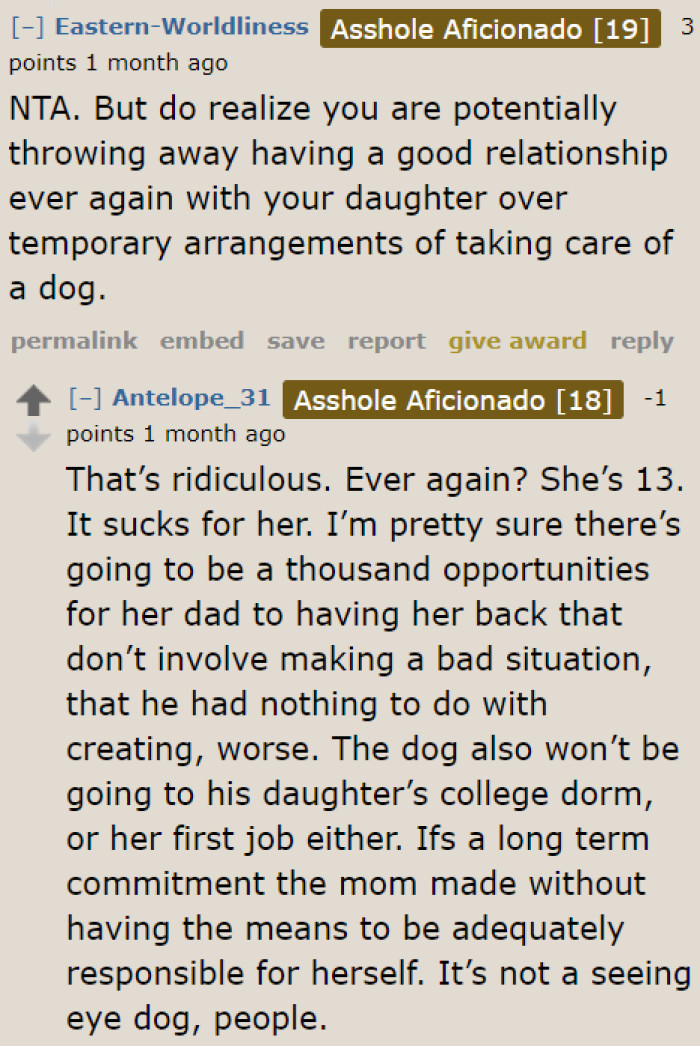
The dog needs to be fostered in a home where people can actually take care of it properly.
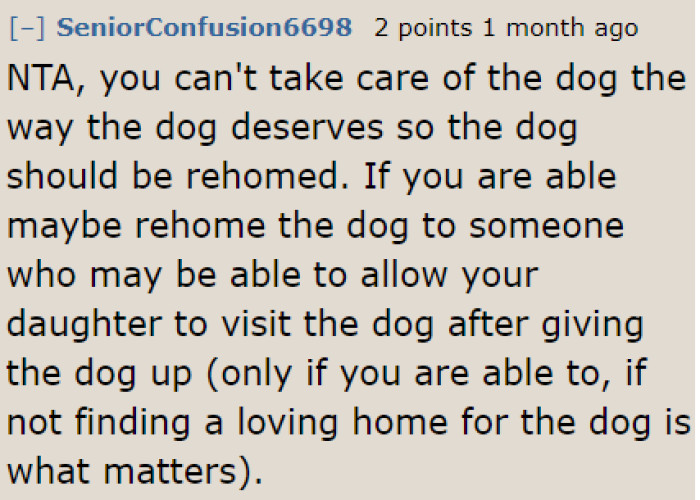
Others believe that he should just suck it up for his daughter.
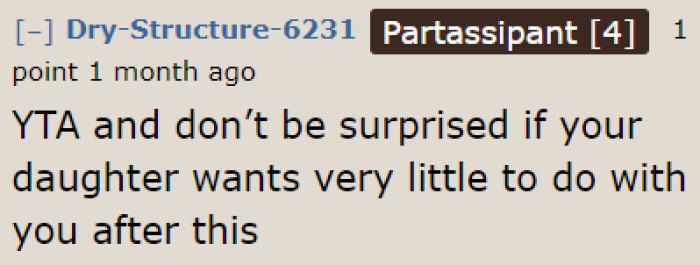
After the dog stayed behind and OP stood his ground, the daughter got emotionally distant, like the refusal wasn’t about the dog at all.
The situation in the article highlights the potential for misunderstandings when one family member, in this case the father, declines to foster a dog while his daughter and ex-wife are temporarily moving out. Such a refusal can lead to feelings of distance, as evidenced by the daughter's reaction. Open discussions about feelings and concerns surrounding fostering a pet could have played a vital role in preventing this rift. Encouraging all family members to voice their thoughts may have led to a more harmonious decision-making process, ultimately fostering understanding rather than division.
With divorced parents, the situation is already difficult for the child. This user believes that he should still do something about the dog since his daughter loves it so much.
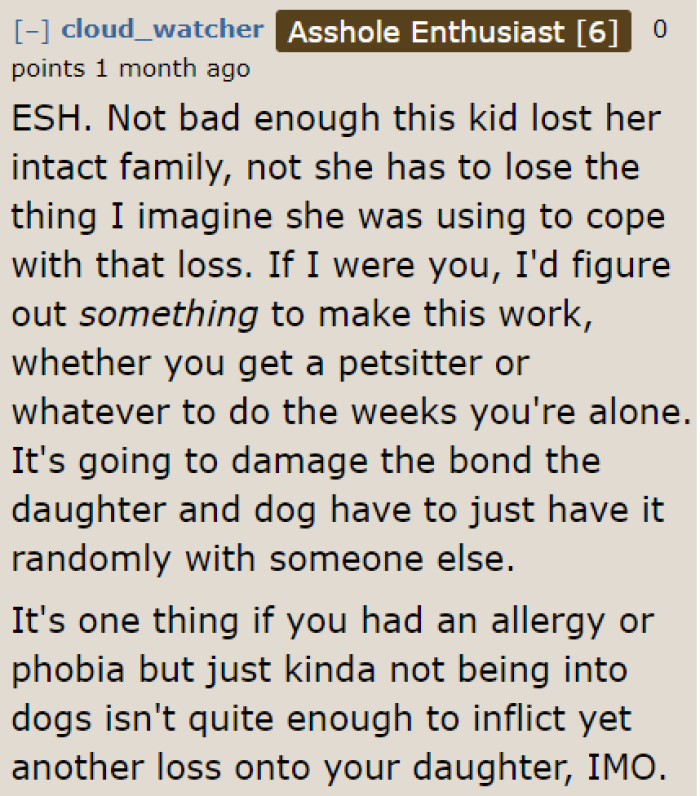
The reality is that the OP's refusal to care for the dog has already disappointed his daughter.
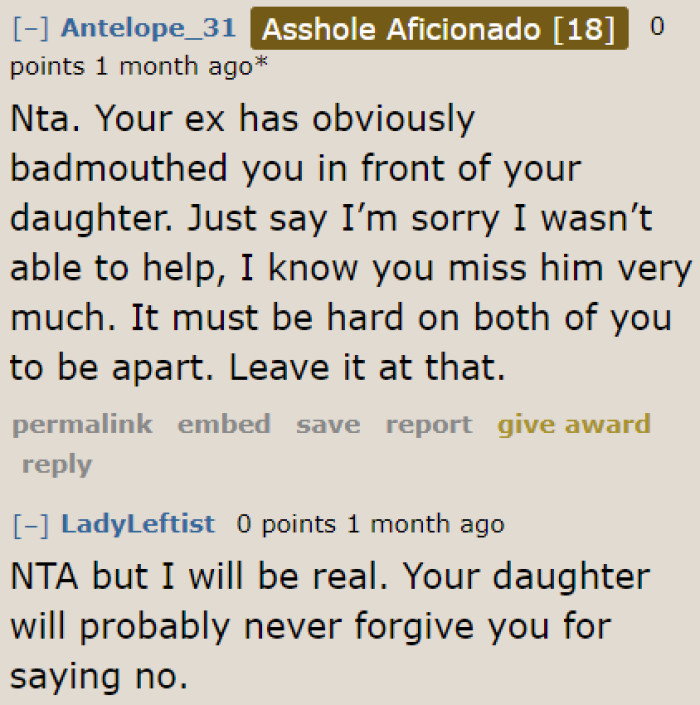
And the ex-wife’s expectation that OP would take over the responsibility during the move left everyone stuck arguing over who was supposed to handle the fallout.</p>
It's tough to be in the OP's and his daughter's situation. But ultimately, it's the ex-wife's fault.
The dog is her primary responsibility. She should be the one finding ways to make things work for her daughter.
And while the OP isn't at fault, he now needs to win his daughter's heart back.
To address the daughter's concerns about the father's decision, it may be helpful to engage in a family meeting.
By openly discussing each person's feelings, families can work toward a resolution that respects everyone's needs.
The situation surrounding the father's refusal to foster a dog highlights the importance of open dialogue within families.
He didn’t just decline a foster request, he changed the temperature of the whole relationship.
Wondering about dog custody too, read how an ex abroad trip sparked full-time care demands. Debating Dog Custody: Ex Wants Full-Time Care For 7-Month Job Abroad
Share this article:





