Husband Makes A Solo Decision About Surgery On A Family Dog, And Now His Wife Doesn’t Want To Help With The Post-Surgery Treatment

Caring for a dog can be rewarding, but it also gets messy fast when big decisions are made without both people being on the same page.
That is exactly what happened in this Reddit story, where a husband moved ahead with surgery for the family dog, and his wife was left dealing with the aftermath. Now the post-surgery care, the blood, and the resentment are all part of the fallout.
It is a simple pet problem on the surface, but the relationship tension underneath makes it a lot harder to ignore.
The original poster discovered a lump on the family dog.
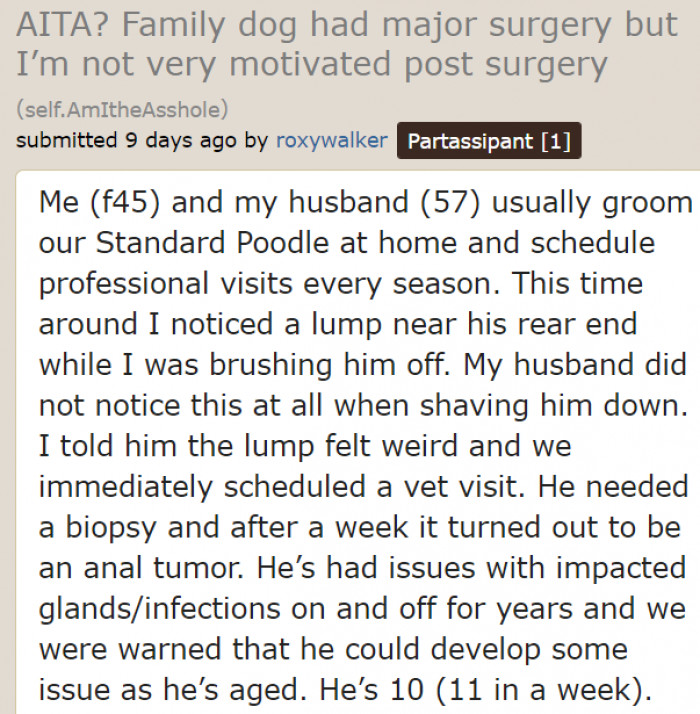
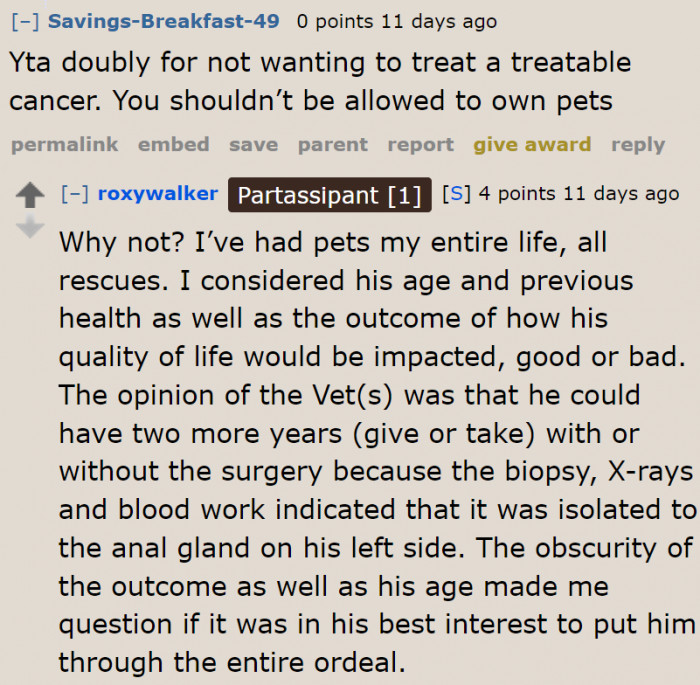
According to the vet, since the cancer is isolated and isn't growing further, it's okay to let it be.
She doesn't want the dog to undergo surgery since it's already old. But her husband thinks otherwise.
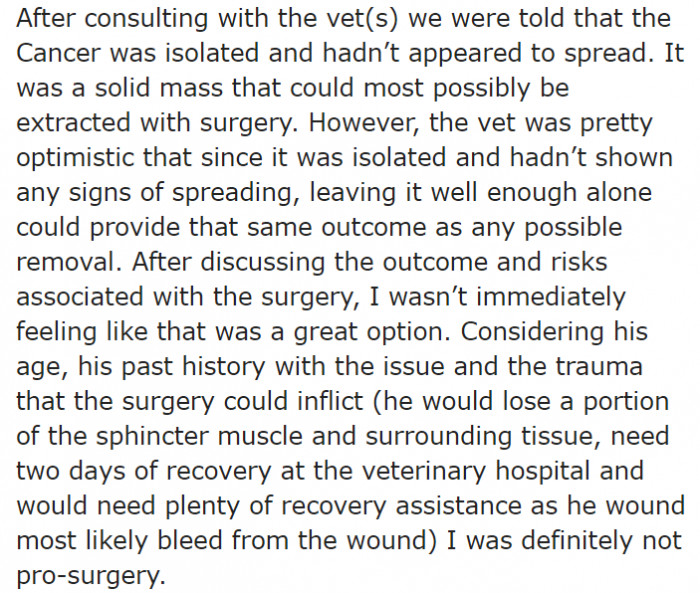
After the surgery, she isn't too willing to take care of it.
The husband's decision to proceed with surgery for the family dog without consulting his wife highlights significant issues in their relationship dynamics. This situation can be analyzed through the principles of social exchange theory, which emphasizes that relationships thrive on perceived costs and benefits. By making a unilateral choice, the husband may have inadvertently fostered feelings of resentment and imbalance within their partnership.
In this case, the wife's reluctance to assist with post-surgery care reflects a breakdown in communication and mutual decision-making. When one partner feels sidelined in crucial matters, it not only breeds conflict but also prompts emotional withdrawal, as seen in their current disagreement over the dog's treatment.
The couple's predicament underscores the necessity of shared values in maintaining a harmonious relationship, especially when it comes to the care of a beloved pet. The decision made by the husband regarding the dog's surgery without consulting his wife reveals a significant gap in their communication and mutual understanding. Open discussions about their beliefs and approaches to pet care are essential to avoid such conflicts. When partners are aligned in their values, it fosters a deeper connection and a sense of cooperation that is crucial for navigating the complexities of shared responsibilities, particularly in the realm of caring for a family pet. The current discord serves as a reminder that effective communication is vital for couples to work together and support one another, especially during challenging situations like post-surgery care for their dog.
The situation surrounding the husband's unilateral decision to proceed with surgery for their dog reveals significant underlying relational dynamics. When one partner takes such a major step without consulting the other, it can create feelings of exclusion and lead to resentment, as seen in the wife's reluctance to assist with post-surgery care. This incident underscores the importance of collaboration in decision-making, particularly in shared responsibilities like pet care. The lack of joint involvement not only affects the immediate situation but can also strain the relationship, highlighting the need for open communication and teamwork in family matters.
That is where the tension really starts to show.
Understanding Decision-Making in Relationships
In this case, the husband's unilateral decision about the surgery reflects a breakdown in communication and shared responsibility.
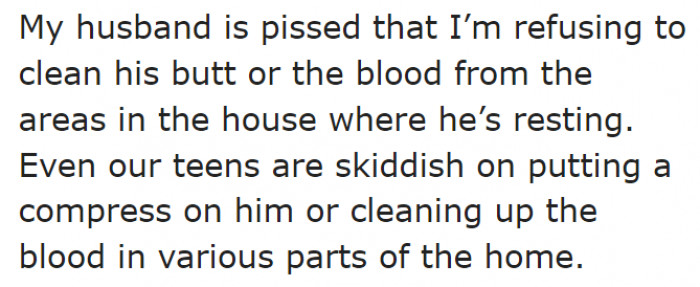
The couple got into an argument about the woman's unwillingness to clean up the dog's blood.
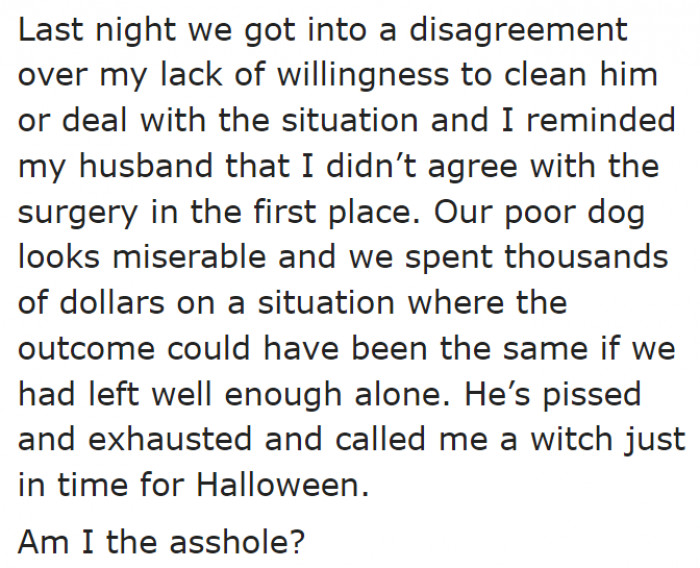
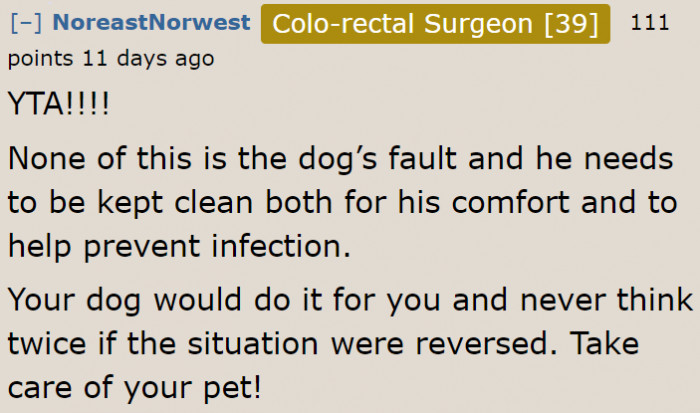
Redditors harshly criticized the original poster (OP), because a dog will always be a responsibility through the good times and the bad ones.
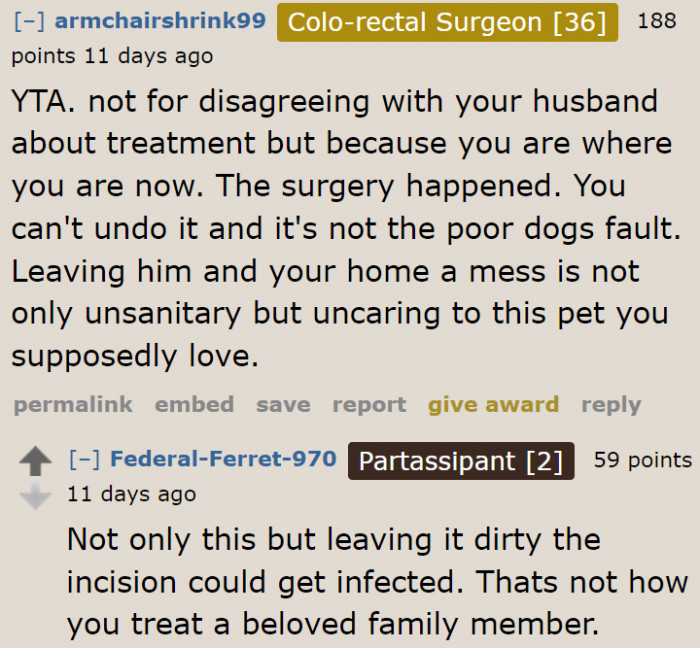
The community insists that she needs to take care of the poor dog.
The situation surrounding the husband's unilateral decision about their dog's surgery reveals a significant underlying issue in the couple's communication dynamics. The article highlights how such decisions can strain relationships, particularly when one partner feels sidelined. Effective communication is essential; without it, resentment can fester, as seen in the wife's reluctance to assist with post-surgery care. The necessity for couples to openly discuss their values and preferences cannot be overstated, especially in matters that significantly impact both partners. This case illustrates the importance of collaborative decision-making in fostering trust and emotional intimacy, which are crucial for maintaining a healthy partnership. Active listening and validation of each other's concerns are vital for creating a supportive environment, particularly when navigating challenging situations like pet care. As the couple faces the repercussions of this decision, it serves as a reminder of the importance of shared responsibilities in a relationship.
This situation illustrates the importance of involving both partners in significant decisions regarding their pets.
This can lead to resentment and a sense of disconnection, as seen in this scenario.
Addressing these feelings openly can help partners navigate their expectations regarding shared responsibilities.
Owning a dog is a commitment. You can't just back out.
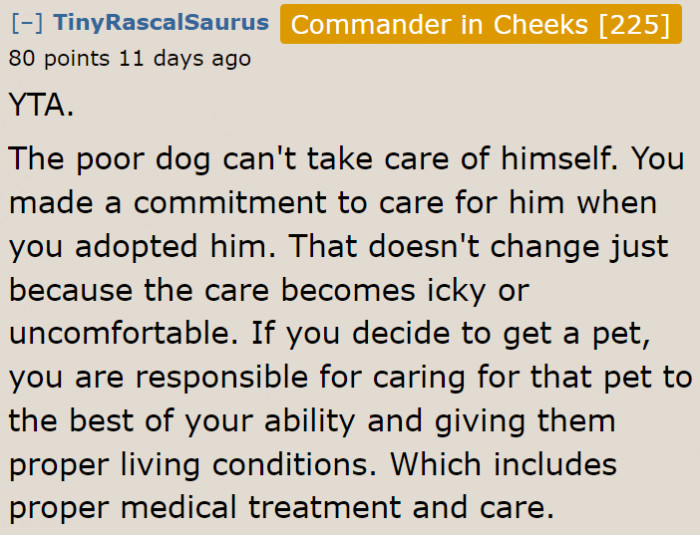
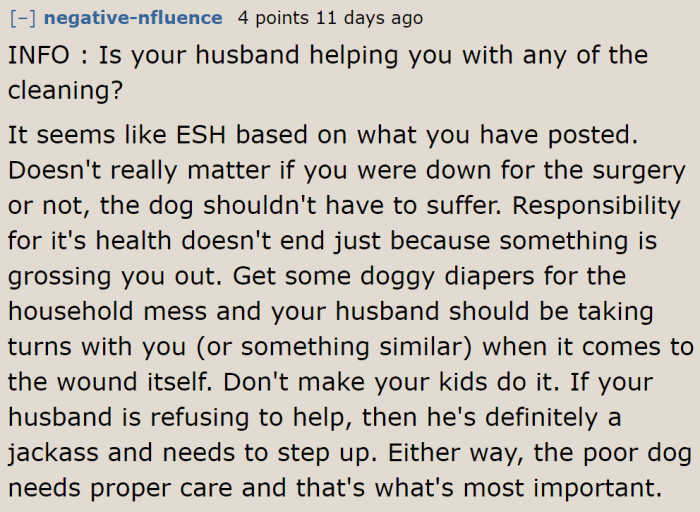
A user suggested using dog diapers to avoid the mess.
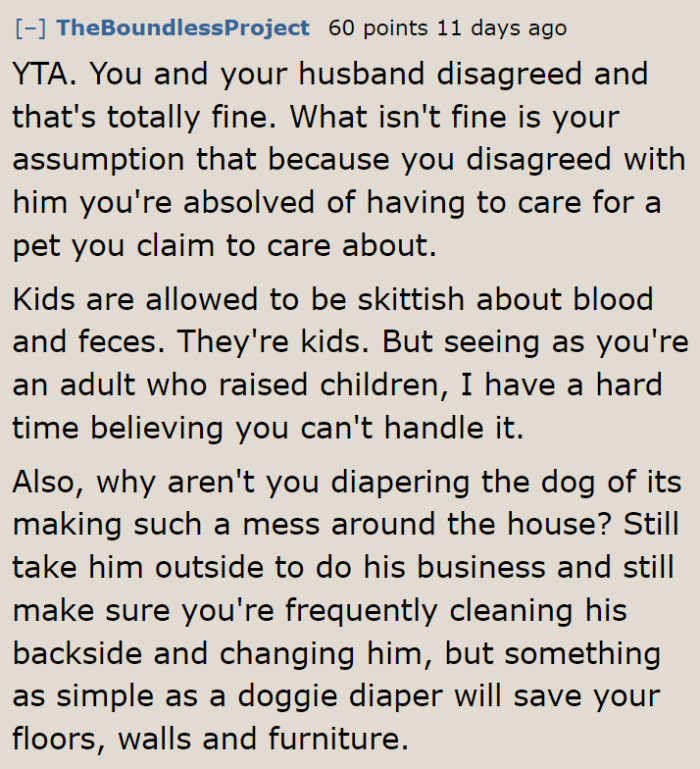
Redditors feel that there isn't any sympathy coming from the OP.
Conflict Resolution Strategies
The discord between the husband and wife over the dog's surgery underscores the need for effective conflict resolution strategies. Research shows that couples who engage in constructive conflict management are more likely to achieve satisfying resolutions.
Practicing these skills can lead to better outcomes for both the couple and their pet.
The Emotional Impact of Caregiving Decisions
When one partner feels overwhelmed by the other's lack of involvement, it can create an imbalance that fosters conflict.
Open discussions about feelings and expectations can help both partners align their responsibilities more effectively.
The Emotional Impact of Pets in Relationships
Pets can evoke strong emotional responses, and their care often reflects deeper relational dynamics.
On the flipside, other people are questioning the husband's inaction.

It's the old dog who suffers in the end.
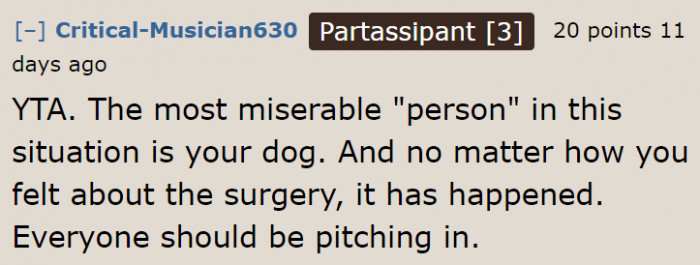
The OP and her husband are supposed to be a team in this situation.
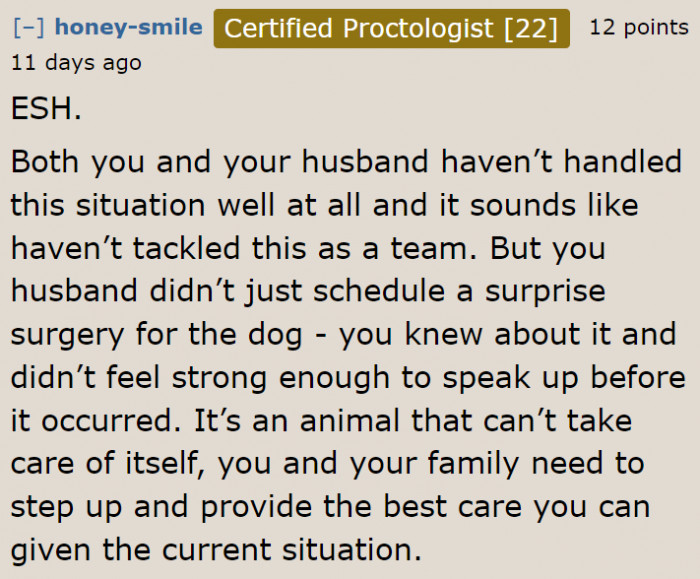
Emotional responses to veterinary decisions can reflect deeper values and fears.
It’s also like the wife who asked her husband to pick up dog poop while she felt sick, and he refused.
The situation surrounding the husband's unilateral decision to proceed with surgery for the family dog highlights the complexities of shared responsibilities in pet ownership. When one partner makes a significant choice without consulting the other, especially regarding something as impactful as a pet's health, it can lead to unresolved emotional tensions. This disconnect may create friction in caregiving roles, as seen in the wife's reluctance to participate in post-surgery care. Addressing these emotional undercurrents is essential for fostering understanding and cooperation in their shared responsibilities. Open conversations about expectations and feelings can pave the way for a more unified approach to their dog's care, ultimately benefiting both the pet and the family dynamic.
Using 'I' statements, like 'I feel concerned about the dog's well-being,' can help reduce defensiveness and promote empathy.
She needs to clean up because it's unsanitary.
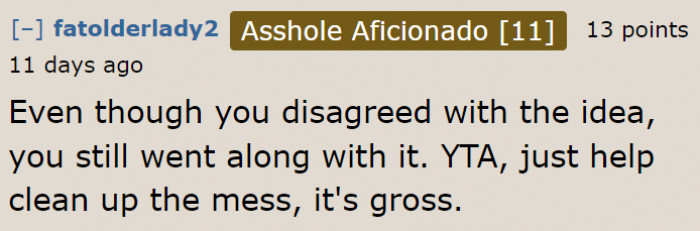
It was an abrupt decision. She didn't get a chance to stop the situation.
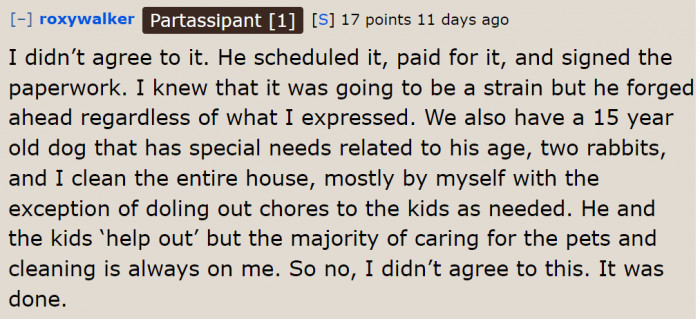
Other redditors understood her situation and are on her side.
The husband's unilateral decision to proceed with the surgery without consulting his wife has not only strained their relationship but also created a rift in their shared responsibilities. Understanding each other's perspectives is vital in situations like these, where the well-being of a beloved pet is at stake.
By fostering empathy, they could bridge the gap created by this decision. If the husband had acknowledged his wife's feelings and concerns before making such an impactful choice, they might have reached a collaborative decision that respected both their viewpoints. Such a shared understanding is crucial in maintaining a harmonious household, especially when navigating the complexities of pet care.
Strategies for Effective Communication
To address the conflict over pet care, implementing effective communication strategies is essential.
Navigating Conflict in Pet Ownership
Conflict can arise in pet ownership when partners disagree on care and treatment decisions.
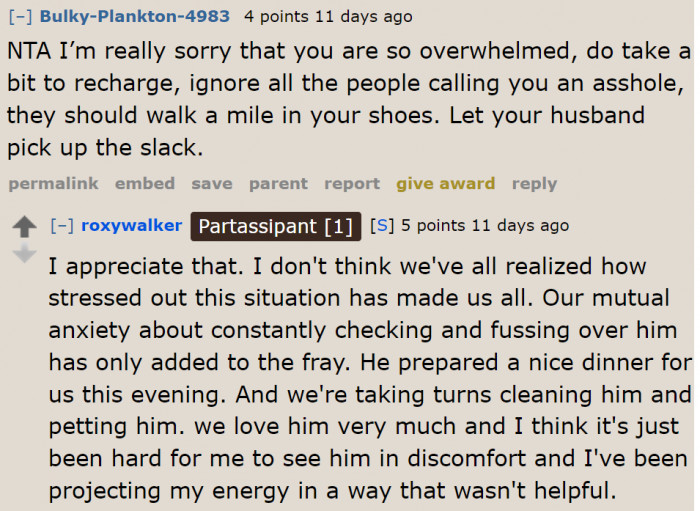
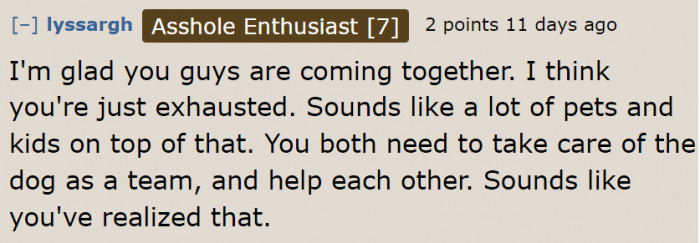
Other Redditors understand that people can get demotivated when they're exhausted.
Although she gets criticized for owning a dog, the OP still defends her decision to get one.
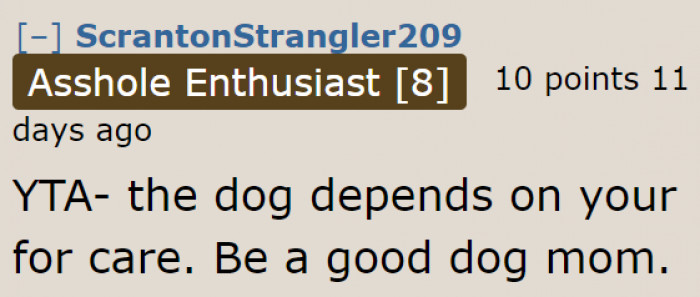
While most people were harsh on the OP, she does needs this reminder.
Behavioral psychology suggests that the couple's differing views may stem from their attachment styles.
Additionally, setting regular check-ins to discuss pet care responsibilities can help both partners stay accountable.
Therapists often recommend establishing a joint pet care plan that includes both partners' views and concerns.
This could involve outlining the dog's needs and treatment options while ensuring both partners feel heard.
Such strategies can enhance emotional connections and reduce conflict.
Others believe that it's the responsibility of the husband to clean up since he's the one who made the decision.
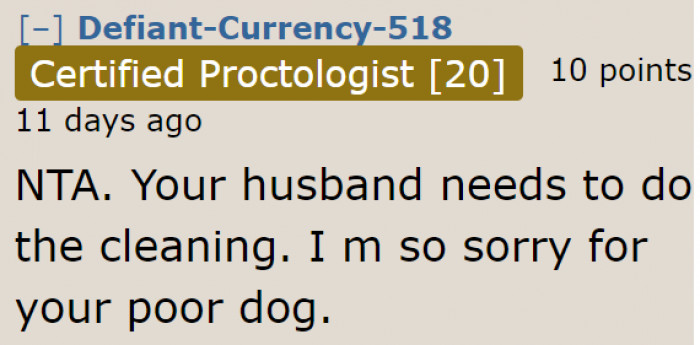
The OP can't just leave things as they are.
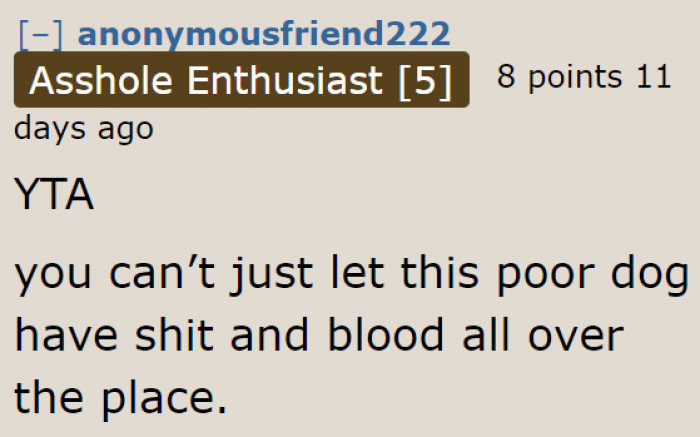
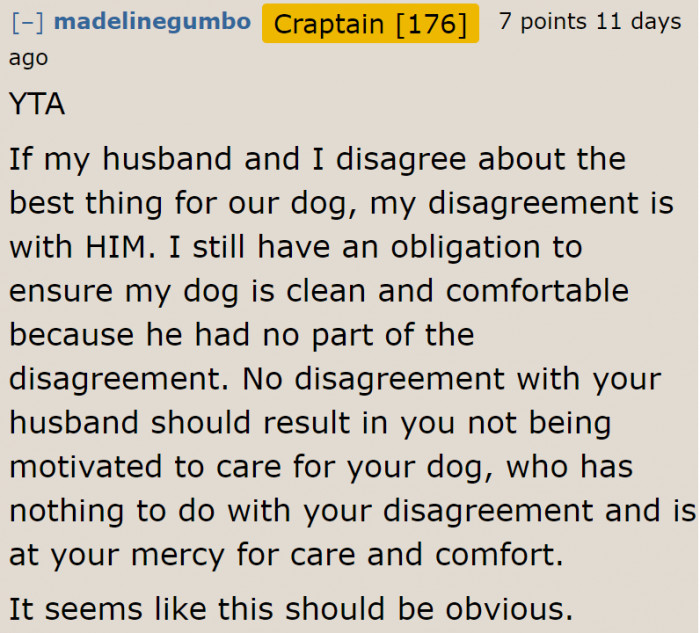
The user has a point. Their disagreement has nothing to do with their responsibility with the dog.
Long-term Implications
Long-term relational satisfaction often hinges on how conflicts are resolved. Research in family psychology shows that unresolved conflicts can lead to emotional detachment and dissatisfaction.
To promote resilience in relationships, regular check-ins about emotional needs and preferences can help. Couples who prioritize ongoing dialogue about their feelings and experiences are more likely to sustain emotional connection and understanding, crucial for navigating challenges like pet care decisions.
The Importance of Emotional Awareness
Building emotional awareness is vital in caregiving roles to prevent burnout and resentment.
Recognizing signs of stress and addressing them early can help sustain a healthy relationship.
Building a Cooperative Environment
Creating a cooperative environment around pet care is essential for maintaining harmony in relationships.
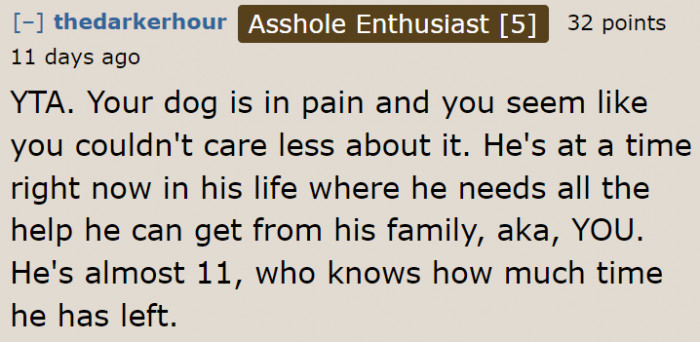
At the end of the day, they need to take care of a member of the family who's suffering.
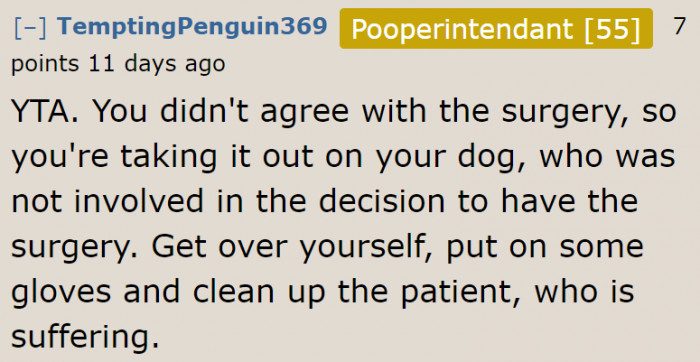
Both sides have faults.
Dogs may be a handful, but when it comes down to it, there's nothing that can compare to the joyful companionship they bring into our lives. So no matter how frustrating things can get, dog owners shouldn't give up on them.
With patience and dedication, the rewards are endless. We hope the husband also realizes that he needs to do his part as well.
This will ease the burden and frustration on the OP's part.
Ultimately, fostering open communication and empathy can significantly improve relationship dynamics when it comes to pet ownership.
This situation highlights the critical need for communication and mutual decision-making in pet ownership.
Ultimately, navigating the challenges of shared pet care requires patience, understanding, and effective communication.
The situation surrounding the husband's unilateral decision about their dog's surgery highlights the critical importance of communication and shared responsibility in pet ownership. The emotional dynamics at play cannot be overlooked, as they significantly impact both the caregiving experience and the couple's ability to come together in support of their pet. This scenario serves as a poignant reminder that successful pet care is not just about the animal's needs but also about the partnership between owners.
In summary, the situation between the husband and wife regarding their dog’s surgery underscores significant themes of communication, empathy, and shared values. By fostering open dialogue and understanding each other's emotional landscapes, couples can navigate challenging decisions more effectively. Ultimately, prioritizing mutual respect and shared goals can promote greater harmony and satisfaction in both their relationship and their caregiving roles.
Now the dog is stuck in the middle of a marriage problem.
Want a different kind of relationship strain during surgery recovery, see how she handled C-section dog boarding and made him stay.
Share this article: