OP's Coworker Reported Her To HR For Bullying After She Snapped And Told Her She Dislikes Having Dogs And Cats In Her House

One coworker kept sending pet adoption ads, even after being told no, and that is where this workplace mess started to boil over.
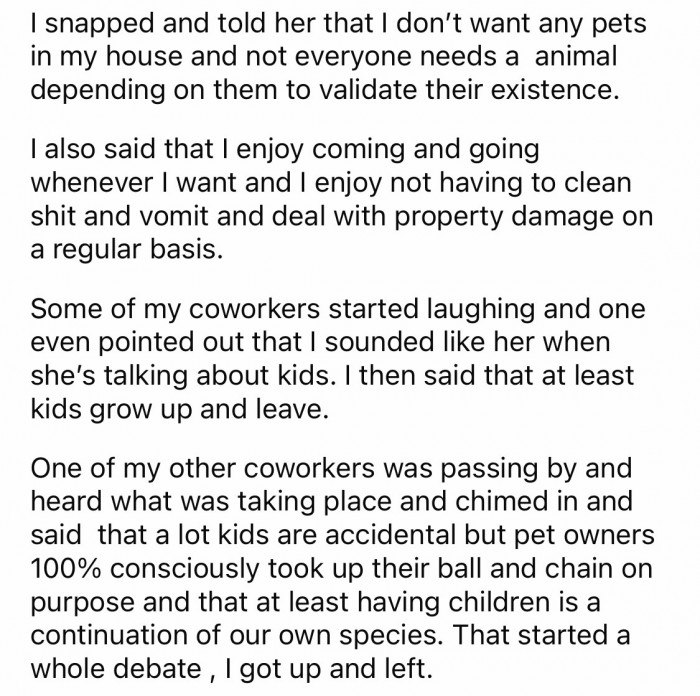
The Reddit poster says she is child-free by choice and also does not want dogs or cats in her home, but her coworker would not stop pushing animal pictures and adoption links on her. After she finally snapped and said she dislikes having pets in her house, the situation escalated fast, and HR got involved.
Now the internet is weighing in on whether she was being rude, or just setting a boundary that should have been respected from the start. Read on.
OP posted that she is child-free by choice.
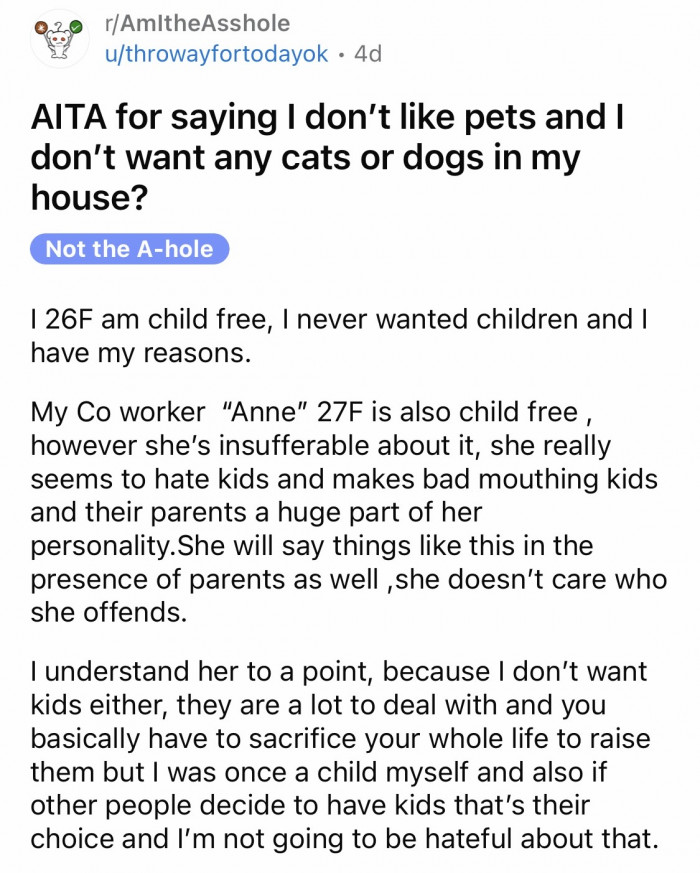
Unlike her coworker, who is also child-free, she does not like to have any pets.
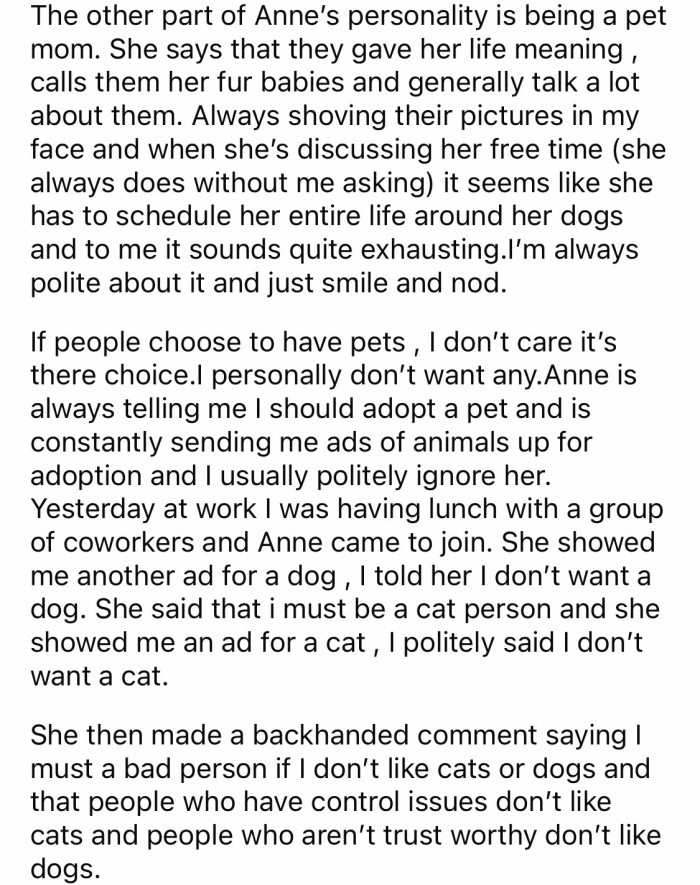
However, her coworker constantly annoys her by sending her ads for animals that are up for adoption, even after she has politely declined numerous times.
In the case of the coworker who reported her colleague to HR for expressing her dislike of pets, it highlights how personal preferences can create tension in professional relationships. The article outlines a fundamental clash of values, while one individual may view pets as beloved companions, another may see them as sources of discomfort. This disconnect is a reminder that acknowledging and respecting differing lifestyles is crucial in maintaining a harmonious workplace. The fallout from this incident underscores the importance of open communication and understanding in navigating interpersonal dynamics, particularly when personal boundaries are crossed.
The recent incident involving a coworker reporting another for bullying over pet preferences highlights the complexities of personal boundaries in the workplace. When one colleague expressed her dislike for both dogs and cats, it sparked an unexpected conflict that underscores the divergent attitudes people have toward pets.
Such preferences can indeed mirror deeper personality traits, revealing how individuals navigate social interactions. Those who are indifferent or averse to pets may prioritize different social dynamics than those who are passionate about their furry companions.
This clash of values is particularly pronounced in diverse work environments, where personal preferences can lead to significant misunderstandings.
Eventually, OP snapped and was reported to HR for bullying.

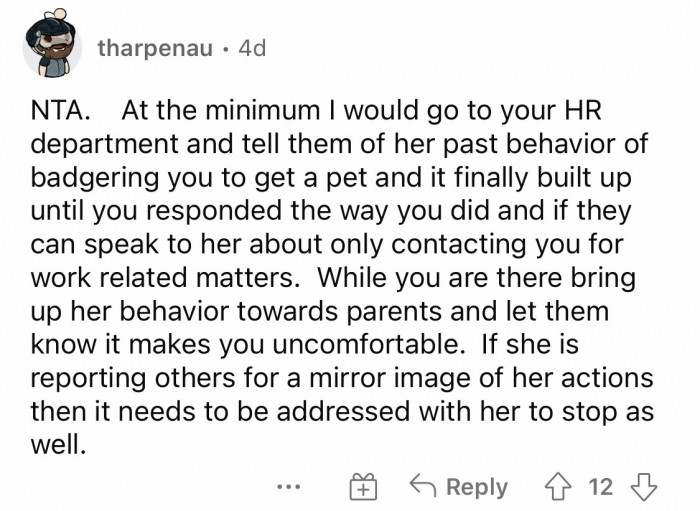
Report to HR that she was harassing you with animal pictures even after you politely told her that you were not interested.
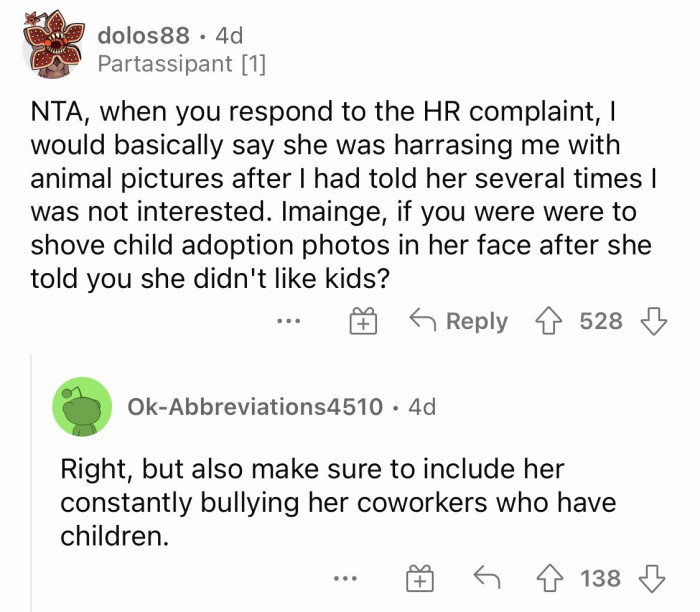
"You just snapped because she keeps bothering you."
This underscores the importance of creating space for open dialogue about personal values and preferences.
Addressing these issues can prevent misunderstandings and enhance relationship satisfaction.
Studies show that personal preferences can significantly impact workplace relationships and team dynamics.
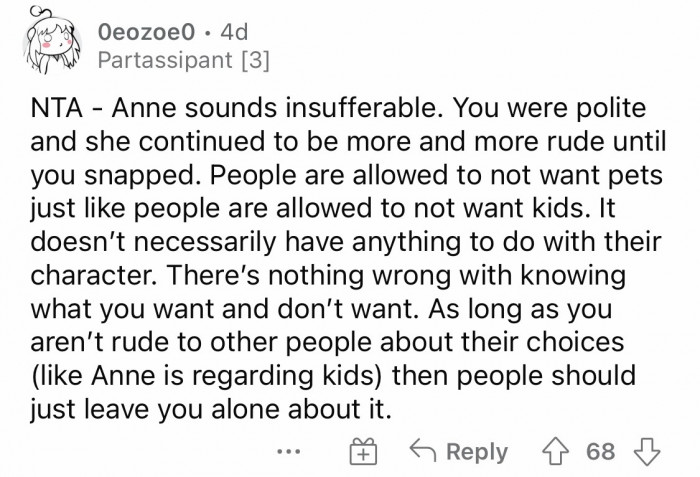
"People are allowed to not want pets just like people are allowed to not want kids." Absolutely!
Hypocrisy at its finest.

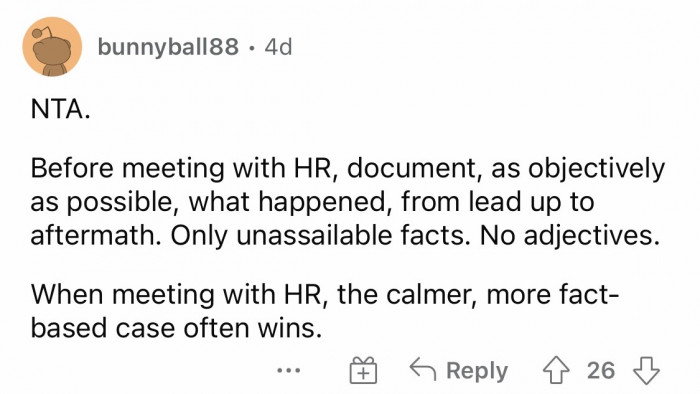
Prepare your documents. Facts will help you win.
Navigating Conflict Over Pets
Conflicts over pets can evoke strong emotions, particularly when they challenge personal values or comfort levels.
Being mindful of these underlying factors can help partners approach disagreements with empathy and understanding.
The Importance of Respecting Boundaries
Respecting personal boundaries is vital for maintaining a positive workplace culture.
When individuals feel that their preferences are acknowledged, it fosters a sense of belonging and acceptance.
Couldn't agree more.

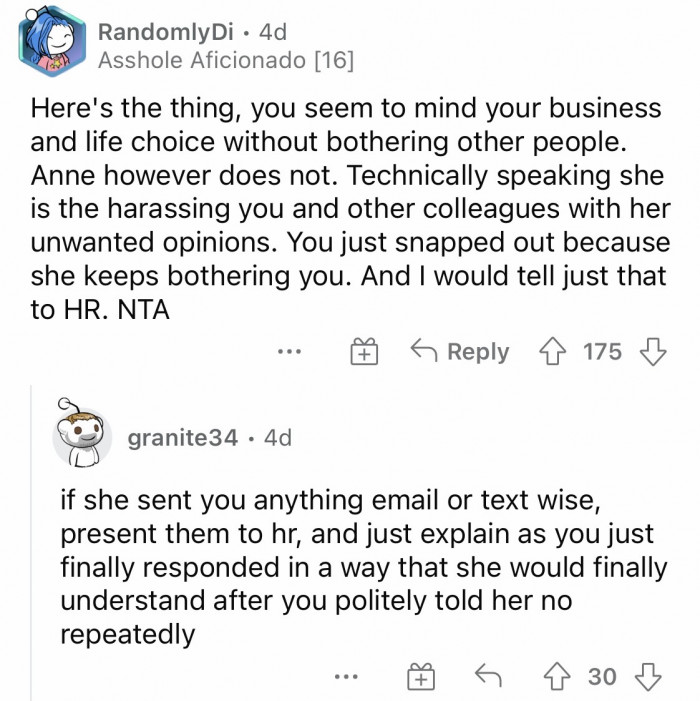
Anne was probably the bully, not you.
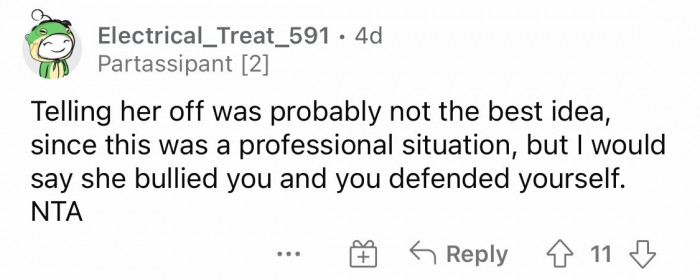
You should tell HR about her past behavior.
Implementing agreements on pet care can alleviate conflicts and foster a sense of teamwork.
Moreover, discussing comfort levels with pets can enhance mutual respect.
To promote a more inclusive atmosphere, organizations should consider implementing policies that respect individual preferences regarding pets.
Everyone who dislikes pets isn't always a bad person.
"Your life, your choices."
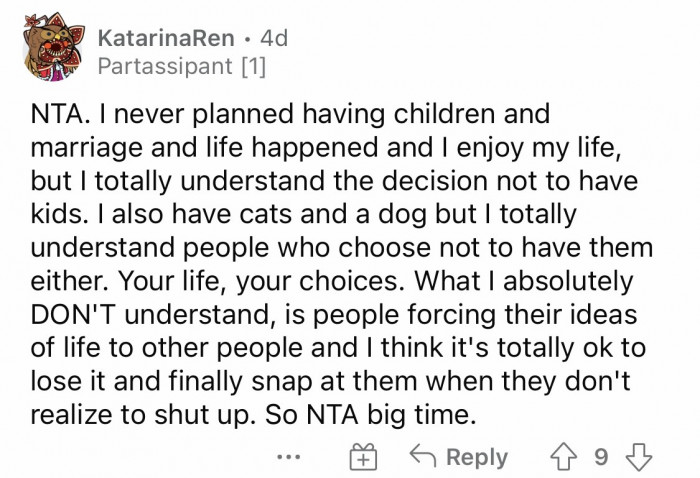
Your preference is valid.

Practical Solutions for Couples
Couples should consider scheduling regular check-ins to discuss their feelings about pets and how they influence their relationship.
This creates an opportunity for both partners to express their concerns and preferences openly.
Fostering Open Communication
Creating a culture of open communication is essential for addressing potential conflicts related to personal preferences.
Encouraging team members to express their feelings can lead to greater understanding and collaboration.
"You were placed in a position to defend your opinion."
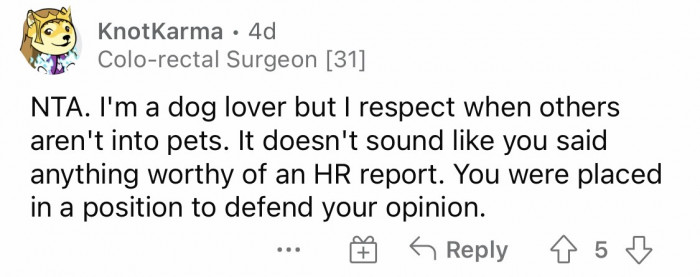
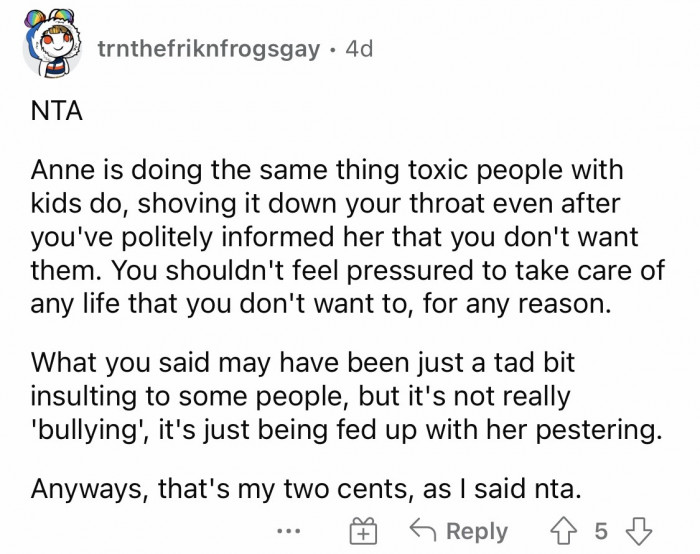
It is toxic when people pressure you to have kids or pets when you clearly don't want to.
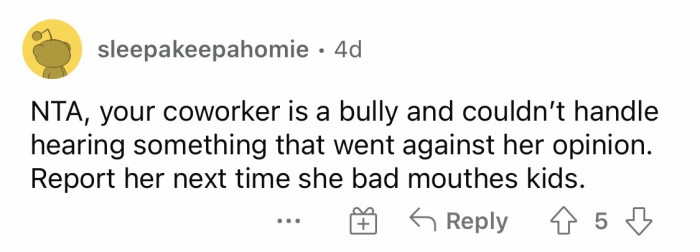
"Report her next time she badmouths kids."
Encouraging empathy during discussions about pet ownership can foster a supportive environment.
Ultimately, prioritizing open communication is key to maintaining a healthy relationship.
Although snapping at a coworker while at work, she definitely went over the line.
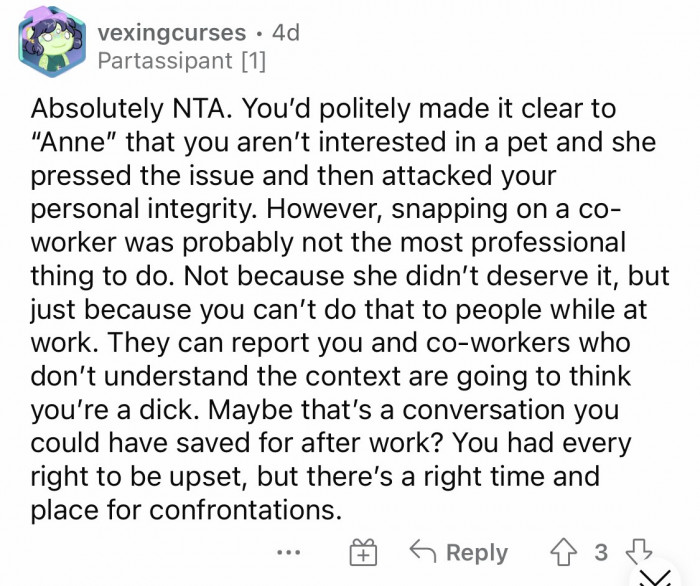
"You were bullied; you didn't bully back. You just stated your opinion."
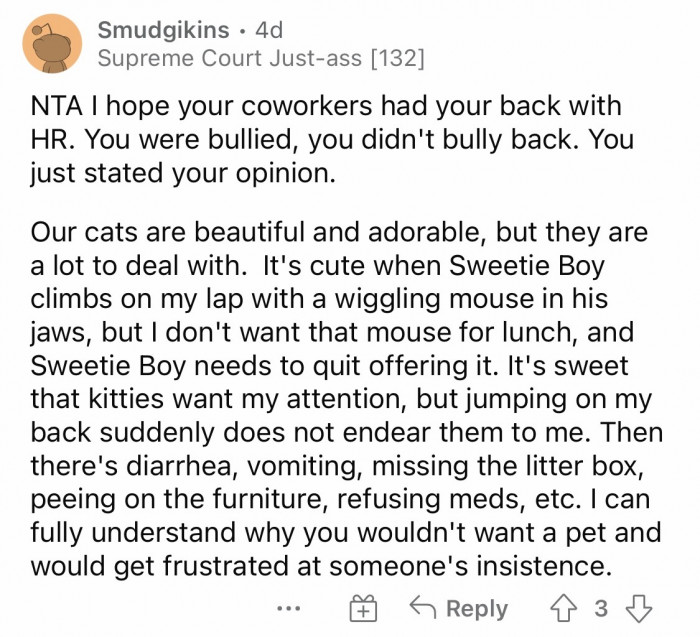
This one is funny, but you can learn from their experience.
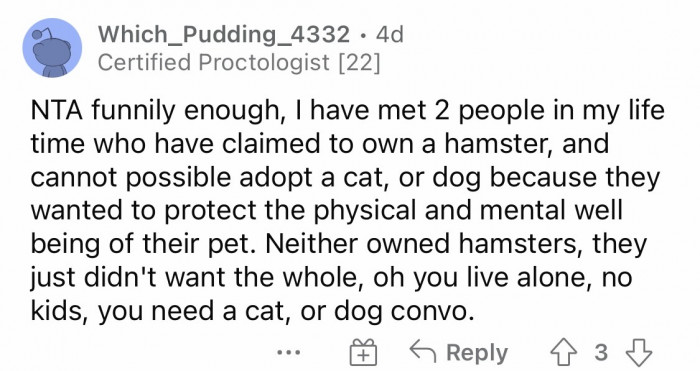
The Importance of Boundaries
Setting boundaries around pet ownership is essential for ensuring that both partners feel comfortable and respected.
Discussions about individual preferences and comfort levels can prevent future conflicts.
"That is completely your right, and you're not the only person in existence who doesn't want an inside pet."
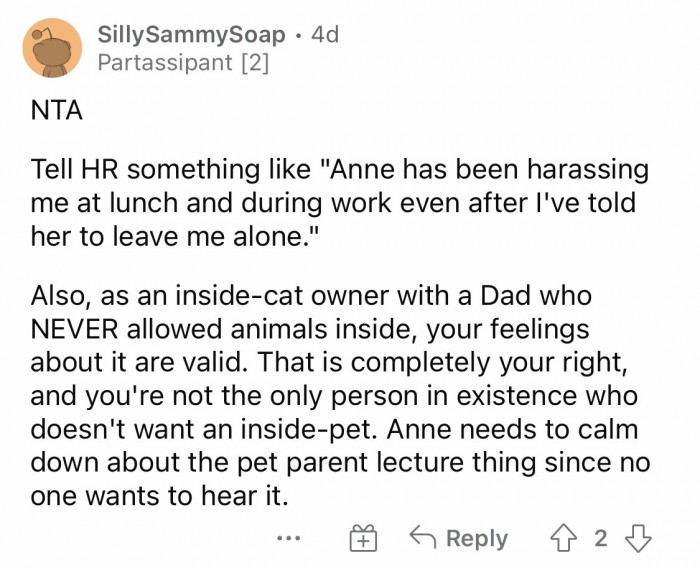
Anne needs to learn how to respect boundaries.
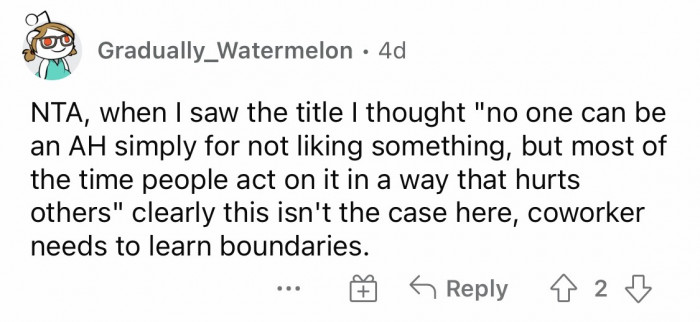
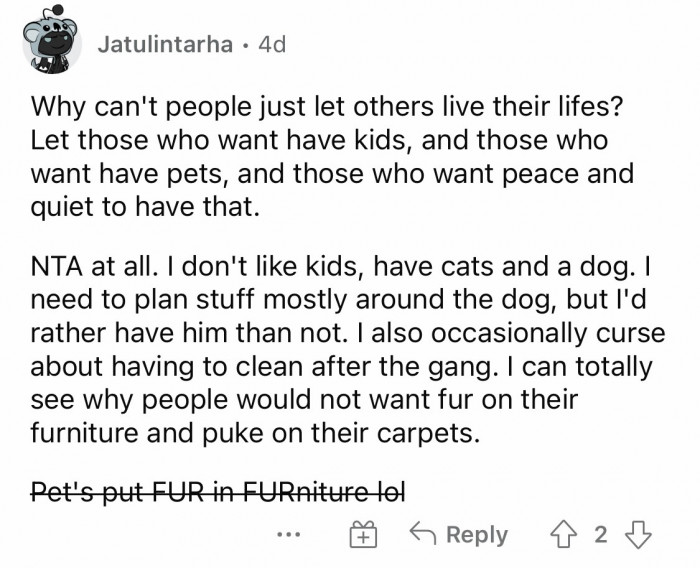
"Why can't people just let others live their lives?"
Engaging in active discussions about personal values and preferences can deepen understanding and connection.
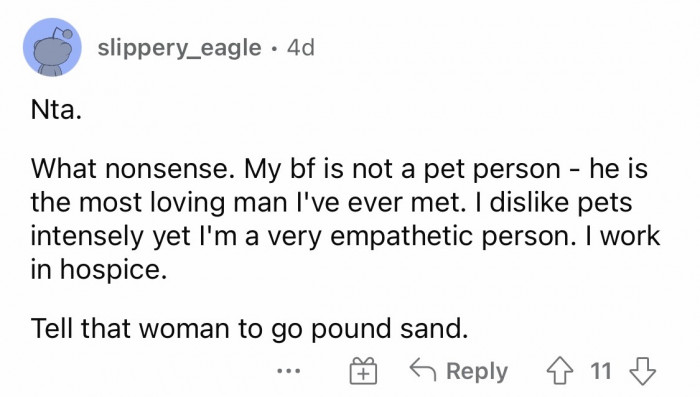
Whatever the reason, people must respect others who might have different preferences, whether it is about having kids, pets, or anything else. Anyone is entitled to live the way they want as long as they are not violating other people's rights.
Have you encountered people who dislike animals or children? Like and share your thoughts in the comment section below!
In the context of the situation described, it is evident that recognizing personal preferences, especially regarding pets, is essential for maintaining harmony in workplace relationships. The co-worker's report to HR reveals a significant disconnect in communication and understanding between the individuals involved.
When one person's disdain for animals collides with another's love for them, it highlights the need for open dialogue and empathy in the workplace. Organizations must strive to cultivate an inclusive environment where such differences are acknowledged and respected.
Ultimately, fostering understanding can not only alleviate tensions but also enhance overall team dynamics and productivity.
In conclusion, the conflict highlighted in this situation underscores the necessity of open communication and mutual respect when it comes to personal preferences in relationships. The article illustrates how a simple disagreement about pets can escalate into a serious issue, as seen when OP’s coworker reported her to HR for perceived bullying. This incident serves as a reminder that understanding each other's values, especially regarding something as personal as pets, is crucial in maintaining harmonious interactions. By addressing such conflicts head-on and fostering empathy, individuals may find a path toward resolution that enhances their overall relationship satisfaction.
Wait until you see why the fiancée snapped after being told “no cat in the house” here.
Share this article: