Woman Refuses To Give A Dog She Found Six Years Ago To His Previous Owner

A woman thought she had finally found a lost dog and given him a safe place to land, but six years later, the story took a sharp turn.
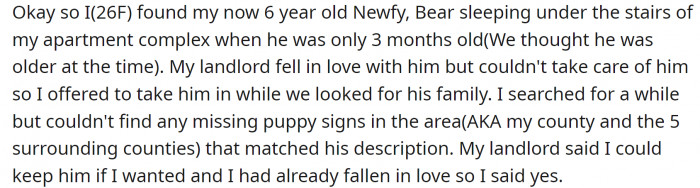
Reddit user u/Sea_War8327 said she found a Newfy puppy under the stairs of her apartment, tried to track down the owners, and eventually kept him when no one came forward. Now the dog is grown, settled, and bonded to her, but a former owner has resurfaced after spotting his pictures online and wants him back.
That is where things get messy, because this is no longer just about who paid for the dog. Read on.
OP asks:

She found a Newfy puppy under the stairs of her apartment six years ago, and she took him in after unsuccessfully trying to locate the owners.
She recently posted his pictures in a Facebook group, and the previous owner sent her a DM.
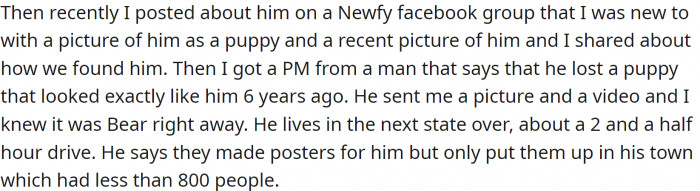
The woman says she found the dog under her staircase and tried to locate the owners before deciding to keep him.
The previous owner wanted to meet and take the dog.
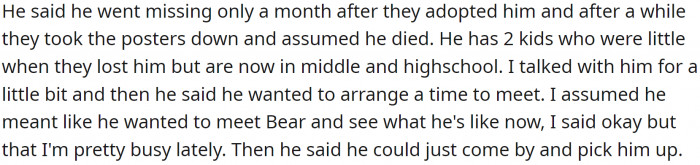
OP started panicking. She couldn't believe he wanted the dog that had spent six years with her. He doesn't even remember his first owners; he was a puppy when he got lost.

He got angry and started threatening.

That is when the conversation stopped being simple.
OP is not sure what to do.

Story in short:

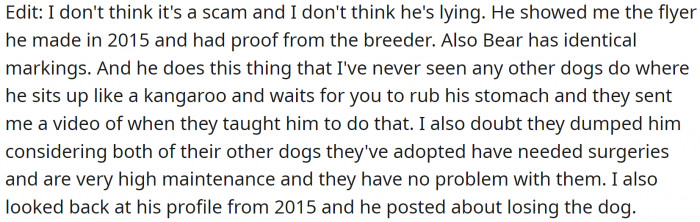
OP also posted clarification about why she doesn't think this is a scam:
Navigating Emotional Responses
Research shows that emotional regulation plays a critical role in how individuals handle distressing situations like the potential loss of a beloved pet.
Practices like mindfulness and cognitive behavioral techniques have been found to help individuals reframe their thoughts about loss, fostering resilience. Implementing these strategies can provide the woman with tools to manage her emotional response, allowing her to process her feelings more effectively and make decisions that consider both her emotional health and the well-being of the dog.
The Redditors backed OP on this one:

The dog is middle-aged now and set in his ways.
He bonded with the OP.

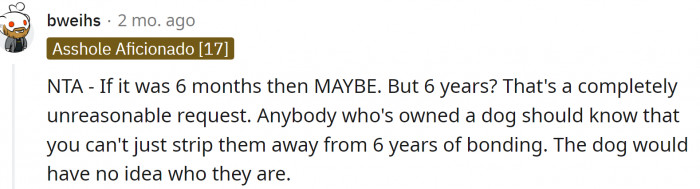
People in the comments were quick to point out that the dog has spent most of his life with her.
It’s hard not to compare this to the woman who refused to return a dog after six months of training and bonding.
It would harm him to change families and environments.
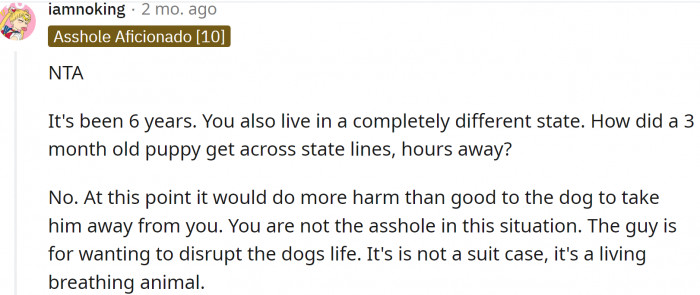
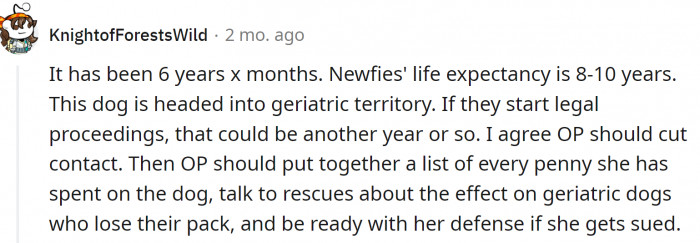
One Redditor suggested OP make a list of expenses, just in case the previous owner decides to take legal action against her:
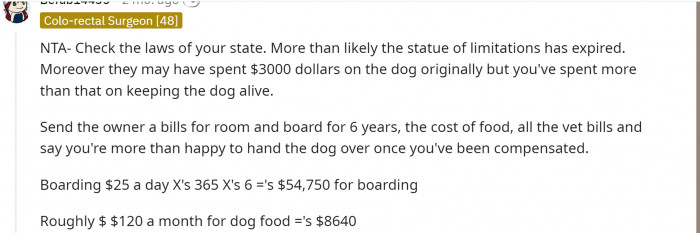
And it is a hefty sum:

The Role of Empathy in Conflict Resolution
Empathy is a crucial component in resolving disputes, particularly in emotionally charged situations like this one. When individuals are able to see the situation from another's perspective, it can reduce hostility and promote collaborative problem-solving. In this case, encouraging both the woman and the previous owner to express their feelings and perspectives can foster understanding. Techniques such as active listening and validation of emotions can help bridge the emotional gap, potentially leading to a solution that honors the attachment both parties have to the dog.
OP agreed it is a good suggestion.

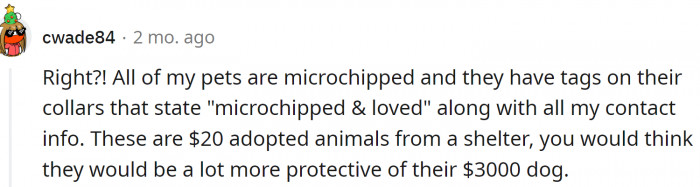
One Redditor shared their experience:
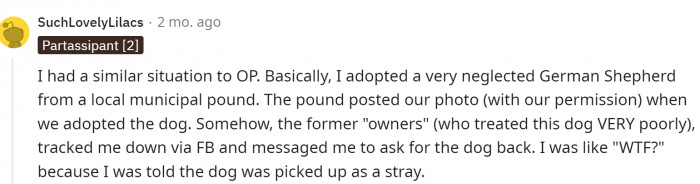
They managed to fight off the previous owners (who were seriously neglecting the dog).
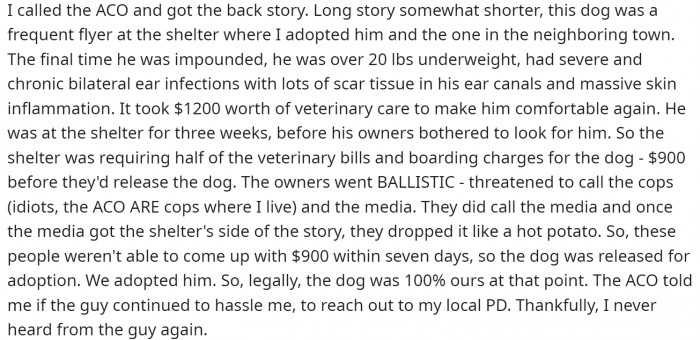
Another commenter said they had been through something similar and managed to keep the dog with the family that actually cared for it.
Makes sense:

This is how you do it:
It all comes down to this:
The Importance of Support Systems
Individuals facing emotional turmoil, such as the woman in this scenario, can benefit significantly from social support. Research published in Health Psychology indicates that strong support networks are linked to better emotional outcomes during stressful life events. Friends, family, or even pet support groups can provide a crucial buffer against the negative effects of stress and anxiety.
Encouraging the woman to seek support from her network can help her process her emotions more effectively and explore her options regarding the dog's future. Additionally, connecting with others who have faced similar situations can provide valuable insights and emotional reassurance, reducing feelings of isolation.
What stands out most is the previous owner's focus on how much he paid for the dog.
Every time pets and prices get mentioned in the same breath, it feels wrong.
The bigger issue is that he seems to ignore the six years the dog has already lived with someone else.
It sure does not sound like he is thinking about the dog's best interests.
The emotional landscape surrounding pet ownership and loss is complex and deeply rooted in psychological principles.
Was she wrong to put her foot down?
Still stuck on the moral math? See why Reddit ruled in AITA for keeping the dog found six years ago.
Share this article: