Redditor Doesn't Want Big Rescue Dog On Her Bed Because He Pees On It, Husband Says She is Wrong

Some rescue stories start with a happy ending and then get messy fast. In this one, a woman and her husband took in a stray dog after finding him skinny, frostbitten, and out in the snow, but the sweet rescue turned into a daily battle over beds, boundaries, and a very stubborn pet.
The dog has clearly had a rough life, and the woman says she has done most of the care and training herself. Even so, she is fed up with him peeing on her bed and leaving hair and mess everywhere, while her husband thinks she should be more understanding because of everything the dog has been through.
That disagreement is where Reddit jumped in, and the comments did not hold back.
OP asks:

She and her husband found a stray dog and took it in

OP has offered the following explanation for why she thinks she might be the asshole:
It’s a pet; people (especially dog people) act like you have to share everything with your dog. I’m not a dog person; to me, the dog is a big stinky animal that my husband shares everything with, including where I sleep.
I don’t mind the dog; he’s a good dog. But I’d really like my bed to be clean, not covered in piddle spots and dog hair.
The poor thing is traumatized and does his business everywhere. He started peeing on their bed

The tension between personal space and shared responsibilities is clearly illustrated in this Reddit scenario.
The woman’s reluctance to allow a large rescue dog on her bed due to its habit of peeing there reveals a fundamental struggle with boundaries in her relationship.
When one partner feels their space is encroached upon, it can lead to significant conflict, especially if they feel their concerns are dismissed.
This situation underscores the necessity of mutual respect and understanding in partnerships.
The husband’s insistence on keeping the dog close may reflect deeper issues, such as trust and security within their relationship, especially as they navigate the complexities of integrating a new pet into their home.
Pets undeniably transform the dynamics of living spaces, especially in terms of personal comfort and boundaries.
Redditors agree that it is completely understandable that she doesn't want the dog on her bed
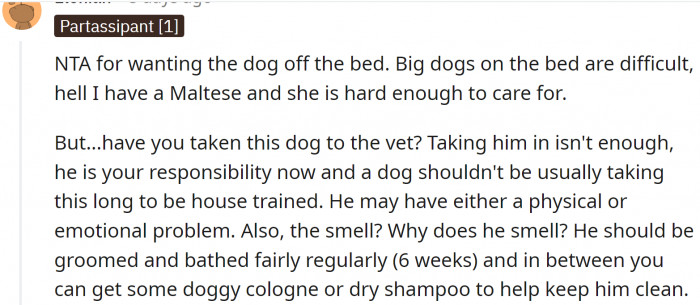
But there may be a deeper issue there

Groomed dogs don't smell that much

The emotional responses elicited by shared living arrangements can often be traced back to one's attachment style and personal history.
Studies suggest that individuals who have experienced insecure attachments may react more strongly to perceived violations of personal space, leading to heightened conflict.
Understanding these patterns can help individuals navigate their feelings in shared living situations better.
Research shows that the presence of pets can influence stress levels in shared living situations.
However, when conflicts arise over pet behavior, it can lead to heightened tension and stress.
OP says:
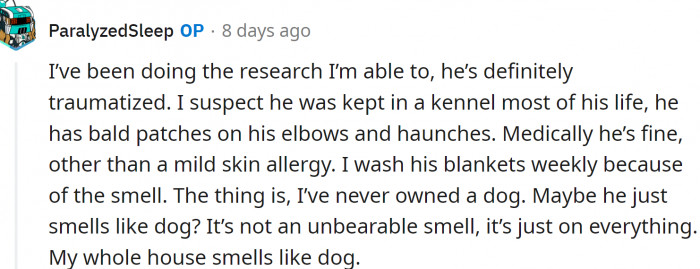
Redditors agree that they need to see the vet again

Not wanting an animal on your bed is okay, people say
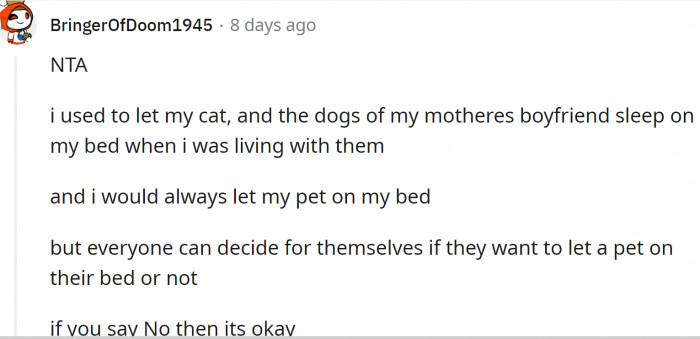
The comments kept circling back to the same thing, the dog is not the villain here.
This is similar to the roommate dispute where his dog peed on the bed, and he claimed it was random.
Effective communication is vital in resolving conflicts related to shared living arrangements.
In any shared living situation, establishing boundaries is essential for maintaining harmony and ensuring comfort for all involved.
Boundaries are important

But training is also important

Sleeping is much more than resting
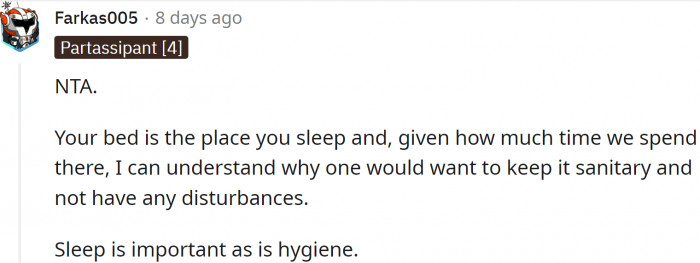
Moreover, exploring the concept of compromise can be crucial in navigating shared living conflicts.
Studies indicate that finding common ground can significantly enhance relationship satisfaction.
Encouraging both parties to articulate their needs and desires can lead to solutions that respect everyone's boundaries.
In this scenario, creating designated areas for the dog could be a viable compromise.
In the debate over whether to allow a large rescue dog in their bed, the Redditor and her husband highlight the importance of setting healthy boundaries within a shared living space.
The situation underscores the need for open discussions about comfort levels when integrating a pet into the household.
The husband's insistence on allowing the dog on the bed reflects a desire for inclusivity but clashes with the Redditor's valid concerns about hygiene and personal space.
“I told my partner I didn’t want him on the bed anymore; he’s a huge dog, and I’ve been trying to be cool, but he stinks no matter how many times he takes a bath. I don’t mind the dog; he’s a good dog. But I’d really like my bed to be clean, not covered in piddle spots and dog hair.
Am I a monster? I feel like a doormat. I just want this one thing to myself. I don’t want to share my bed with a massive dog.”
She is not a monster, but she and her husband should work more on their dog’s training.
That’s where the whole argument really lands.
Compromise is essential in shared living situations, especially when it comes to pets.
Additionally, setting up regular check-ins to discuss any concerns can foster an environment of cooperation and understanding.
In the case of the Redditor who is reluctant to share her bed with a big rescue dog due to the dog's habit of urinating on it, the crux of the issue lies in the dynamics of shared living spaces.
Open communication and finding a middle ground become essential when two people have differing views on pet ownership.
Establishing these boundaries can foster a more harmonious environment, as both partners must consider the impact of their choices on their living conditions and each other.
Ultimately, fostering a culture of respect and understanding in shared living situations can lead to healthier interactions.
In this scenario, the struggle between personal boundaries and the desire to help a stray dog highlights the complexities of shared living spaces.
The Redditor's discomfort with the big rescue dog on the bed stems from practical concerns about hygiene and respect for personal space.
This situation underscores the need for effective communication between partners when it comes to accommodating new pets.
The husband’s insistence on allowing the dog on the bed may reflect a deeper emotional connection to the animal, yet it is essential that both parties feel their feelings and boundaries are respected.
Addressing these conflicts through open dialogue will not only help resolve the immediate issue but also foster a more harmonious living environment for everyone involved.
She wants a clean bed, and that does not make her the bad guy.
Want the other side of the dog-care fight? See how she handled her boyfriend refusing instructions.
Share this article: