Mother Refuses To Get An Emotional Support Animal For Her Daughter Because She Doesn't Like Dogs

A mother’s refusal to bring a dog into the house has sparked a messy family debate, and the internet has plenty to say about it.
In this Reddit story, a daughter wants an emotional support animal after her therapist recommended one, but her mom says no because she does not like dogs and does not want one in the home. That leaves the daughter upset, the mother second-guessing herself, and the whole situation stuck between personal comfort and emotional needs.
Now the Reddit community is weighing in, and the reactions are all over the place.
Here's the original post by Reddit user u/ExchangeSuccessful21:
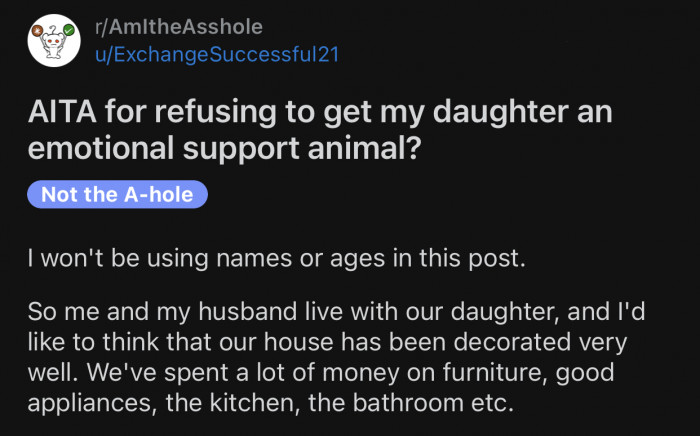
The daughter's therapist recommended an emotional support animal, specifically a dog.
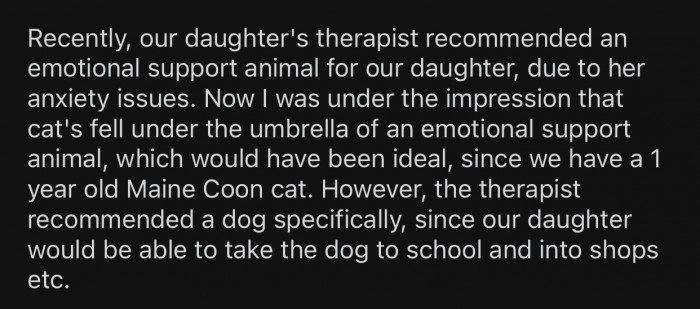
OP is not a big fan of dogs and isn't ready to constantly be around one.

These animals can provide significant psychological benefits for individuals experiencing emotional distress. Research shows that owning an emotional support animal can alleviate symptoms of anxiety and depression, making it a valuable resource for many individuals.
Studies have found that the presence of an animal can enhance feelings of safety and security, particularly for those struggling with emotional challenges.
The ongoing debate surrounding emotional support animals takes a poignant turn with the story of a mother who refuses to get a dog for her daughter, citing her own dislike for the animals. This decision raises questions about the balance between personal preferences and the potential therapeutic benefits that emotional support animals can provide. Research has consistently shown that such animals can play a vital role in alleviating symptoms of anxiety and depression, making the mother's stance particularly noteworthy. While her feelings are valid, it is essential to consider how the absence of a supportive animal might impact her daughter's emotional well-being. As society grows increasingly aware of mental health needs, the disconnect between personal comfort and the therapeutic advantages of pets cannot be overlooked.
OP's daughter is mad at her for refusing to get her a dog.

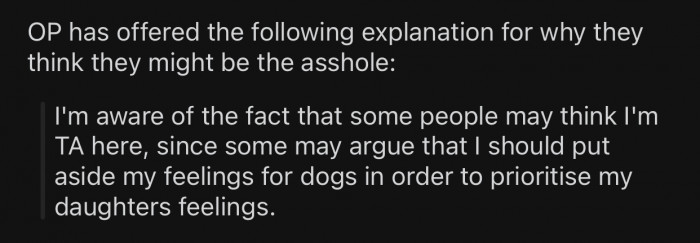
OP thinks she might potentially be the a-hole for the following reason:
Here's how the Reddit community reacted to u/ExchangeSuccessful21's post:
The mother's refusal to get a dog for her daughter may indicate a lack of understanding of the importance of emotional support animals in mental health. A study from the University of California indicates that parents' beliefs about mental health can significantly influence their children's well-being.
When parents dismiss the potential benefits of emotional support animals, it can hinder their children's healing process.
That is where the comment section starts to split.
Studies have indicated that emotional support animals can enhance well-being by providing companionship and reducing feelings of loneliness.
Understanding the role of pets in emotional health can help families navigate discussions about acquiring an emotional support animal.
Recognizing the value of these animals is essential in making informed decisions.
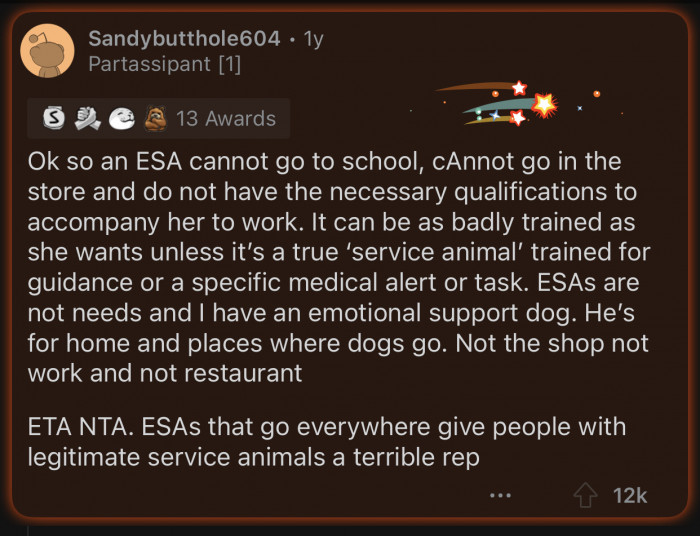
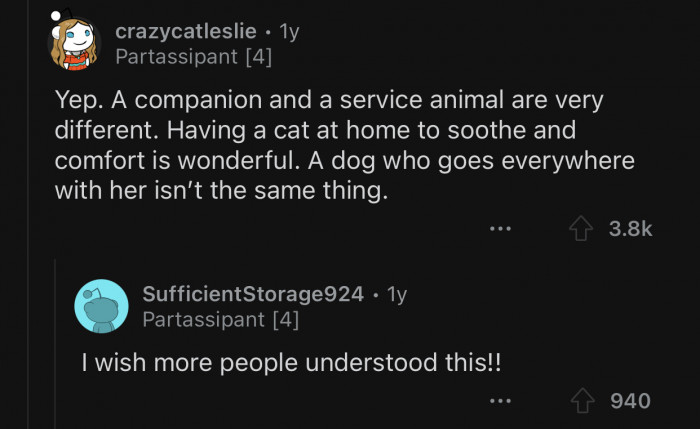
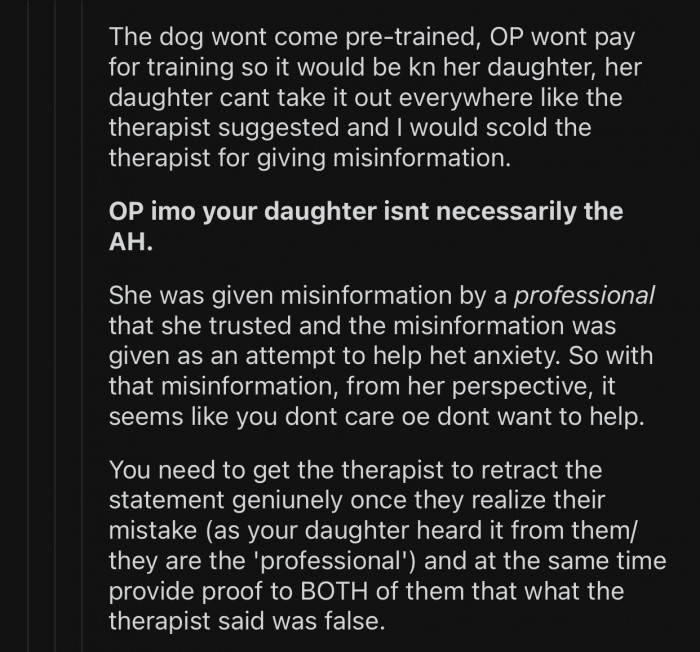
There's a difference between a service animal and a companion.
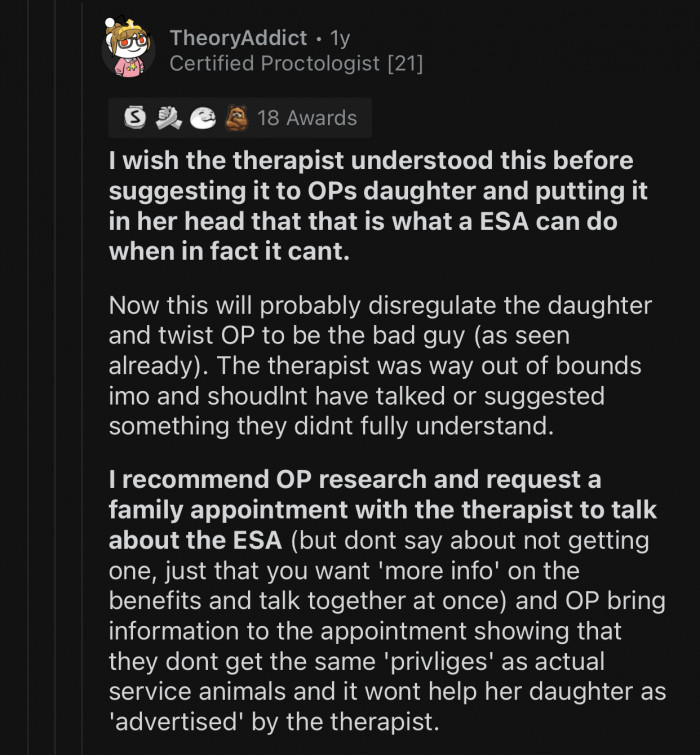
The therapist was way out of bounds.
The therapist should retract their statement to convince OP's daughter.
This situation highlights how family support is crucial for mental health. When a child expresses a desire for an emotional support animal, it reflects an understanding of their need for companionship and comfort during difficult times.
This situation reflects the complexities of family dynamics when mental health needs are involved.
Recognizing the need for an emotional support animal can be a point of contention that requires careful negotiation.
It's more responsibility than OP's daughter probably expects.

OP needs to look for what is best for her daughter.
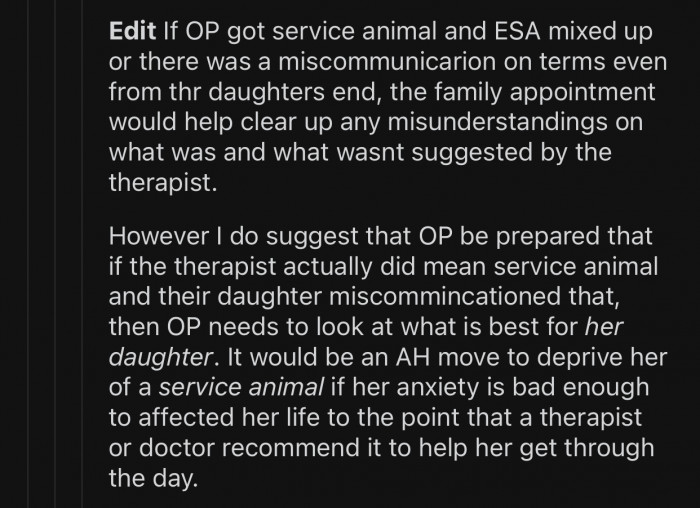
Service dogs are not pets; there's a huge difference.
Encouraging parents to engage in conversations about the potential benefits of emotional support animals can foster understanding. Utilizing educational resources, such as literature on the positive impacts of emotional support animals, can help parents make informed decisions.
This can create a more supportive environment for children experiencing emotional challenges.
To facilitate constructive discussions, families can engage in open dialogues about mental health and support needs.
Establishing a safe space for expressing feelings can lead to better understanding and collaboration.
This approach fosters a supportive environment for discussing the potential benefits of an emotional support animal.
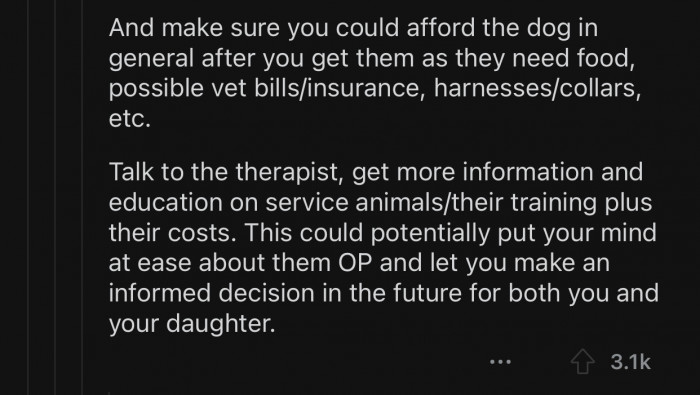
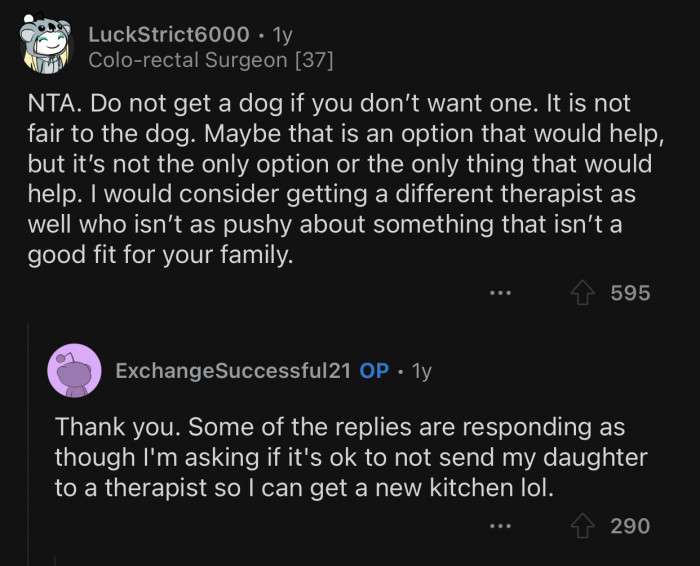
OP should talk to a therapist and get more information.
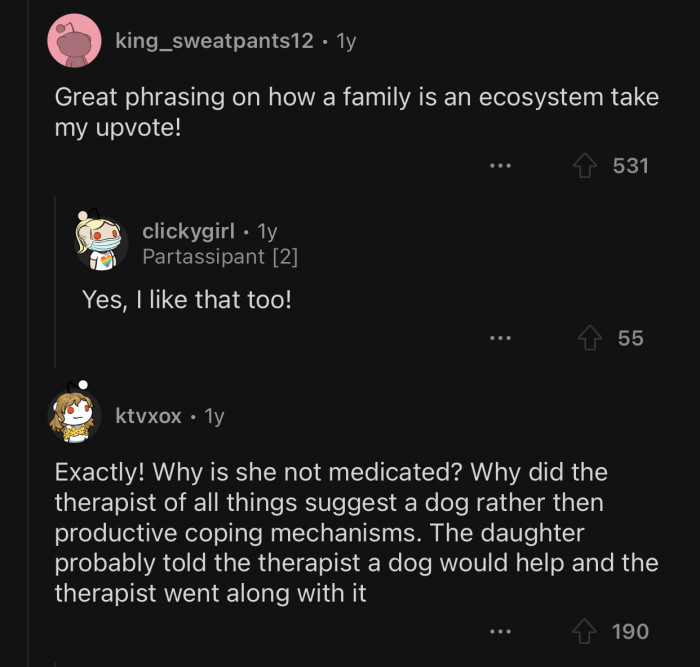
"Your family is an ecosystem and needs to find the right recipe."

Why would the therapist suggest that?
The decision of a mother to refuse an emotional support animal for her daughter highlights a critical issue in parental attitudes towards mental health. This choice may inadvertently send a message that the child's emotional needs are not valid or worthy of support. When parents dismiss such needs, it can foster feelings of isolation and unworthiness in children, as seen in this scenario.
Moreover, children lacking validation for their emotional experiences are more likely to grapple with self-esteem issues and difficulties in emotional regulation. The refusal to acknowledge the potential benefits of an emotional support animal could therefore have lasting implications on the daughter's emotional development, raising important questions about how parents can better support their children's mental health.
The reluctance of the mother in this situation to consider an emotional support animal highlights a common misconception surrounding their purpose and benefits. Emotional support animals have been shown to provide significant psychological and emotional support to those in need, yet there remains a stigma that can hinder acceptance. This case underscores the importance of educating family members about how these animals can enhance wellbeing and foster a supportive home environment. By understanding the positive impacts of emotional support animals, families could potentially bridge gaps in acceptance and create a more nurturing atmosphere for their loved ones.
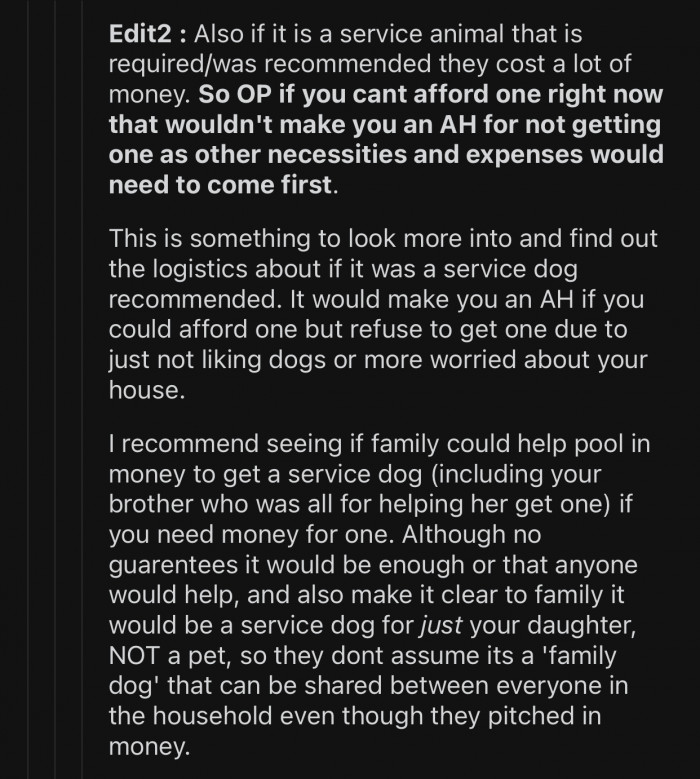
You're not supposed to take an actual service dog into stores or schools.
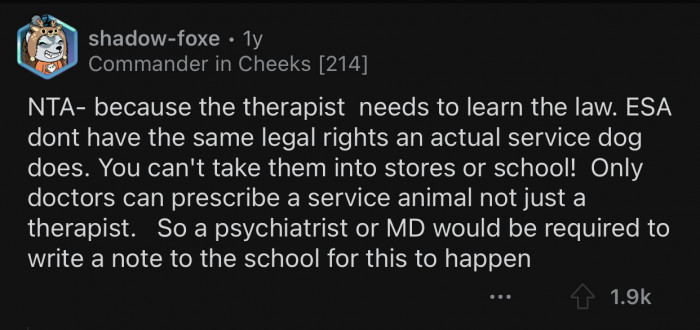
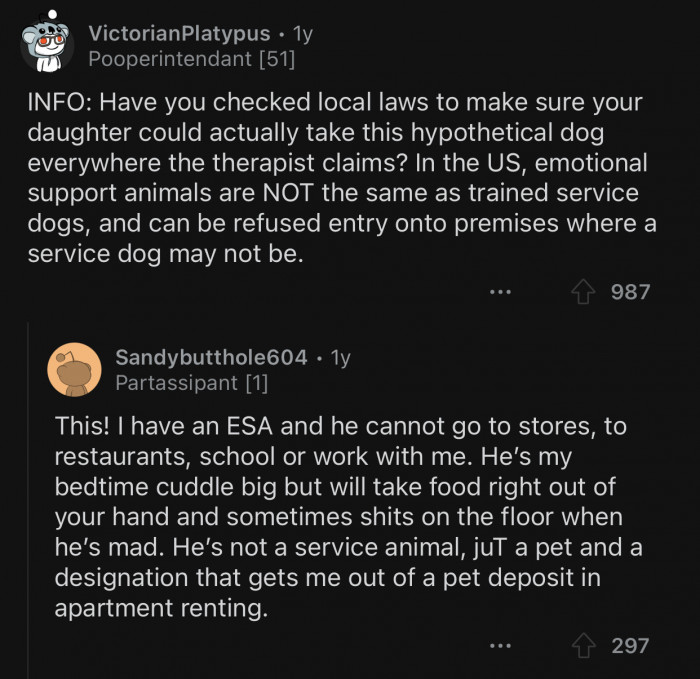
OP should check local laws to verify the therapist's claims.
It wouldn't be fair to the dog to live with a non-dog lover.
Addressing parental attitudes towards mental health can be essential for fostering healthier family dynamics. Encouraging parents to validate their children's feelings and experiences can promote emotional growth and resilience.
Therapeutic interventions can provide a safe space for families to explore these dynamics and improve communication.
Providing information about the therapeutic benefits of emotional support animals can help address concerns.
Education can lead to greater acceptance and willingness to accommodate emotional support needs.
By fostering understanding, families can work together to support one another's mental health.
There are many ways to deal with anxiety. OP should check the alternatives.
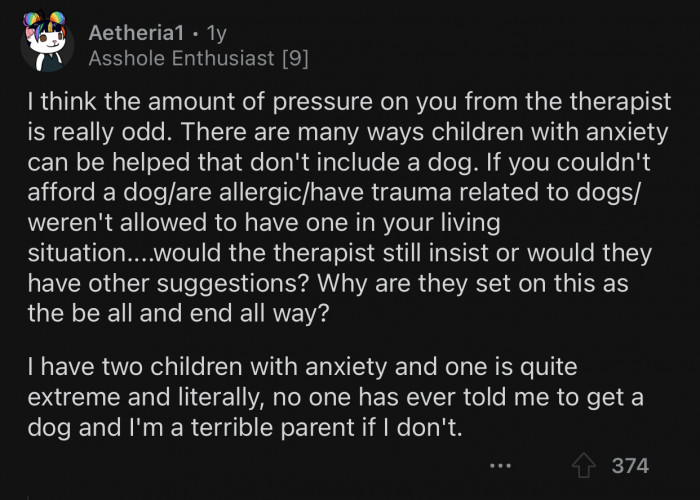
The daughter's therapist is advocating fraud.
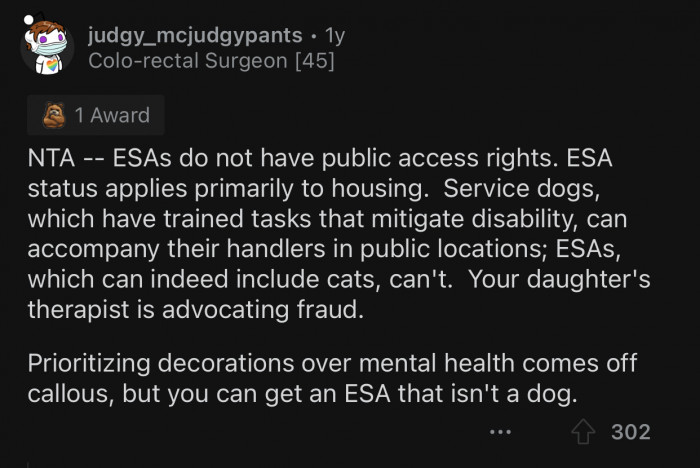
A dog is still a huge commitment, regardless.
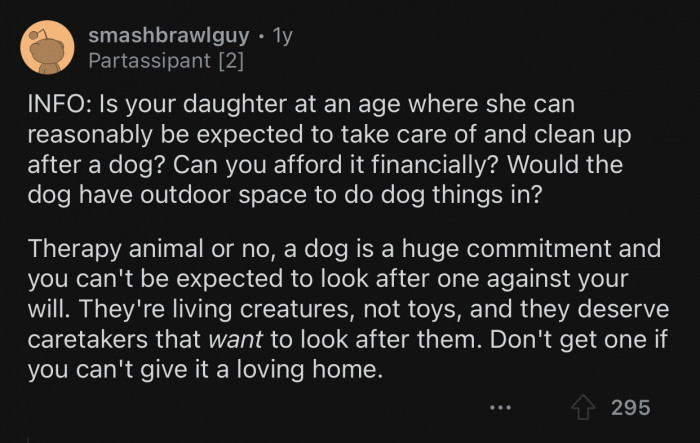
When a child expresses a desire for an emotional support animal, it’s important for parents to explore the underlying needs driving this request. Engaging in open discussions about emotions and coping strategies can help parents understand their child's perspective.
Compassion plays a crucial role in navigating family discussions about mental health needs.
This compassion is essential in fostering an environment where all family members feel valued and heard.
Adopting a dog into a family where not all members are animal lovers would be unfair to the dog. OP made the right choice by refusing to get a dog for her daughter because it would cause her a lot of stress and anxiety whenever the dog is around.
If you enjoyed this story, make sure to check out similar content on our platform.
That is why this story has so many people arguing over who should compromise.
Encouraging family members to engage in compassionate dialogues can lead to more productive discussions about mental health.
Creating an atmosphere of support allows everyone to express their feelings without fear of judgment.
This approach can enhance family relationships and promote well-being.
The refusal of a mother to consider an emotional support animal for her daughter due to a dislike of dogs highlights a critical issue in family dynamics surrounding mental health. It underscores the importance of open communication and empathy when discussing mental health needs within the family. The potential benefits of emotional support animals are well-documented, and their absence can hinder a child’s emotional development. By engaging in healthy discussions about these needs, families can foster stronger connections and better support one another.
Additionally, seeking guidance from mental health professionals can provide parents with strategies to support their child's emotional needs effectively. This approach can foster a collaborative environment where the child feels understood and supported in their journey.
Ultimately, promoting open communication and understanding can help families navigate the complexities surrounding emotional support animals.
The debate surrounding emotional support animals, particularly in the context of children's mental health, takes on a unique nuance in this situation. It is evident that emotional support animals can significantly enhance mental well-being, especially for children who often face emotional challenges. The refusal of the mother to consider a dog as an emotional support animal for her daughter raises questions about the family's dynamics and the importance of empathy in addressing mental health needs.
In navigating such sensitive issues, open dialogue becomes essential. It is crucial for families to engage in discussions about emotional support and explore alternative avenues that could foster resilience and emotional well-being for their children. This case highlights the need for a balanced approach that considers both familial preferences and the potential benefits of support animals.
For more ESA boundary drama, see how a Redditor refused a dog for a disabled mother.
Share this article: