Redditor Refuses "Free Dog" From Sister-In-Law Because It Is Not the Breed That Suits the Family’s Lifestyle; Husband Sees It As Ungrateful

A 28-year-old woman refused a “free dog” from her sister-in-law, and somehow it turned into the kind of family drama that ruins dinner plans for months. After years of tension with her husband’s side, OP and her spouse finally made peace, and they were determined to keep it that way.
They were also gearing up for a big life change: their guinea pig had died, and they wanted a real dog for their three daughters. They spent serious time researching a hypoallergenic breed, because their household actually has a lifestyle to match, not just a Pinterest vision.
Then the sister-in-law popped up after seeing their adoption post with a dog she claimed was “free,” and her husband reacted like OP had slapped his whole family in the face.
OP asks

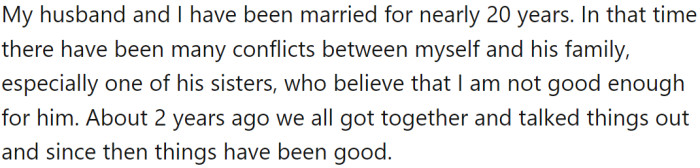
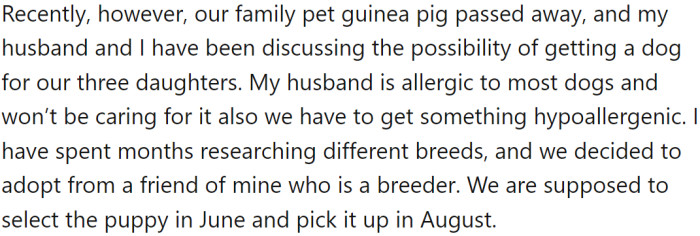
OP and her spouse have been married for nearly 20 years and have had conflicts with his family, particularly one sister, in the past. However, they reconciled about two years ago.
Recently, they decided to get a dog for their three daughters after their pet guinea pig passed away. OP and her spouse chose a hypoallergenic breed after extensive research and planned to adopt a puppy from a friend who is a breeder.
The situation presented in the article highlights the critical importance of choosing a dog that aligns with the family’s lifestyle. The decision made by the Redditor to decline the offer of a free dog underscores that aesthetics should not overshadow practical considerations. The potential for increased stress and conflict within the family unit, as seen in the husband's reaction, serves as a reminder that the responsibilities of pet ownership can significantly impact household dynamics. Selecting a breed that fits one's lifestyle is not just a matter of preference; it is essential for maintaining harmony and ensuring that both the family and the pet can thrive together.
That’s when OP and her husband had to decide whether a “free” dog was worth derailing the fragile peace they rebuilt with his sister.</p>
Decision-Making and Lifestyle Compatibility
choosing a pet is often more than just a personal preference; it reflects one's lifestyle and emotional needs. In this case, the Redditor’s refusal to take the dog can be seen as an instinctive alignment with their active lifestyle and the desire for a pet that fits their needs.
Research indicates that compatibility in pet ownership can significantly impact the well-being of both the owner and the animal, highlighting the importance of considering lifestyle factors before making such commitments.
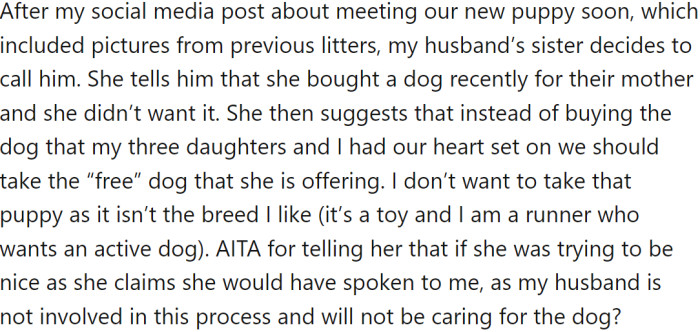
OP's sister contacted her spouse after seeing a social media post about the upcoming adoption and offered a "free" dog she had recently acquired.
Her husband is now upset
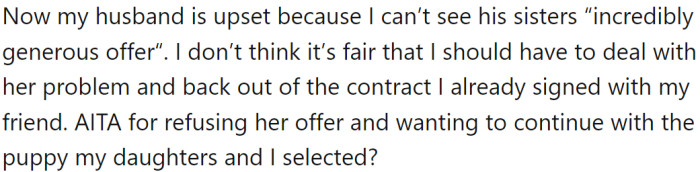
OP has offered the following explanation for why they think they might be the a-hole:

In this case, the reluctance to accept a free dog reflects a deeper understanding of one's needs and lifestyle preferences, which is essential for maintaining emotional well-being.
Furthermore, studies have shown that mismatches in pet ownership can lead to stress and dissatisfaction.
OP and her daughters are the ones who will be caring for the dog; they should have a say in what dog it is.
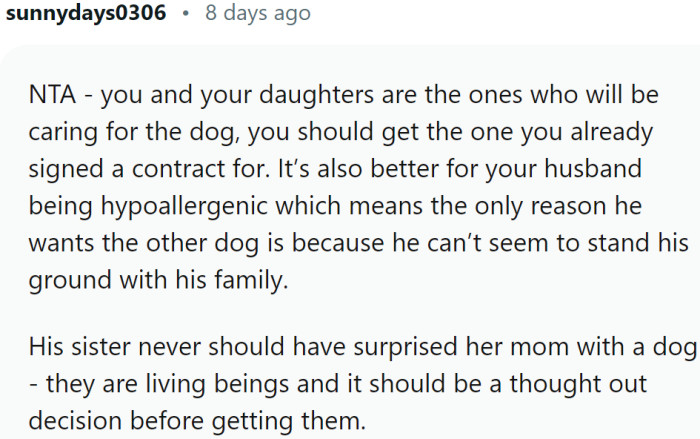
Her husband can take the dog, and that one can be his responsibility.
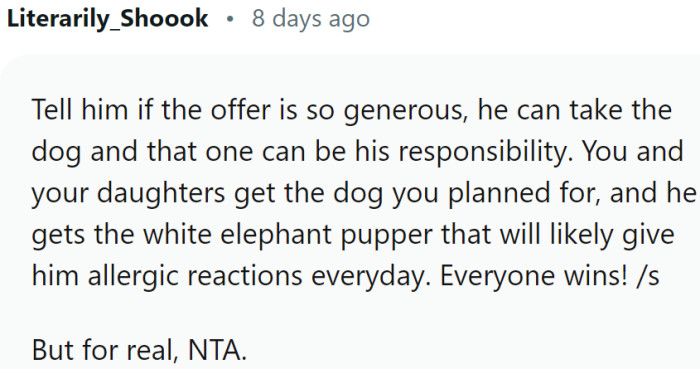
OP has the right to choose what kind of dog she wants and where it comes from.
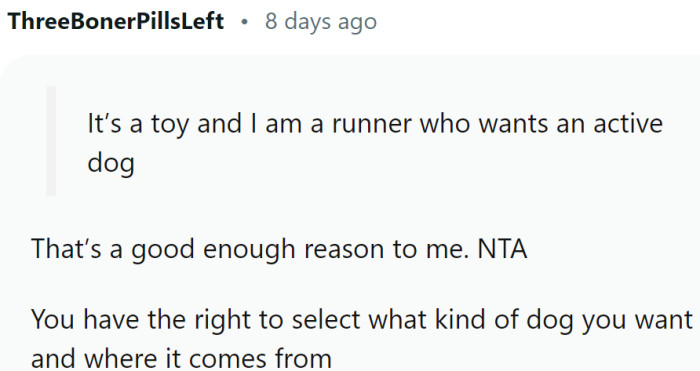
Right after OP’s post about adopting, the sister-in-law offered the dog anyway, even though OP had already picked a hypoallergenic breed for a reason.</p>
This is similar to Jay’s refusal to get rid of his dog for a transgender in-law, and MIL calling her the AH.
Communication and Compromise
Navigating family dynamics often requires effective communication and compromise, especially when differing views on pet ownership arise.
Practicing assertive communication helps all parties express their needs and concerns without escalating tensions.
The Emotional Toll of Unwanted Responsibilities
Taking on a pet that doesn’t fit one's lifestyle can lead to feelings of resentment and burnout.
"Why is it okay for their mother to reject the dog but terrible for you to do the same?"
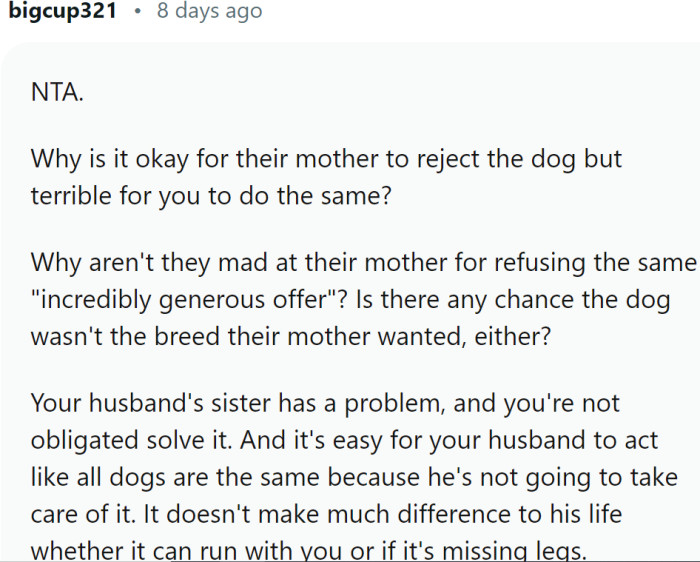
OP responded:
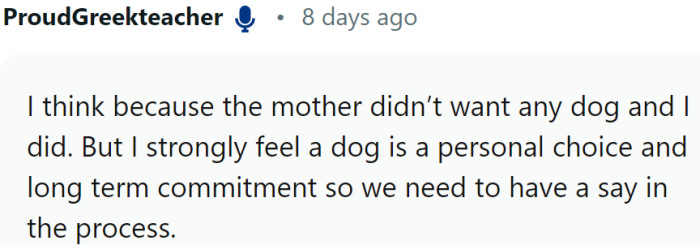
This is a common problem and the main reason for anxious and nervous dogs.
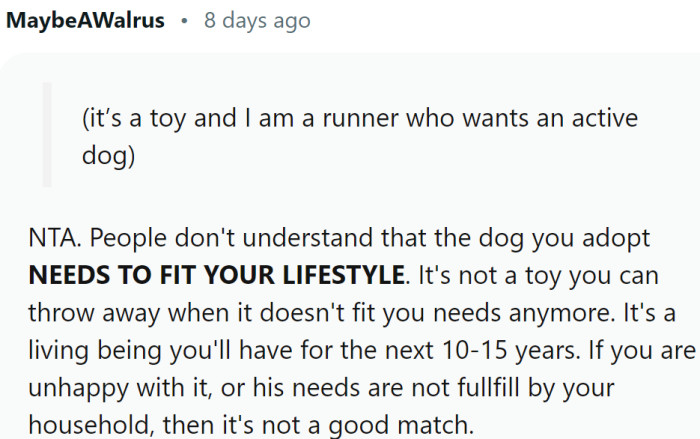
Meanwhile, the husband’s anger kicked in fast, because he saw the refusal as ungrateful, not practical, especially after his family had been difficult before.</p>
Ultimately, fostering an environment of mutual respect can lead to more constructive discussions about lifestyle choices and family responsibilities.
Ensuring that everyone involved is on the same page can prevent misunderstandings and promote a healthier living environment.
OP clarified some things
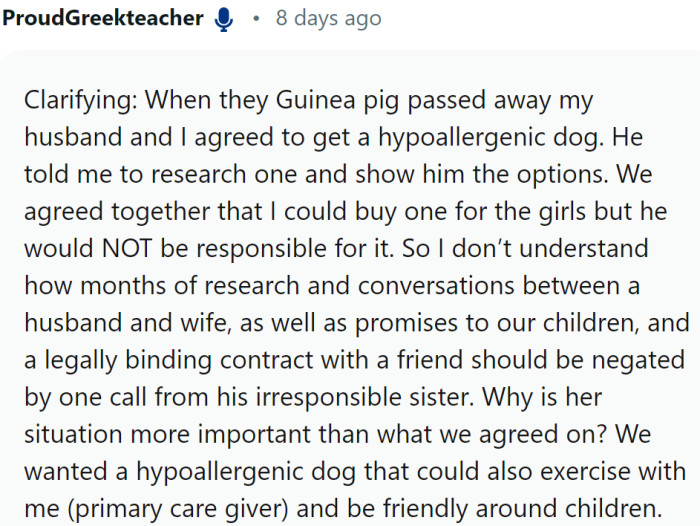
Living beings that need attention and care are not gifts, people.
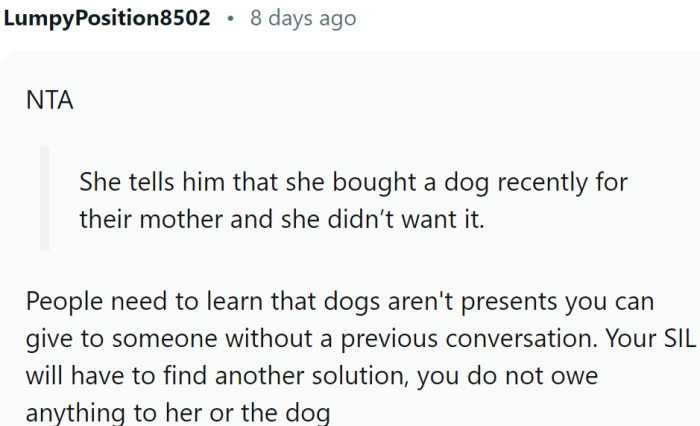
Sounds like her husband wants to save money.
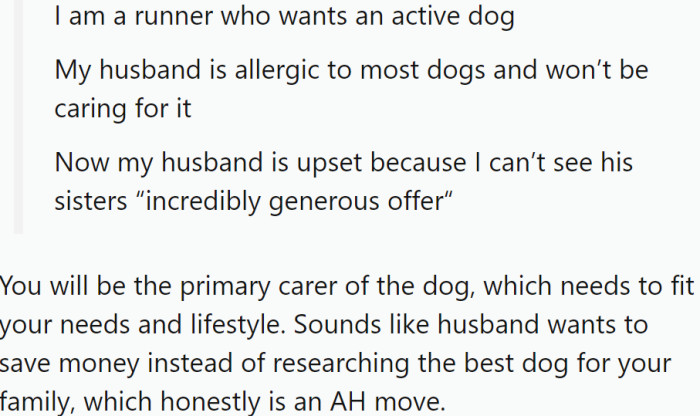
Now the whole argument hangs on one question, which breed fits their home, and whether his sister’s “free” offer came with expectations nobody asked for.</p>
Research in animal-assisted therapy indicates that pets can significantly influence family dynamics, providing companionship and emotional support.
However, the responsibilities tied to pet care require careful consideration of each family member's lifestyle and preferences to avoid potential conflict.
Establishing boundaries is essential in family dynamics, especially regarding shared responsibilities like pet care.
Choosing the right breed of dog to fit your lifestyle is crucial for a happy and healthy relationship between you and your pet. By taking the time to research different breeds and assess your needs, you can ensure that you select a dog that will bring joy and companionship into your life.
It's also important to remember that dogs and other living beings are not gifts but long-term commitments that require care and attention. Adopting a dog should not be taken lightly and requires a significant investment of time, money, and energy.
Additionally, creating a family agreement about pet ownership can help clarify expectations and responsibilities.
In this case, the decision to refuse a "free dog" highlights the importance of aligning pet choices with family dynamics and lifestyle needs. The Redditor's choice reflects an understanding that not all breeds suit every household, which is crucial for maintaining emotional well-being and harmony within the family. This situation emphasizes the need to navigate the psychological aspects of pet ownership carefully, as differing opinions can lead to tension.
Encouraging open discussions about pet preferences and responsibilities can pave the way for a more supportive family environment, ultimately benefiting both the family and the potential pet. The Redditor's stance serves as a reminder that thoughtful decision-making in pet adoption is essential for fostering lasting relationships and preventing future conflicts.
The decision to accept a dog into a family setting goes beyond mere affection for animals.
The family dinner did not end well, and OP is left wondering if her “no” was the real problem or just the last straw.
Before you side with free-dog “rules,” see what happened when a sister demanded photo access.
Share this article: