Lady Gives Away Her Brother's Dog Due To Neglect; Now He Wants Her To Pay What He Spent On It

Some family arguments start small, then turn into a full-blown mess over who did what, who paid for it, and who should have stepped up sooner.
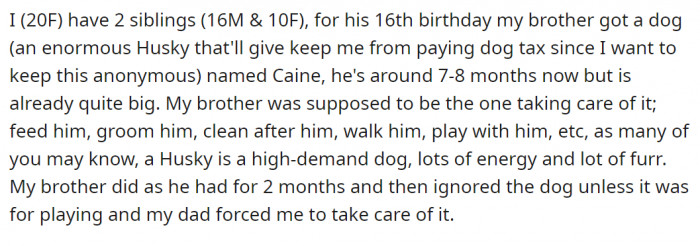
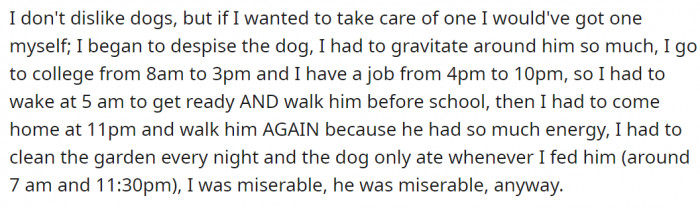
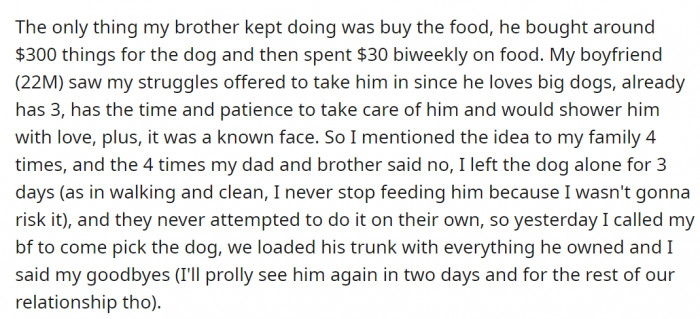
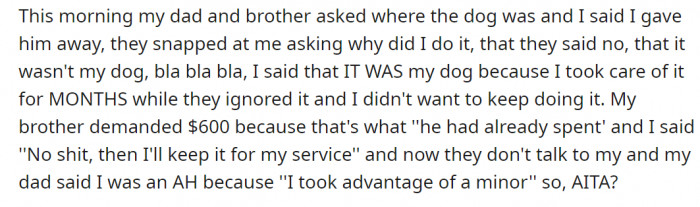
In this Reddit story, a college student says she spent months juggling school, work, and her brother's neglected Husky before finally giving the dog to her boyfriend, where she believed it would get better care. That decision set off a fight with her dad and brother, and now her brother wants her to pay him back for everything he spent on the dog.
The dog was supposed to be his responsibility, but now the whole family is arguing over money, ownership, and what counts as doing the right thing. Read on.
She decided to table the case before the Reddit community

This situation sheds light on the complex dynamics of family relationships and shared responsibilities. Family members often have differing views on what constitutes neglect, particularly when a pet is involved. Research shows that differing perceptions can lead to feelings of betrayal and resentment, especially when someone feels their contributions are unappreciated or undermined.
A study published in the Journal of Family Psychology indicates that these conflicts can often reflect deeper issues within family dynamics, such as communication patterns and unmet expectations.
Family dynamics can become strained when values and expectations collide, especially in emotionally charged situations like the one involving the brother and his sister over the dog. The act of giving away a pet, which is often seen as a family member, can trigger feelings of betrayal and hurt. This case highlights how one party's sense of justification can lead to significant emotional turmoil for others. Open communication is vital; without it, misunderstandings can compound the distress, leaving family members grappling with unresolved feelings and resentment.
Let's find out how the Reddit community reacted to the story:
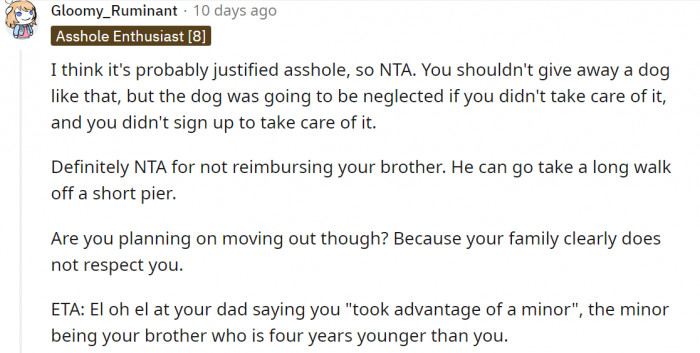
"You shouldn't give away a dog like that, but the dog was going to be neglected if you didn't take care of it"
NTA, but according to this Redditor, maybe she shouldn't have secretly given the dog away.
Furthermore, the act of giving away a family member’s pet can be viewed through the lens of boundaries and respect for autonomy. When one family member makes unilateral decisions that affect others, it can lead to significant breaches of trust. This may trigger strong emotional reactions, particularly when the decision impacts a beloved pet.
Understanding the underlying motivations for such actions can foster more productive conversations around shared responsibilities and respect for individual boundaries.
It’s a lot like the woman who refused to pay her brother’s vet bills after his dog ate her underwear while she was away.
Studies in developmental psychology have shown that patterns of conflict often mirror those seen in childhood family dynamics.
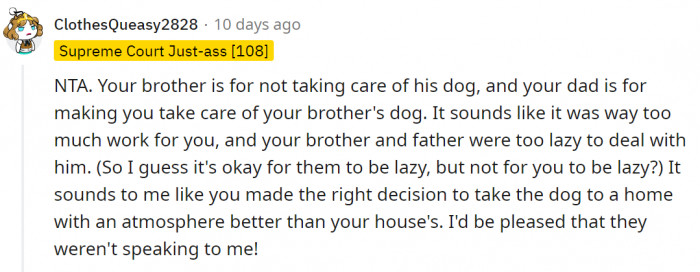
"It sounds to me like you made the right decision to take the dog to a home with an atmosphere better than your house's"
On the bright side, the dog is with someone who gives him much-needed attention and care.
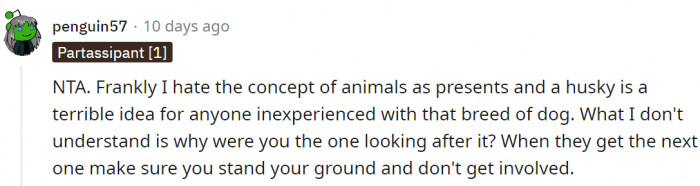
"NTA. Frankly, I hate the concept of animals as presents, and a Husky is a terrible idea for anyone inexperienced with that breed of dog"
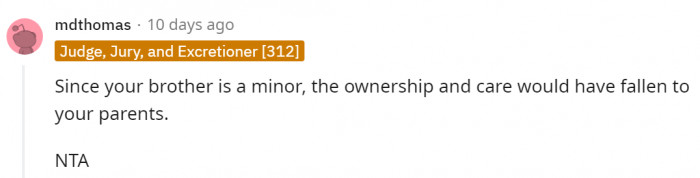
"Since your brother is a minor, the ownership and care would have fallen to your parents"
Her dad has some questions to answer.
The concept of neglect in this context can be complicated. Often, what one person sees as neglect, another may view as a difference in priorities or values. Research from developmental psychology suggests that how responsibilities are perceived can be influenced by individual backgrounds and experiences, particularly childhood upbringing.
This underscores the importance of discussing and defining what constitutes proper care and ownership within the family context.
Empathy plays a vital role in resolving family disputes, as it allows individuals to understand each other's perspectives.
When family members feel heard and understood, it can soften the emotional impact of conflicts.
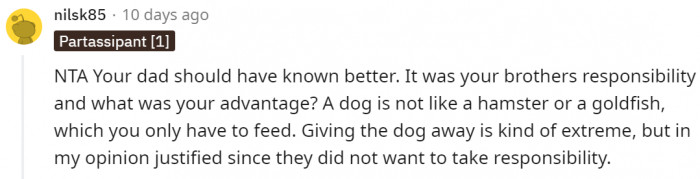
"Giving the dog away is kind of extreme, but in my opinion, justified since they did not want to take responsibility"
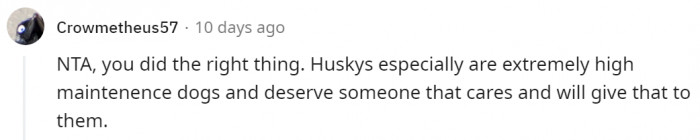
"NTA, you did the right thing"
While it's understandable that he wants to be reimbursed for his expenses, it's also important to consider that his sister was trying to do what she thought was best at the time.
The Husky must have been a handful for her to deal with, and it's unfair to put that kind of pressure on someone who is already juggling so much.
It will be interesting to see how this case unfolds and whether a resolution can be reached. In the meantime, we hope that the dog is doing well in its new home.
Communication strategies rooted in empathy, such as reflective listening, can help de-escalate tensions during family disputes.
By acknowledging each other's feelings and validating their experiences, family members can create a more supportive environment for discussion.
This approach can lead to more amicable resolutions and strengthen family bonds over time.
To navigate conflicts effectively, families should establish regular communication practices to address potential issues before they escalate.
Setting aside time for family meetings to discuss feelings and expectations can be an effective way to foster open dialogue.
Additionally, seeking the help of a family therapist can provide valuable tools and techniques for improving communication and resolving conflicts.
The situation surrounding the brother's dog underscores the complications that arise within families when expectations are not aligned.
Creating a family meeting to discuss pet care responsibilities can help ensure everyone is on the same page and feels heard.
Implementing a shared pet care schedule can also help clarify responsibilities and reduce feelings of resentment.
The situation surrounding the brother's dog highlights the intricate dynamics of family relationships and the responsibilities tied to pet ownership. The article illustrates how neglect can lead to not just the well-being of a pet being compromised but also strain familial bonds. The emotional turmoil that arises when one family member feels obliged to take action, such as giving away a dog due to perceived neglect, underscores the need for clarity in communication regarding pet care responsibilities.
Open discussions about expectations and responsibilities could have potentially averted this dispute. By addressing these issues upfront, families can work together to ensure that all members, including their pets, are well cared for, thus preserving both the emotional and physical well-being of their furry companions and the integrity of their relationships.
For another family standoff, see the woman who tried to keep her brother’s sick dog despite her niece’s objections.
Share this article: