Redditor’s Brother Believes They Should Dogsit For Free Till The End Of Time Just Because He Let Them Crash For A Couple Of Weeks For Free 10 Years Ago

Some people don’t recognize a favor, they treat it like a subscription. That’s the vibe in this Reddit story, where one brother thinks a free crash for a couple weeks a decade ago has turned into a lifetime membership plan for dog care.
OP stayed at their brother’s place about ten years back, and ever since, the brother has been sliding into “whenever needed” mode with two large dogs. No holiday exceptions, no “can you this time,” just the expectation that OP will step in and dogsit for free, forever, because of that old hospitality.
Now OP is stuck between feeling like a doormat and wondering if they’re the asshole for saying no.
OP asks:

Ten years ago, OP spent some time in their brother's home
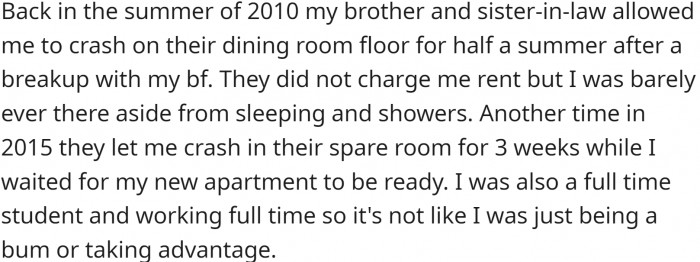
Since then, they have expected OP to take care of their two large dogs whenever needed.
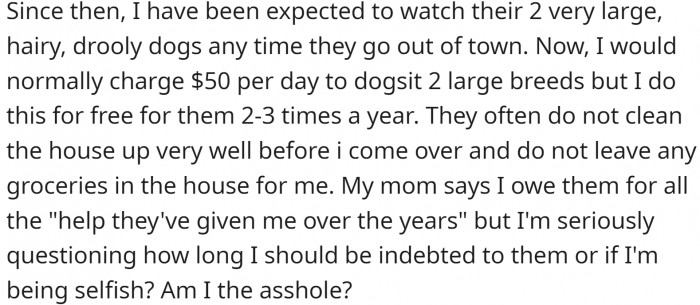
The brother's insistence that the Redditor should provide free dogsitting services stems from an all-too-familiar dynamic often seen in family relationships. This mindset, akin to the 'sunk cost fallacy,' highlights how individuals can become trapped by past favors, feeling obligated to reciprocate indefinitely. In this case, the brother believes that a few weeks of hospitality a decade ago should translate into a lifetime of free labor.
This perspective not only disregards the current needs and boundaries of the Redditor but also cultivates an unhealthy sense of resentment. Rather than fostering a supportive relationship, this expectation may lead to feelings of obligation that can strain familial ties, suggesting that it is essential to reassess the balance of give-and-take in relationships.
OP’s brother keeps bringing up that “you stayed here for a couple weeks” moment like it’s a legal contract, not a favor from the past.
This situation highlights the complexities of perceived debt and reciprocity in relationships. the expectation to 'pay back' favors can create tension in relationships. Research indicates that perceived imbalances in relationships can lead to feelings of resentment and frustration. This underscores the need for open communication about expectations and perceived obligations.
OP has offered the following explanation for why they think they might be the asshole:

They are just being greedy

OP said
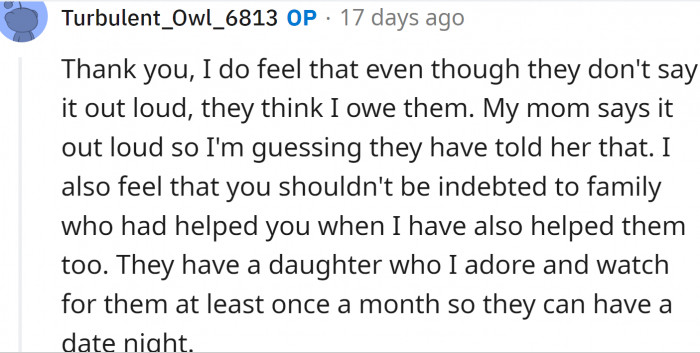
Understanding this dynamic is crucial for recognizing how past favors can complicate current relationships. The expectation of reciprocity can create imbalances in relationships, leading to frustration when one party feels overburdened.
Every time the two large dogs need watching, the “ten years ago” argument comes back up, and OP is expected to just absorb it.
Moreover, the idea of 'paying back' favors can often lead to misunderstandings about the nature of support in relationships. This highlights the importance of balance in relationships, as rigid expectations can hinder this dynamic. It's essential for individuals to communicate their needs and boundaries effectively to ensure mutual understanding.
This could involve discussing feelings about past favors openly, allowing both parties to express their perspectives and negotiate future arrangements without the shadow of obligation.
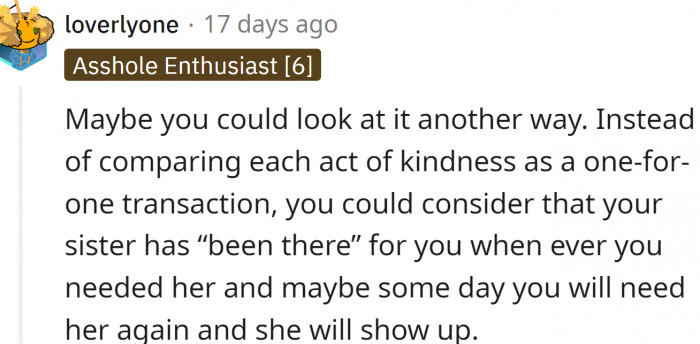
"You take care of her. She takes care of you"
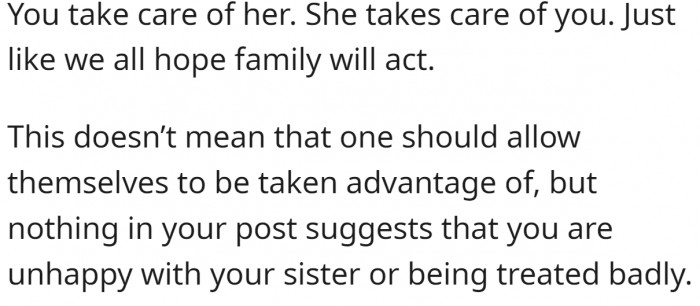
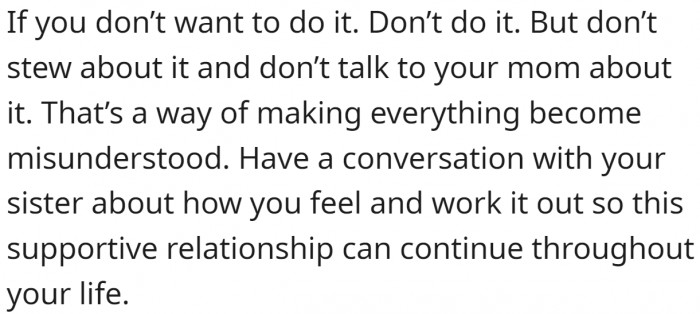
OP shouldn't stew about it
Family dynamics often complicate the issue of obligations and expectations.
This is particularly important when past favors are invoked, as it can lead to feelings of guilt or resentment if not addressed openly.
This is similar to the Redditor who refused to take sister’s puppy-care days off unpaid.
The Emotional Toll of Unmet Expectations
Research indicates that unresolved feelings of obligation can lead to anxiety and burnout in relationships. A study from the American Journal of Psychology shows that when individuals feel trapped by obligations, it can lead to withdrawal or conflict in relationships. This might involve setting limits on how long one is willing to help or defining specific circumstances under which help is provided.
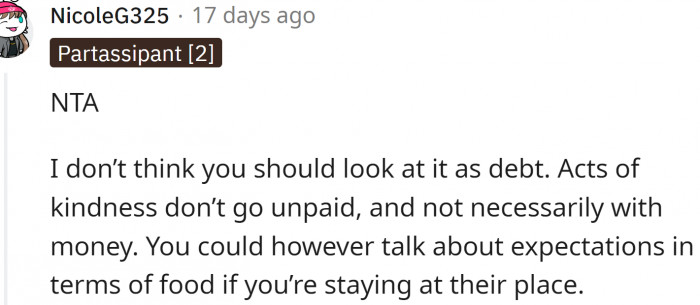
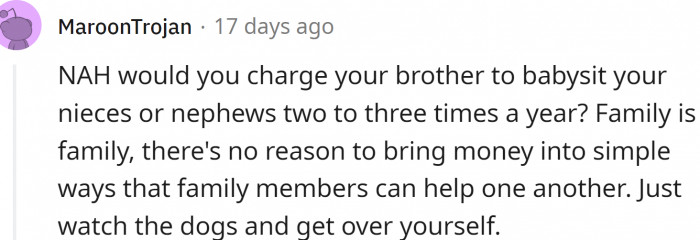
This Redditor believes OP shouldn't look at it as debt.
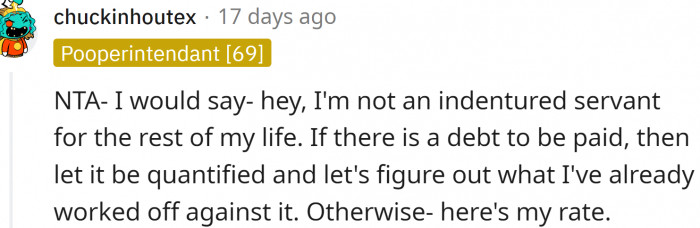
If there is debt to be paid...
"There's no reason to bring money into simple ways that family members can help one another."
OP tries to explain they’re not refusing help, they’re refusing the lifetime free dogsitting deal that’s been quietly growing rent-free in their head.
One effective strategy is to have direct conversations about expectations and boundaries. The Redditor could express their feelings about the situation, emphasizing that while gratitude for past help is important, ongoing obligations should be mutually agreed upon.
Establishing a framework for future interactions can lead to more equitable exchanges.
Additionally, resolving conflicts around perceived obligations can be approached through empathy and understanding.
When OP says they’re being “greedy,” it turns a simple request into a family fight over whether the old crash even counts as repayment.
Ultimately, the decision of whether and how to help a family member will depend on the specific circumstances and your own feelings and abilities.
But how can it remain healthy and positive when there is so much resentment? OP should clearly communicate their thoughts to their brother instead of stewing on them.
Keeping quiet about things that bother us almost always ends up with us losing our temper at some point and then saying all kinds of things (even those we don't really mean). If someone helped you out, you need to repay them.
However, there is a limit. And it needs to be discussed.
The story of a Redditor's brother insisting on free dog-sitting for life due to a past favor highlights the intricate balance of give and take within familial relationships. This situation underscores how perceived obligations can create tension and resentment, especially when one party feels entitled to ongoing support without reciprocation. Establishing boundaries not only protects individual needs but also enhances the overall quality of interactions, ensuring that both parties feel recognized and appreciated. In this case, the Redditor must navigate the tricky waters of familial loyalty while asserting their own limits to maintain a healthy relationship.
Feelings of resentment can build over time when one party feels taken advantage of.
Encouraging open dialogue about feelings can help reduce tensions and create an environment where both parties feel comfortable expressing their needs. Utilizing 'I' statements can facilitate more constructive discussions, allowing for a focus on personal feelings rather than accusations.
This approach promotes empathy and understanding, creating a more supportive atmosphere.
Mutual agreements are essential in maintaining healthy relationships, particularly when it comes to responsibilities like dog-sitting.
Understanding each other’s perspectives can lead to agreements that feel equitable and fair.
One practical solution is to create a written agreement outlining expectations around dog-sitting duties. This could include specifics on when and how often the Redditor would be willing to help, which can prevent misunderstandings in the future.
The situation between the Redditor and their brother underscores the complexities of familial obligations and the potential for resentment to fester when boundaries are blurred. The brother's belief that a past favor warrants perpetual free labor in the form of dog sitting reveals a misunderstanding of healthy relationship dynamics.
This scenario illustrates the critical need for open communication about expectations and responsibilities. By discussing what each party is willing to contribute and recognizing the limits of their own time and energy, they can avoid the pitfalls of misunderstanding and foster a more supportive family environment.
Nobody wants to be the free dog-sitter for a decade-old couch stay.
Wait until you see the brother who demanded new jeans money after his cat ruined them.
Share this article: