
Redditor Boycotts Visiting Her Mom Because She Refuses To Take Her Dog To The Vet

A 28-year-old woman refused to keep visiting her mom after a fight over one small, gross, totally preventable problem: her dog’s health. The puppy her boyfriend gifted her years ago ended up at her mother’s house when the relationship ended, and now that same house has an 8-year-old rescue dog too.
OP’s concern was not vague. Her dog had been sharing water and hanging out together, and when OP finally got her fur baby checked, the vet visit turned up worms. She told her mom, expecting basic action, but her mom went full defensive, refusing to bring the dog back to the vet because she claimed there would be “accidents” in her car.
And that’s when a routine checkup snowballed into a family boycott, over a dog who can’t advocate for himself.
The OP posted about how she is concerned about the way her mom treats her dog.
She explained that when she was younger, her boyfriend gave her a puppy that stayed at OP's mother's house when they broke up.
The Reddit user says her mother also has an 8-year-old dog that she rescued from a pretty bad situation.
OP’s mom was already raising two dogs under the same roof, so the worm news felt like it should have triggered an immediate “okay, let’s handle it” moment.
The situation surrounding the Redditor's decision to boycott her mother over her refusal to take the dog to the vet highlights the complex web of responsibilities that come with pet ownership. It is not merely a matter of caring for an animal; it touches on deeper issues of empathy and shared values within family relationships.
When one family member disregards the health needs of a beloved pet, it often raises questions about the emotional landscape of that relationship. The refusal to act in the best interest of the dog can signal broader issues, indicating a possible lack of understanding or alignment on fundamental responsibilities.
As this case illustrates, pet care can serve as a revealing mirror for familial dynamics. The willingness to prioritize a pet's health may serve as a litmus test for emotional compatibility, shedding light on how family members navigate shared responsibilities and care for those they love.
Now the OP is married and has a home big enough to house her dog, so he is back with her full-time. Recently, the OP took her fur baby for a check-up at the vet and discovered he had worms.
The Redditor alerted her mom that her dog had worms because the dogs had been sharing water and spent a lot of time together.
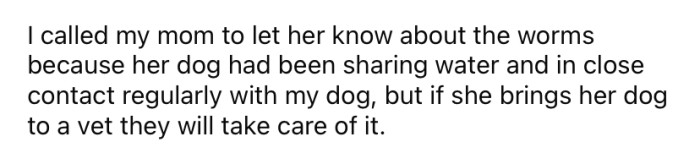
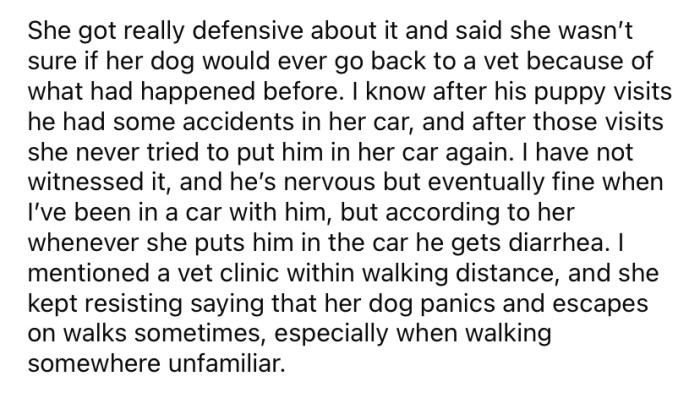
But OP's mother became very defensive and said she would never take her dog back to the vet because he would have "some accidents" in her car.
The phenomenon of 'pet-parenting' has gained traction in contemporary society, where individuals often view their pets as family members.
This has implications for how decisions regarding their care are made, often leading to conflicts when partners disagree about their pets' needs.
Understanding these conflicts through the lens of attachment theory can provide insight into why certain decisions feel more emotionally charged than others.
Ever since then, the OP has not been bringing her dog to her mom's house.
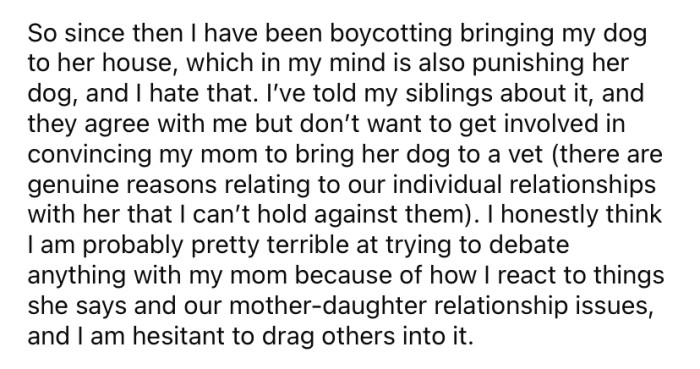
So, the OP turned to the Reddit community for advice.

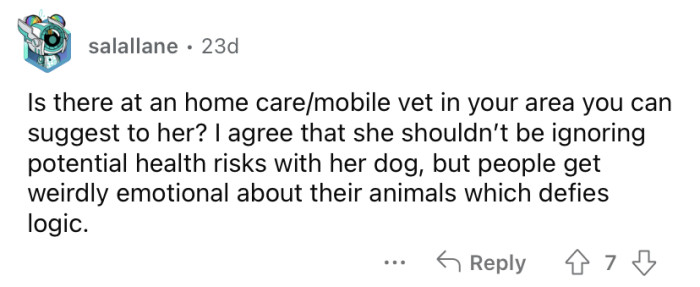
Here's how people reacted.
Instead, the second OP mentioned worms, her mother snapped back with the “accidents in my car” excuse, turning pet care into a personal argument.
This is the same kind of emotional fallout as a mom secretly fixing her daughter’s dog and the daughter moving out.
Impact of Emotional Attachment
Research indicates that emotional attachments to pets can significantly influence decision-making processes among pet owners.
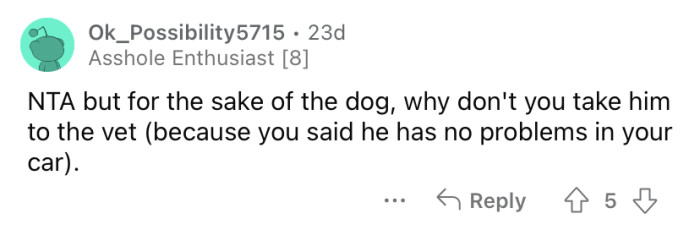
"Why don't you take him to the vet?"
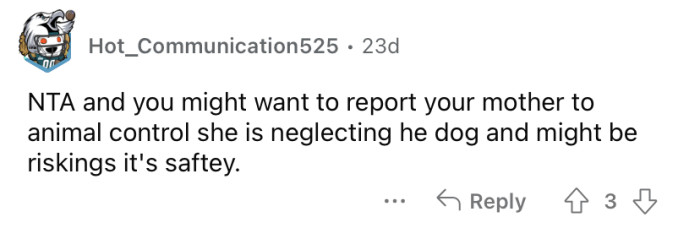
"Report your mother to animal control."
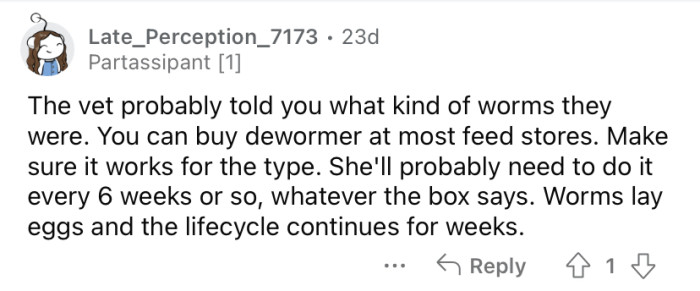
"You can buy dewormer at most feed stores."
The irony is that OP is now married with a home where her dog can stay full-time, while her mom still refuses any follow-up after the dogs shared water.
To navigate these emotionally charged situations, couples should consider establishing a shared pet-care plan that outlines responsibilities, including vet visits.
Additionally, couples therapy can help address underlying relational patterns and improve communication, ultimately leading to more collaborative decision-making.
Setting monthly meetings to discuss pet care can also foster a sense of teamwork and shared commitment to their pet's well-being.
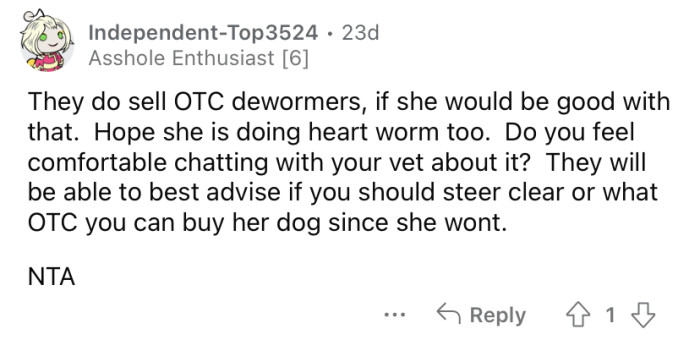
Ask the vet for advice.
"It's a human risk too."
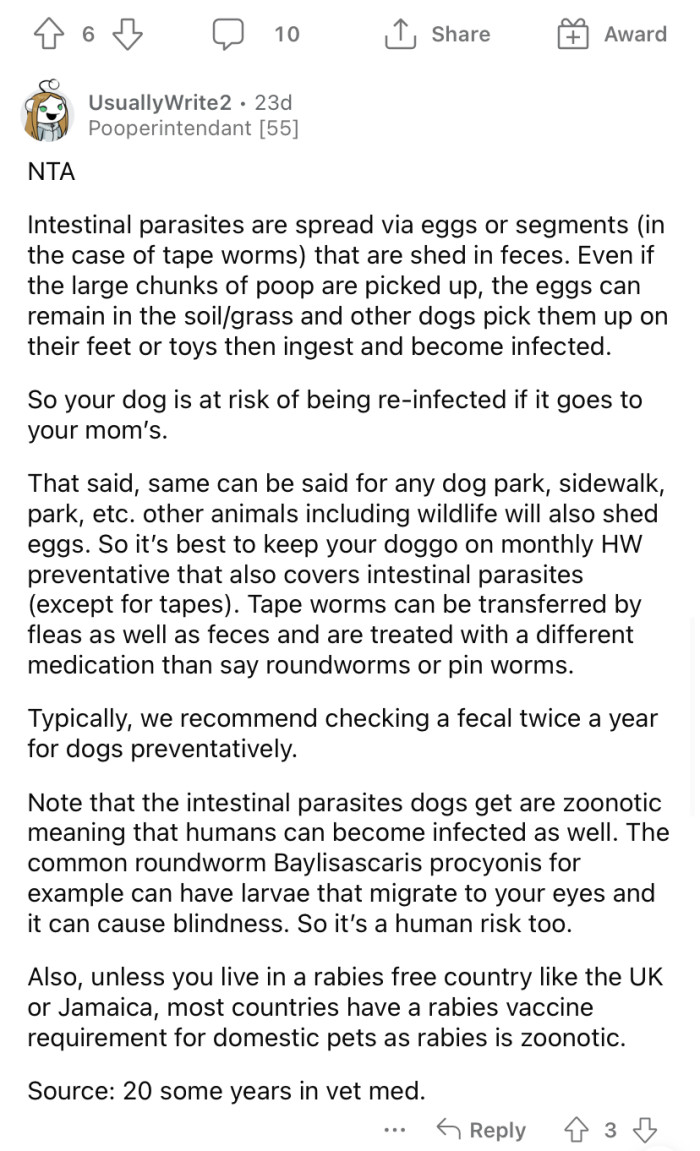
Now the whole visit dynamic is basically frozen, because OP’s “take the dog to the vet” line got treated like an attack on her mom’s rules.
What's your take on this situation? Do you think the OP is overreacting by not bringing her dog to visit with her mom anymore, or is she doing the right thing here?
Either way, we hope OP's mom will give her dog the care he deserves. Every pet deserves to receive the medical treatment they need.
We would love to hear your opinions on this. You can share your thoughts with us in the comment section.
Effective communication is a cornerstone of healthy relationships, especially when navigating disagreements about shared responsibilities.
Couples who practice active listening and express their feelings openly are often more successful in resolving conflicts.
Professionals recommend implementing communication techniques such as reflective listening, where partners paraphrase what the other has said to ensure understanding.
This method not only clarifies intentions but also validates each partner’s feelings, creating a more supportive environment for discussion.
Incorporating regular relationship check-ins can help couples address issues before they escalate, fostering a healthier partnership overall.
The situation presented by Reddit user u/GoodBoyKazak sheds light on the complex relationship between pet ownership and family dynamics. The refusal to take the dog to the vet is not merely about a pet's health; it symbolizes deeper issues in the relationship between the Redditor and her mother. This conflict illustrates how the care of a beloved pet can become a battleground for broader familial tensions. It highlights the need for open communication and shared values in family relationships. When responsibilities toward pets are not aligned, it often reflects a lack of understanding or respect for one another's priorities. Through collaboration and mutual understanding, families can not only ensure their pets receive the necessary care but also strengthen their bonds in the process.
The family dinner never ended, it just moved from the table to the driveway, and the dog is the one stuck in the middle.
For another family showdown, read about the Redditor who refused to drive two hours daily for their dad’s cat.
Share this article:





