99-Million-Year-Old New Bird Species With Weird-Looking Toes Has Been Discovered In Myanmar

A 99-million-year-old bird trapped in amber is already strange enough, but this one came with toes that looked almost too long to be real. The fossil, identified as Elektorornis chenguangi, was described in a study published in Current Biology after researchers examined amber from Myanmar’s Hukawng Valley.
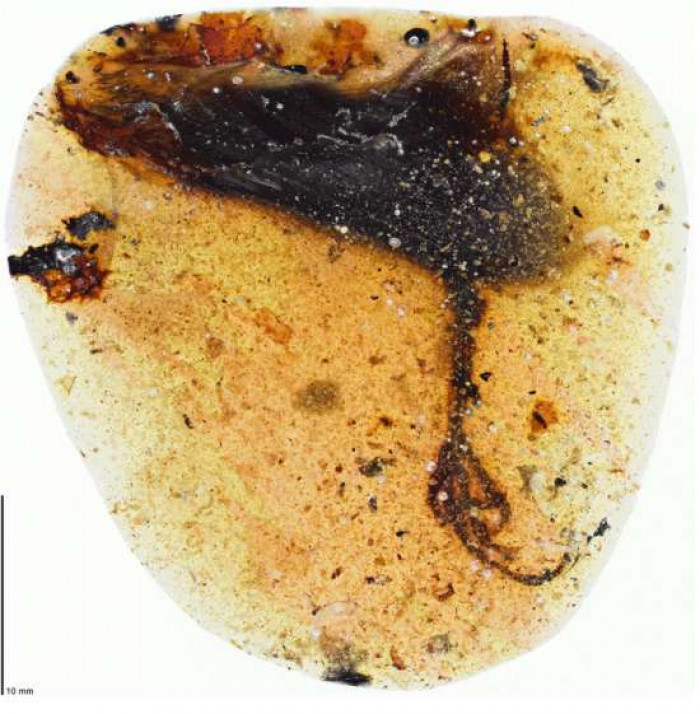
The remains were first found in 2014, and amber traders initially mistook the foot for something from a lizard. Scientists later determined it belonged to a bird preserved during the Cretaceous period, when dinosaurs still roamed the Earth, and its unusual feet have left plenty of questions unanswered.
Now the tiny ancient bird is getting attention for one very odd feature, and the mystery of those toes is still wide open.
An artist's illustration of what the bird named Elektorornis chenguangi looks like and how it uses its strange-looking toes.
One of the co-authors, Jingmai O’Connor of Beijing’s Institute of Vertebrate Paleontology and Paleoanthropology, stated that the bird was the first of its kind. "We have the leg of a little 99-million-year-old bird, preserved in amber, that shows a foot morphology unlike any known previously," says O'Connor.
"I've never seen anything like this, or even close. Imagine a scale on a chicken foot in which the distal end tapers into a very fine, almost hairlike bristle," O'Connor said.
Before coming up with the name Elektorornis chenguangi, the scientists carefully examined the bird's remains and realized that the foot was so distinctive. The name "elektorornis" means "amber bird," being the first bird species found in amber.

A long-toed bird preserved in amber from Myanmar.
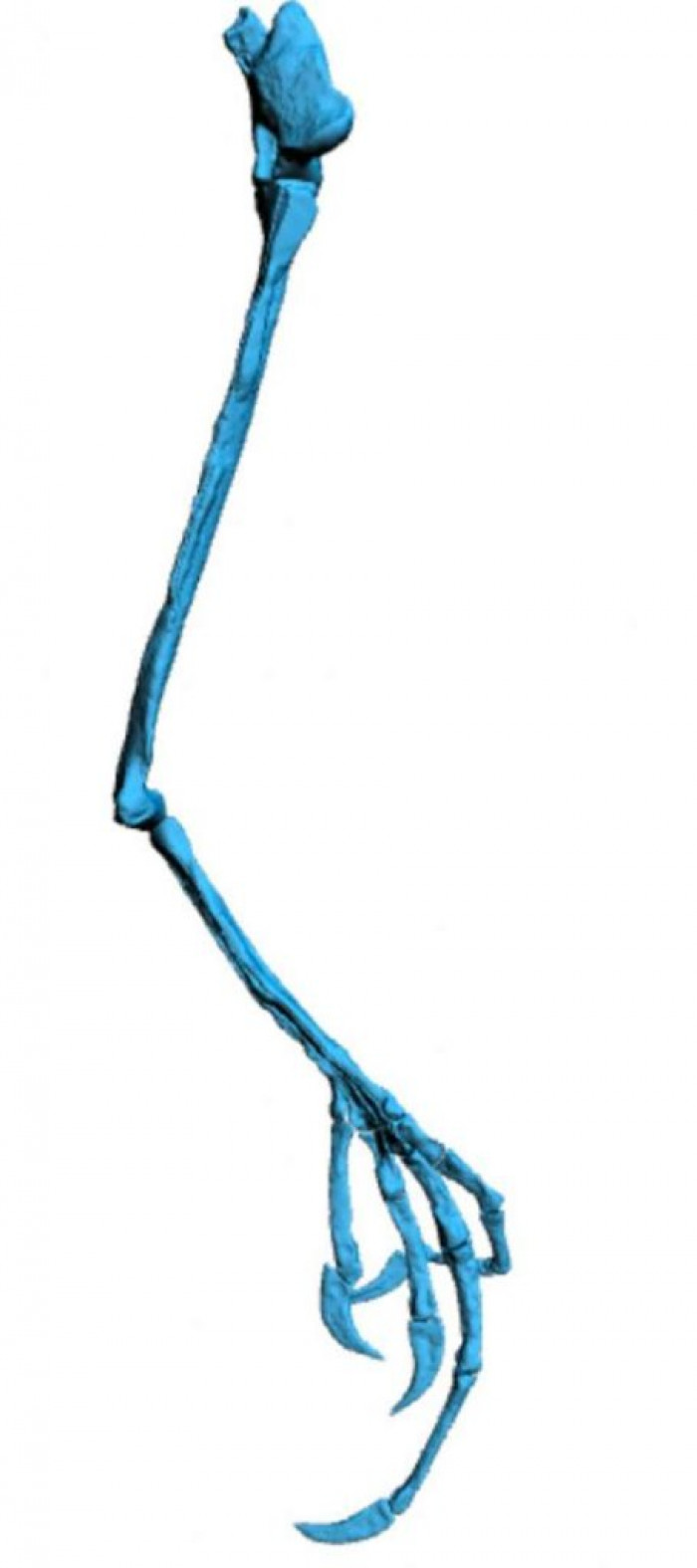
The bird was about the size of a sparrow and had four toes. The third toe was 20% longer than its lower leg bone and 41% longer than its second toe.
To further understand the lifestyle of this bird, scientists compared it with other known species with long fingers, such as the aye-aye. An aye-aye is a lemur that uses its elongated toes to extract larvae and bugs from tree trunks, and scientists believe that the new bird species utilizes its toes in a similar manner.
A reconstruction of the long-toed bird’s unusual limb.
Moreover, the amber encasing the bird's foot was placed under a CT scan to create a 3D model. This model was constructed for comparison with 62 current and 20 extinct bird species, and these efforts served to highlight the foot's bizarre nature.
That quote was the easiest part to cut.
Also, if you want weird anatomy, check out the long-eared jerboa, the tiny rodent with the largest ears on Earth.
Currently, there are still ongoing studies on this new bird species before scientists can finally determine what these strange-looking toes were used for. Like and share to discover more interesting stories!
Wait until you see what scientists found in amber, beyond anything imagined. Scientists Unearth 99-Million-Year-Old Creature Frozen in Amber, and It's Beyond Anything Imagined.
Share this article: