Redditor Doesn't Want To Give The Cat He Found To Its Rightful Owner Because He Is Stealing His Plants

A Redditor found a Siamese cat stuck on their fence, and at first it felt like the kind of wholesome rescue story that ends with everyone getting a happy ending. They hauled the cat down with a ladder, left it outside, and the cat just… refused to go anywhere else.
OP checked with the guardhouse, no one had reported a missing cat, so after five days they handed the cat to a friend who was genuinely thrilled. Then the plot twist hit: the guard said the cat belonged to a neighbor, and that neighbor had been posting about it in a group OP wasn’t even in.
What makes it messier is why OP suddenly didn’t want to return the cat, and that’s where the neighbor’s shouting match comes in.
OP asks:

OP found a Siamese cat stuck on their fence two weeks ago. After using a ladder to retrieve the cat, they left it outside, and it refused to leave.
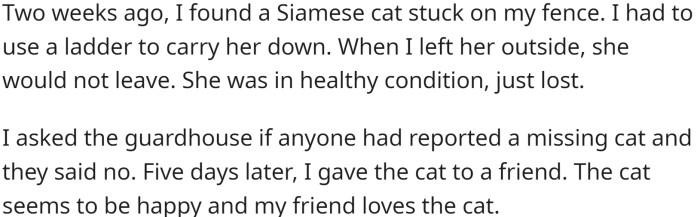
OP asked the guardhouse if anyone had reported a missing cat, and they said no. After five days, OP gave the cat to a friend, who seemed to be happy and loved the cat. However, after some time, OP was informed by the guard that the cat belonged to a neighbor.
The Emotional Attachment to Pets
This scenario underscores the deep emotional connections many people have with pets, which can often lead to possessive feelings. Research from the Journal of Human-Animal Interaction suggests that individuals may develop a sense of ownership over pets that transcends traditional boundaries.
The emotional bond can evoke strong protective instincts, leading to behaviors that might seem petty but are rooted in a desire to safeguard one's emotional investment.
The situation surrounding the lost Siamese cat highlights a common emotional struggle for those who encounter pets that appear to be lost. The impulse to keep the cat rather than seek its rightful owner reveals a complex interplay of attachment and personal desires. The Redditor's choice to prioritize their relationship with the cat, despite knowing it likely belongs to someone else, suggests a longing for companionship that resonates with many who feel isolated or disconnected.
This scenario also raises ethical questions about ownership versus guardianship. The Redditor's reluctance to return the cat, citing issues like the theft of their plants, illustrates how personal grievances can cloud moral judgment. As the emotional weight of pet ownership becomes entangled with individual circumstances, it poses a dilemma that many find difficult to navigate.
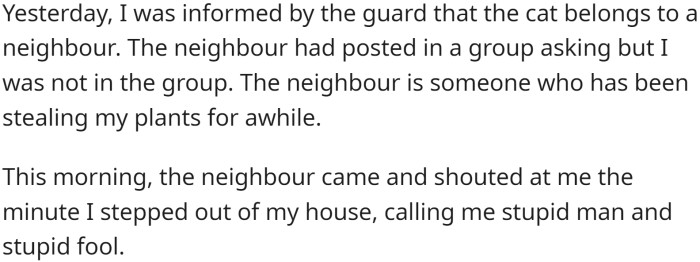
The neighbor had posted in a group asking, although OP was not in the group. This morning, the neighbor came and shouted at OP, calling them 'stupid man' and 'stupid fool.'
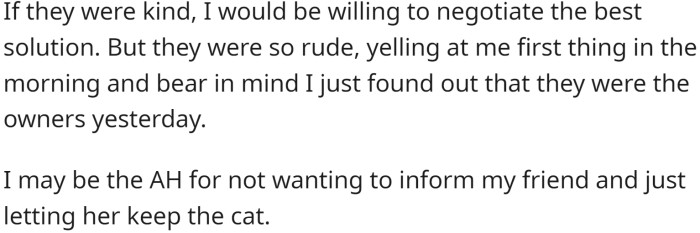
OP posted an edit:

OP has offered the following explanation for why they think they might be the a-hole:

OP tried to do the “right thing” by asking the guardhouse, but the missing-cat silence set everything in motion.
Studies have shown that pet ownership often reflects broader themes of attachment and loss.
The situation surrounding the lost Siamese cat reveals the intricate dynamics of human-animal attachments and ownership perceptions. The individual who found the cat has formed a bond, which often leads to possessiveness, especially when the original owner is still in the picture. This possessiveness complicates the ethical considerations of returning a pet to its rightful owner, as emotions can cloud judgment. The Redditor's reluctance to return the cat due to its impact on their plants underscores a broader conflict that arises when individuals prioritize their interests over the well-being of the animal. Navigating these complexities requires a thoughtful approach, balancing personal attachment with the cat's best interests and rightful ownership.
This Redditor didn't go easy on OP:
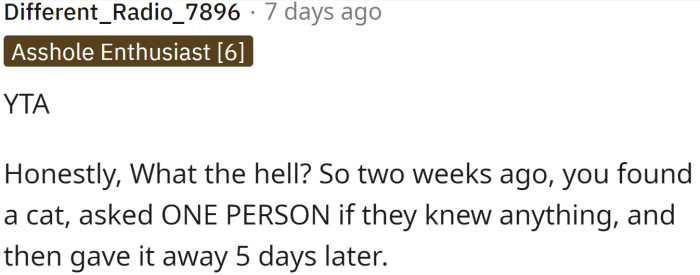
Not working:

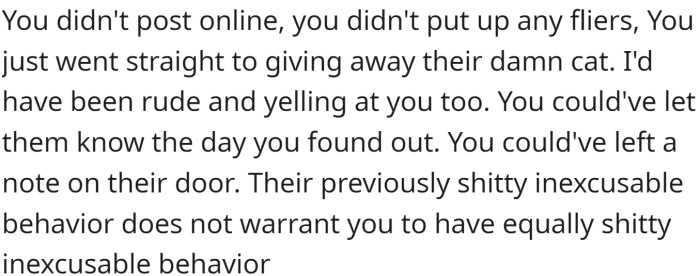
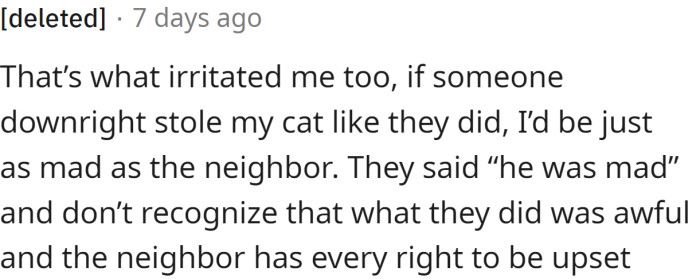
No posts, no fliers, no contacting others...
After five days, OP gave the Siamese to a friend who clearly bonded with the cat, so returning it started to feel personal.
Emotional intelligence plays a pivotal role in resolving conflicts related to pet ownership. Developing emotional intelligence can aid individuals in responding to situations with empathy rather than defensiveness, fostering a more constructive dialogue.
This feels like the Redditor who “stole” their neighbor’s cat and dodged blame.
Ethical Considerations in Pet Ownership
Ethical considerations around pet ownership and rehoming often revolve around the concept of welfare versus possession. Research in animal ethics suggests that prioritizing the animal's well-being over human desires is paramount.
Behaviorists advocate for a careful assessment of the pet's needs and history before making decisions about ownership, emphasizing that returning to a previous owner may not always be in the animal's best interest.
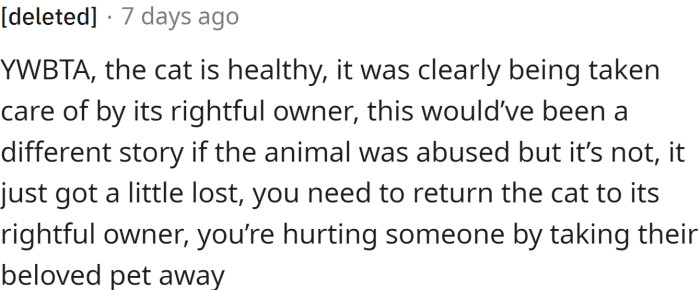
"The cat is healthy, it was clearly being taken care of by its rightful owner"
Other Redditors are upset too:
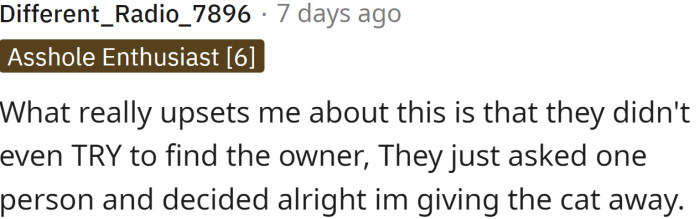
"The neighbor has every right to be upset."
When OP finally heard the neighbor claimed the cat, the neighbor was already fired up because they’d been posting in a group OP wasn’t part of.
Practicing active listening can enhance communication in these challenging situations. A study published in the Journal of Communication suggests that individuals who engage in active listening are more likely to defuse tension and open up avenues for cooperation.
By validating each other's feelings and concerns, parties can work toward a solution that acknowledges the emotional attachments involved.
Moreover, understanding the psychological impact of losing a pet can provide insight into why previous owners may feel entitled to reclaim their animals. The grief of losing a pet can be profound, often leading individuals to overlook the animal's current well-being in favor of their emotional attachment.
This highlights the importance of empathy and understanding in making decisions about a pet's future.
This makes sense:
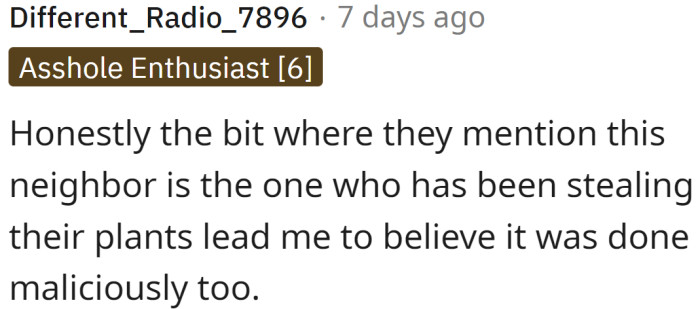
Completely understandable...
The bottom line is:

Compromise is essential in resolving disputes over pets, particularly when emotions run high.
When conflicts arise over pet ownership, communication becomes essential.
The situation escalated fast when the neighbor showed up and started calling OP “stupid man” and “stupid fool,” over a cat and some stolen plants.
What to do when you find a pet that's obviously an owner's pet (healthy and clean)?
1. Check the pet for any identification, such as a collar with tags, a microchip, or other identifying features.
2. Contact your local animal shelter or humane society to inquire if the pet has been reported lost or stolen.
3. If the pet is not wearing a collar, contact local veterinarians in the area to inquire if they have had any reports of lost pets.
4. Place posters in the area with a photo of the pet and contact information in case the owner is searching for their pet.
5. Place an ad in the local newspaper and on social media about the found pet.
6. If the pet is not reunited with its owner, consider taking it to a shelter or rescue for adoption.
OP, however, did nothing. Therefore, he is clearly in the wrong here and should contact his friend and give back the cat.
Additionally, exploring compromise solutions can help alleviate tensions.
Community support can play a vital role in navigating pet ownership dilemmas.
Ultimately, balancing personal desires with ethical considerations in pet ownership requires ongoing reflection and communication.
The situation presented in the article underscores the intricate emotional and ethical landscape that comes with finding a lost pet. The dilemma faced by the Redditor reveals how personal feelings can conflict with the responsibilities of pet ownership. While the Siamese cat's initial reluctance to leave suggests a bond forming, one must also consider the rightful owner’s feelings and the cat’s well-being.
As the Redditor grapples with the decision to keep the cat due to its perceived threat to their plants, it raises questions about the balance between personal interests and ethical obligations. This scenario calls for a compassionate approach that thoughtfully weighs the needs of the pet against the rights of its owner, ultimately aiming for a resolution that respects all parties involved.
Moreover, exploring shared responsibilities can alleviate some of the tension surrounding ownership disputes.
Practical Steps to Resolve Ownership Disputes
Creating a shared pet care agreement can provide clarity and structure in ownership disputes.
The situation surrounding the found Siamese cat highlights the complexities of pet ownership and the emotional stakes involved. The Redditor's attachment to the cat, which has been unwilling to leave, raises questions about the balance between compassion for lost animals and the rights of their owners. Finding a resolution may require not only understanding but also a willingness to compromise on both sides, especially when the emotional investment in the cat's wellbeing creates friction over plant-related grievances.
Now OP is stuck wondering if they rescued a cat or accidentally lit a neighbor war.
If you think you can guess how this ends, read about the man debating confronting his neighbor over midnight cat crying.
Share this article: