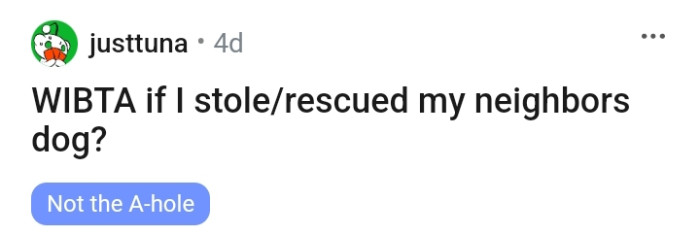
Redditor's Intention To Steal/ Rescue The Neighbor's Abused And Neglected Dog Gets Support Online

A Redditor didn’t just notice a problem next door, they got visited by it. Their neighbor’s dog, uncollared and clearly neglected, kept showing up during the day and night, like it was trying to find a way out of the situation.
What made it complicated was what the OP kept seeing at the neighbor’s place, a 6x6 kennel with no bed, no house, and no bowls of water or food. And to make matters worse, there weren’t real animal shelters nearby, just a local humane society run by older folks who could only do so much.
So the OP is stuck between what feels morally obvious and what they can actually pull off, and Redditors are not letting that question go.
So now, the OP is asking...
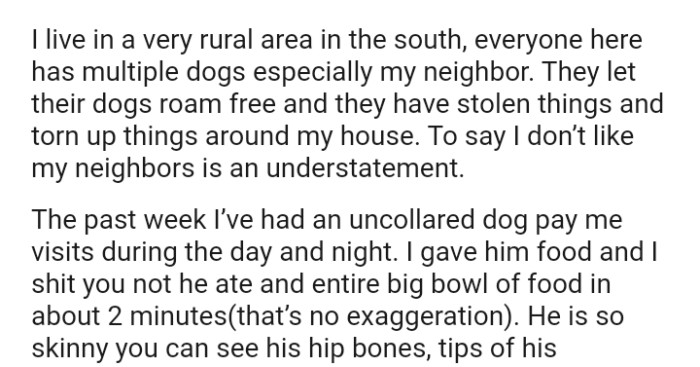
The OP has had an uncollared dog pay them visits during the day and night
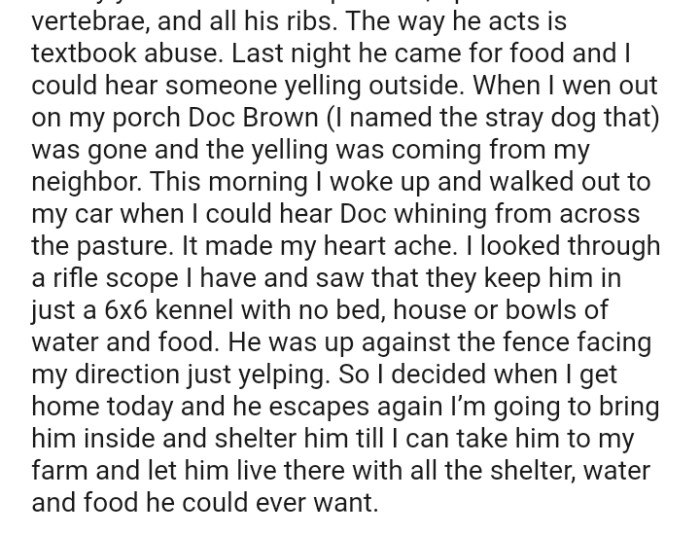
The OP saw that they keep the dog in a 6x6 kennel with no bed, house, or bowls of water and food
The case of the Redditor who seeks to intervene in the neighbor's abuse of a dog highlights the deep-rooted issues of animal rights and welfare that resonate with many individuals. The online support garnered for this act of potential rescue underscores a societal empathy that often prioritizes the well-being of animals over rigid legal frameworks.
This situation illustrates a critical intersection of compassion and moral reasoning, as individuals feel compelled to act against perceived injustices, even if those actions challenge existing laws. Such a response reflects a broader trend where strong empathetic traits drive advocates to take a stand for animal welfare, thereby questioning the adequacy of current legal protections for vulnerable creatures.
The Ethics of Intervention
This situation raises important ethical questions about intervention, especially concerning animal welfare. A significant body of research in ethics and psychology suggests that our moral compass often guides us to intervene when we witness suffering, particularly in vulnerable beings like animals.
However, moral dilemmas often arise when the means of intervention conflict with legal or ethical standards.
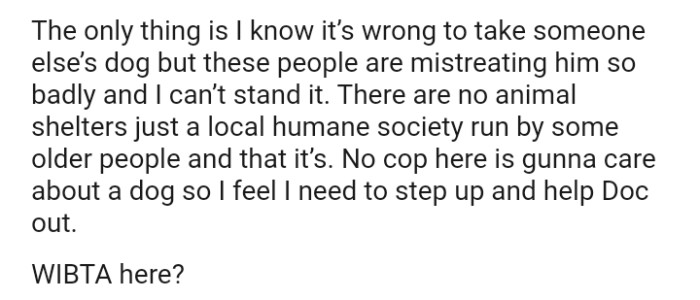
There are no animal shelters, just a local humane society run by some older people
Below, we gathered some of the top comments from Redditors for you to read through

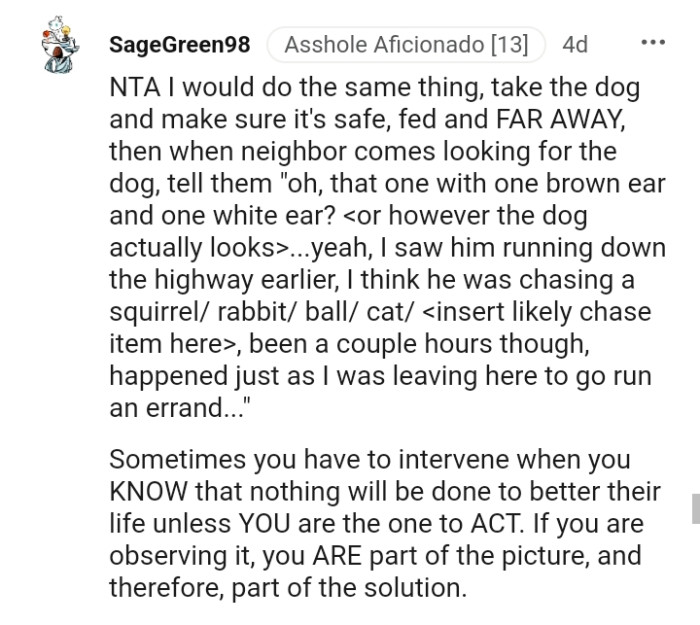
This Redditor would take in the dog too

OP’s neighbor’s uncollared dog kept popping up day and night, which turned a “maybe” into a full-on daily reality check.
From a psychological perspective, the intention to 'rescue' an animal often speaks to deeper issues of empathy and moral obligation.
Studies indicate that when people witness suffering, their emotional responses can drive them to take action, even if it means breaking the law.
A developmental psychologist points out that the inclination to rescue animals often stems from early experiences with empathy and compassion. Research indicates that individuals who were encouraged to care for others during childhood are more likely to engage in altruistic behaviors as adults. This suggests that our childhood experiences shape our moral beliefs and actions throughout life.
While the desire to save the neglected dog is commendable, it’s essential to consider the potential consequences of such actions. Understanding the legal implications and potential backlash can prevent further distress for both the individual and the animal.
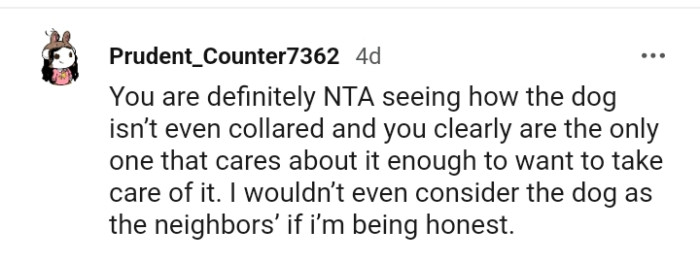
This Redditor won't consider the dog as the neighbor's
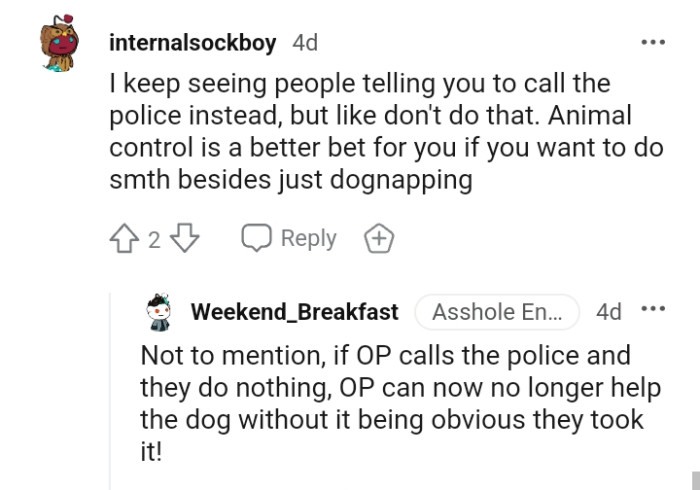
Animal control is a better bet for you
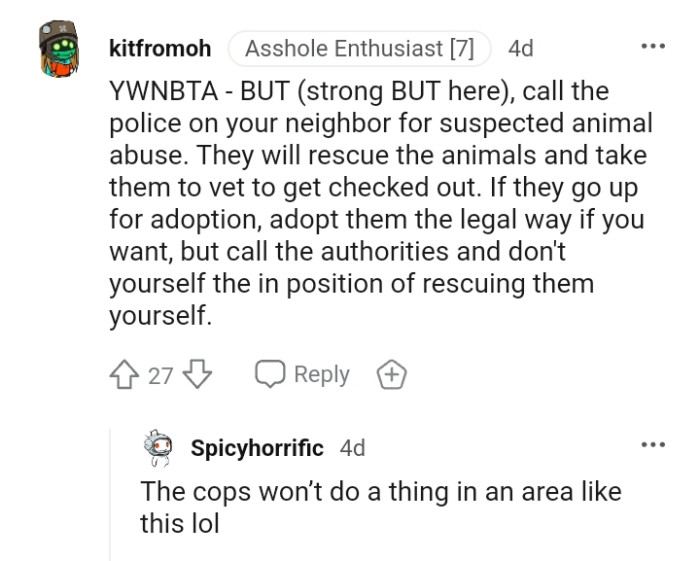
You can adopt the dog the legal way
Then the OP described the 6x6 kennel setup, no bed, no house, and no visible water or food, and people started reacting fast.
Moreover, the impulse to act on behalf of an animal in distress can be linked to attachment styles developed in early life.
Research indicates that individuals with secure attachments are more likely to express compassion towards others, including animals.
Understanding one’s attachment style may help individuals navigate their reactions and motivations in situations involving animal welfare.
The psychological principles guiding our views on animal welfare can significantly influence our actions and decisions. As awareness grows, so too does the responsibility individuals feel to intervene in cases of neglect.
However, this responsibility must be balanced with an awareness of the potential consequences of direct intervention. Research shows that individuals often experience moral distress when their actions conflict with their ethical beliefs, leading to cognitive dissonance.
This is the same conflict as when a Redditor asked whether she should report her friend for taking a lost dog.
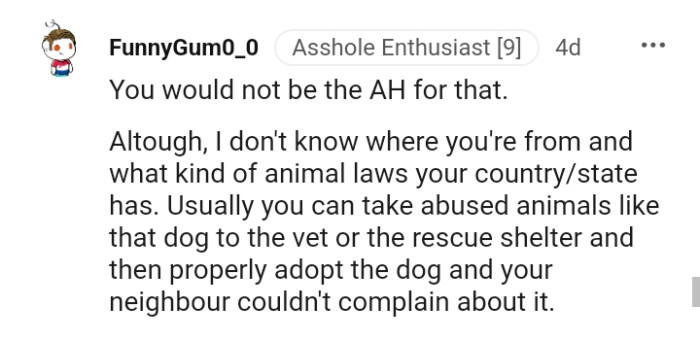
Redditor Asks If She Should Report Her Friend for Finding a Lost Dog and Gifting It to Another Person Without Trying to Find Its OwnerYou can take such abused animals to the vet
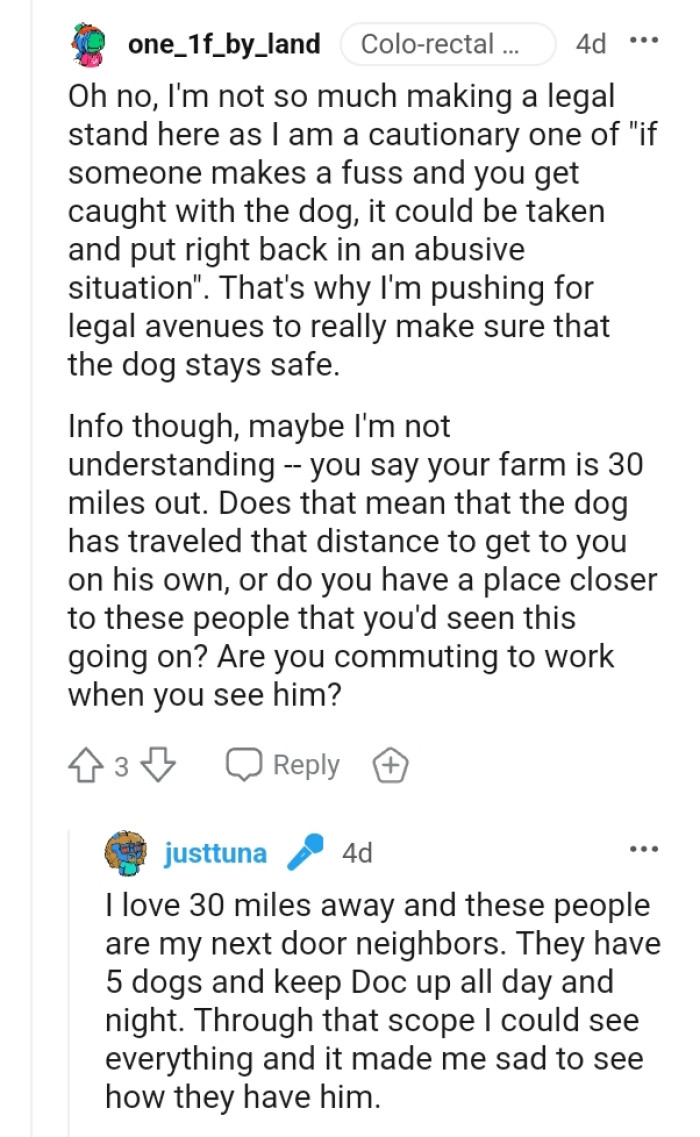
The OP could see everything through this scope
The OP has six dogs that are all rescues on their farm

Furthermore, it's essential to balance empathy with ethical considerations.
To navigate the complexities of ethical intervention, individuals can cultivate a thoughtful approach to animal welfare. Consulting with animal protection organizations can provide guidance on the best course of action without jeopardizing the animal's safety. Research in social psychology suggests that individuals who seek advice from knowledgeable sources are more likely to make informed and ethical decisions.
Additionally, advocating for systemic changes to animal welfare laws can be a powerful way to address the underlying issues of neglect and abuse without risking personal repercussions. Engaging in community awareness initiatives can foster a more compassionate society that prioritizes animal welfare.
This Redditor wants to know how the dogs are used as tools
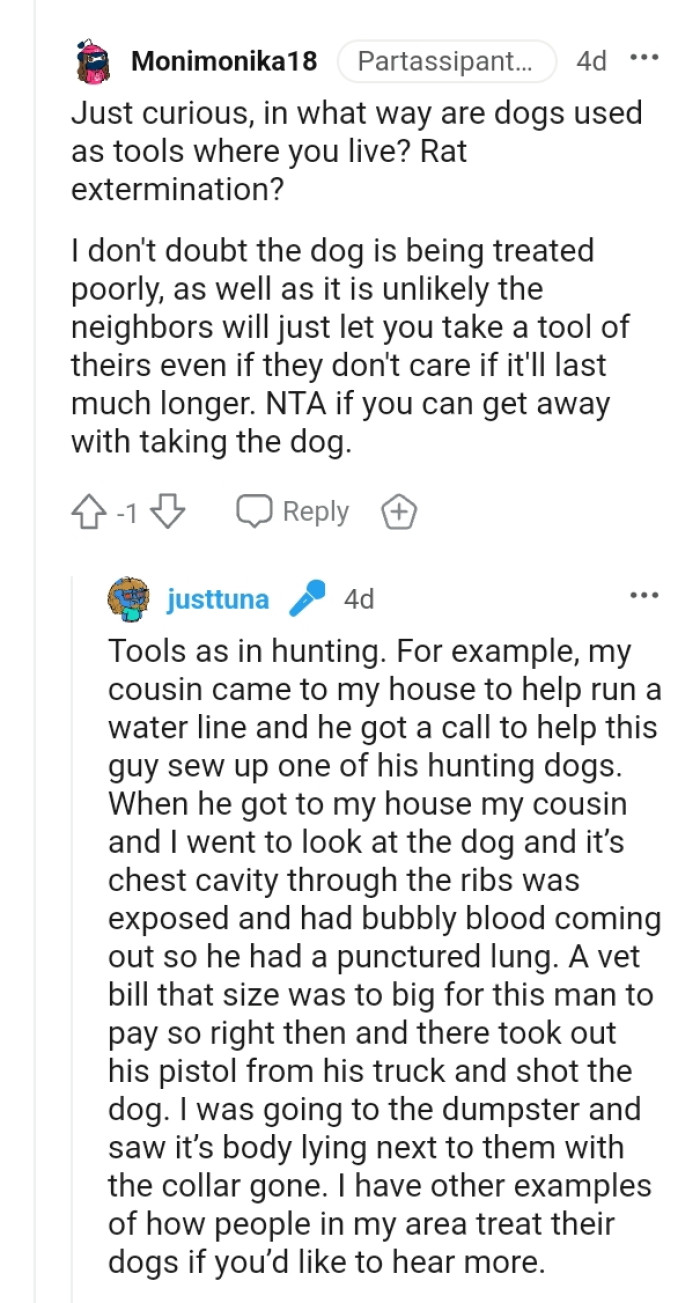
It is a man and his wife who run it
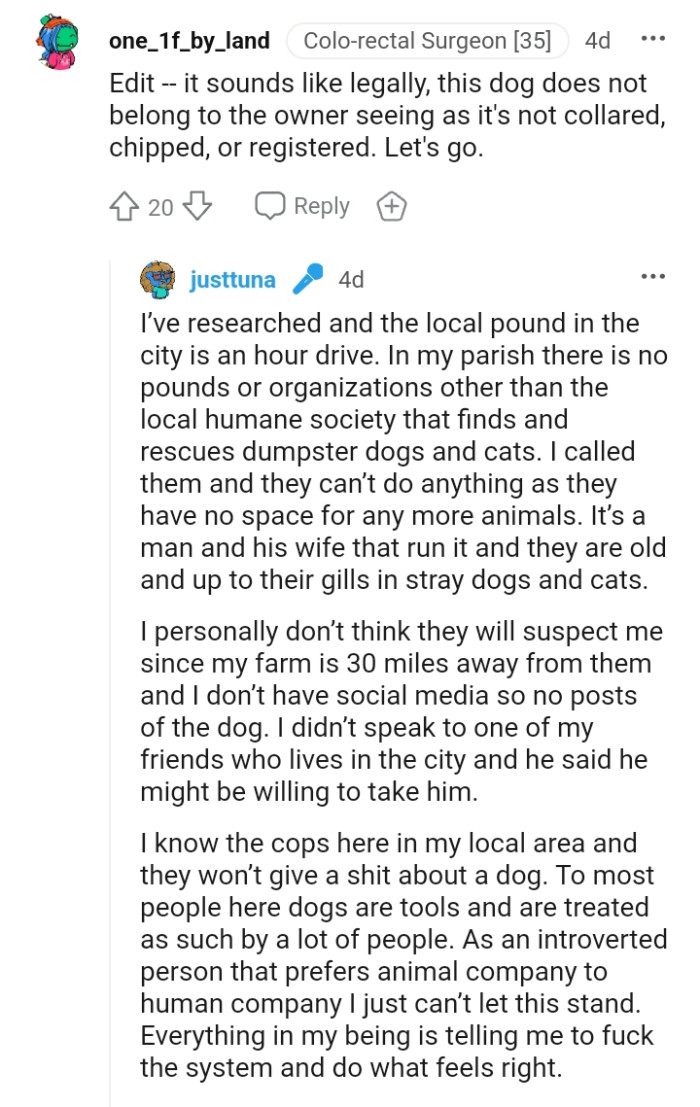
You can intervene when you know nothing else can be done
The humane society detail, basically a small operation run by older people, made everyone wonder how long a “wait and see” would take.
Community Support and Advocacy
Building community support for animal welfare issues can amplify individual efforts.
Ultimately, the desire to help a neglected animal reflects a deep-seated moral imperative driven by empathy and compassion.
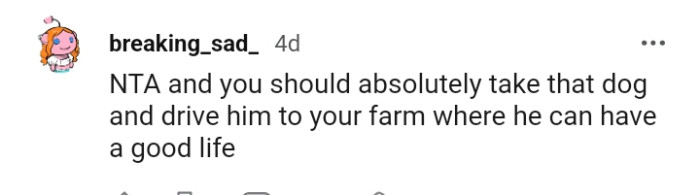
Take the dog and drive him to your farm
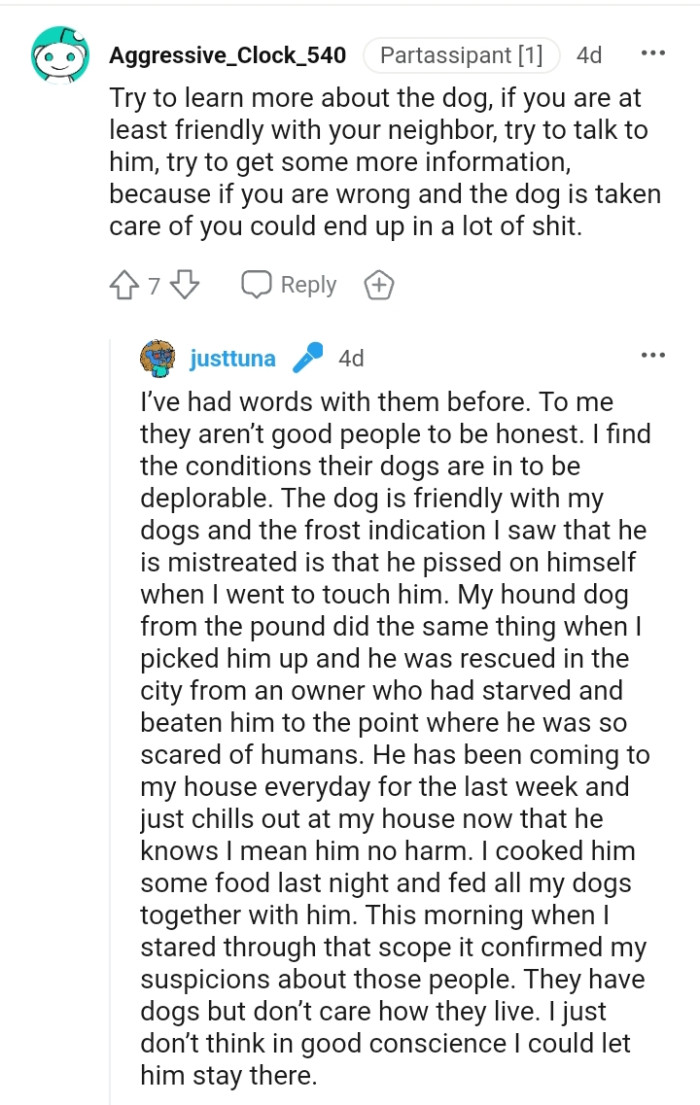
Try to talk to him and get more information
This Redditor wishes the dog a happy retirement

And once OP’s post hinted at taking the dog in, the comment section split into rescue plans and legal worries over what “help” even means here.
Ultimately, understanding the psychological drivers behind the desire to rescue animals can inform more effective advocacy strategies.
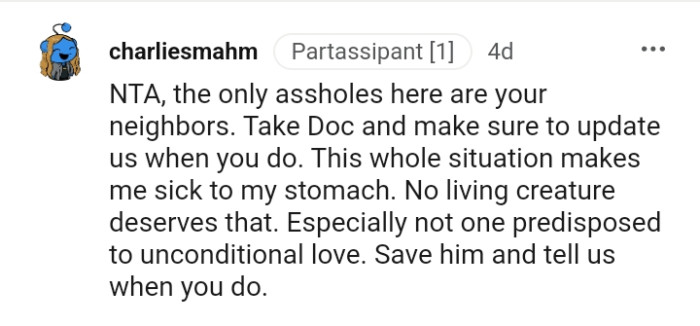
The whole situation just makes this Redditor sick
A Redditor who does the same good work

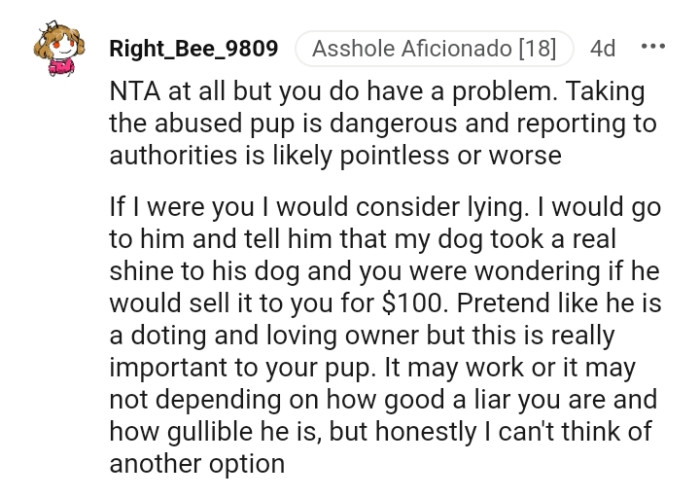
Taking the abused pup is dangerous
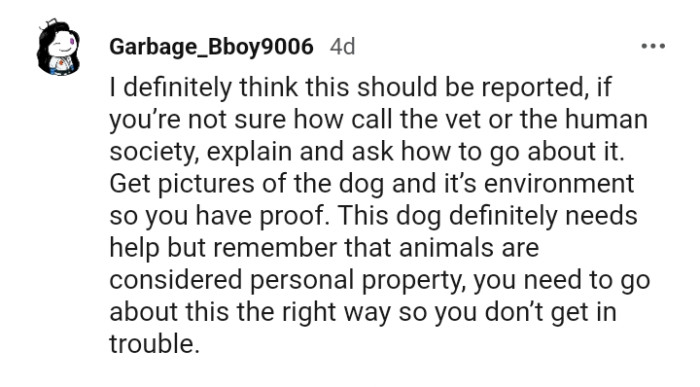
Get pictures of the dog and its environment
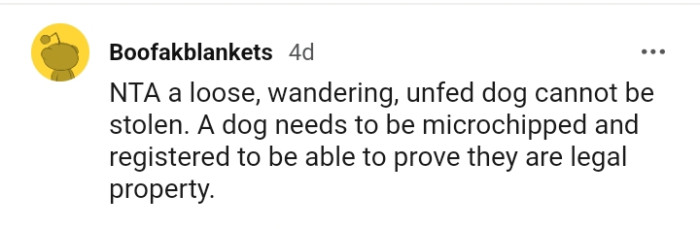
A dog needs to be microchipped and registered
Animal welfare organizations shout from the rafters that radical change is necessary. Our moral status as humans is tarnished by the epidemic of dog abuse.
Dogs are sensitive to mistreatment and will display it in a variety of ways. Redditors declared the OP "not the AH," which means they can go ahead and give the dog all the help and care it needs.
The story surrounding the Redditor's intention to rescue their neighbor's neglected dog highlights the complex interplay between empathy and ethics in addressing animal abuse. While the desire to intervene stems from a deep-seated compassion for the suffering animal, it is essential to recognize the potential legal and moral ramifications of such actions. The call for informed decision-making in these situations cannot be overstated. It is not enough to act on impulse; individuals must weigh their options carefully. This case serves as a reminder that while the collective outrage over animal neglect can drive support for proactive measures, it is crucial to approach these crises with a well-considered strategy. Ultimately, fostering a culture of awareness and advocacy for animal welfare can lead to more sustainable solutions that align with both ethical standards and community values.
The urge to rescue the neighbor's abused and neglected dog underscores a profound empathy and moral obligation within communities. This situation, as highlighted in the article, brings to light the alarming prevalence of animal abuse that often goes unnoticed. The Redditor's intention to intervene not only reflects personal compassion but also serves as a rallying point for others to recognize their role in animal welfare.
Support from online communities demonstrates that fostering empathy is crucial in addressing such issues. The balance between emotional response and informed action is critical in driving meaningful change in animal welfare.
The OP’s about to learn that saving a dog can be the easiest part, and dealing with the fallout is the real story.
For more neglect drama, read how a girl sought advice after serially adopting dogs.
Girl Seeks Advice On Dealing With Neglectful Neighbors And Their PetShare this article: