These Rose-Faced Birds Are Sure To Make You Fall In Love With Their Beautiful Pastel Hues

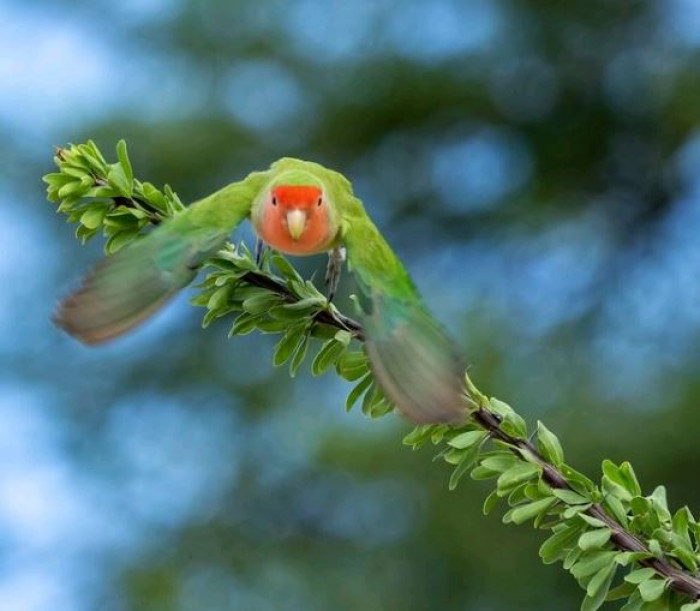
Rosy-faced lovebirds have a way of stealing attention fast, with pastel feathers, bright personalities, and a look that makes them hard to ignore. Their soft green bodies and colorful faces have made them a favorite among bird lovers for years.
These small parrots are known for their strong pair bonds, lively behavior, and striking mix of colors that can range from teal to lavender. The rosy-faced variety stands out the most, especially when you see how vivid and delicate their plumage can be.
Once you see them up close, it is easy to understand why they leave such a lasting impression. Read on.
Meet The Rosy-Faced Lovebirds With The Most Striking Hues
The rosy-faced lovebird (Agapornis roseicollis), sometimes known as the rosy-collared or peach-faced lovebird, is easily the most popular species of lovebirds found not only in the United States but all over the world. Because they breed prolifically, many color mutations have emerged, including but not limited to Creminos, Lutinos, Pieds, Orange-faced, Fallows, Whitefaced, Cinammons, and Violets.
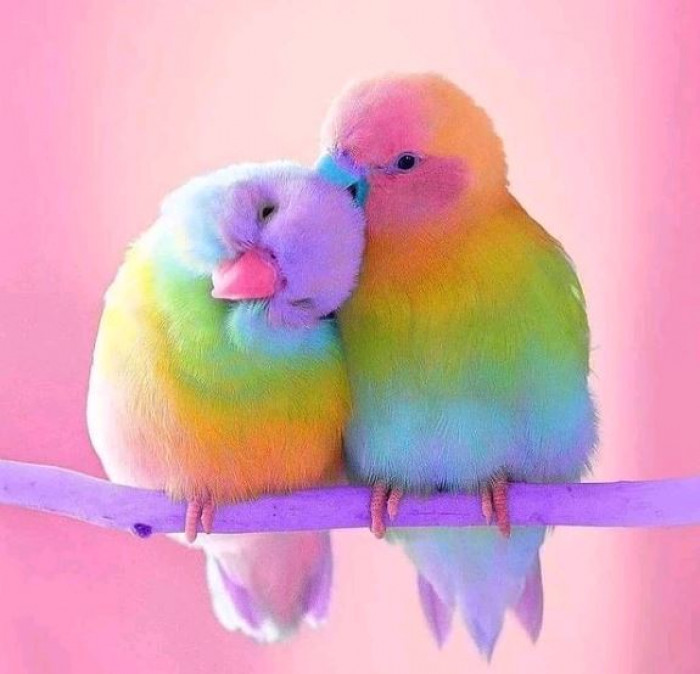
They are the epitome of true love, hence their name. Lovebirds mate for life and can become depressed when separated from their partner.
They are monogamous by nature and reach sexual maturity at ten months of age. Their mating begins with courtship, which can continue throughout their lifespan, approximately 12 to 15 years.
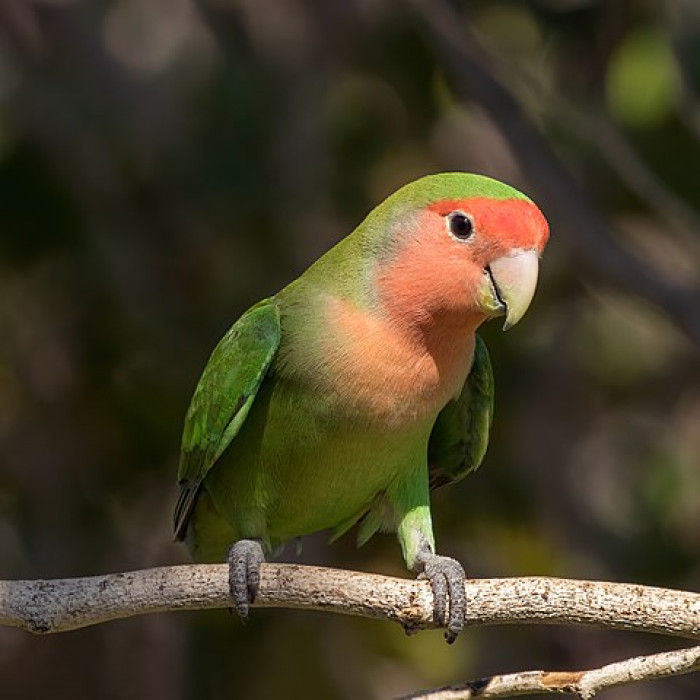
Rosy-faced lovebirds originally have beautiful green bodies, with a blue rump, horn-colored bill, and gray feet.
With their growing population, they have branched out into a variety of color combinations, including white, teal, black, lavender, and yellow.
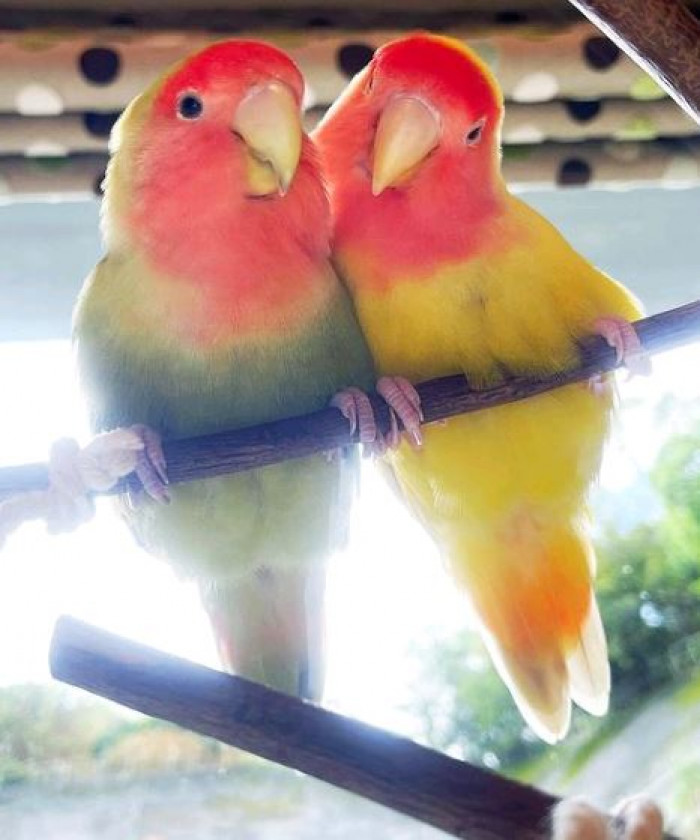
They really do look like tiny parrots with a softer color palette.
Their personalities and intelligence can be likened to those of parrots, as can their appearance.
However, they are significantly smaller and less noisy than their larger counterparts. They are native to the forests of Africa but are now easily found all over the world, whether in the wild or in someone's backyard.
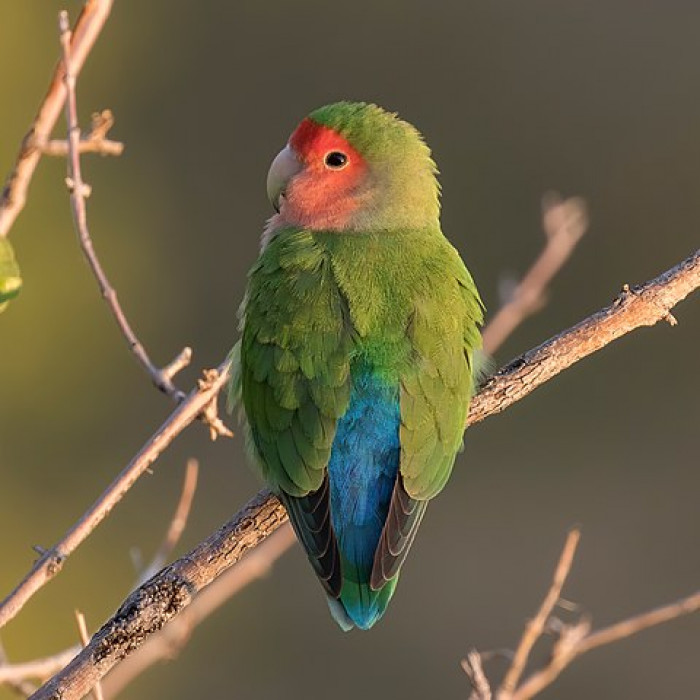
They are androgynous, making it difficult to distinguish between males and females. Needless to say, both are excellent breeders and parents.
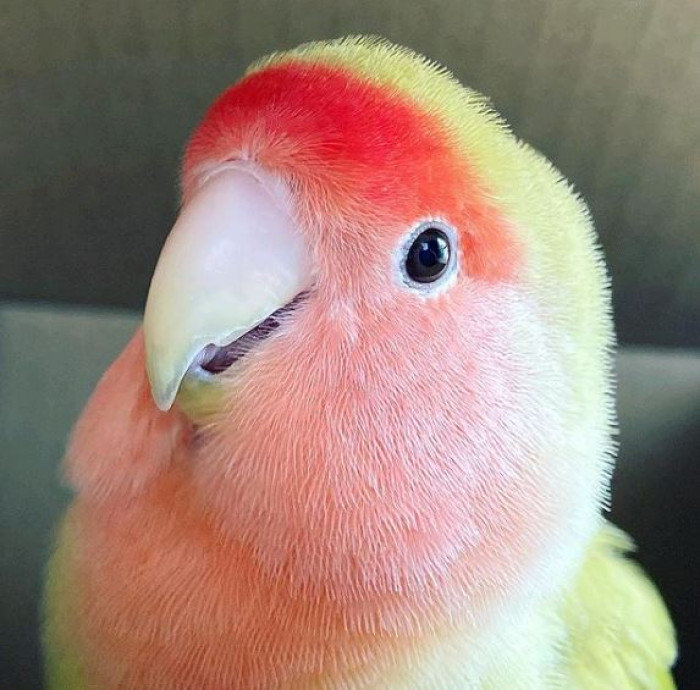
Most lovebird species grow to be 10-14 cm, and the rosy-faced species are actually the largest, potentially reaching 15 cm in size.
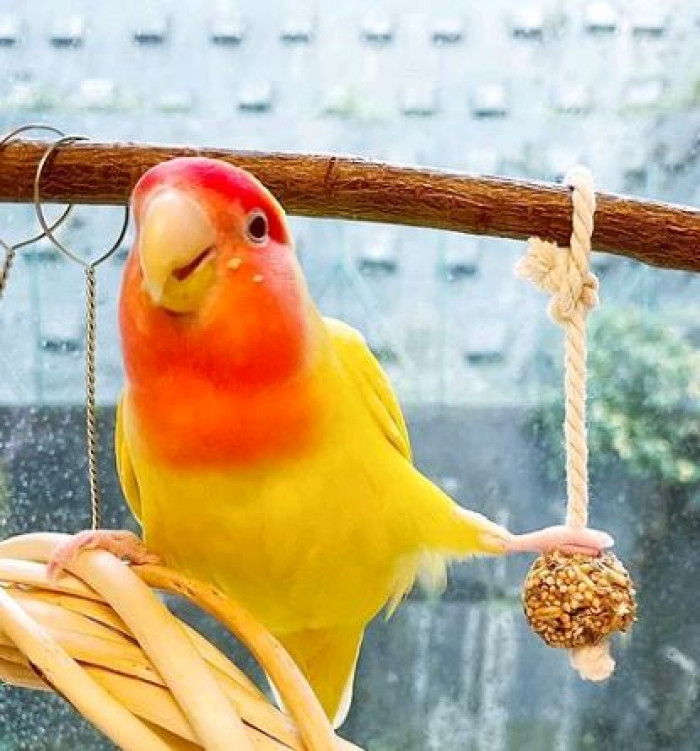
That small size makes their colors stand out even more.
And if you love pastel plumage, these 20 elegant pigeon breeds are next.
In the wild, they prefer to live up to 1,600 meters above sea level and are usually found in forests, semi-deserts, and high mountains. Their habitats depend on their access to water.
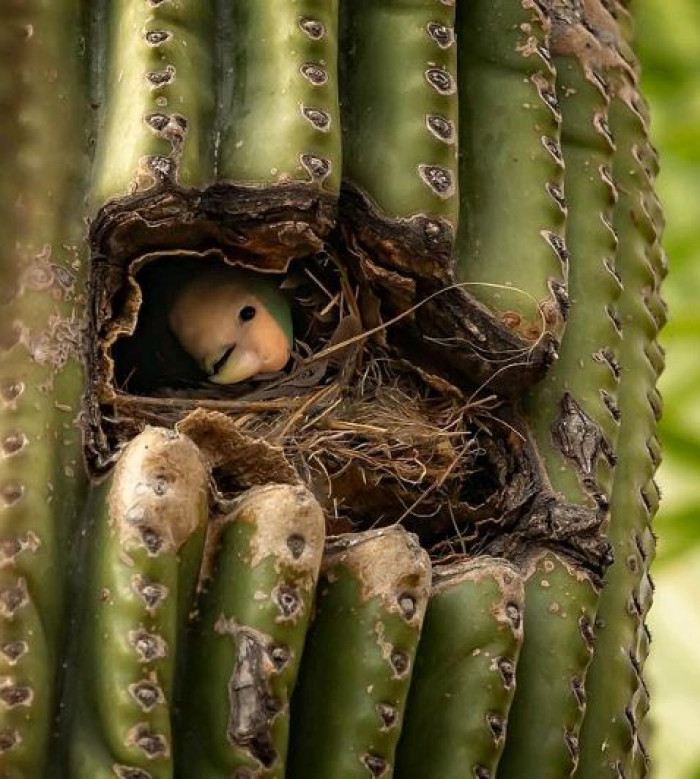
They primarily eat seeds and berries and may gather in flocks when food is abundant. That said, they can also be pests in agricultural lands as they enjoy feeding on crops such as millet.
When breeding, the females typically take charge of building the nest, where they lay about three to six eggs and incubate them for approximately twenty-three days. She will then care for the hatchlings until they reach six weeks of age, after which the father takes over until they are ready to fly.
Here's a video to see them in action!
Compared to other species, lovebirds are truly the life of the party when it comes to showing affection and love not only towards each other but also for the person who takes care of them. They are certainly the epitome of true love, a concept that many people aspire to have!
Comment with your thoughts, and share this story with your family and friends! Who knows, this might encourage them to get a couple or two of these gorgeous beauties!
They are hard not to admire once you see the full picture.
Heartbreaking like the woman’s last goodbye to her African Grey, Sinbad.
Share this article: