Redditor’s Washing Machine Breaks From Constant Washing Because Her “Super Smeller” BF Constantly Complains About Her Apartment Smelling Like Dogs, Now She Wants Him To Wash The Sheets

Some couples discover their first real compatibility issue over money, chores, or family. This one started with smell, and it quickly turned into a full-blown laundry problem.
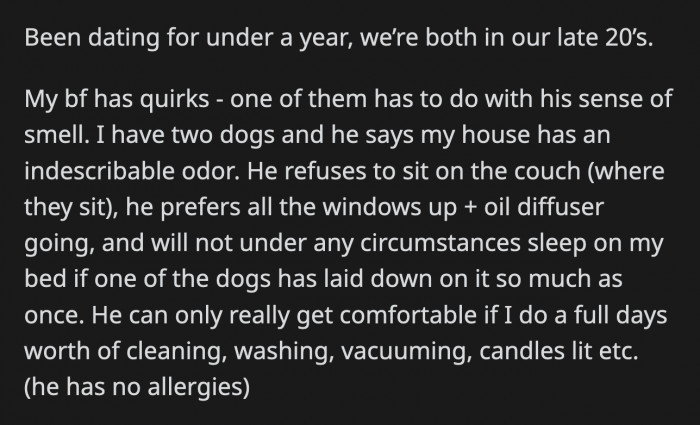
OP has been dating her boyfriend for a year, and the longer they spend together, the more his ultra-sensitive nose becomes an issue. He complains that her apartment smells like dogs, avoids her couch, and even refuses to lie on her bed unless the whole place has been cleaned to his standards.
Now her washing machine is paying the price, and she is done being the only one doing the extra work. Read on.
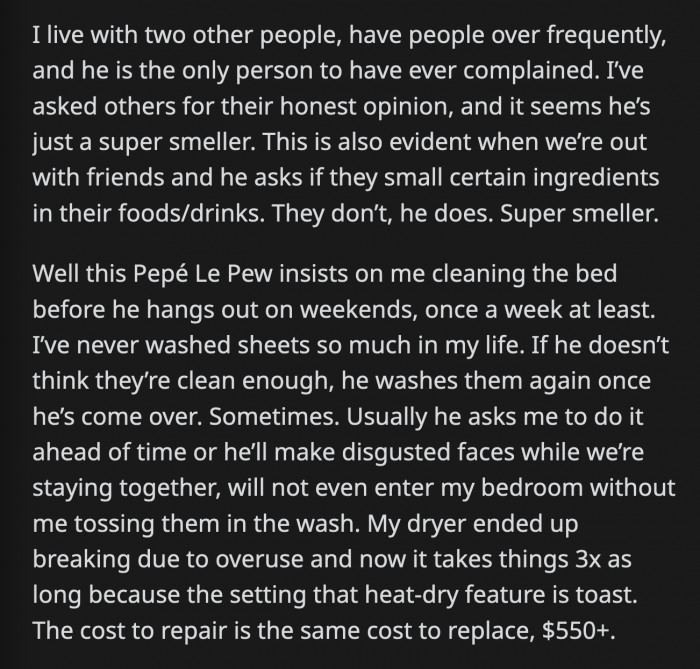
OP thinks her boyfriend is a super smeller because even when they are at restaurants, he can smell some of the ingredients used in people's food and drinks.

OP is getting tired of washing her bedding because he stays with her on weekends.
If he doesn't think they are clean enough, he will wash them again, but that task mostly falls on OP. He even reminds her to wash the sheets before he visits, or he will make faces if OP neglects to do so.
OP's dryer broke because of the frequent washing. The repair costs more than $550, and it's simply out of the budget.
The situation here is simple, but the tension is not.
The Reddit story highlights a familiar yet often contentious issue in relationships: the clash of cleanliness standards.
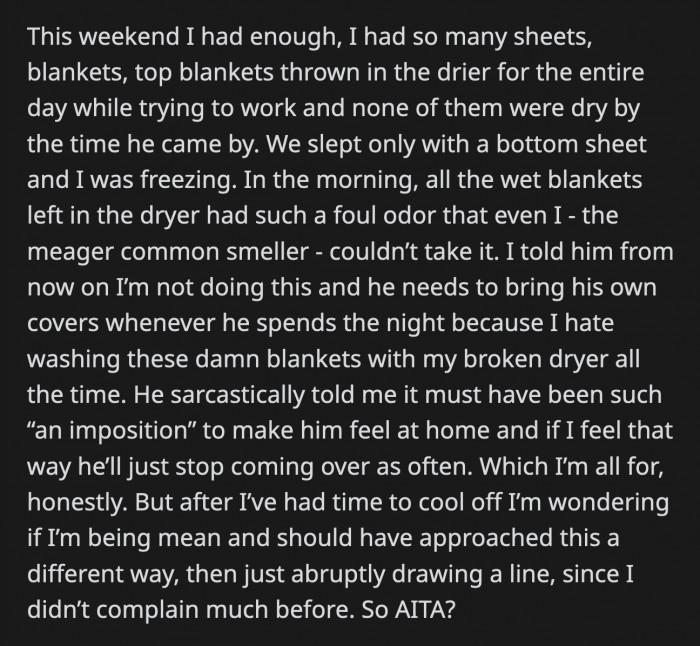
During the most recent weekend, OP washed everything, but they didn't dry before bedtime, and they had to settle for sleeping on just a top sheet.
The semi-dry sheets smelled awful the next day, and OP had enough of her boyfriend's demands. OP told him to bring his own sheets whenever he plans on staying at her place because she hated washing her bedding using a broken dryer.
He sarcastically replied that his comfort must have been such an imposition and that it would be easier if he just stopped coming over. OP didn't fall for his manipulation, but after she cooled down, she is now wondering if there was another way she could have handled the situation.
Have they considered any other underlying medical conditions that could be causing his hypersensitivity to the smell?

OP doesn't know of any diagnosis, and if she did, she would have been more considerate of his accommodations.

That is where the comments started steering the conversation.
Conflict in relationships can often trigger deeper insecurities, especially when one partner feels their efforts are unappreciated.
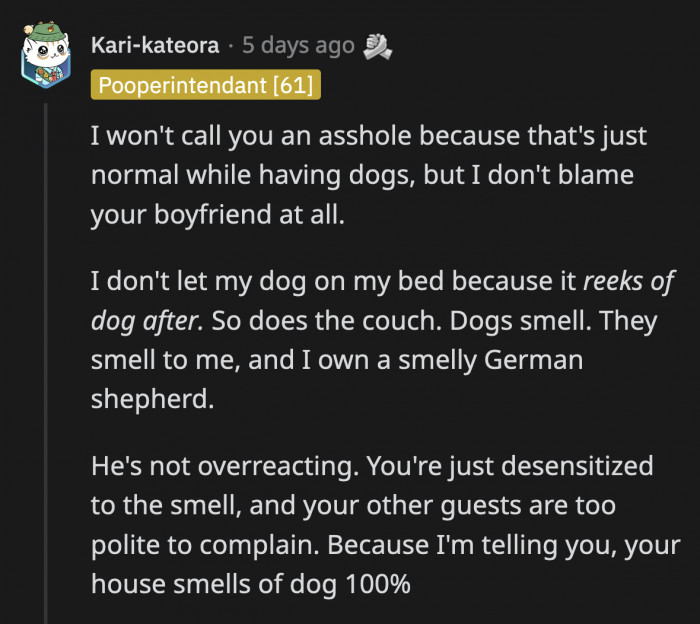
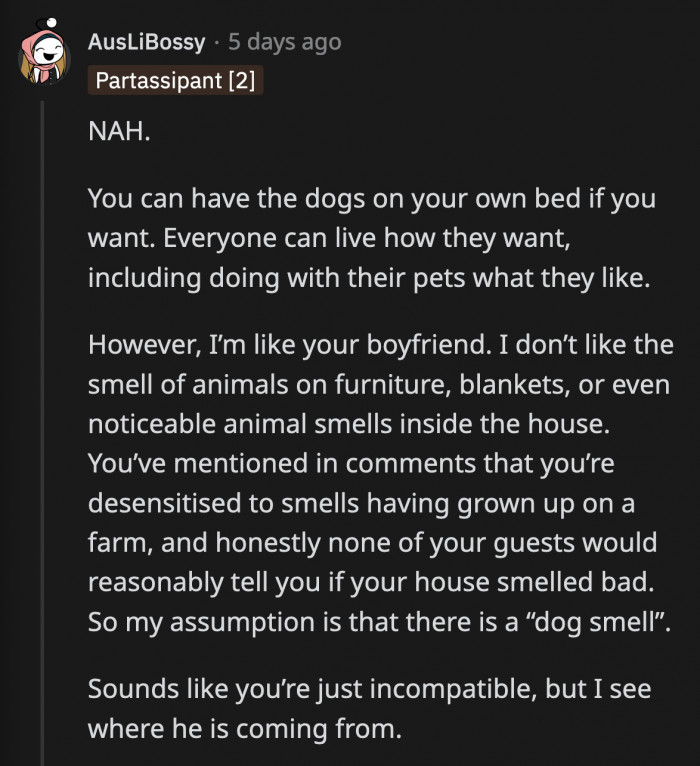
OP may not be sensitive to her dogs' smell anymore, but people who don't live in her house definitely are. Dogs emanate a smell; it's natural, and just because OP can't smell it doesn't mean it's not there.
OP also grew up on a farm, which means her meter for what is stinky could be different from her BF's.
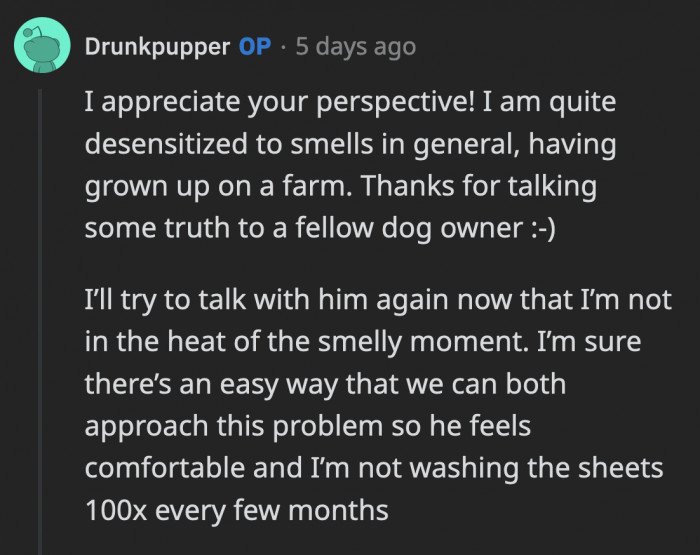
Staying at his place more will accomplish two things: OP won't have to run an in-home laundromat, and her BF will be more comfortable.
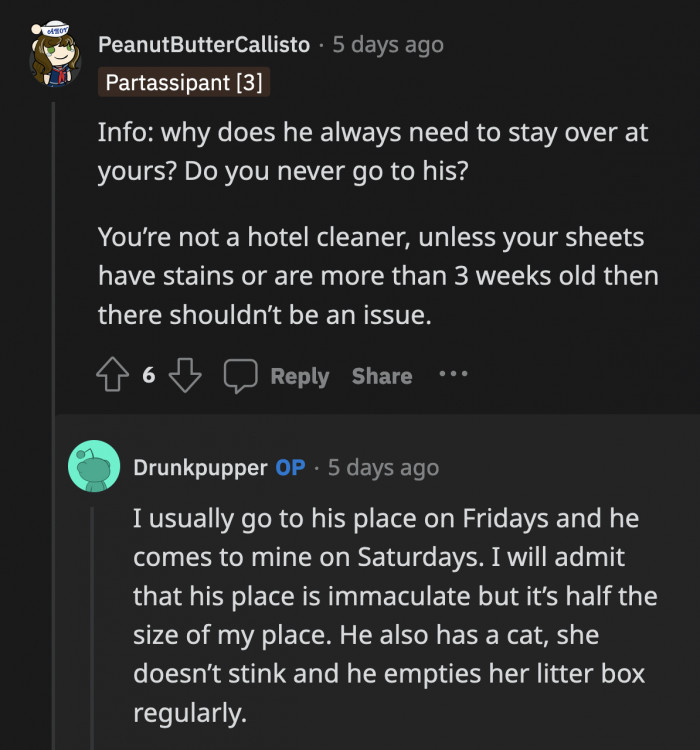
It sounds like Reddit had a pretty practical fix in mind.
Emotional intelligence plays a significant role in navigating relationship conflicts.
This is similar to the Redditor who only wanted her BF to move in after he got rid of his dog.
Identifying Underlying Issues
Often, conflicts about cleanliness may reveal deeper issues such as anxiety or fear of loss of control.
OP says her BF adores her dogs except for their smell, but it seems like their incompatibility runs deeper than a fading aroma.

OP learned through the comments that her BF's adverse reaction to smells is not uncommon and that she should be more understanding of what he's going through.
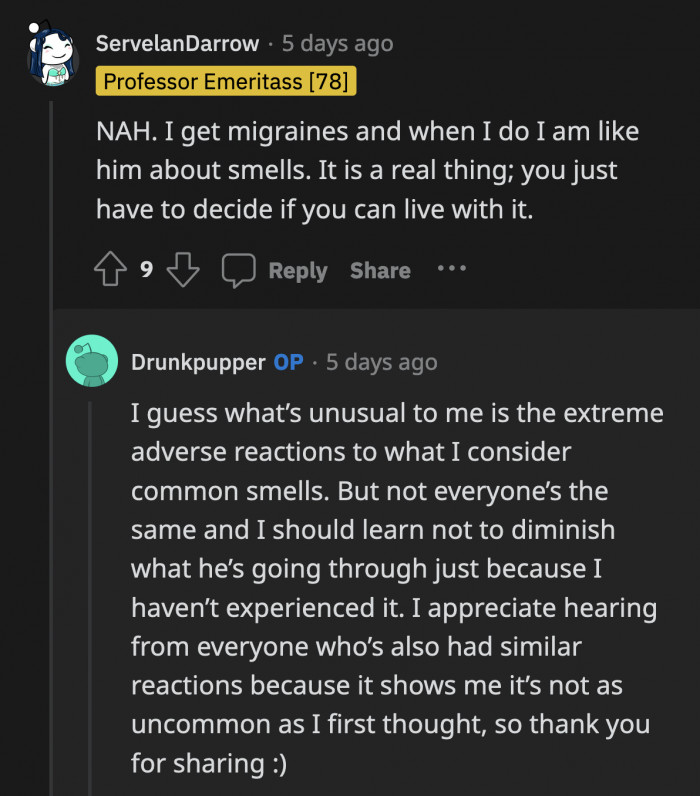
However, reading her comments just made it glaringly obvious how incompatible their perspectives and lifestyles are.

By this point, the relationship issue was bigger than one bad-smelling weekend.
This includes setting aside time for both partners to express their feelings and needs without judgment.
Active listening and validating each other's experiences can help foster a stronger connection and reduce the likelihood of misunderstandings.
If OP is adamant about making their relationship work, a sheet cover for her bed can offer a quick solution.
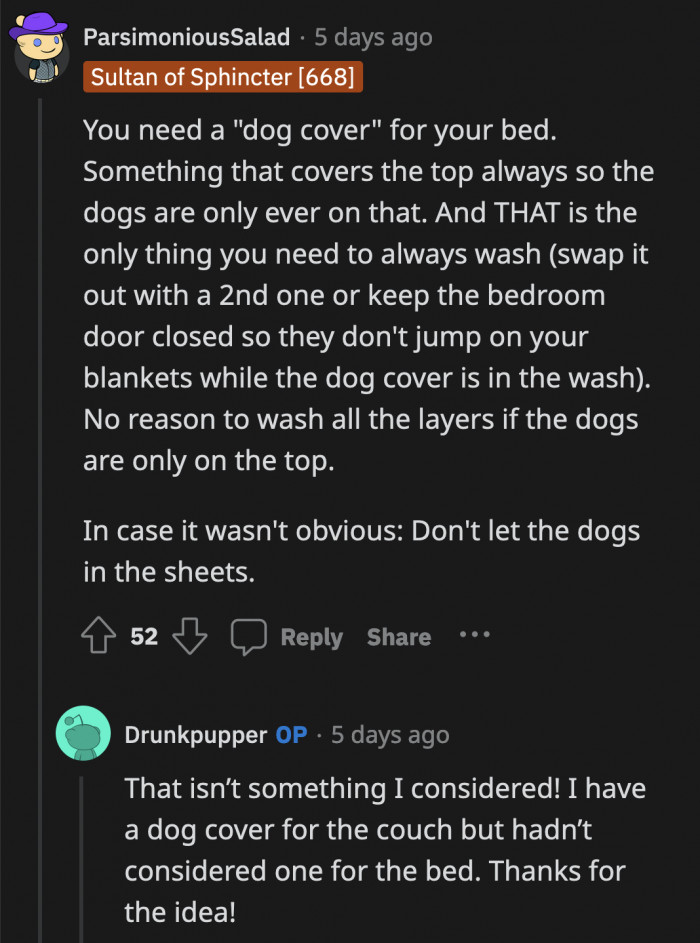
If they ever decide to live together, their issues and disagreements will become more apparent.
OP said she knew right off the bat that they are two very different people, but she refused to let their differences break their relationship, so she is set on giving it her all.
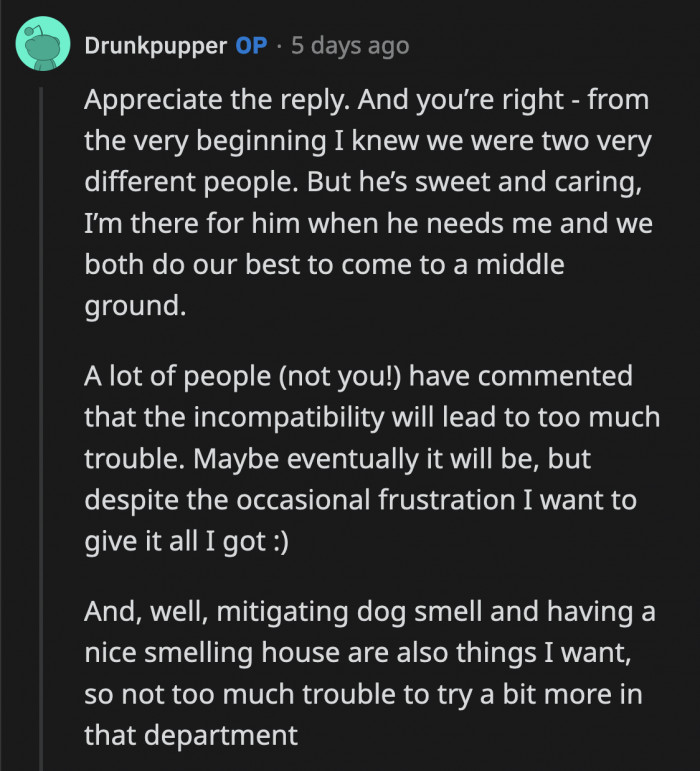
That optimism is doing a lot of heavy lifting here.
The Importance of Compromise
In any relationship, compromise is vital for maintaining harmony and mutual respect.
Finding middle ground on issues like cleanliness can enhance emotional intimacy and create a sense of teamwork.
It looks like they found a middle ground they are both happy with, thanks to some advice from Redditors!

Do you think OP and her BF are incompatible with each other? OP's determination to give their relationship her all is admirable, but sometimes even a 110% effort is not enough to disguise fundamental differences, for now, they seem to be happy with their temporary solution, and only they can decide if the relationship is working.
It all comes down to whether this is a fix or just a pause.
Identifying Underlying Issues
Often, conflicts about cleanliness may reveal deeper issues such as anxiety or fear of loss of control.
Acknowledging and addressing individual differences in cleanliness preferences is essential for relationship harmony.
Building a Supportive Environment
Creating a shared vision for your living space can significantly enhance relationship satisfaction.
In examining the situation faced by the Redditor with her "super smeller" boyfriend, it becomes evident that their conflict over cleanliness is not merely a matter of differing standards. The emotional weight of his complaints about the apartment smelling like dogs likely stems from deeper psychological factors that influence how each partner perceives their living space. The Reddit story reveals that the boyfriend's insistence on cleanliness may reflect a need for control or a desire for comfort in their shared environment. By addressing these underlying motivations through open communication and empathy, they can work towards a compromise that satisfies both parties. This approach not only helps in resolving their immediate issues, such as the boyfriend's demands for her to wash the sheets more frequently, but also paves the way for a healthier relationship dynamic as they learn to navigate each other's sensitivities.
Encouraging each partner to engage in self-care practices could also alleviate some tension. Activities that promote individual well-being, such as exercise or mindfulness, can enhance emotional regulation, allowing for calmer interactions.
This Reddit story highlights the complexities of compatibility in relationships, particularly when external factors come into play.
For another pet-related blowup, check out the woman who barred her boyfriend’s family pets and got labeled a germaphobe.
Share this article: