Watch Tiger Mom Bathing Her Cub In The River

Some moments look staged until you realize they were caught in the middle of real life, in real mud, in real danger. In Tadoba-Andhari Tiger Reserve in Maharashtra, India, a mother tiger turned a river into her own private nursery, bathing her cub with slow, deliberate care.
The footage was snapped by Ninad Sane, an amateur photographer from Mumbai, while he was there capturing the reserve’s wild rhythms. And here’s the complicated part, this is not a cute petting moment, it’s survival math, the cub is vulnerable, the mother is constantly on alert, and every splash has a purpose.
One river, one tigress, one tiny cub, and suddenly you get a front-row seat to what “mothering” looks like when the stakes are life and death.
The beautiful scenes came to life in the Tadoba-Andhari Tiger Reserve in Maharashtra, India.

The moment was caught on camera by Ninad Sane, an amateur photographer from Mumbai.

Bathing your kids can be tough for both humans and animals, as this tiger mom can attest.

Ninad Sane’s camera caught the exact second the tigress leaned into the river, turning a normal day into something you can’t unsee.
In her extensive research on primates, she highlights that nurturing behaviors, such as bathing and grooming, not only strengthen the bond between mother and offspring but also promote the young's health and development.
In the wild, a mother's attention can make the difference between life and death, as it teaches vital skills and helps in socialization. This behavior is particularly evident in species like tigers, where the first few years are critical for learning survival tactics.
The heartwarming scene of the tigress bathing her cub in the river highlights the profound connection between mother and child that resonates across species. This moment not only captures the tenderness of maternal care but also underscores essential parenting lessons that can be drawn from the animal kingdom. The act of bathing serves as a form of nurturing, instilling a sense of security in the young cub, which is vital for its emotional development.
In human contexts, the parallels are striking. Establishing routines filled with affection and attention, much like the tigress's instinctual care, can foster strong bonds between parents and children. Simple daily rituals, be it reading together or sharing meals, mirror the nurturing behaviors observed in nature and can significantly enhance familial relationships, promoting emotional resilience in children.
While the cub splashed and settled, the reserve’s constant threat level meant this grooming session was also a safety check.
Indian tigresses typically give birth to a litter of two to four cubs. In the initial stages, the cubs are blind and completely dependent on their mother for survival. The tigress ensures their safety by isolating the den from potential threats, including male tigers who might harm the cubs. She is highly vigilant and will often move her cubs to new locations to escape detection by predators or rival tigers.
Feeding and nurturing the cubs are solely the mother's responsibility. During the early weeks, she spends significant time nursing them, only leaving the den for short periods to hunt. As the cubs grow, the mother teaches them essential skills for survival, such as hunting techniques and how to mark their territory.
The bond between the tigress and her cubs is strong and lasts for about two years, during which the cubs learn and gradually become independent. Once they are mature enough, the cubs will leave their mother to establish their territories, carrying forward the lessons and skills imparted by their diligent mother.
This “lion king” moment echoes the majestic lion embracing his cub in that heartwarming scene.
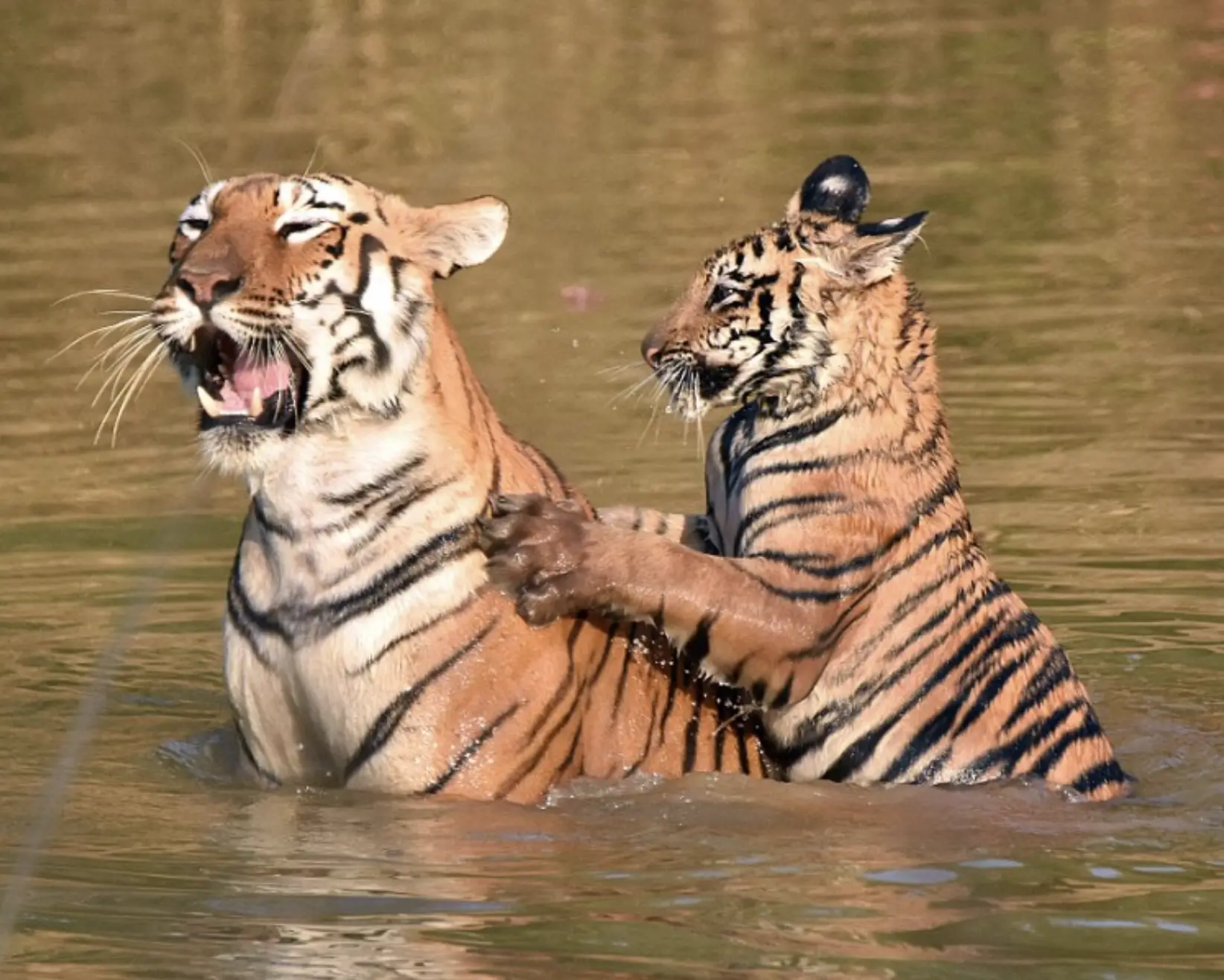
The mother brings her baby to the river for serious reasons, but the child sees it as playtime, splashing around while the mother tries to clean it.

She persists!

The mother tiger patiently lets her cub mistake bath time for playtime.
The story gets even more intense when you remember those first cubs are blind and totally dependent, so one missed move matters.
Research indicates that the affection shown by animal parents can have long-lasting effects on the emotional health of their offspring.
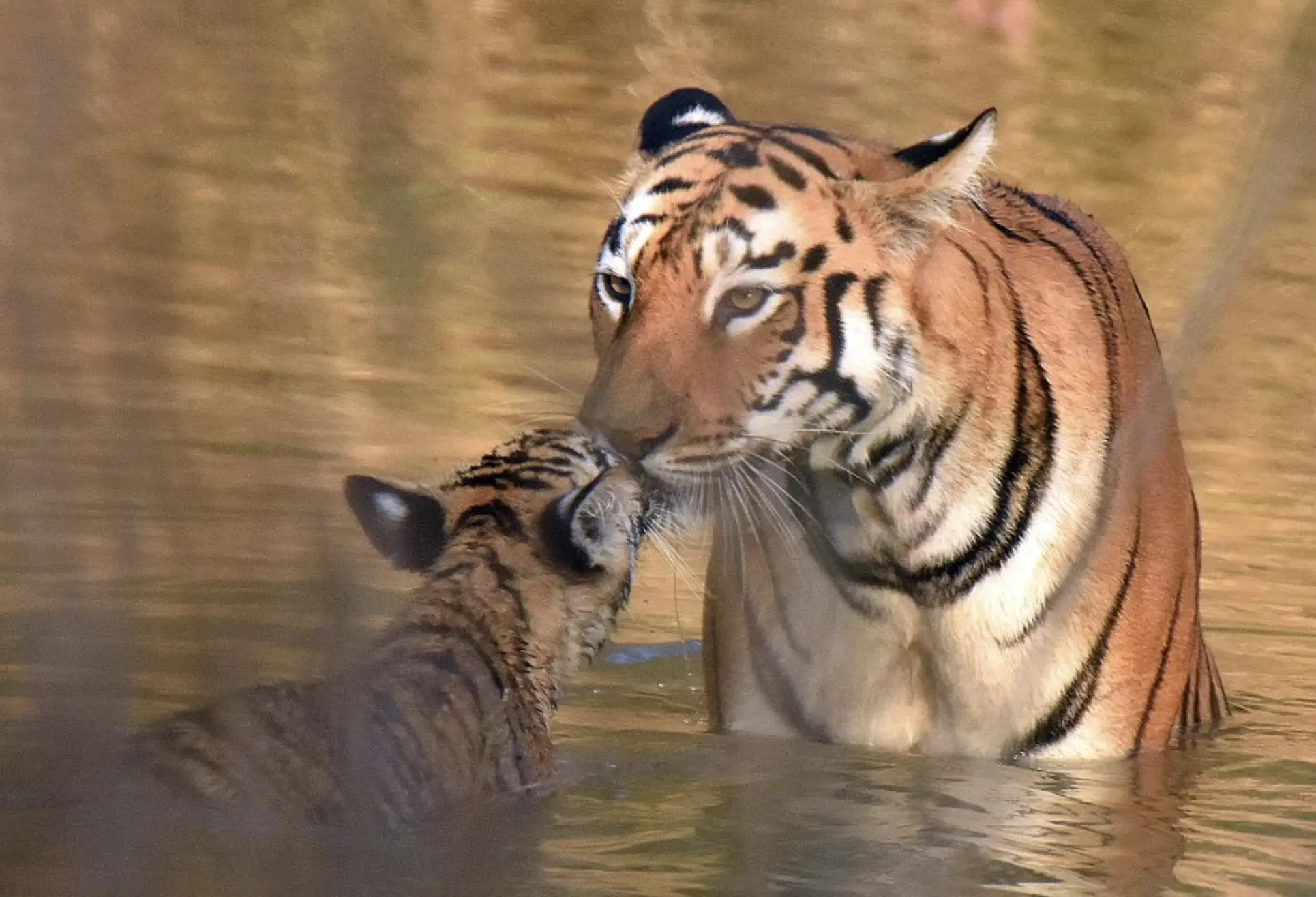
She cuddled and kissed the baby tiger after cleaning it.
And when the tigress keeps moving the cubs to new spots, that river bath becomes part of a bigger routine, not a random act of tenderness.
Seeing these pictures of the tiger mom and her cub is like getting a special peek into their family life. It shows us how wild animals, like tigers, are caring parents. Even though they face many challenges, they're still strong and loving towards their babies.
These images remind us of the resilience and tenderness that even the fiercest creatures possess.
The heartwarming scene of a tigress bathing her cub in the river serves as a poignant reminder of the vital role of nurturing in the animal kingdom. This moment captured in the Tadoba-Andhari Tiger Reserve illustrates not only the tenderness of a mother's care but also the importance of maternal instincts for survival. Observers can draw parallels to human parenting, where consistent routines and emotional closeness significantly impact a child's development. The affectionate interaction between the mother tiger and her cub reinforces the idea that nurturing behaviors are fundamental across species. By reflecting on these connections, we can enhance our understanding of parenting and strive to create more supportive environments for our children.
That river wasn’t just for washing, it was for keeping her cub alive.
For another emotional predator-prey twist, watch what happened when a baby baboon fell into a lioness' lap.
Share this article: