The Wilson's Bird Of Paradise Is Utterly Exquisite

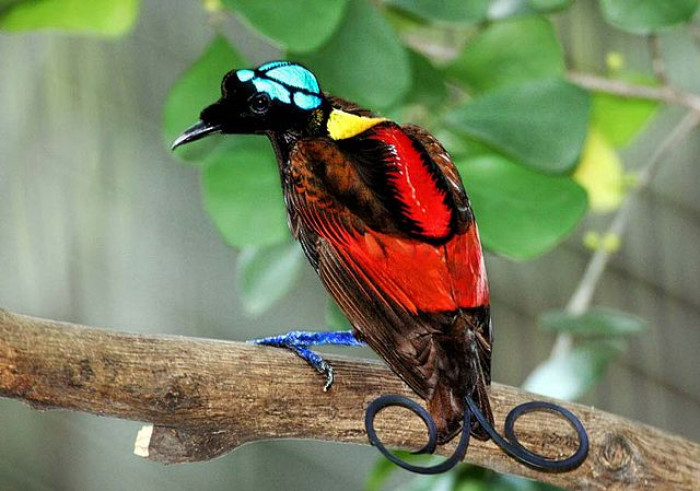
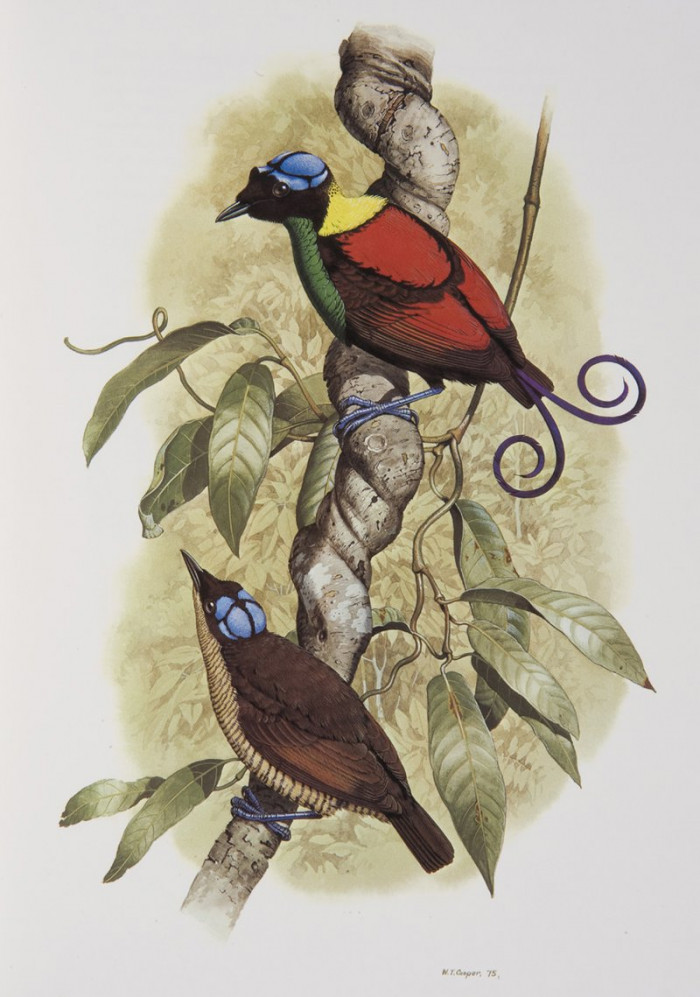
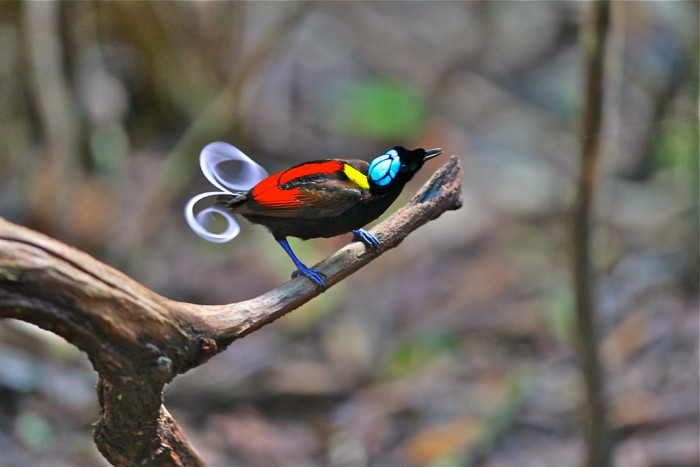
Wilson’s bird-of-paradise is one of those rare birds that looks almost unreal at first glance. With its black body, bright red markings, yellow neck patch, emerald throat, blue feet, and curled violet tail feathers, it stands out even among the famously colorful birds of paradise.
Native to parts of Indonesia, this species lives in rainforest habitats that are increasingly under pressure, which makes its survival story even more interesting. The males are especially striking, and their unusual courtship display has long fascinated bird lovers and researchers alike.
What makes Wilson’s bird-of-paradise so memorable is not just its color, but how little is still known about it. Read on.
Wilson’s Bird of Paradise is native to Indonesia. You can find this gorgeous bird throughout the hill and lowland rainforest regions of Waigeo and Batanta Islands off West Papua.
As you can see, female Wilson's birds of paradise are not as extravagant in plumage. They have a brownish coloring with a darker blue crown than the males of their species.
According to Wikipedia, a "2009 study examining the mitochondrial DNA of all species to examine the relationships within the Paradisaeidae family and to its nearest relatives estimated that the family emerged 24 million years ago."
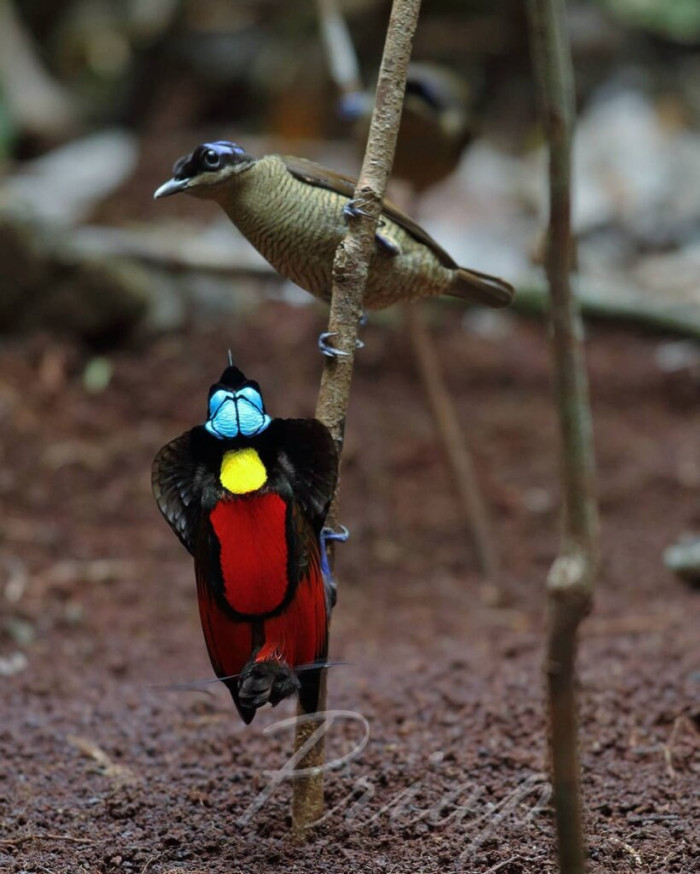
According to the bird fan blog Just Birding:
"Don't feel bad for the drab female because it is this sexual dimorphism that gives her the power to judge the male's appearance and choose whether he will make a proper father for her offspring, genetically speaking."
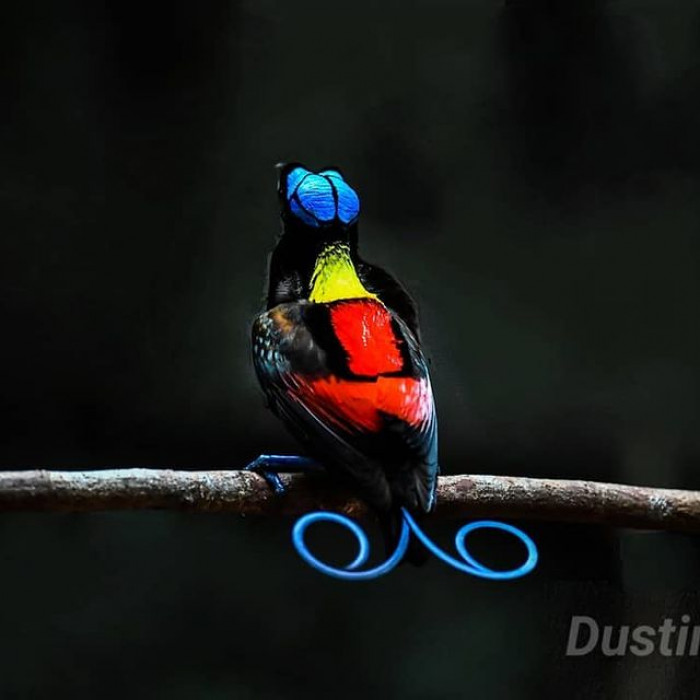
Like many birds of paradise, Wilson's bird-of-paradise prefers to feed on fruit and insects, so it thrives in the hilly areas of the rainforest.
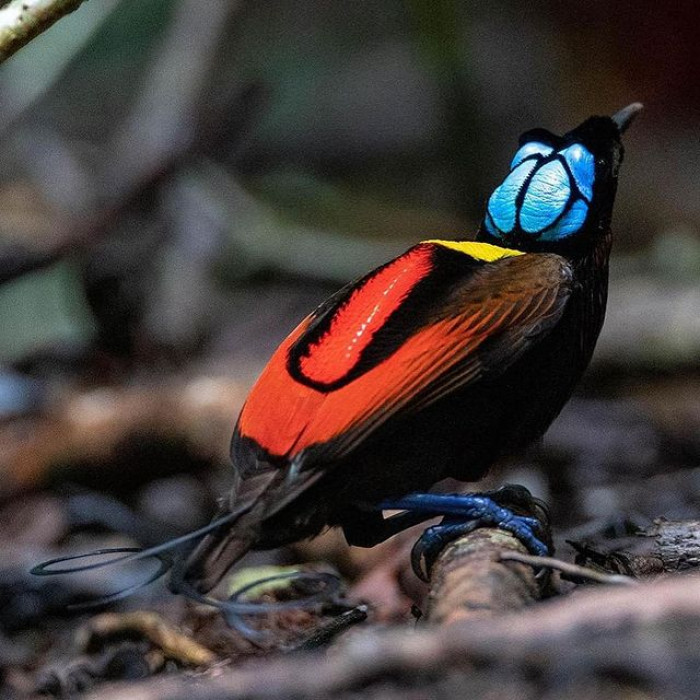
On average, these beautiful birds are about 6.3 inches (16 cm) in length, but males can easily reach a length of 8.25 inches (21 cm) when including their iconic, curlicue tail feathers.
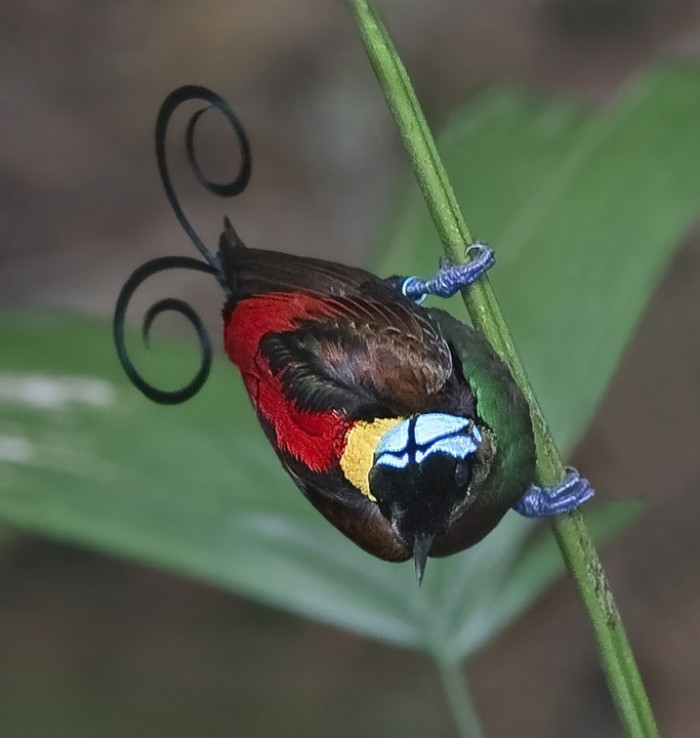
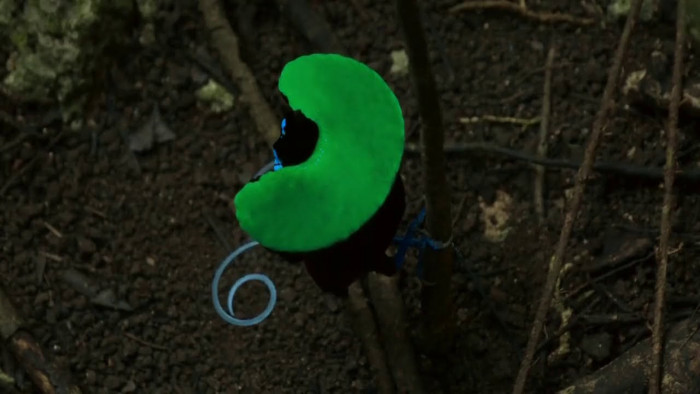
Surprisingly, not much is actually known about Wilson's birds of paradise regarding their breeding and mating habits... with a few exceptions. Most notably: the male's intricate dance routine.
Fluffing his plumage for the exotic dance routine, the male becomes a "brilliant disc of green," and his mouth opens to a fluorescent vibrancy. He becomes, quite literally, a beacon of color.
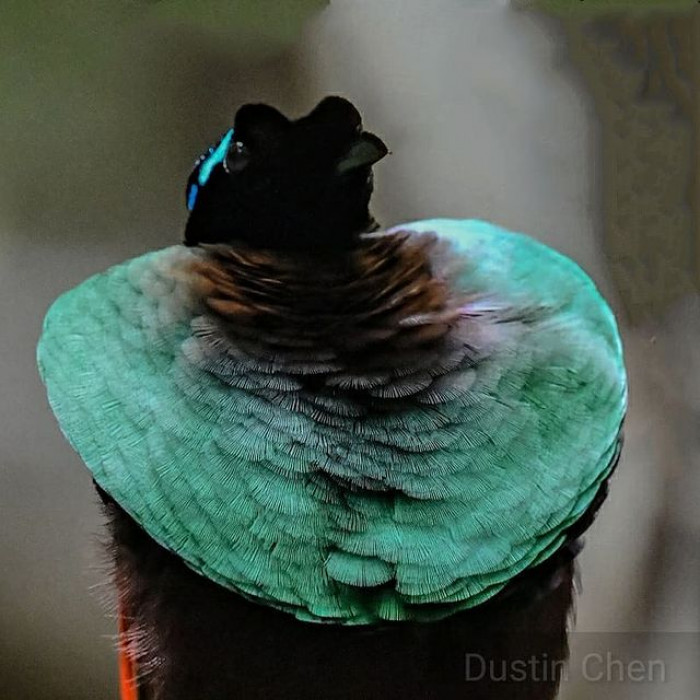
That mystery is part of the appeal.
And if you love dramatic contrast, this masked cardinal with a black-and-white coat and red head is a knockout.
In the wild, Wilson's birds of paradise live around 5-8 years, but in captivity, they can live up to 30 years.
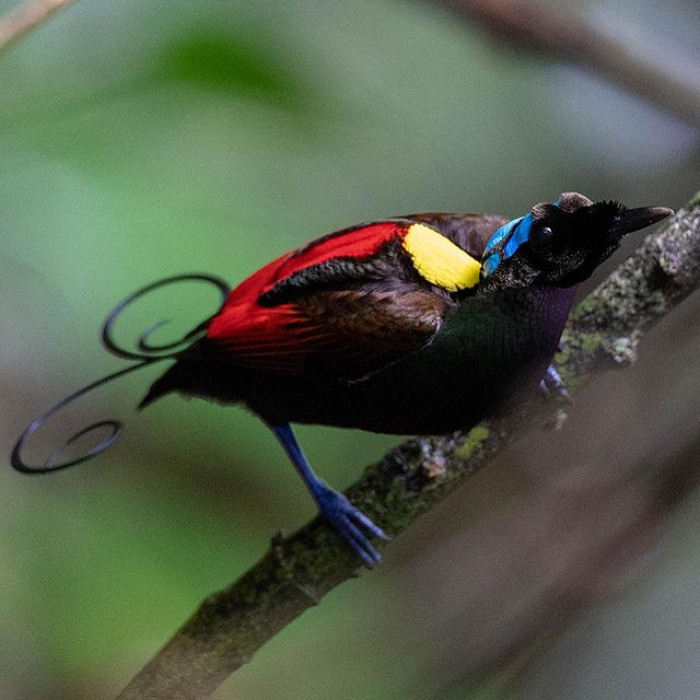
There are many other things researchers and bird enthusiasts simply don't know about Wilson's birds of paradise and their behavior.
JustBirding states that multiple males have been spotted in a shared area without aggression, so it's possible that they are not territorial, but it's difficult to determine whether or not they are aggressive. "Out of the whole bird-of-paradise family, Wilson’s species remains the most poorly known," adds JustBirding.
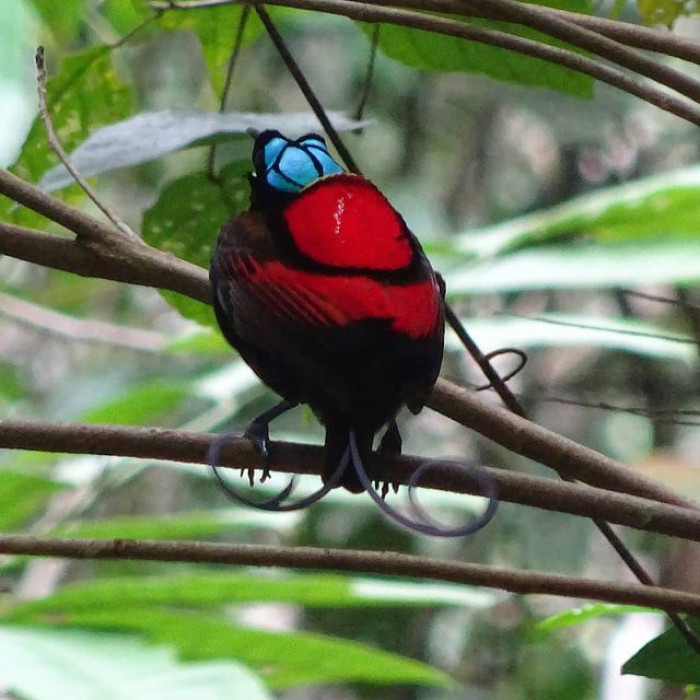
Check out this beautiful bird in action:
Check out this beautiful bird in action:
Male Wilson's Bird of Paradise are polygamous, so this species does not mate for life. In fact, the males will mate with multiple females at a time.
Afterwards, females build and tend to nests for the eggs. So, the couples get busy, the females build their nests, and the males just look for the next female to mate with! What a bird.
The first time their mating dance was ever captured on camera was in 1996, thanks to the world-famous British naturalist, David Attenborough.
Wilson's Bird of Paradise is truly a stunning creature and exemplary proof of nature's incredible strength in diversity. We may not know all there is to know about this beautiful bird, but the fact that there are still mysteries in nature to unravel and questions to answer will only serve to fuel future generations to seek such answers, and we can't wait to see what comes next.
That “where did this color come from?” moment is nothing compared to the exceptionally rare yellow cardinal sighted in Alabama.
Share this article: