Joyful Relief For Baby Albino Elephant After Days Of Captivity

Khanyisa, a baby albino elephant, did not get a gentle rescue story. She got barbed wire, panic, and cuts that ran from her ears to her mouth on both sides, and somehow she still had the will to keep going.
In South Africa, her situation was complicated fast, because time matters when a young elephant is trapped. Hoedspruit Elephant Rehabilitation and Development carer Herman had to get her out and into care, then keep her steady enough to heal, bottle-feeding her as she adjusted to a new life.
And once Khanyisa started taking those first steps toward recovery, the whole world leaned in.
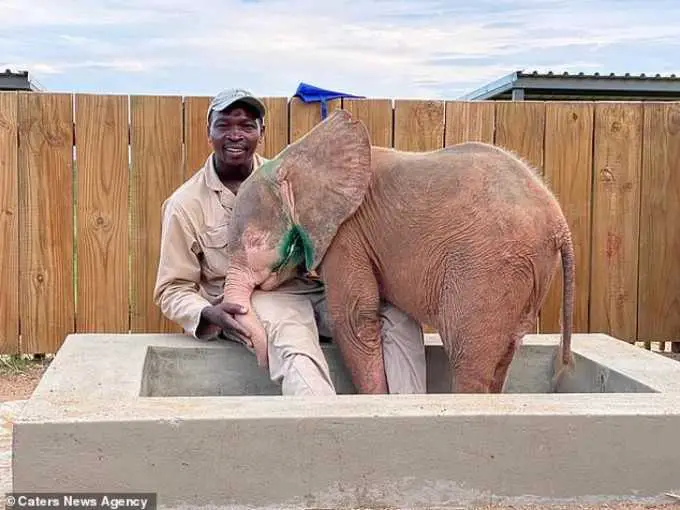
"Khanyisa had cuts running from her ears to her mouth on both sides."
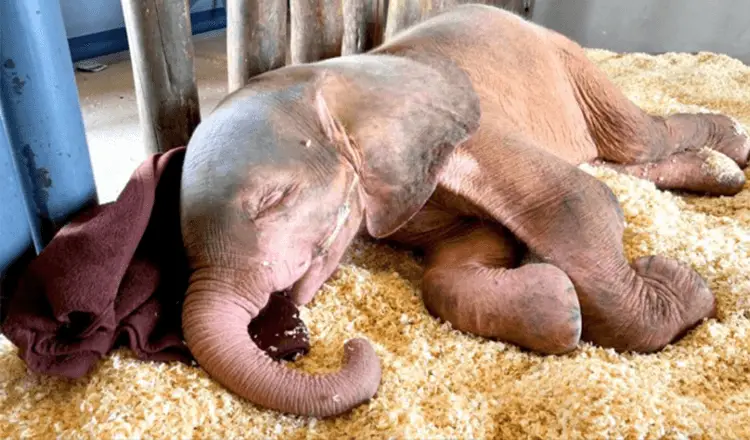
"Carer Herman from Hoedspruit Elephant Rehabilitation and Development looking after albino elephant calf, Khanyisa, after she was rescued from a barbed wire snare in South Africa."
"Herman feeds Khanyisa with the bottle."
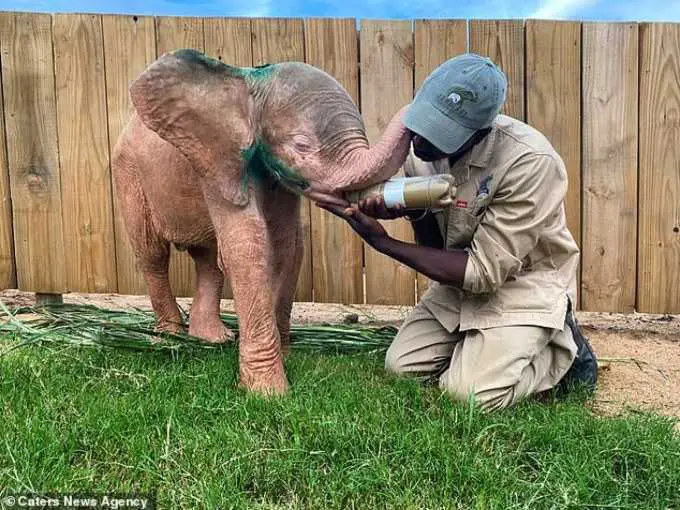
While Khanyisa was still fighting the effects of that barbed wire snare, Herman from Hoedspruit had to move quickly to get her stable enough to survive the next hours.
After the rescue, the image of Herman feeding Khanyisa with a bottle was basically the turning point, because it meant the danger was not the only thing left in her story.
Wildlife rescue operations often operate under immense time constraints, especially when dealing with injured or trapped animals. The psychological stress on a young elephant can be profound, impacting its long-term health and social behaviors.
In her extensive work with elephants, Poole notes that immediate intervention can prevent irreversible trauma.
And if you need a lighter twist, check out the cheeky baby elephant that tickled a journalist’s nose during a news report.
Even with Khanyisa on the mend at her new home, her cuts and her captivity kept pointing back to what led her there in the first place, human choices around wildlife.
In the face of wildlife entrapment, it's crucial to consider prevention strategies. Community education is key to reducing human-wildlife conflicts. Local workshops that teach proper waste management and wildlife-friendly farming practices can help.
Such initiatives can minimize the likelihood of animals venturing into human territories, thereby decreasing the risk of entrapment. Engaging communities in conservation efforts fosters a sense of responsibility towards local wildlife, ultimately leading to more harmonious coexistence.
"Khanyisa at her new home."
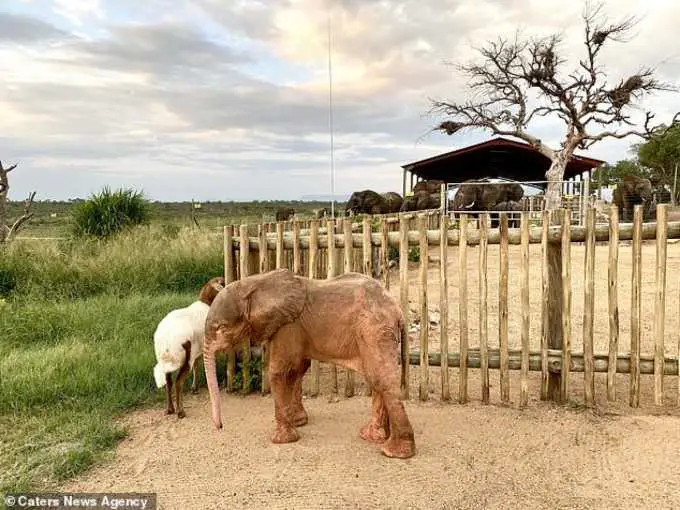
That is why her journey turned into more than a feel-good update, it became a loud reminder that communities have to help keep elephants out of traps like the one Khanyisa survived.
As Khanyisa embarked on her journey towards healing, her story captured people's hearts worldwide. Through her ordeal, Khanyisa became a symbol of hope, inspiring others to join the fight to protect and preserve our planet's precious wildlife.
Her story served as a rallying cry for conservation efforts worldwide, reminding us of the importance of standing together to safeguard the future of our planet's most vulnerable inhabitants. And as Khanyisa took her first steps towards recovery, she did so not just as an elephant, but as a symbol of resilience, courage, and hope for generations to come.
The rescue of the baby albino elephant from the snares of Kruger National Park serves as a critical reminder of the urgent need for improved wildlife protection measures. The harrowing ordeal endured by the young calf, trapped for four days, brings to light the consequences of human encroachment on natural habitats. This incident emphasizes the need for immediate action and active involvement from local communities in wildlife conservation efforts.
Addressing the root causes of human-wildlife conflict is essential to prevent such tragic events from recurring. By prioritizing education and awareness, communities can cultivate a deeper understanding of their interactions with wildlife. A collaborative approach that integrates local populations into conservation strategies can create a safer environment for both animals and humans, ultimately enriching the ecosystem and ensuring its resilience for future generations.
Khanyisa’s first steps were hope in motion, but the real test is making sure no baby elephant ever has to bleed through a snare again.
Watch the frantic moment a baby elephant tumbled into a manhole, and its mother rushed in.
Share this article: