Dramatic Video Captures Rescue Of Baby Elephant And Mother In Thai National Park

A baby elephant’s bad luck turned into a full-on rescue mission in Thailand’s Khao Yai National Park, and the video is equal parts terrifying and heartbreaking. One wrong step, one dangerous drop, and suddenly everyone is racing against time.
It began with a calf and the mother elephant who refused to leave her baby’s side. The calf fell into a drainage trough near the Royal Hills Golf Course in Nakhon Nayok Province, and the steep sides made it impossible to climb out. When rescuers tried to get closer, the mother stayed right there, guarding her calf like her life depended on it, and that only made the rescue harder.
Then the park team stepped in, and the mother’s determination became the biggest obstacle, and the biggest reason this story ended safely.
The baby elephant accidentally fell into a manhole, and while trying to protect it, the mother also fell in when rescuers approached.
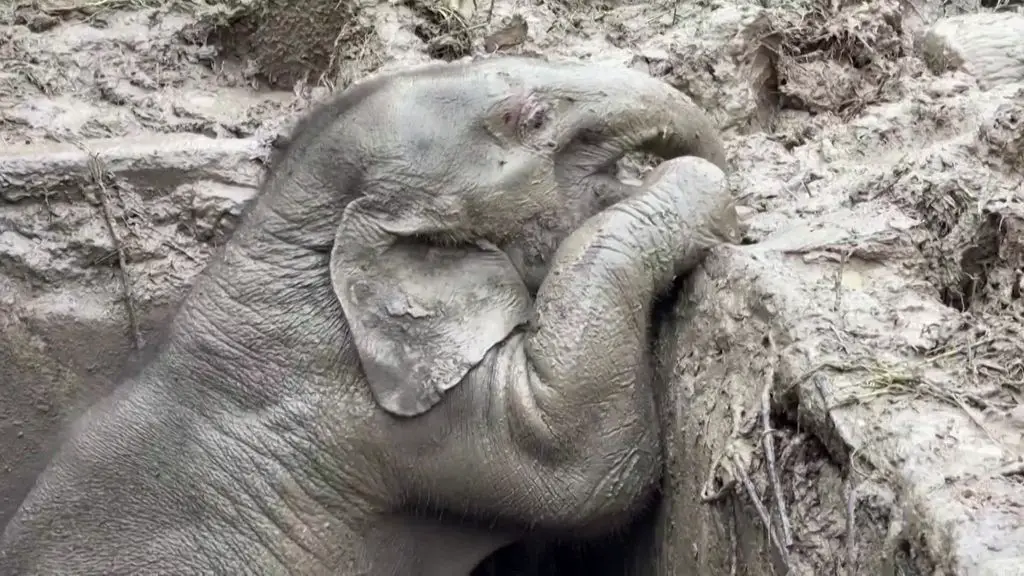
A calf fell into a drainage trough near the Royal Hills Golf Course in Nakhon Nayok Province, and it could not climb out due to the steep sides.
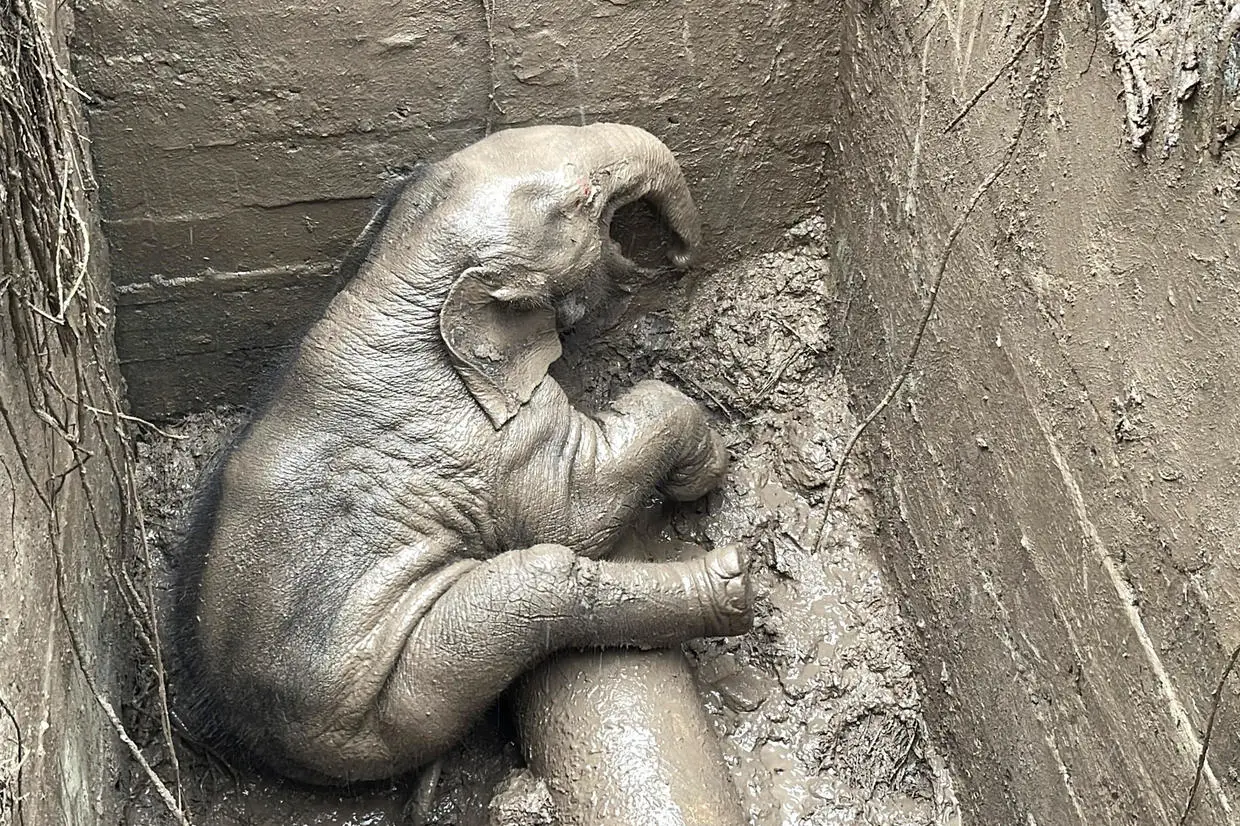
The baby elephant's distressed mother stayed with her calf and kept rescuers from getting close.
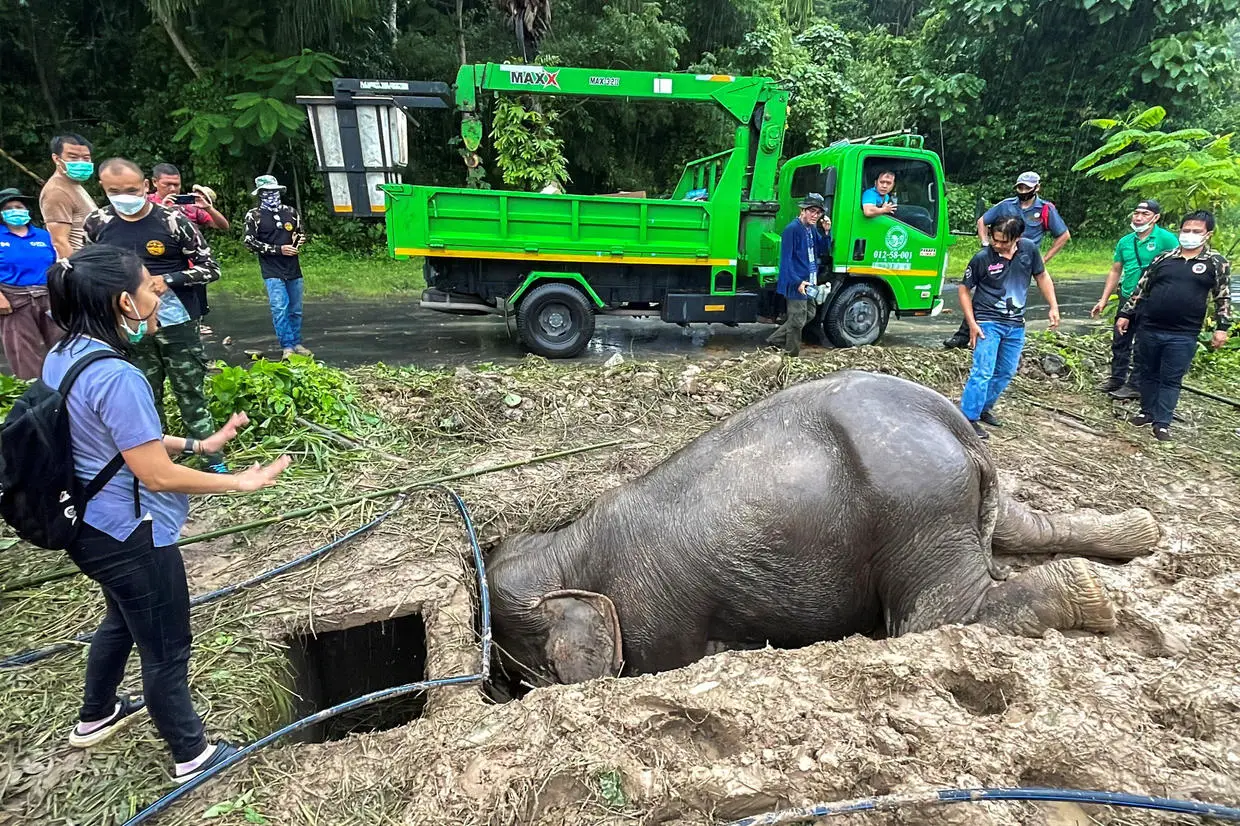
That manhole and drainage trough situation is exactly why the mother elephant would not budge as rescuers approached.
Officials from Khao Yai National Park and the Department of National Parks, Wildlife, and Plant Conservation had to deal with a calm baby elephant rescue plan and a stubborn mom in the same moment.
Research shows that timely responses can significantly reduce stress and physical harm to animals in distress.
In this case, immediate action was vital not only for the baby elephant's safety but also to maintain the mother's calm. If left unattended, prolonged distress could have led to severe psychological consequences for both the mother and calf.
This is the same kind of urgent rescue energy as the team freeing a baby albino elephant after days of captivity.
For instance, enhancing safety protocols around manholes and drainage systems can drastically reduce such emergencies.
Wildlife conservationists recommend implementing barriers or warning signs in critical habitats to prevent animals from accidentally falling into dangerous situations. Education campaigns can also inform local communities about wildlife safety practices, reducing the likelihood of such incidents and promoting coexistence.
Officials from Khao Yai National Park and the Department of National Parks, Wildlife, and Plant Conservation tranquilized the mother elephant to safely rescue her baby.
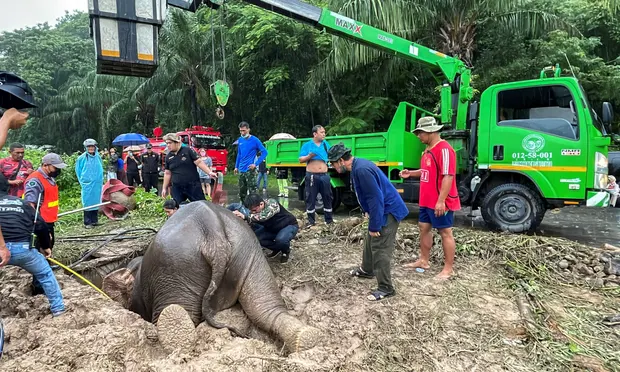
Check out the intense moment here:
The mother elephant staying close, even while the calf was trapped, turned a simple drop into a full rescue standoff.
Once they tranquilized her and got her baby out, the video shows the real payoff, relief, and that protective mom energy in action.
This amazing rescue story isn't just about saving a baby elephant. It's about how strong a mom's love can be, whether you're a human or an elephant.
Seeing Mom Elephant do whatever it takes to keep her baby safe reminds us of how important family is to us, animals included. We all need to care for each other and the world around us. This story shows us that when we work together and care for one another, we can overcome any obstacle, big or small.
So, let's take a page from this elephant's playbook and show more love and kindness to each other and our planet. If a mom elephant can do it, so can we!
The recent rescue of a baby elephant and its mother near the Royal Hills Golf Course in Nakhon Nayok Province illustrates the critical need for swift action in wildlife conservation. The dramatic video of their rescue not only captures a tense moment but also underscores the profound impact that timely interventions can have on the lives of these animals and their overall well-being. This incident serves as a powerful reminder that proactive measures, such as safety protocols and community education, are essential in preventing similar situations from arising in the future.
Furthermore, the collaborative spirit displayed during this rescue highlights the importance of partnerships between wildlife experts and local communities. By fostering open communication and shared knowledge, we can create a safer habitat for both elephants and humans, paving the way for a harmonious coexistence that benefits all parties involved.
That’s the kind of “don’t touch my baby” love that makes you hold your breath until the last second.
After watching the mother and baby elephant fall into a manhole, check out the forest guard who carried a 100-kilogram baby elephant on his shoulders.
Share this article: