Redditor Tries To Forbid Her BF From Being A Part Of The Service Dog Handler Community Because It Is Toxic

A 28-year-old woman refused to be chill about her boyfriend joining the service dog handler community again, and it turned into a full-on relationship showdown. Four years ago, she and her boyfriend met in that world, but she eventually bailed because the vibe she kept running into felt mean, competitive, and exhausting.
Now he’s back, without telling her, and the tension is immediate. He wants to meet other handlers, she only wants that to happen if they are not service dog handlers, and he’s pushing back because he wants to be a dog trainer and thinks the community is the fastest way to get his name out there. Add in the argument about who counts as “in the circle,” and suddenly love is getting dragged through the same toxic dynamics she tried to escape.
Here’s the part where OP realizes her boyfriend might be walking right back into her worst memories.
OP asks:

The OP and her boyfriend met in the service dog community four years ago and have been dating for two.
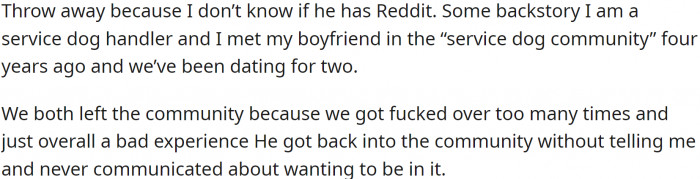
The OP left the community because of bad experiences, and her boyfriend recently returned without telling her.
The Toxicity of Community Dynamics
In any community, especially those centered around shared interests, toxicity can emerge when members begin to engage in unhealthy competition or exclusionary behavior. The Redditor’s concerns about the service dog handler community reflect a broader issue of toxic environments that can negatively impact mental health.
These studies suggest that individuals who feel unsupported or attacked in their communities are more likely to experience anxiety, depression, and decreased self-esteem. Recognizing these patterns is vital for individuals to protect their mental health.
OP’s four-year history in the service dog community explains why her boyfriend’s surprise return hit like a betrayal, not a casual update.
Exploring Community Dynamics
The concerns raised about the service dog community highlight a significant issue often seen in various social groups.
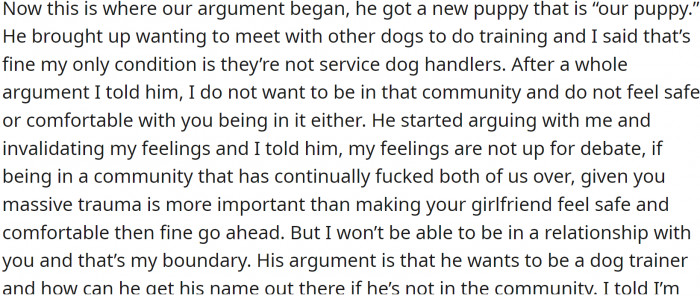
They argued about him wanting to meet with other dog handlers, and the OP said she only wanted him to if they weren't service dog handlers.
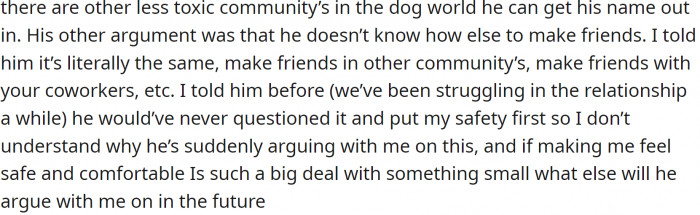
He argues that he wants to be a dog trainer and how he can get his name out there if he's not in the community.
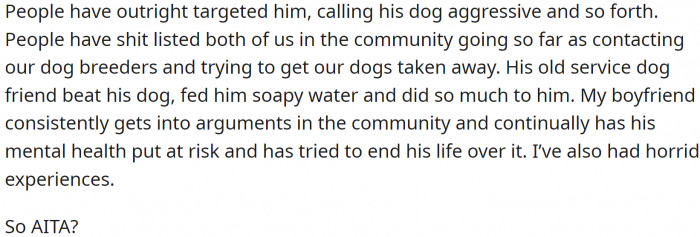
OP shares examples of toxicity:
The moment he starts arguing that he wants to meet other dog handlers, OP shuts it down unless they are not service dog handlers.
Additionally, the desire to shield one's partner from toxic dynamics reflects caring and protective instincts, but it can also lead to conflict within relationships. This can lead to feelings of resentment and frustration on both sides.
Encouraging open discussions about feelings can help partners navigate these complex emotions while maintaining a healthy relationship dynamic.
From a psychological standpoint, the desire to protect oneself from perceived toxicity is a valid response. This instinct can serve as a protective mechanism, but it can also lead to isolation if not managed carefully.
To navigate this situation, it might be beneficial for the individual to openly discuss her concerns with her boyfriend, allowing them to explore how they can both support each other while addressing their shared experiences in the community.
This echoes the boyfriend who said he dislikes the girlfriend’s dog for making him uncomfortable.
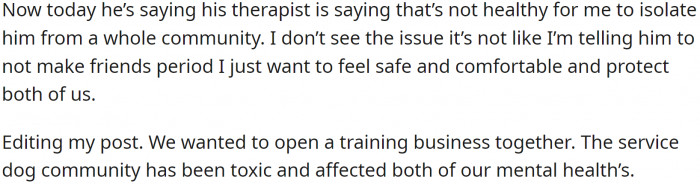
OP posted an edit:

OP has offered the following explanation for why they think they might be the a-hole:

It’s abusive and controlling to tell someone what company they should keep.
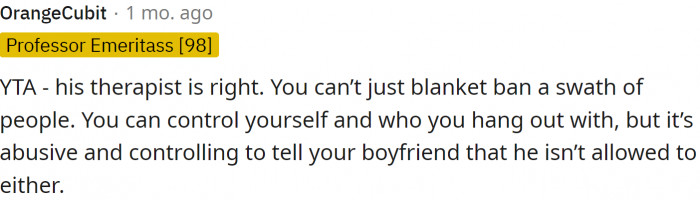
When he frames it as a way to get his name out there as a dog trainer, the “community” stops sounding like fun and starts sounding like a trap.
Setting boundaries is a vital aspect of maintaining healthy relationships, particularly when external influences threaten the well-being of one partner. As advised in psychological literature, boundaries should be communicated clearly and respectfully to prevent misunderstandings.
In this case, the Redditor may benefit from discussing her concerns with her boyfriend in a constructive manner, focusing on her feelings rather than dictating his actions. This approach can lead to a more open dialogue about their needs and emotional health.
Setting boundaries is crucial in any relationship, particularly when external factors threaten mental health.
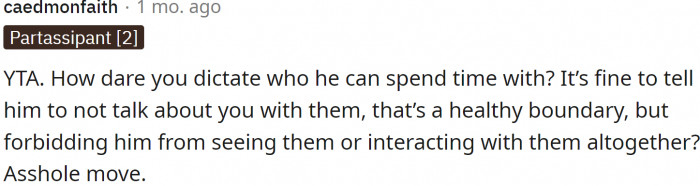
This comment hits the mark:

OP has no right to cut BF off from an entire group of people.
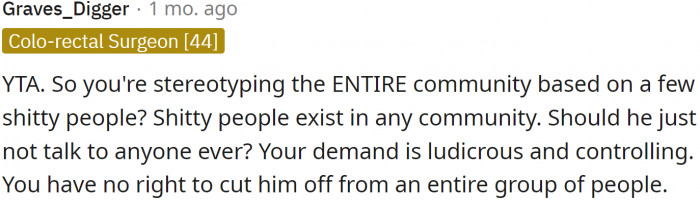
Controlling, abusive, and manipulative.
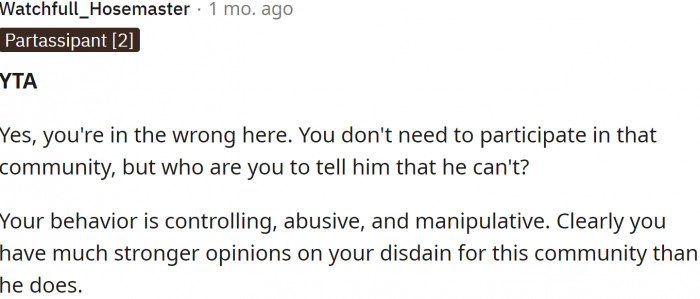
After OP lays out examples of the toxicity she faced, it becomes clear they’re not fighting over dogs, they’re fighting over what that community does to people.</p>
Moreover, utilizing conflict resolution strategies can enhance communication between partners.
"How exactly is him participating in this community harming your safety?"
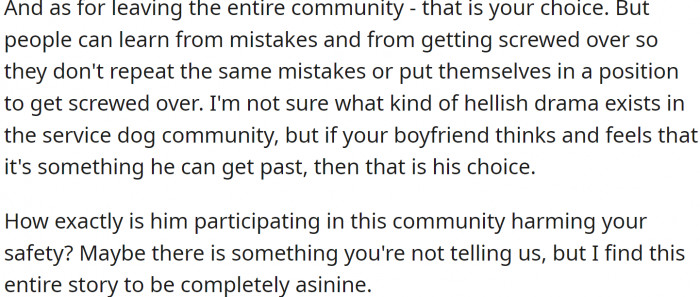
The bottom line is:
Service dog training is a challenging job that not many people do. This makes the community elitist and hard to enter.
The elitism makes it difficult for people to learn about service dog training and get the proper education and support needed to succeed. There are few people who are willing to share their knowledge and experience with others, which makes it hard for new trainers to get started.
The community is also small, which can make it difficult to find a mentor or support system. Service dogs can cost anywhere from $10,000 to $30,000. But, no matter what, OP has no right to forbid her boyfriend from being a part of it.
The complexities of social groups can significantly affect personal relationships, especially in niche communities like service dog handling.
The OP's attempt to shield her boyfriend from the service dog handler community reflects a deeper concern for his mental health and emotional well-being. By encouraging open dialogue about the pressures he faces, the couple can work together to navigate these external challenges. This approach not only strengthens their bond but also fosters resilience against the negativity that can permeate such closed communities. It is essential to prioritize healthy communication and conflict resolution to ensure that both partners feel supported amidst the stresses of their respective environments.
He might be trying to build a future, but OP is terrified he’s stepping into the same mess that ruined hers.
For another service-dog boundary blowup, see the roommate who banned a narcolepsy dog even after witnessing episodes.
Share this article: