
Redditor Asks If She's Wrong For Expecting Her Sister To Pay Her For Watching Dog For 8 Weeks Instead Of One

A 28-year-old woman is asking Reddit a very specific question, and it’s not about her dog’s cuteness. It’s about the money. Her sister left town, her sister’s dog ended up in her care, and suddenly “just one week” turned into eight weeks of work.
Here’s the mess: the two sisters originally agreed the OP would watch the dog for one week while her sister was away. But her sister stayed gone for eight full weeks, and when the OP asked to be paid for the extra time, her sister called it silly and acted like the OP was being unreasonable.
The OP’s parents didn’t even agree, so this became a full-on family accounting showdown, with Reddit weighing in too.
The OP asked if she is an a**hole for making her sister pay her for taking care of her dog.
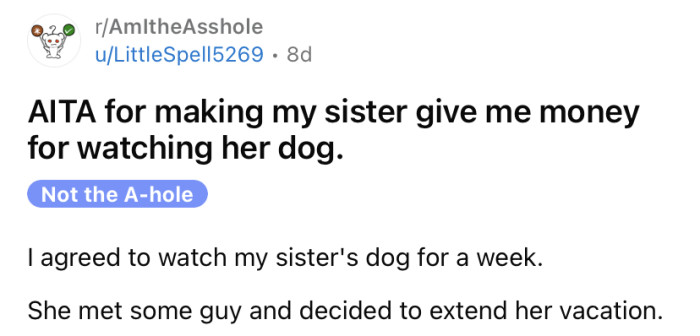
The Redditor's sister went away for eight weeks when the OP had only agreed to take care of her dog for one week.

Her sister said she was being silly for expecting her to pay for the extra weeks.

This situation highlights a common tension in familial relationships regarding expectations of reciprocity.
The conversation surrounding financial arrangements between family members often highlights underlying social expectations and norms.
When one family member feels entitled to compensation for services rendered, it can create tension and conflict, particularly if there is a mismatch in expectations.
These dynamics can lead to feelings of resentment and stress, especially if communication is lacking.
But the OP said her sister was getting off lightly compared to what a kennel would have charged her for the same amount of time.

The OP's parents have conflicting opinions, so she turned to Reddit for advice.

Here's how people reacted.
"Did she leave enough food for her dog to last the whole eight weeks?"

The OP points out that a kennel would have charged her far more than what she’s asking for, so her sister’s “you’re being dramatic” argument doesn’t exactly land.
Furthermore, this conflict illustrates the broader psychological principle of entitlement versus obligation.
Research indicates that discussing expectations openly can minimize misunderstandings and foster a more cooperative atmosphere.
In this case, having a candid conversation about the value of caregiving and establishing a fair compensation method may help ease tensions.
"So, she expected you to do 700% more work for free?"
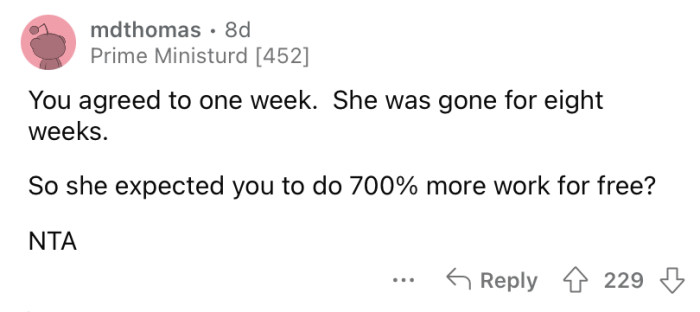
"NTA. Your sister is."

"A seven-week extension? Seriously?"

While the OP’s sister insists it’s “extra weeks for free,” the OP is basically saying she didn’t sign up for seven extra weeks of unpaid labor.
To address these complexities, open communication is key.
This is similar to the sister charging $300 for dog toys she said her dog chewed while petsitting.
The Financial Psychology Behind Familial Obligations
Familial obligations often complicate financial transactions, leading to emotional entanglements.
"She was inconsiderate and needs to pay for it."

"She's lucky you didn't put her dog in a kennel after the week you agreed to."

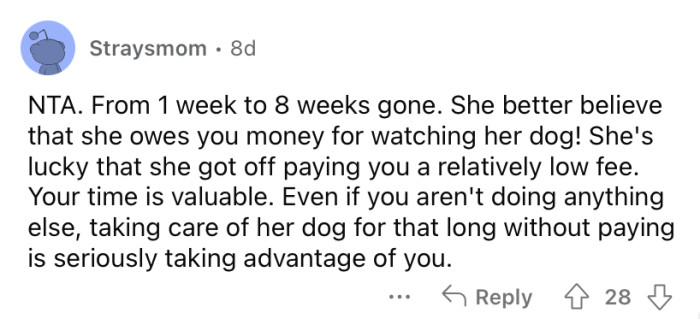
"Your time is valuable."
Additionally, it’s important for family members to express gratitude for each other’s contributions.
Expressing appreciation can significantly enhance relationships, creating a positive feedback loop of support and reciprocity.
Incorporating regular gratitude practices, such as sharing thanks during family meals, can cultivate a more appreciative family dynamic.
Even the comments jump straight into the practical stuff, like whether the sister left enough food for eight weeks, because people are not letting this slide.
Creating a written agreement that outlines services, expectations, and compensation can help clarify roles and reduce potential conflicts.
"She was incredibly careless with your time."

Okay, but did she get her man?

"Entitled and selfish."

Setting Healthy Boundaries
Healthy boundaries are essential in any relationship, especially within families.
"If sis did this at a boarding facility, would she be at risk of her dog being relinquished for abandonment?"

"That's a long time."

"Were you supposed to spend your money on that?"

With her parents split on the situation and the dog-care timeline stretched way past the original deal, the family dinner version of this argument did not end quietly.
Implementing a family contract can also be a practical solution.
"That's your dog now."

"Totally justified wanting compensation."

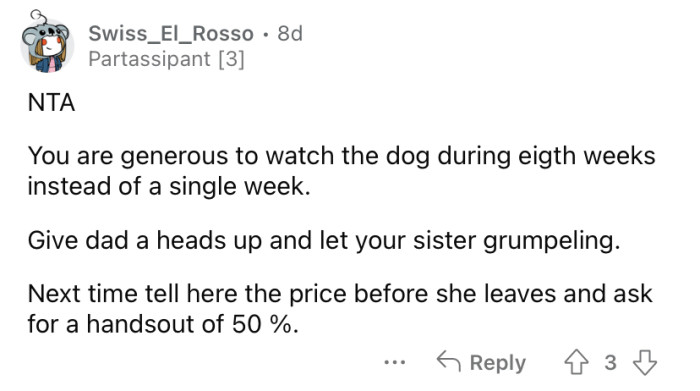
"You are generous to watch the dog."
What's your take on this situation? Do you think the OP should have taken care of her sister's dog for free, or was her sister taking advantage of her kindness by extending her holiday?
We would love to hear your opinions on this topic. You can share your thoughts with us in the comment section.
In this case, the Redditor's expectation for payment after dog-sitting her sister's pet for eight weeks instead of just one raises important questions about family dynamics and financial responsibilities. The article showcases how such situations can lead to misunderstandings and feelings of being taken advantage of. When one person feels their generosity is being exploited, it can create tension that undermines the familial bond.
The situation with the Reddit user highlights the complexities of family dynamics, particularly when expectations clash with perceived obligations. The scenario of watching a dog for eight weeks raises questions about reciprocity and the balance of favors among family members.
To navigate these challenges, it is crucial for families to engage in open dialogue about their expectations and needs.
Establishing healthy boundaries is essential. When family members understand their limits and responsibilities, they can avoid misunderstandings that may arise from unspoken assumptions. This approach not only prevents feelings of exploitation but also strengthens family relationships, ensuring that acts of kindness remain joyful rather than burdensome.
Nobody wants to watch someone else’s dog for seven extra weeks and then be told they’re the problem.
For another payment fight, see how the sister refused to pay after four days off for puppies.
Share this article:





