
Mother Tests Family Members By Making Them Do Tasks Continuously For 60 Days To Prove That They Can Take Care Of A Dog

A mother basically turned her house into a 60-day dog boot camp, and her family walked right into it like it was a reality show audition. The catch? The OP did not want a dog, but everyone else in the family was pushing hard for one.
So she agreed to let them get a pet, only after they proved they could handle the nonstop grind. Over two months, family members had to complete continuous tasks designed to test real responsibility, not just “we’ll help sometimes” energy. The whole thing is messy because it is not just about a dog, it is about who actually shows up when effort is required.
And by the end, the family is forced to answer the question they never wanted to ask out loud, can they take care of a dog or are they just good at wanting one?
A mother wanted to see if her family members are up for the task of caring for a dog.
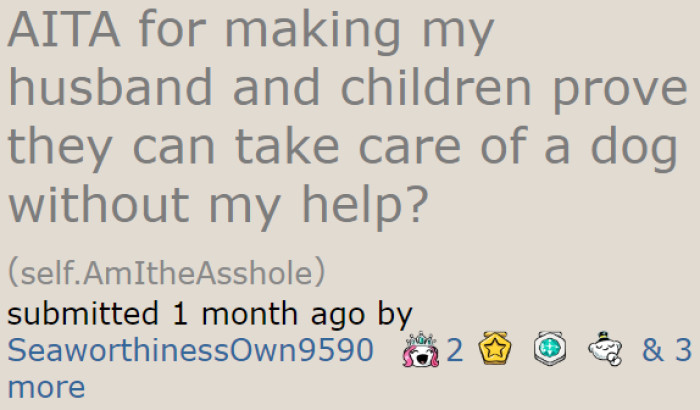
The OP doesn't want a dog. But the entire family wants one.
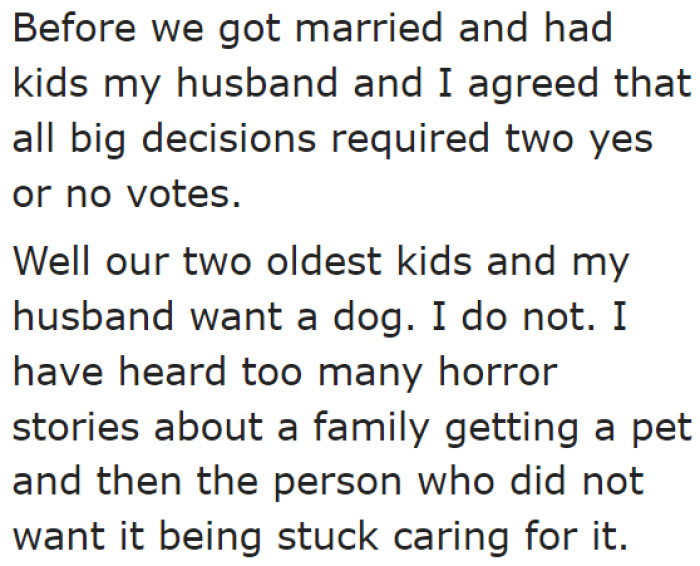
She agreed, but only if they successfully meet her conditions.

The experiment conducted by the mother in this article sheds light on the dynamics of family responsibility and teamwork. By assigning continuous tasks to family members over 60 days, she aims to determine their capability to care for a dog, a commitment that requires both time and collaboration. This approach highlights the importance of shared responsibilities within a household.
However, the manner in which these tasks are framed can significantly impact family relationships. When responsibilities are positioned as collaborative efforts rather than mere tests of ability, the potential for enhancing family dynamics increases. This suggests that fostering a sense of community and teamwork not only prepares the family for the joys of pet ownership but also strengthens their bonds.
This mother's approach to testing her family members' capability to care for a dog reflects a deep-seated concern for responsibility and commitment. Psychological research suggests that behaviors like this can stem from a desire to establish boundaries and expectations within family dynamics. The act of testing can serve as an unconscious method for assessing the reliability of others, especially when a significant commitment, such as adopting a pet, is at stake.
Furthermore, this behavior might illustrate a protective mechanism, where the mother seeks to ensure that her values regarding responsibility are upheld by her family members.
Family dynamics often involve complex negotiations of responsibility and care. A developmental psychologist notes that testing family members' willingness to take on responsibilities can be indicative of underlying concerns about commitment and ability.
By making family members complete tasks, the mother may be seeking assurance that they can manage the responsibility of a pet, which reflects her own apprehensions about the family's readiness for such a commitment.
Testing family members' capabilities can serve as a catalyst for understanding responsibilities.
The family members weren't successful.
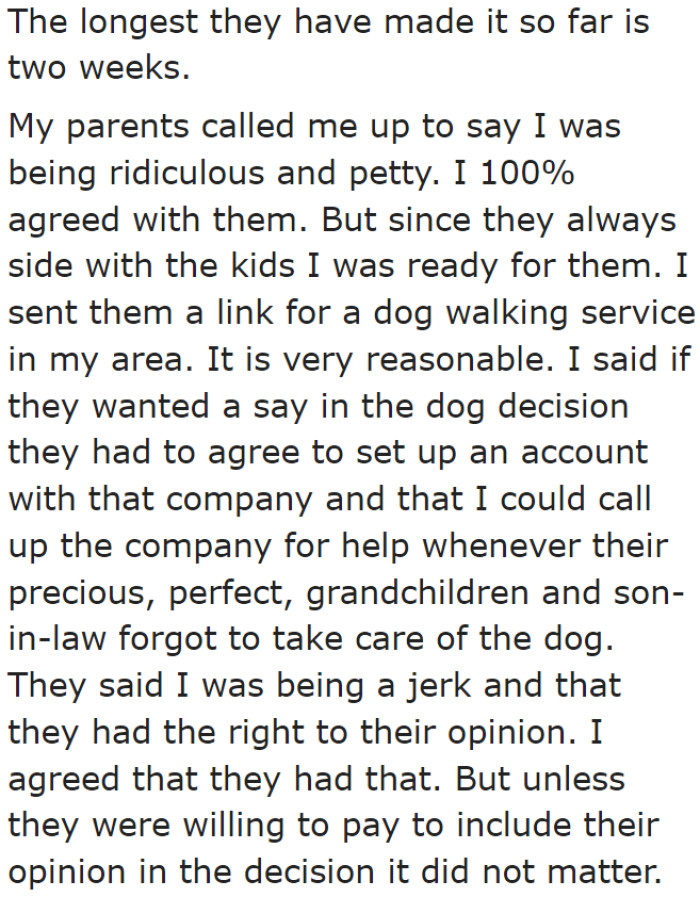
The OP's parents and husband didn't like what she did.

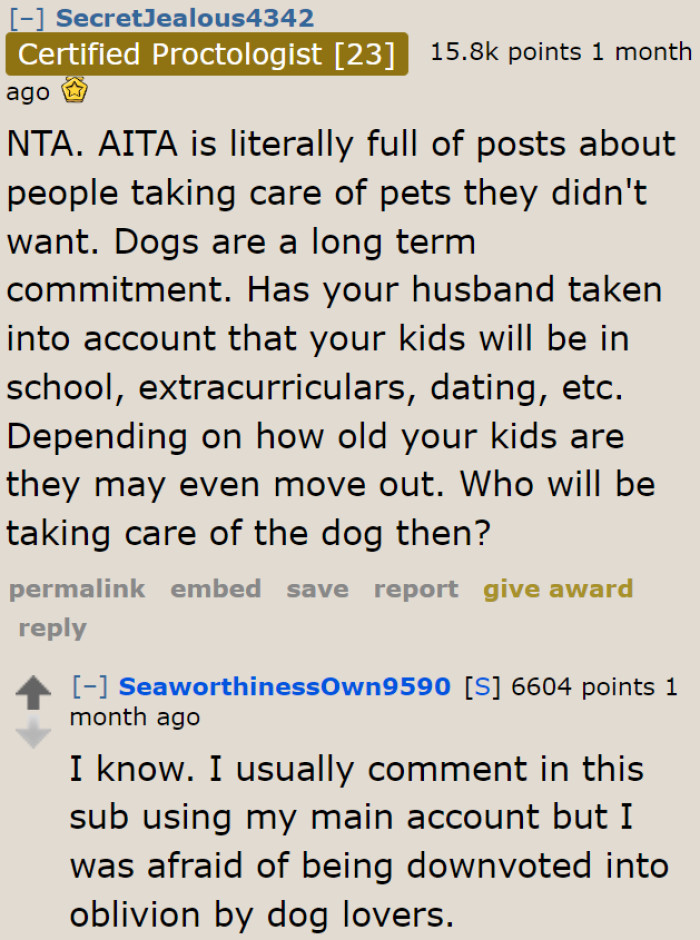
Looks like the husband didn't consider a thing that this Redditor pointed out.
That is when the OP’s “no dog” stance collided with the rest of the family’s nonstop enthusiasm, and the mother decided to settle it with a challenge.
Behavioral studies indicate that task delegation can enhance family cohesion when framed positively.
When family members feel trusted and valued in their roles, they are more likely to contribute willingly and enthusiastically.
However, if tasks are perceived as punitive or condescending, it can lead to resentment and pushback, emphasizing the importance of how responsibilities are communicated.
From a developmental psychology perspective, this testing behavior may also be linked to childhood experiences. If the mother grew up in a household where responsibilities were not shared or where she felt unsupported, she may feel compelled to ensure that her family can meet the demands of caring for a pet. This reflects the complex interplay between past experiences and current behaviors.
In the realm of family dynamics, the influence of parental roles on children's growth is profound. The mother’s decision to have her family members complete tasks continuously for 60 days serves a dual purpose. Not only does it test their commitment, but it also aims to instill a sense of accountability and independence in them. By preparing her family for the responsibility that comes with having a dog, she is setting the stage for a successful and harmonious pet ownership experience. This approach highlights her understanding that a pet adds joy to a home only when the family is ready to take on the associated responsibilities.
When family members are not on the same page regarding responsibilities, it can create frustration and resentment. Research published in the Journal of Family Psychology highlights that clarity and communication of expectations can improve cooperation among family members.
In this case, the mother’s approach may inadvertently create division rather than unity, as family members may feel resentful or pressured by the testing dynamic.
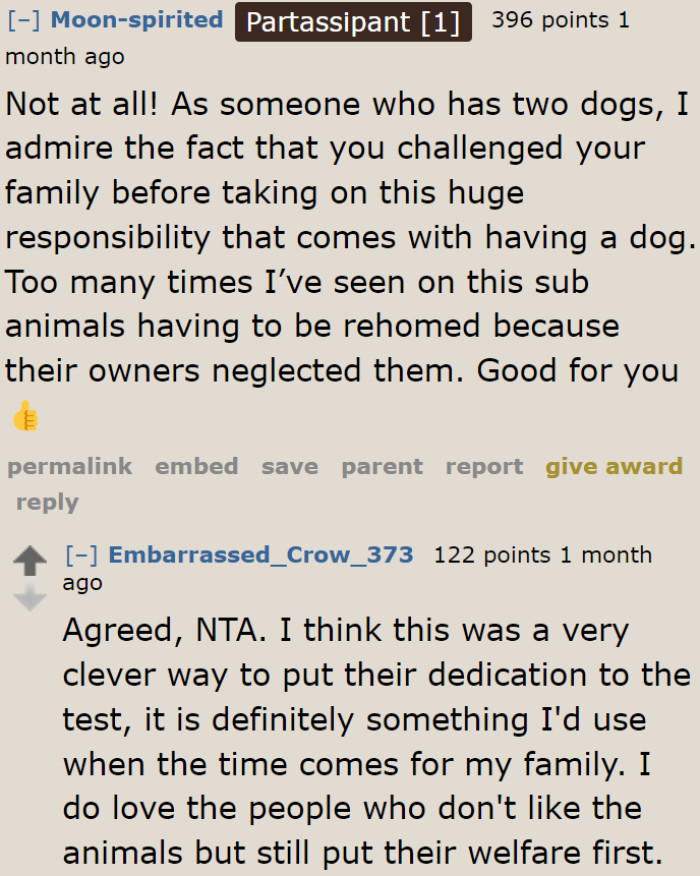
True dog lovers will understand this situation.

Redditors applauded the OP for preventing her family to take a dog that this family won't properly care for.

Dog lovers agree that she was right to test them as having a dog comes with tons of responsibility.
Then the 60-day timeline kicked in, and suddenly “continuous tasks” stopped sounding cute and started sounding like a full-time commitment.
The Psychological Impact of Testing Family Members
Testing family members can create tension, particularly when it involves responsibilities like pet care.
The Psychological Implications of Testing Family Members
Studies on family systems reveal that testing behaviors can create a rift between family members if not communicated effectively. It's crucial for families to foster an environment where open communication is prioritized to mitigate the potential negative effects of such testing.
Encouraging dialogue about responsibilities can ensure that all family members feel valued and respected, reducing the likelihood of conflict.
Testing as a Means of Communication
Testing family members can also act as a communication strategy. A psychologist specializing in family therapy explains that such tests can serve as a way to express concerns indirectly, allowing the mother to gauge the family's readiness without confronting them directly.
However, these indirect methods can sometimes lead to misunderstandings, as family members might feel manipulated instead of supported. Open communication is essential in these scenarios to ensure everyone is on the same page.
This echoes dad’s regret in letting the family get a dog, then getting stuck doing everything himself.
Motivation and Family Responsibilities
Understanding what motivates family members to take on responsibilities is key to fostering cooperation. A study from the American Psychological Association indicates that intrinsic motivation—doing something for personal satisfaction—often leads to better outcomes than extrinsic motivation, which relies on external rewards or pressures.
The mother’s strategy to test family members could be perceived as a lack of trust in their ability to take care of a pet, which may lead to feelings of inadequacy rather than motivation to succeed.
This family is not fit to care for a dog and OP has proven that.
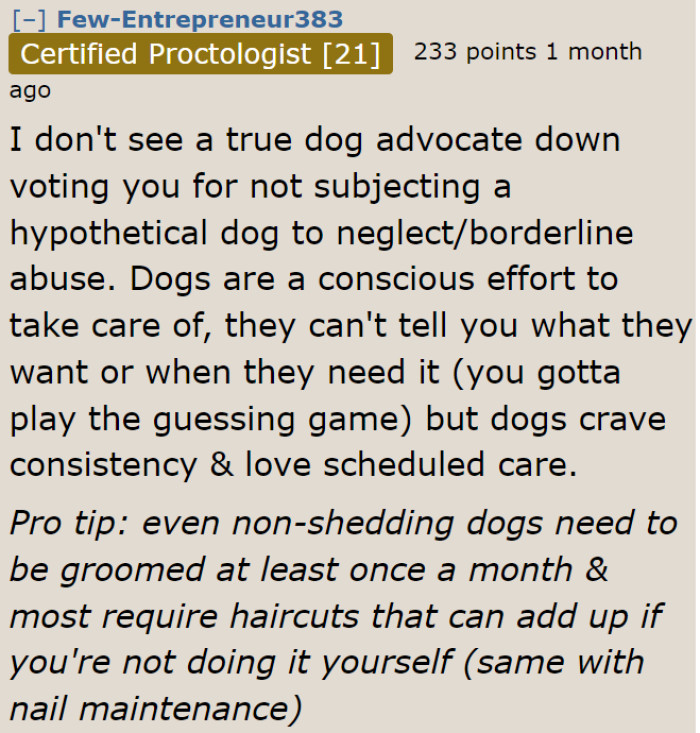
Looks like they're not ready to take a dog in yet.
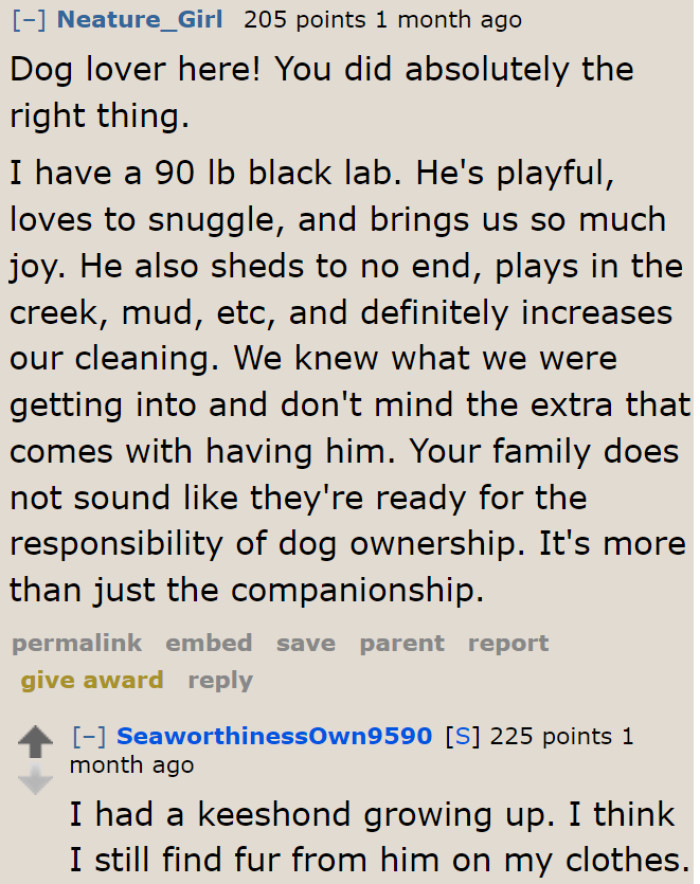
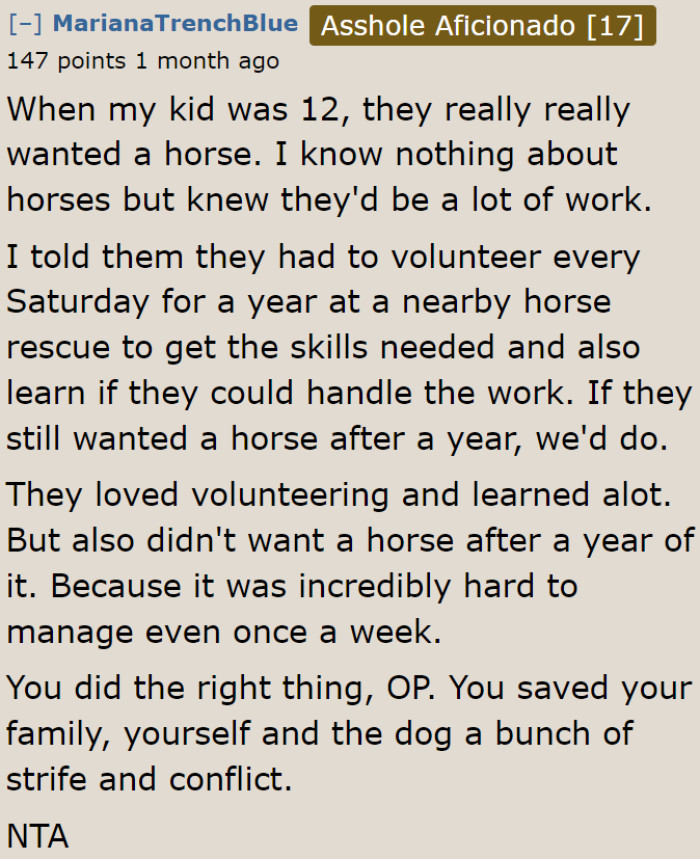
They can try volunteering for a shelter and see if they really want one.
Additionally, the concept of 'family roles' plays a significant part in how each member perceives their responsibilities. This can affect mental health and relational satisfaction.
In addition, the concept of role theory may shed light on this situation. Each family member typically adopts specific roles, which can influence their behavior and expectations. The mother may perceive her role as the caretaker and protector of family values, prompting her to test others to ensure they align with her expectations. Engaging family members in discussions about roles can facilitate a more cooperative environment where everyone feels empowered.
As the days piled up, the family’s teamwork got tested hard, because caring for a dog is not one person’s job, it is everyone’s.
Conflict often arises when expectations are not clearly communicated. In psychology, the concept of 'implicit expectations' refers to unspoken assumptions that can lead to disappointment.
For the family, the mother’s assumptions about their willingness to care for a dog may not align with their actual readiness, resulting in frustration on both sides. Thus, discussing expectations openly can mitigate potential conflicts.
To encourage a collaborative family environment, it may be beneficial for families to engage in discussions about pet ownership openly. Inviting each family member to share their thoughts and feelings can foster a sense of ownership and commitment. Research suggests that when family members feel heard and valued, they are more likely to engage positively with family responsibilities.
These conversations can also help clarify expectations and align motivations, ultimately leading to a more harmonious family dynamic.
The OP not only needs to parent her kids, but also her husband.
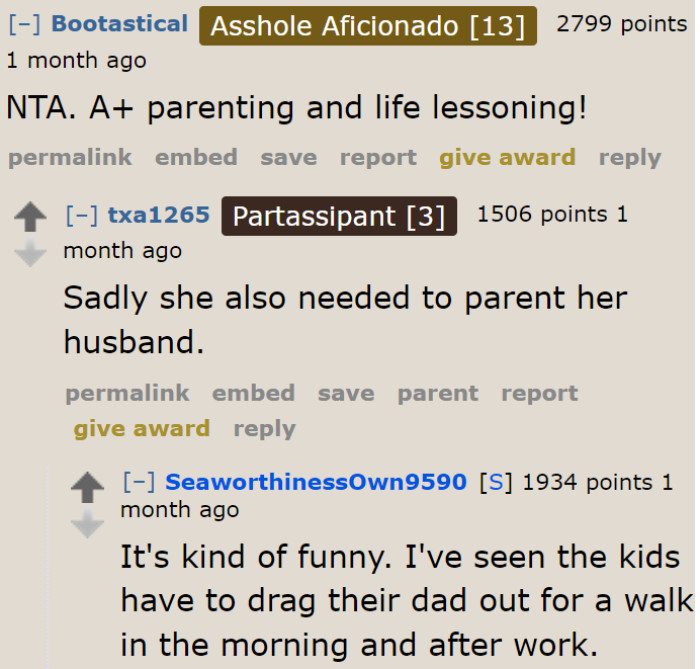
The OP's test was a good reality check.
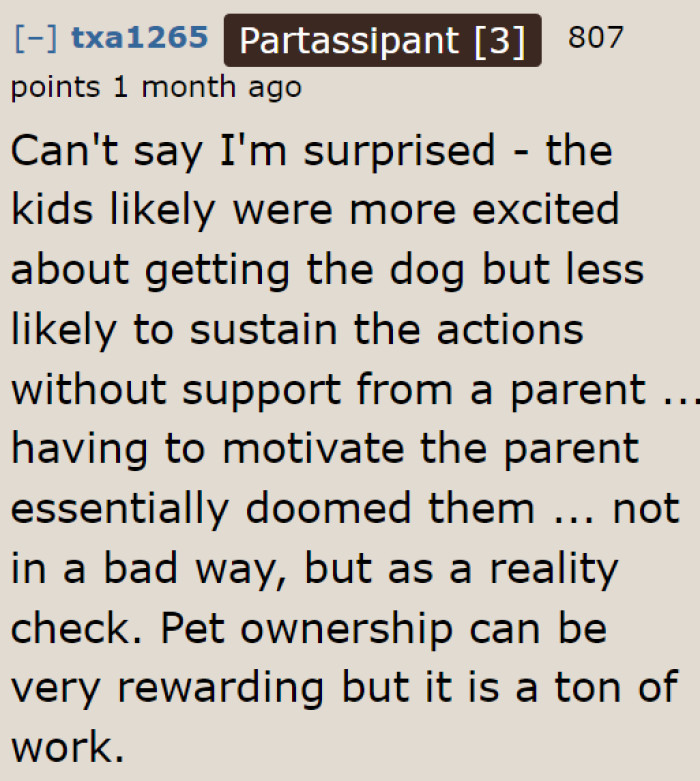
The OP might end up caring for the dog because the kids won't make an effort.
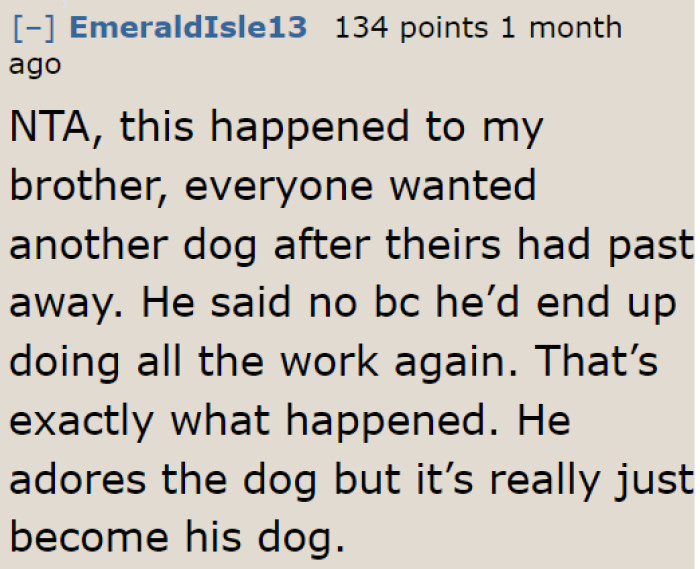
Recommendations for Healthy Family Dynamics
To navigate the complexities of shared responsibilities, families should prioritize open communication.
Building a Supportive Family Environment
To foster a more supportive family environment, it’s essential to encourage open dialogues about responsibilities. Families can benefit from regular family meetings where everyone can express their thoughts and feelings about shared responsibilities.
This practice can create a sense of teamwork and collaboration, reinforcing the idea that caring for a pet is a shared effort that requires commitment from all members.
The Psychological Impact of Testing Dynamics
Testing family members can have unintended psychological effects.
The OP needs to make it clear that the kids aren't ready for a dog.
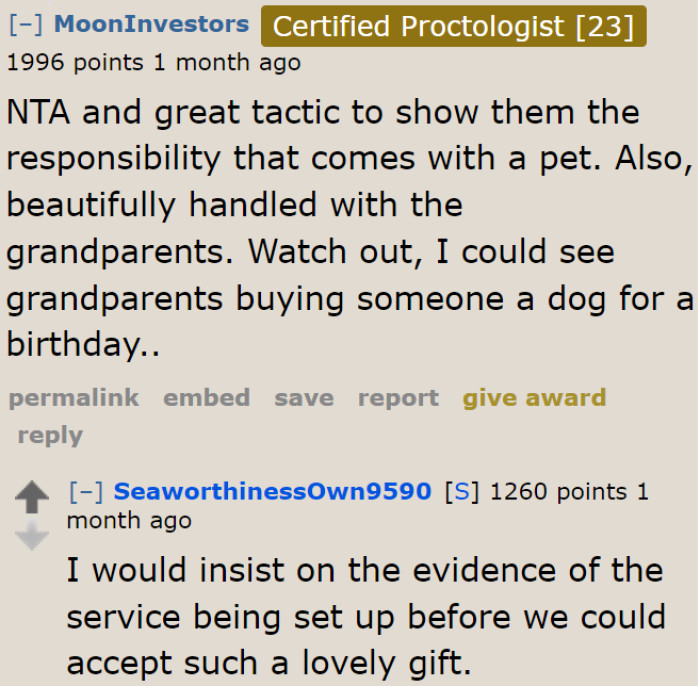
What the OP needs to say if her parents end up getting her kids a dog

All the people in this situation, except for the OP, don't understand what it takes to take care of a pet dog.
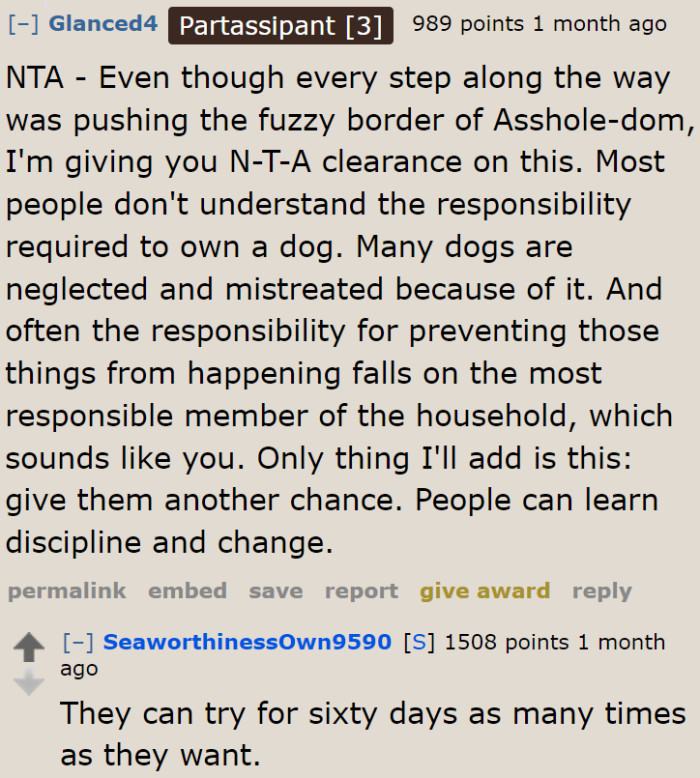
By the time the experiment hit the later stretch, it was clear this wasn’t just a dog trial, it was a stress test for how the family handles responsibility when it is not optional.
Additionally, establishing a rotating schedule for responsibilities can alleviate feelings of unfairness or burden.
Additionally, involving family members in the decision-making process regarding pet care can enhance their sense of ownership and responsibility. A practical approach could include having each member take on specific tasks related to pet care, allowing them to experience the joy and challenges of responsibility firsthand.
Research indicates that hands-on involvement fosters greater empathy and understanding towards others, which can be particularly beneficial in family dynamics.
Ultimately, fostering a supportive environment where family members feel empowered to take on responsibilities can yield better results. Encouraging collaboration and teamwork can transform the testing dynamic into a shared journey towards pet ownership. Research indicates that families who emphasize cooperation and shared goals tend to experience increased satisfaction and resilience.
Establishing regular family meetings to discuss responsibilities and expectations can be a constructive step toward achieving greater harmony.
If the family members can't handle household chores, then there's no way they can handle pet care.
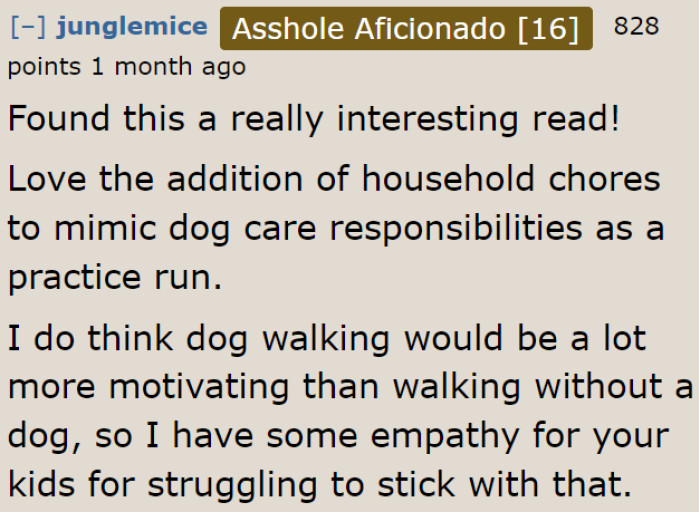
Even if it's considered the children's dog, it's the parents who are completely responsible for the dog's welfare.
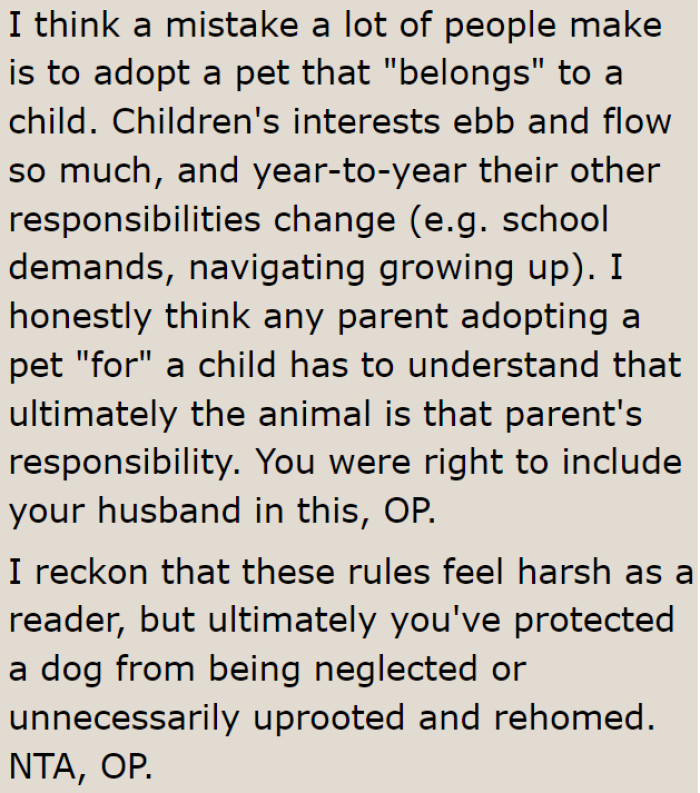
We hope the kids learned their lesson that getting a dog comes with responsibility, and at the moment, they're not capable of handling it. If they really want a pet, they can always consider getting smaller ones, such as hamsters, fish, or even cats, which are often more manageable and easier to care for than dogs.
Ultimately, the experiment of making family members complete tasks for 60 days reveals much about the dynamics of responsibility and commitment within a household. This method not only highlights individual accountability but also fosters a sense of teamwork among family members. When families engage in collaborative efforts, as demonstrated in this scenario, they not only prepare themselves for the joys of pet ownership but also strengthen their relationships in the process. The challenges posed by the 60-day task serve as a microcosm of the broader conversations families must engage in to ensure emotional well-being and cooperation.
The experiment conducted by the mother, asking family members to complete tasks continuously for 60 days, underscores the importance of responsibility and communication within a household. This method not only tests individual commitment but also emphasizes the collective effort needed when considering the addition of a pet.
By fostering an environment where shared responsibility and open dialogue thrive, families can better prepare themselves for the long-term commitment of caring for a dog. This proactive approach not only strengthens family bonds but also enhances the overall quality of home life, making it a more suitable environment for a furry companion.
The scenario presented in this article underscores the intricate nature of family dynamics and the underlying psychological motivations at play. The mother’s decision to test her family members through a series of tasks over 60 days serves a dual purpose: it establishes expectations for responsibility while also emphasizing the need for open communication. Without this balance, one can easily foresee potential misunderstandings arising as family members navigate the demands of proving their capability to care for a dog. This approach not only challenges individual commitment but also highlights the importance of fostering dialogue within the family unit, which can ultimately lead to healthier relationships and a more supportive home environment. As families consider the joy that a pet can bring, they must also recognize that meaningful discussions about responsibilities and expectations will be critical in ensuring a harmonious coexistence with their future furry companion.
Resistance to taking on new responsibilities, such as pet care, can stem from a fear of failure or inadequacy.
Psychological studies show that individuals often fear being judged based on their ability to fulfill new roles, which can lead to avoidance behavior.
Addressing these fears through supportive dialogue can encourage family members to embrace new responsibilities with confidence.
This mother’s unique experiment of assigning family members tasks for 60 days serves as a compelling case study in family dynamics and shared responsibilities. By putting everyone to the test, she is not only evaluating their readiness to care for a dog but also fostering open dialogue about each person's role within the household.
The challenges faced during this trial period highlight the importance of addressing individual concerns and fears about pet ownership. As family members work together, they are likely to strengthen their bonds, leading to a more cohesive and supportive environment.
This initiative underscores that recognizing and valuing each member's contributions can significantly enhance relational satisfaction, ultimately paving the way for a harmonious family life, especially when considering the responsibility of welcoming a dog into their home.
The dog was the bait, but the real question was whether they could handle each other.
Wait until you see the mom who turned her teen’s “I want a dog” into rules.
Share this article:





