Redditor Forbids The Dog They Didn’t Even Want To Be On The Couch, Their Partner Gets Angry

One Redditor thought they had made a simple rule about the couch, but their partner turned it into a full-blown argument. The problem started after the partner brought home a large dog the Redditor never wanted in the first place.
What makes it messier is that the dog was supposed to be the compromise, yet the Redditor still ended up dealing with the parts they never agreed to. Now the couch, the furniture, and the dog’s habits are all part of the fight. Read on.
OP asks:

She lives with her partner, and her partner wanted a dog. OP didn't. So they made a compromise, and her partner got a dog. Some compromise...

OP has some rules about dogs and the furniture. She even listed her reasons

The recent dispute between the Redditor and their partner over the dog's place on the couch highlights the deeper issues that can arise from differing views on pet ownership. Living with a pet is not just a logistical arrangement; it reflects personal values and emotional attachments that can significantly impact a relationship.
The Redditor's insistence on keeping the dog off the couch reveals a potential conflict rooted in their priorities and boundaries, while their partner's frustration suggests a more inclusive approach to pet companionship. This clash of perspectives can create a rift if both parties are not willing to engage in honest dialogue about their feelings and expectations.
Without constructive communication, such disagreements may escalate, making it crucial for couples to navigate these emotional landscapes thoughtfully. Addressing these issues head-on can often prevent resentment from building and foster a more harmonious living environment.
Conflict in relationships often arises from differing values and priorities, particularly in the context of shared spaces.
And they all sound perfectly reasonable
But her partner doesn't understand them and gets angry whenever OP asks that the dog stay off the furniture.

OP listed her reasons:
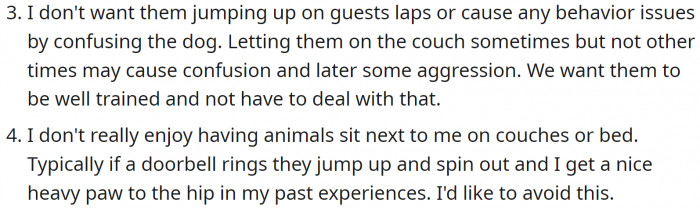
I have hip issues. This dog likes to jump into laps, and if they jump up on the couch onto me, it causes pain. I think it's better to let them lay on their bed next to the couch where they can receive pets and belly rubs.
The fur on the couch makes me kind of itchy, and we have some pretty nice furniture that cost a good penny.
I don't want them jumping up on guests' laps or causing any behavior issues by confusing the dog. Letting them on the couch sometimes but not other times may cause confusion and later some aggression. We want them to be well-trained and not have to deal with that.
I don't really enjoy having animals sit next to me on couches or beds. Typically, if a doorbell rings, they jump up and spin out, and I get a nice heavy paw to the hip in my past experiences. I'd like to avoid this.
That dog needs training
Pets often become symbols of comfort and unconditional love, making it difficult for one partner to restrict access to the pet without feeling guilt or resentment.
Understanding these emotional investments can help both partners navigate their feelings more effectively.
A developmental psychologist emphasizes that pet-related conflicts can often mirror childhood experiences related to sharing and boundaries.
This feels like the Redditor who didn’t want her boyfriend’s dog on the same couch.
But they both need to agree on that

Even people who let their pets on furniture understand OP

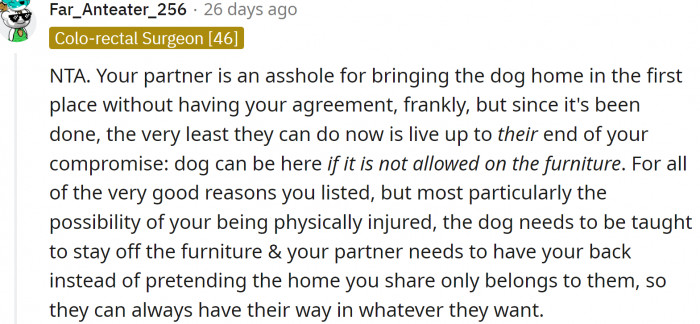
OP has some serious problems in her relationship
When addressing disagreements over pet policies, it’s crucial to approach the conversation with empathy and understanding.
Research in conflict resolution suggests that using 'I' statements can facilitate more productive conversations by focusing on personal feelings rather than accusatory language.
For example, saying 'I feel anxious when the dog is on the couch' rather than 'You always let the dog on the couch' can reduce defensiveness and promote collaboration.
Effective communication is crucial in resolving conflicts about pets and household rules.
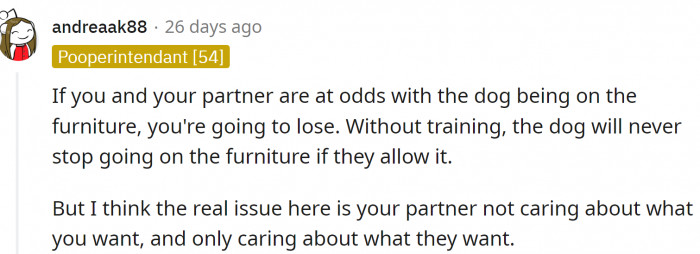
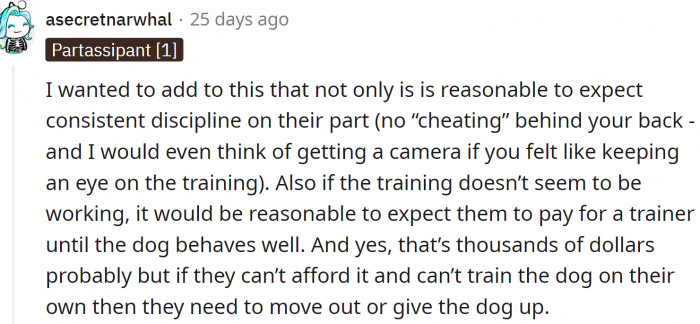
No cheating. Dogs need consistency to learn and adopt new habits
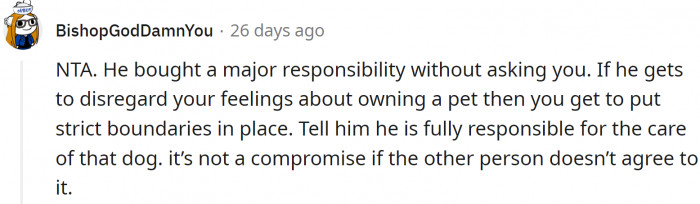
It is not a compromise if the other person doesn't agree
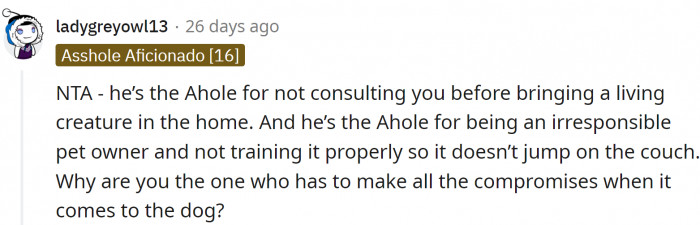
Compromises shouldn't be made by one person only.
Additionally, couples might consider setting boundaries together that respect both partners' comfort levels.
Behavioral studies reveal that consistent patterns of avoidance or confrontation can lead to escalating conflicts in relationships.
OP’s reasons all sound perfectly reasonable. After all, she shouldn’t even have to justify her unwillingness to let the dog onto the bed. However, she went the extra mile and provided them.
She made far too many compromises here. It seems that there are many deeper issues this couple needs to resolve.
Finding compromise is essential in any relationship, particularly when it comes to shared responsibilities like pet care.
Such agreements can help both partners feel validated and respected, ultimately strengthening their bond.
The clash over the dog's place on the couch exemplifies a broader struggle in relationships where compatibility of core values is tested. This situation highlights how the presence of a pet is far more complex than merely sharing space; it encompasses emotional attachments and differing priorities.
In this case, the Redditor's reluctance to allow the dog on the couch, despite their partner's desire for inclusivity, reveals underlying tensions that go beyond just pet ownership. It is a microcosm of the larger dynamic at play in their relationship.
Effective communication becomes crucial here. By articulating feelings and preferences regarding the dog, both partners can work toward a compromise that respects each person's viewpoint. Ultimately, fostering empathy and understanding in this context is essential for creating a living environment where both partners feel valued and heard.
The emotional attachment to pets can complicate relational dynamics, especially when one partner feels strongly about the pet's role in the household.
Recognizing the emotional significance of pets can help couples find common ground when discussing household rules.
In the realm of shared living, pet-related conflicts can serve as a significant flashpoint, as highlighted in this scenario where one partner's decision to forbid the dog from the couch leads to frustration. The emotional attachment to a pet often runs deep, and when one partner's preferences clash with another's, it can create tension in the relationship.
Establishing boundaries that honor both partners' needs is crucial for maintaining harmony in the home. This situation underscores the importance of open dialogue; by discussing their feelings and working collaboratively, couples can navigate their differences more effectively.
Ultimately, fostering understanding and empathy around pet ownership can not only resolve immediate conflicts but also strengthen the overall bond between partners.
For more couple conflict, see how one partner’s “dream dog” derailed moving in plans. A Dream Dog Becomes A Dealbreaker In Deciding If A Couple Will Move In Together Or Not.
Share this article: