Sister Backs Out Of Pet Sitting For Brother After He Didn't Agree To Give Her Grocery Money Or Allow Her To Have A Friend Stay Overnight

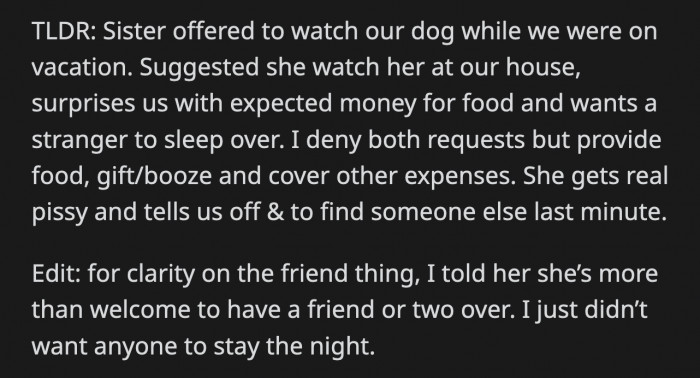
A 28-year-old sister refused to “just do it” when her brother tried to pet sit her dog deal without giving her grocery money or letting her have a friend stay overnight. And honestly, the way this family handled the whole thing makes it feel less like a simple favor and more like a test of who’s willing to bend first.
OP had already tried to soften the situation, he’d offered wine, a small gift, and even covered her parking permit. But then his sister asked for more, some money for groceries, plus a friend to sleep over, and OP shut both requests down. From there, it turned into a straight-up sibling standoff over fairness, boundaries, and how much “thank you” is actually worth.
Here’s the full story.
They already gave her wine, a small gift, and paid for her parking permit as thanks for her pet sitting

OP didn't bring it up again because he knew it was going to cause drama
He was already thinking of giving her money to avoid the headache, but his wife thought he should talk to his sister
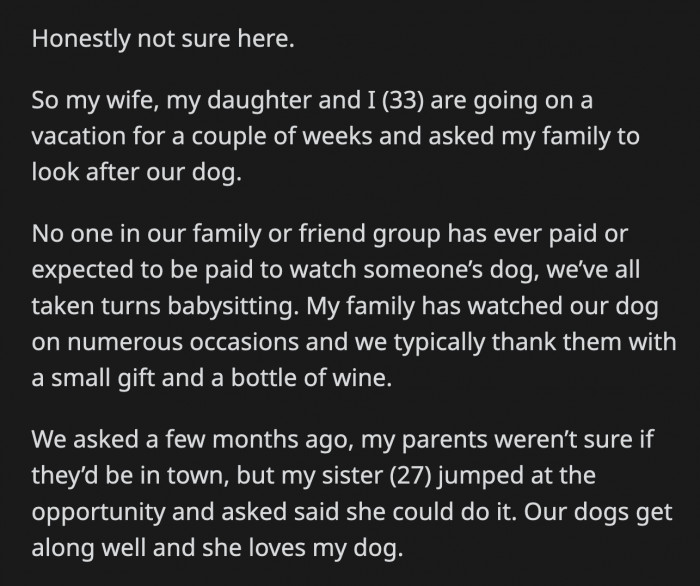
OP already paid for the parking permit and brought wine, but his sister still kept pushing for grocery money, and that’s where the tension started to sour.
The dynamics between siblings often hinge on a delicate balance of expectations and responsibilities. In this case, the brother's request for pet sitting, coupled with his refusal to provide grocery money or allow a friend to stay overnight, highlights a significant breach in what is perceived as equitable support within familial relationships.
This situation underscores how financial disagreements can serve as a catalyst for deeper emotional rifts. The sister's decision to back out reflects not just a reaction to the immediate request but also an accumulation of feelings regarding fairness and reciprocity.
When one sibling believes they are giving more than they receive, it can lead to feelings of resentment. This is evident in the sister's withdrawal from the pet-sitting arrangement, suggesting that unresolved tensions may be at play, impacting their bond.
So, OP talked to his sister and told her that she was more than welcome to eat the food they have at home during her stay, but she might have to buy the perishables like milk and eggs
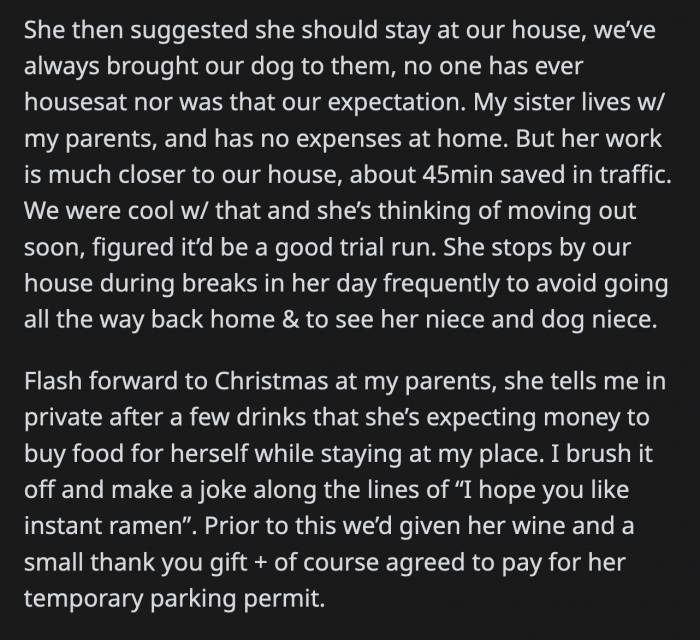
He also denied her request for one of her friends to sleep over. She wasn't happy with his answer.
His sister told him to find someone else to watch their dog since he wouldn't agree to her terms. Fortunately, someone from his wife's family stepped up to watch the dog.
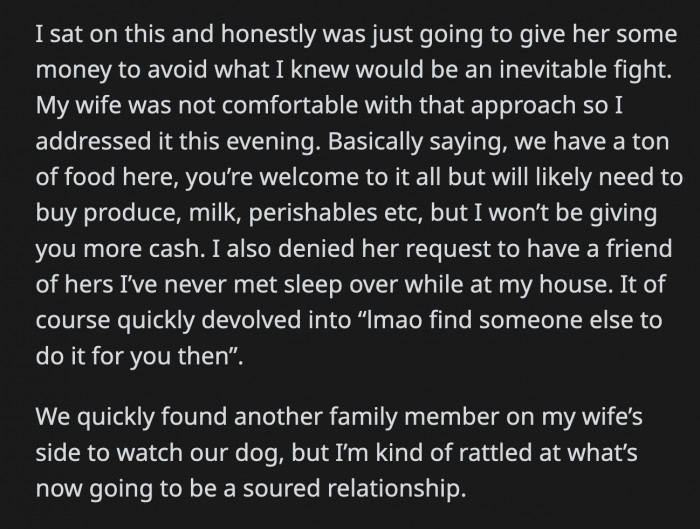
She was testing the waters when she asked if she could have some money, but she overplayed her hand when she added a friend staying over

OP’s wife thought a calm conversation with the sister was the move, so he tried to explain she could eat their food but would need to cover the perishables like milk and eggs.
This situation highlights the importance of communication in sibling relationships. Research shows that open dialogues about expectations and contributions can prevent misunderstandings and foster healthier family dynamics.
This is like the unemployed 24-year-old who whined to his mom after his aunt paid him to deliver pet sitting.
She probably wanted to get what she could from the situation since OP owed her one

She will definitely sulk for a while, but if they approach the misunderstanding carefully, OP doesn't have to worry about permanently changing their relationship

She was acting like a high schooler who wanted to fool her parents into financing a house party while she's alone

When OP refused the friend-sleepover request too, his sister took it personally and told him to find someone else to watch their dog.
Practical Solutions for Conflict Resolution
Setting boundaries and discussing each person's expectations can go a long way toward reducing friction.
Family therapy can also provide a structured space for siblings to voice their concerns and negotiate terms that feel equitable.
Such interventions have been shown to enhance relational satisfaction and reduce feelings of resentment among siblings.
OP did clarify that he was cool with his sister's friend visiting, but he wasn't comfortable with them staying the night, especially since they hadn't met before
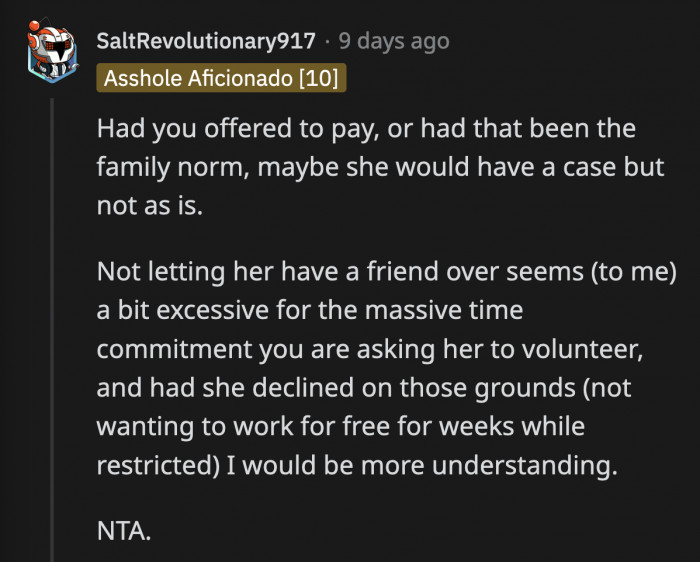
It's unclear when she brought up the money part, but OP should have expressed his discomfort when she did instead of waiting for his wife to encourage him
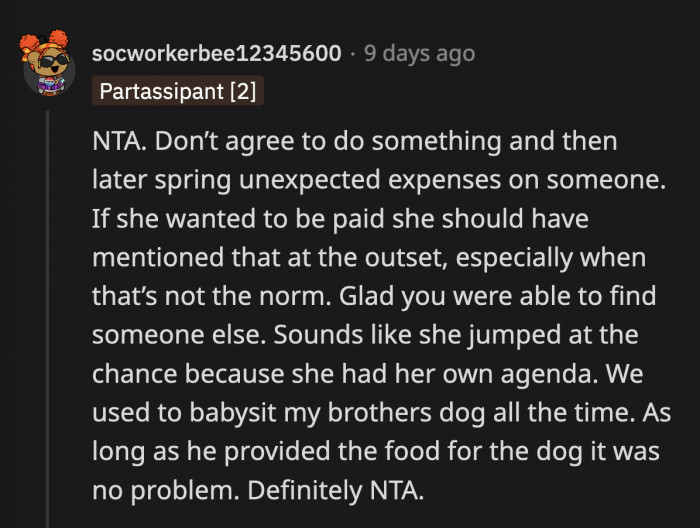
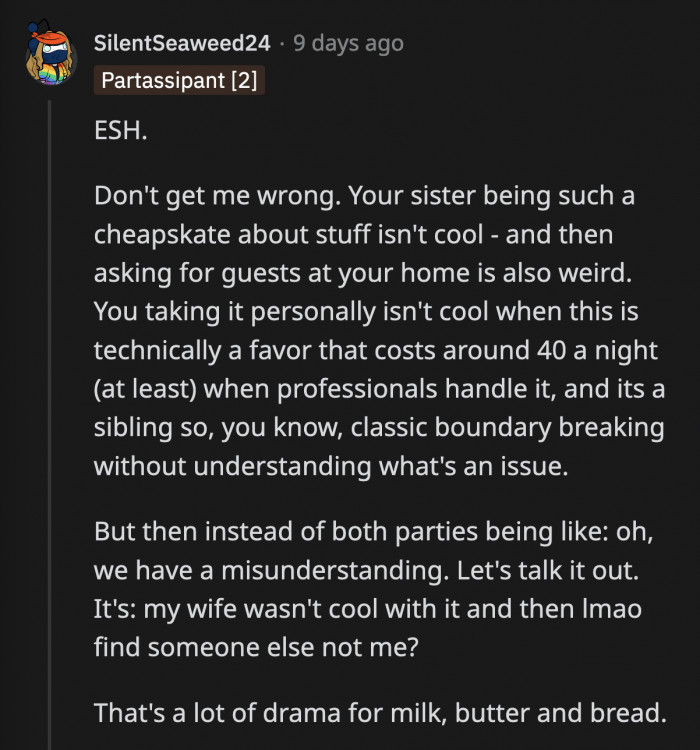
One of the comments said that they were all acting immature and should have communicated calmly instead of taking everything so personally
Luckily, someone from OP’s wife’s family stepped in, and now OP is stuck wondering if his sister was really being unreasonable or if he was already playing offense.
Additionally, it's important for siblings to recognize their unique roles within the family.
It definitely was a sibling squabble, but it's not the relationship-ending kind. OP needs to talk to his sister when he gets home from their vacation, but the problem isn't as unsolvable as he thinks.
In the case of the brother and sister navigating the complexities of pet sitting, the absence of mutual understanding is evident. The sister’s withdrawal from the arrangement after her brother declined to provide grocery money and allow a friend to stay overnight highlights a breakdown in communication. Such situations often escalate when feelings of resentment build up, making it crucial for siblings to engage in open dialogue early on.
This scenario underscores the importance of balancing individual needs with the expectations of familial support. The brother’s reluctance to meet the sister’s requests may have stemmed from a desire to maintain boundaries, yet it also reflects a missed opportunity for compromise that could have led to a more supportive dynamic.
Nobody wants to negotiate their way through a dog-sitting favor, especially when the grocery list includes a sleepover.
Wait until you see the sister who picked a free weekend over a bridesmaid’s pet-sitting request, in “Sister Chooses Free Weekend Over Helping Out”.
Share this article: