Woman “Steals” Her Sister’s Dog and Takes It With Her to Another City to Save It from Maltreatment

Some people treat a dog like part of the family, and others treat one like a backyard alarm system. That difference is at the center of a Reddit story that has people arguing over whether one woman rescued a neglected pet or simply stole her sister’s dog. When the original poster moved to another city, she decided she was not leaving him behind.
Now the dog is gone, the sister is furious, and the internet is split. Read on.
OP asks:

Her sister has a dog, and she is seriously maltreating it. OP is moving to another city, so she decided to steal (rescue) it and take it with her.
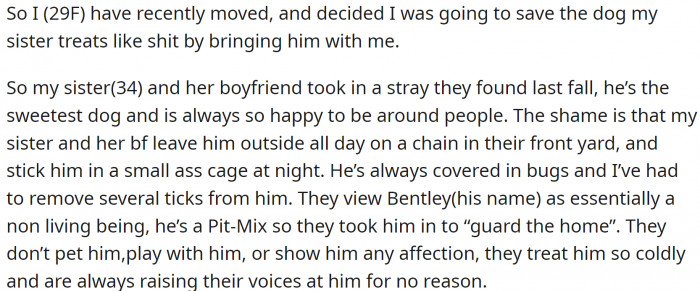
She devised a plan to save that dog and give it a good life

The situation got messy fast, and the comments did not hold back.
The situation with the sister and her dog highlights the complexities of attachment theory, which explores how early relationships shape our emotional bonds in adulthood. There are distinct attachment styles, secure, avoidant, and anxious, that dictate how individuals relate to others, including pets. Those with a secure attachment style are more likely to engage in healthy relationships, whereas those with avoidant or anxious styles may struggle with emotional connections, leading to behaviors like neglect or extreme protective actions in the case of perceived maltreatment.
In this scenario, the sister’s decision to take her dog reflects a potentially anxious attachment, manifesting as a protective instinct stemming from fear of loss or abandonment. When pets are seen as extensions of ourselves, their well-being can trigger profound emotional responses, resembling those we have for family members. Understanding one’s attachment style can foster healthier relationships with pets and loved ones alike.
Her sister noticed the dog missing and sent a group message. OP is keeping quiet about her rescue mission.
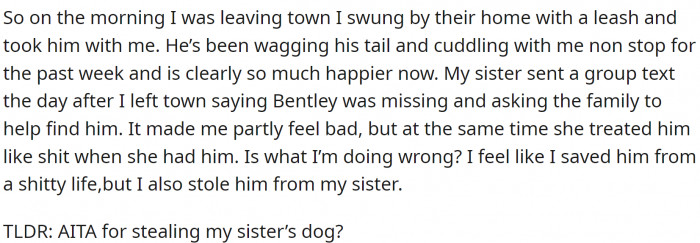
Stealing is not cool. But rescuing is...

Rescuing it is...
That’s where the debate really starts.
Research published in the Journal of Applied Animal Welfare Science indicates that individuals who struggle with mental health issues, such as depression or anxiety, may unintentionally project their internal struggles onto their pets, leading to neglect or abusive behaviors. Conversely, people who foster nurturing environments often report improvements in their own mental health as they engage positively with their animals.
Practically, it’s crucial for pet owners to regularly assess their emotional well-being and recognize how it might be impacting their pets. Seeking therapy or support groups can help individuals address underlying psychological issues, thus promoting better care for their animals. Regular check-ins about one’s mental state can be transformative, not just for the individual but also for their pets, fostering a more compassionate relationship.
This mirrors the man’s fight after his narcissistic sister beat his dog, and he blamed his parents.
But the sister is going to be mad...
Legally vs. morally and ethically...
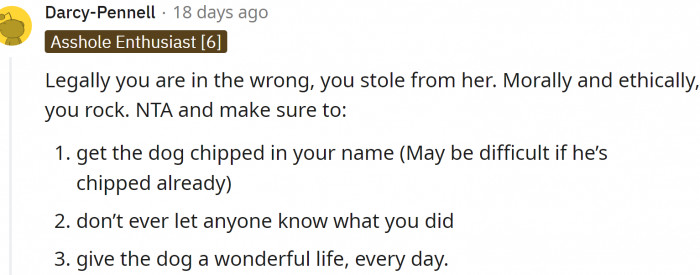
Doesn't make sense. Does it?

People kept circling back to the same question, what does a dog actually owe a home like that?
Empathy plays a critical role in how we relate to animals and their treatment.
Dogs are property; that's the law
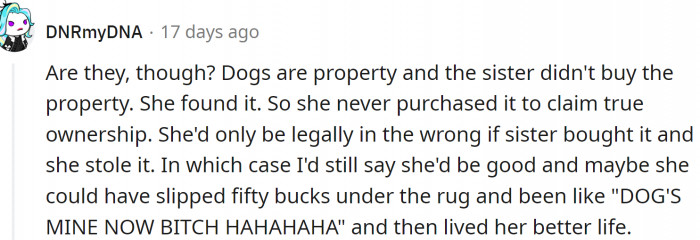
Other Redditors shared their daring rescue missions:
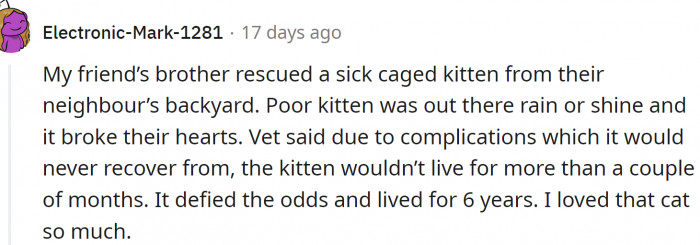
Some people have experience with it:
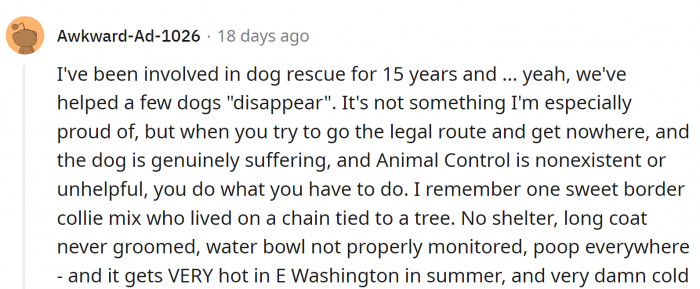
More commenters jumped in with their own stories and opinions.
Social learning theory posits that behaviors are learned through observation and imitation.
500 miles away:
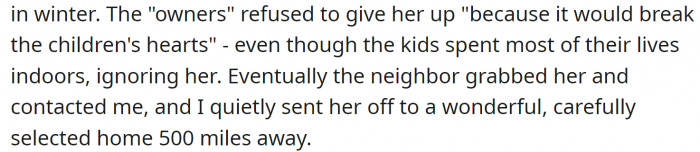
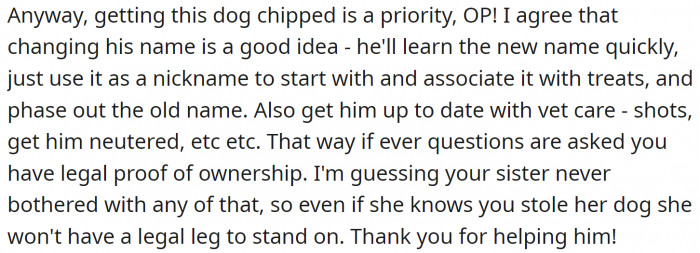
Getting the dog chipped is a priority
Some people simply shouldn’t own dogs. If you need a guard dog and plan to keep it chained all the time, simply get an alarm. That’s no way for an animal to live.
A chained animal will most certainly develop mental and physical issues that may make it potentially dangerous. Dogs get frustrated, and they can express it in ways you don’t really want to see or feel.
Aggressive dogs are rarely aggressive by nature; we make them that way. Remember that.
Responsible pet ownership is not just a phrase.
This story highlights the complex emotional bonds people form with their pets, particularly when it comes to ensuring their well-being. The woman's drastic decision to take her sister's dog to another city illustrates the extent to which individuals will go to protect animals from perceived maltreatment. It raises important questions about the responsibilities of pet ownership and the lengths to which one should go to ensure a pet’s welfare.
The act of "stealing" the dog may be viewed as a desperate response to the animal's suffering, emphasizing a deep-seated empathy that many pet owners share. This situation sheds light on the need for greater awareness and education surrounding animal care and the emotional health of both pets and their owners. By fostering a community that prioritizes compassion and responsible pet ownership, we can create a more supportive environment for both animals and their caretakers, leading to healthier relationships.
Wait until you see how the bender-sister left a puppy behind, then flipped when rehomed.
Share this article: