Young Woman Angers Her Father By Moving Out And Taking The Cat, Turns Out He Was Just Missing Her Money

Some family blowups are about money, and some are about control. This one managed to be both, with a young woman leaving home after college, taking her cat, and suddenly finding out her father was not nearly as upset about the pet as he was about losing her support.
She had a job, a place to go, and a cat she wanted with her, but her dad and his girlfriend pushed back hard. What started as a move toward independence turned into guilt trips, angry messages, and a Reddit thread full of people wondering what was really going on.
Then the update arrived, and it made the whole situation look even worse. Read on.
OP says:

OP graduated, got a good job, and she figured moving out was the logical step
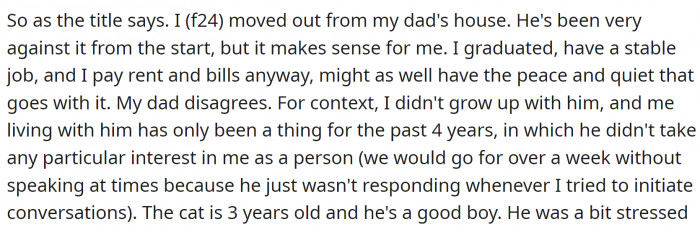
She also took the cat with her. Her father was against the move and is constantly criticizing OP.

Moving out and taking a beloved pet can evoke a complex mix of emotions, particularly in familial relationships. Research in developmental psychology shows that transitions such as leaving home can trigger feelings of guilt and anxiety, especially when family dynamics are involved. For many young adults, these feelings can stem from a deep-seated desire to maintain close family ties while also asserting independence.
The decision to move out from a parental home is rarely straightforward, especially when it involves beloved pets. In the case of the young woman who took her cat when leaving, we see a poignant reflection of the emotional turmoil that can accompany such a significant life change. The bond between the woman and her pet likely symbolizes comfort and security, amplifying the sense of loss her father may feel.
However, the father's reaction reveals a more complex dynamic at play. Instead of exhibiting the expected parental concern, his anger seems rooted in financial dependency rather than genuine emotional attachment. This scenario raises questions about the nature of their relationship and whether it was built on mutual respect or financial convenience. The situation underscores how parental roles can sometimes be overshadowed by self-interest, complicating the already fraught process of gaining independence.
Redditors share their views, and they were all similar - dad misses the money
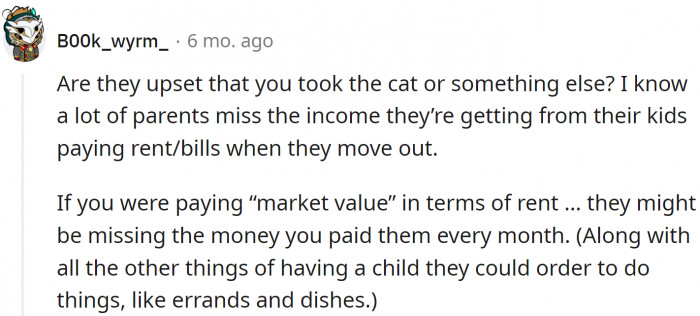
She needs to look after herself

Again - it is the money they are missing

Moreover, the emotional connection to pets often complicates these transitions. The act of taking a pet can symbolize both a severing of ties and a means of maintaining connection, reflecting the complex nature of familial relationships.
When a child moves out with their pet, it can create a sense of betrayal for the parent, particularly if they feel financially dependent on their child. Financial dynamics often complicate the emotional landscape during family transitions, leading to heightened tensions.
This emotional strain can manifest as anger or resentment, particularly if the parent perceives the decision as a lack of appreciation for past support.
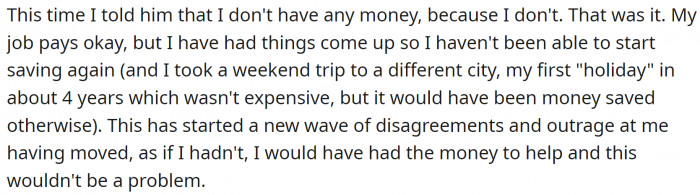
OP shared an update a couple of months after the move:
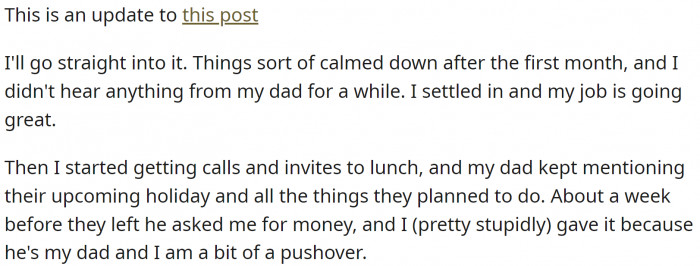
And surprise, surprise:

Her dad is simply unbelievable
For many young adults, the feeling of guilt associated with moving out can be overwhelming.
This is wild like the sister who secretly re-homed her aggressive ESA cat, and started a fiery war.
Guilt often plays a significant role in family relationships, especially when making decisions that impact loved ones. A study published in the Journal of Family Psychology highlights that feelings of guilt can lead individuals to prioritize others' needs over their own, potentially compromising their happiness.
This is particularly relevant in scenarios where leaving home brings about feelings of guilt for perceived abandonment or lack of gratitude.
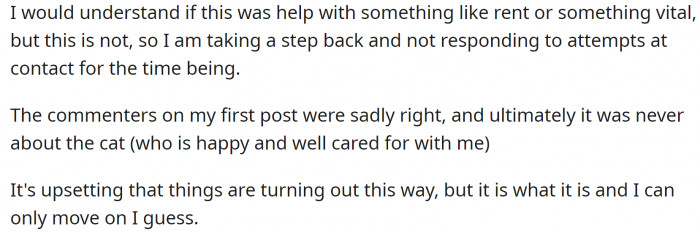
OP now understands that it was never about the cat
OP was their ATM
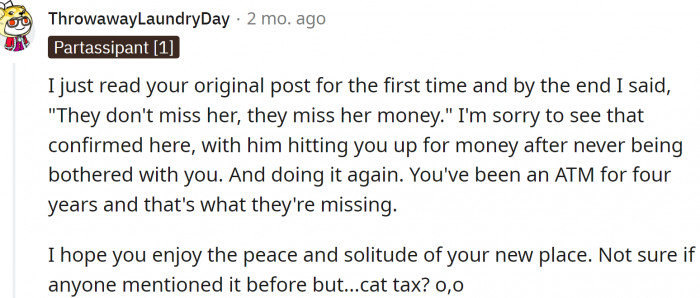
This is, sadly, so true...

Additionally, fostering open discussions with family members about the decision to leave can enhance understanding and acceptance. By explaining the reasons for the move and emphasizing the ongoing connection with family, young adults can help alleviate parental concerns.
To navigate these emotional complexities, open communication is essential.
We can’t choose our parents, but we can choose the type of relationship we will have when we become independent. It is hard to find out that you are nothing more than an ATM machine for your parents. That has to hurt, no matter how independent we are.
We hope OP will find a way to deal with it. She says she is a pushover, and she needs to learn to stand her ground and protect her interests.
She would have probably given him the money the second time if she had it. People like her simply must learn to say no.
Managing family expectations during significant transitions can be challenging.
Additionally, cultivating empathy towards family members can enhance relational dynamics.
The departure of a young woman from her family home, accompanied by her cat, highlights the emotional turbulence that often accompanies such life changes. The article illustrates how relationships can become strained when pets are involved, revealing deeper issues beneath the surface. The father's reaction, rooted in financial concerns rather than genuine affection, emphasizes the need for open communication and understanding in family dynamics. The story serves as a reminder that, without open dialogue, misunderstandings can easily overshadow the bond that should exist between parents and their children.
To ease the transition of moving out, individuals should consider developing a plan that includes emotional and logistical support. Engaging in discussions about future family visits or ways to maintain connections can foster a sense of security. This proactive approach can help mitigate feelings of loss and enhance familial bonds.
The decision to move out and take a beloved pet is not just a logistical change but an emotional upheaval that can stir feelings of guilt and anxiety. The young woman's experience illustrates how pivotal these transitions are, especially when parental support is lacking. In this case, the father's reaction reveals a deeper issue, his concern appears less about his daughter and more about the financial implications of her departure. This scenario underscores the importance of open communication during such life changes. By addressing these complex emotions and fostering dialogue, young adults can better navigate their journeys toward independence while also attempting to maintain familial bonds, even when those bonds are tested.
Before you judge her, read how the lady got blamed after losing her cat, too.
Share this article: