Can You Tell The Difference Between Torbie, Tortie, Calico And Tabby Coat Color? Let Us Help You Learn

Cats may all look adorable at first glance, but their coat patterns have a lot more going on than simple black, gray, or orange. Once you start noticing the differences, torties, torbies, calicos, and tabbies are much easier to tell apart.
This guide breaks down the most common cat coat colors and patterns, from tortoiseshell and torbie to calico and tabby. Along the way, it also explains why some of these cats are almost always female and why their markings can look so similar.
By the end, you will know what makes each pattern unique, and which details matter most when you are trying to identify a cat’s coat.
Tortoiseshell Cats
A tortoiseshell cat has a coat that resembles a speckled or particolored tortoise shell. Like calicos, tortoiseshell cats are nearly always female. If a male tortoiseshell cat appears, it will almost certainly be sterile.
Tortoiseshell patterns appear in various breeds, including domestic cats that are not of pure breed.
People who own these cats often say that they have "tortitude." A tortie cat is well known for having an attitude and a distinctive personality. If you are an owner, you know what we mean by tortitude.
Examples of tortie cats:
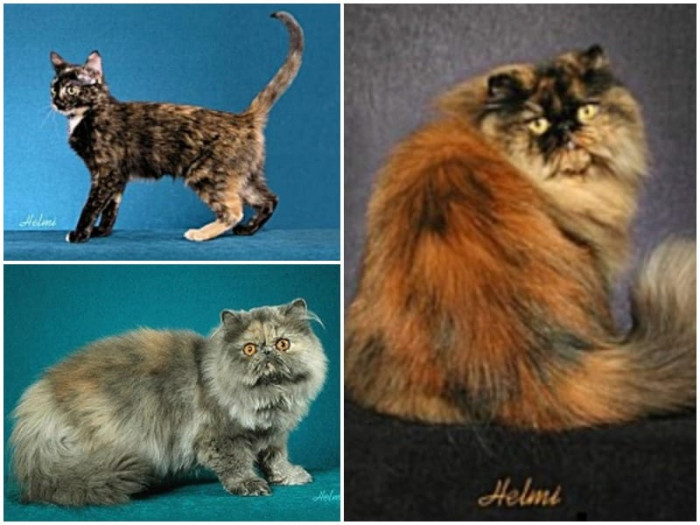
Since torties are not restricted to any specific breed, their overall coloring typically appears brownish or tawny.
Interesting tortoiseshell cat fact: In numerous cultures, tortoiseshell cats are considered good luck. For the Celts, tortoiseshell cats were signs of good fortune. Today, the Scottish and Irish believe that stray tortoiseshell cats can bring them luck. In the USA, tortoiseshells are commonly referred to as money cats.
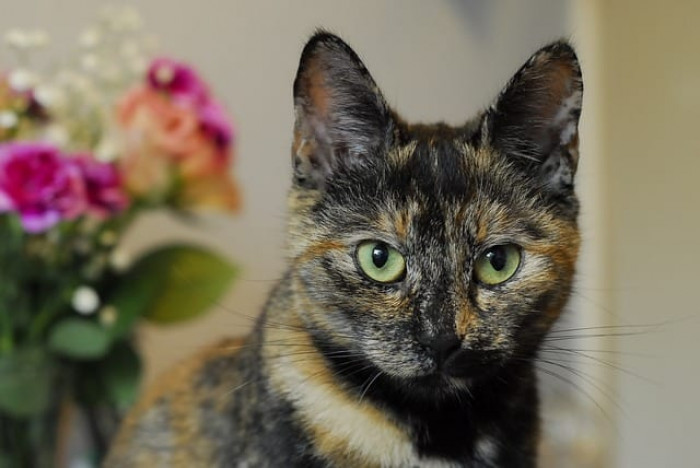
It can be somewhat tricky to determine the distinction between torbie and tortie cat coat colors. This may help you:
You can often see stripes on the red and cream parts of a solid color cat. The only way to be certain is to disregard any stripes in the red or cream regions, simply check if the black color is solid or has stripes. There may be some small white spots, but typically, tortie fur is mostly black and red-colored.
Tortoiseshells, torbies, and calicos all belong to a tricolor cat color category.
Torbie Cats
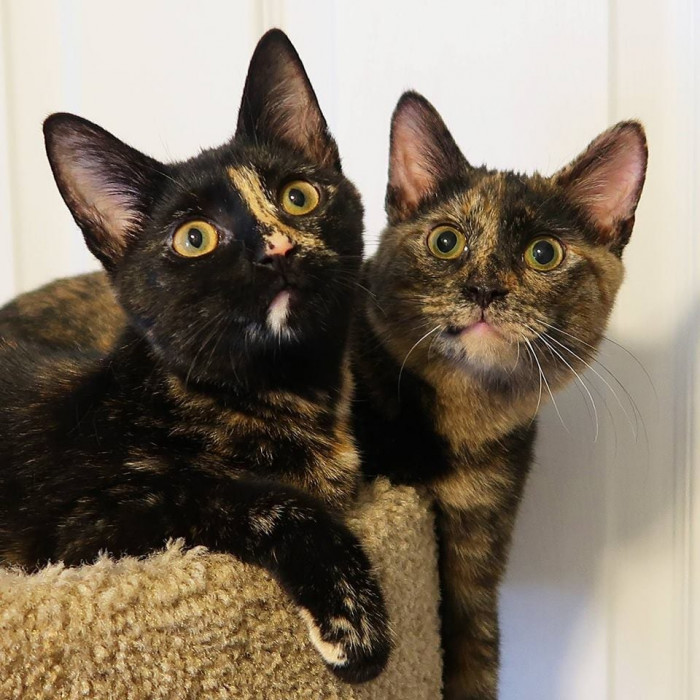
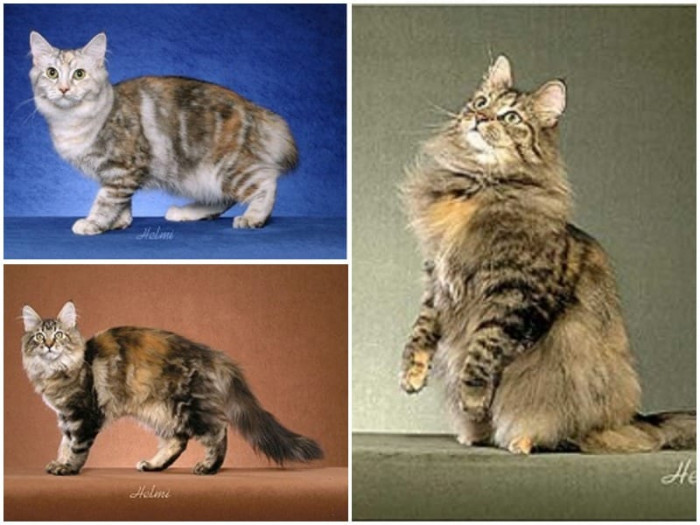
The torbie cat is the rarest of all the types of cat coat colors we mentioned. The term "torbie" is short for tortoiseshell-tabby, and they were previously called reverse torties. If a cat has tabby stripes combined with a tortoiseshell pattern, the result is known as a torbie. Sometimes they are referred to as "patched tabbies" because they are tabbies with patches of cream or red.
This is a lot like the rare-breed surprise in 14 Unique Cat Breeds That You Don’t See Every Day.
Torbie cats:
Calico Cats
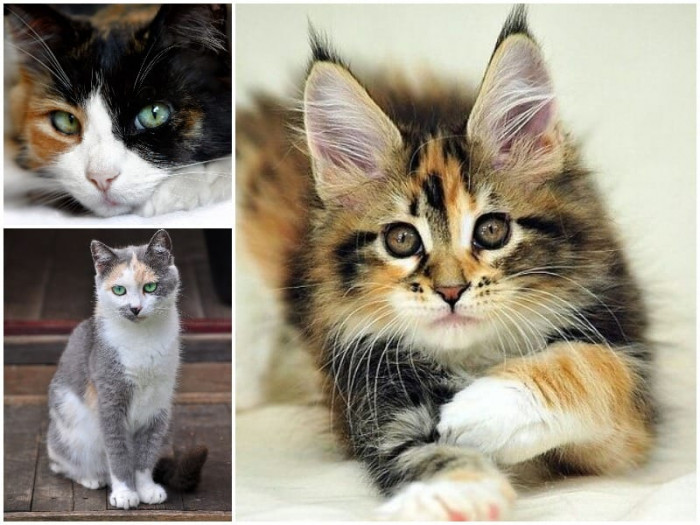
This is a very loving breed, and most importantly, easy to recognize. Just look for black, orange, and white. Calico cats come in many color schemes, and there are no two cats with identical patterns. So, any cat with large black, orange, and white patches is a calico.
If you mix a calico cat with a tabby pattern, you get a caliby cat. Cats with "diluted" calico colors can also be found; they have gray patches instead of black.
Interesting calico cat fact: The official state cat of Maryland is calico.
Calico cats:
Calico cats are almost always female because of their genes:
A gene for orange cat coat color is noted as O. This O gene can only be held on the X chromosome. Because a male cat has just one X chromosome, if he has the orange gene, he is either OY (orange) or oY (another non-orange color).
On the other hand, female cats have two X chromosomes, which means they can be OO (dominant orange), oo (recessive orange, the outcome will be a cat of another color), or they can be Oo, which is tricolor. Tricolor has dominant and recessive orange genes.
Tabby Cats
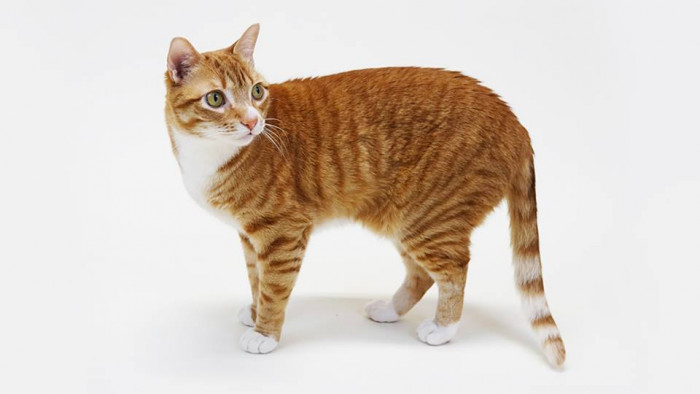
By definition, a tabby is any domesticated cat that has "a coat featuring distinctive stripes, dots, lines, or swirling patterns, always together with a mark resembling an 'M' on its forehead." It is not uncommon for tabby kittens to be born without stripes, and those stripes may appear after a few weeks. Tabby cats can be male or female, but ginger tabbies, as a rule, are males due to genetics.
The reason for this interesting coat pattern is quite fascinating:
"The tabby pattern is a naturally occurring feature that may be related to the coloration of the domestic cat's direct ancestor, the African wildcat, which, along with the European wildcat and Asiatic wildcat, has a similar coloration. A genetic study found five genetic clusters from tabbies that are ancestral to wildcats in various parts of the world."
Interesting tabby cat fact: The English term tabby derives from the translation of the French phrase "striped silk taffeta," and its root is tabis, which means "a rich watered silk."
If you want to go into detail, there are various variations of tabby cat coat colors: spotted, mackerel, striped, and ticked.
Share pictures of your tortie, torbie, calico, or tabby cat in the comments section.
Before you blame the coat, meet the orange cats who “rule the house” with pure drama, explained by a cat behaviorist in 50 Orange Cats Who Clearly Think They’re the Stars of the Show.
Share this article: