
The Dog Breeding Market Is Getting Out of Hand, and We Want to Know Why

Dog prices have gotten so high that even longtime pet owners are doing a double take. What used to feel like a straightforward choice, buy from a breeder or adopt from a shelter, now comes with a much bigger price tag on one side of the equation.
In this Reddit post, one user points out how expensive breeder dogs have become, and the comments turn into a full-on comparison of what people paid years ago versus what they would pay now. Between inflation, demand, and the popularity of certain breeds, the whole market feels a lot different than it used to.
The responses are where things really get interesting, because people do not hold back about pricing, breeding, and adoption. Read on.
Here’s what this user had to say about dog breed pricing.
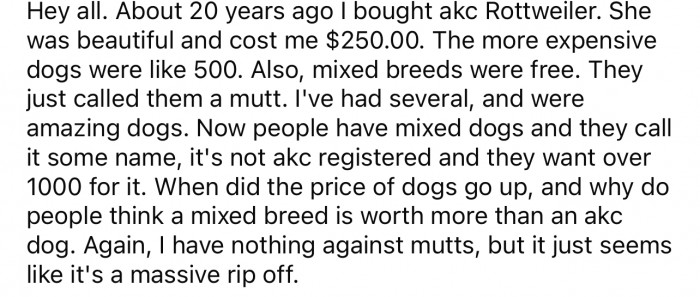
People quickly started sharing how much they paid for their dog.
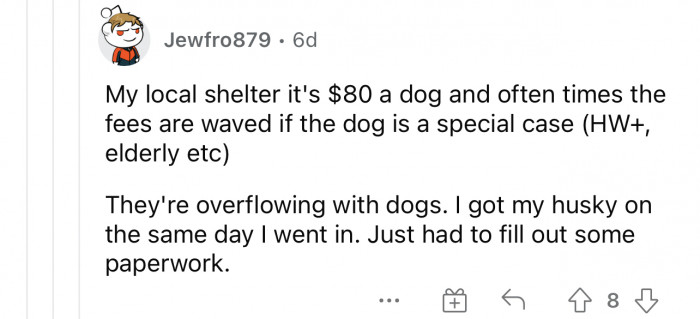
The pricing difference is evident, though. Clearly.

The rising prices in the dog breeding market can be attributed to several psychological factors, including social status and consumer behavior. Research shows that owning a pet, especially a specific breed, can elevate an individual's social status, leading to increased demand (McNicholas & Collis, 2000). This phenomenon aligns with the concept of conspicuous consumption, where individuals purchase luxury items or pets to signal their wealth and taste to others. Such consumer behavior is particularly pronounced in a culture that increasingly values status symbols, making purebred dogs highly sought after despite their high costs.
Additionally, the emotional connection many people feel toward dogs, often akin to familial bonds, can further justify these expenditures. Emotional attachment to pets can lead to irrational spending behaviors, where consumers prioritize their pets' needs and wants over their own financial limitations.
Shelters will always be the best choice instead of buying from a breeder.

Adoption prices are still much lower nowadays. Always adopt.
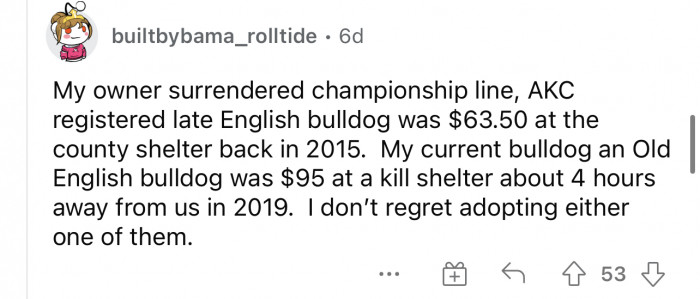
Breeding can be dangerous if people don’t do it properly. Be careful about who you buy from.
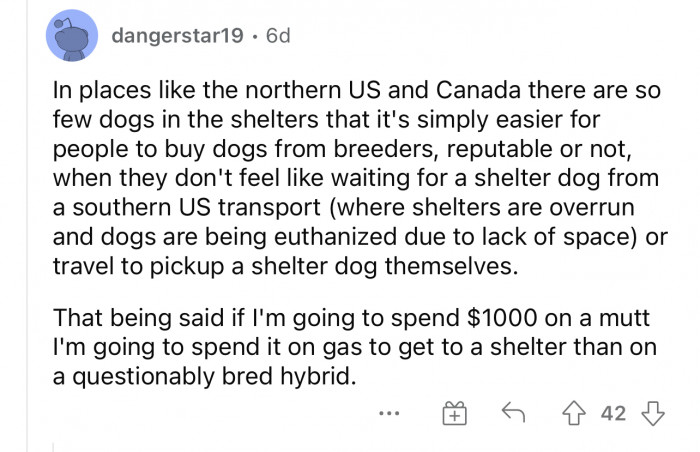
Marketing strategies play a significant role in shaping perceptions about dog breeds and their desirability. This not only influences potential buyers but also increases competition among breeders to produce more 'desirable' traits, leading to inflated prices driven by perceived value rather than actual costs.
Understanding the psychology behind these marketing tactics can empower consumers to make more informed decisions. By recognizing the emotional triggers utilized in marketing, such as limited-time offers or exclusive breed features, potential dog owners can reflect on whether their desire for a specific breed stems from genuine compatibility or social influence.
There are options for free adoption in some places.
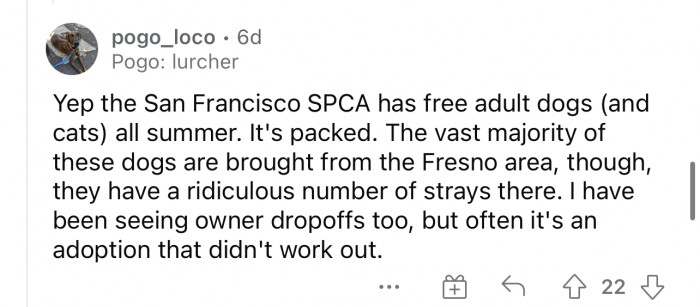
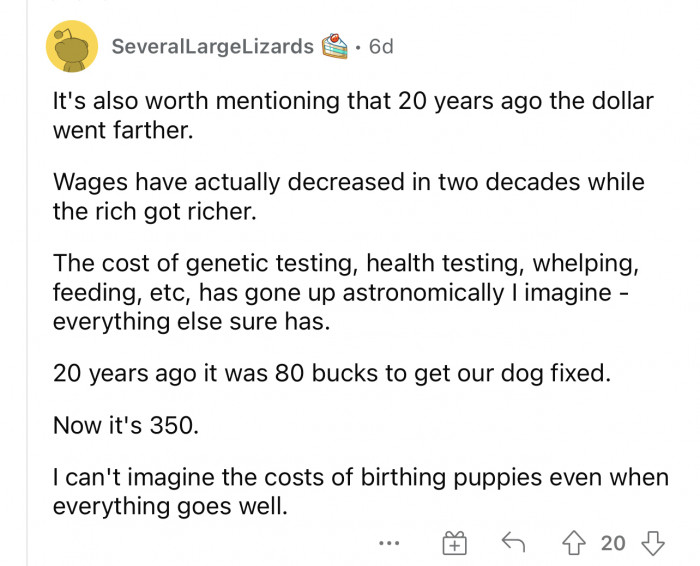
This is also true. The dollar doesn’t go quite as far today as it did back then.
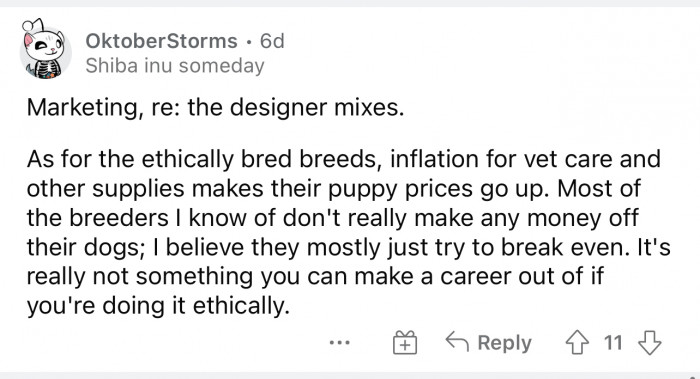
Not breeding ethically is very common and very sad.
The ethical implications of dog breeding practices extend beyond pricing; they also raise questions about animal welfare and the psychological impacts on adoptive families. Research indicates that breeding practices often prioritize aesthetics over health, leading to breeds that may suffer from genetic predispositions to certain diseases (Parker et al., 2010). These health issues can create significant emotional distress for families, who may find themselves facing unexpected veterinary bills and heartache.
In light of these concerns, potential dog owners might consider adopting from shelters, where emotional support and community engagement can mitigate the financial burden of pet ownership., 2009). By prioritizing adoption, individuals not only contribute to the welfare of animals in need but also engage in a more psychologically rewarding experience.
This is the same kind of buyer-versus-breeder fight as the Redditor who refused to pay for a sick dog.
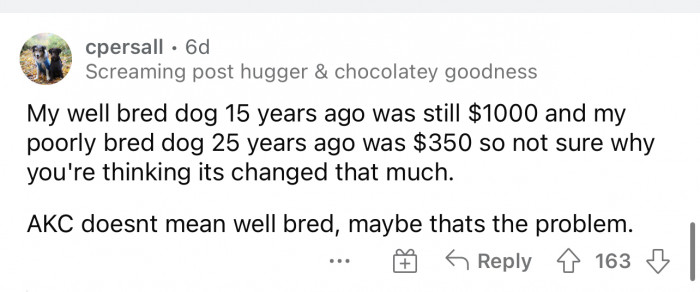
The AKC is great, but it doesn’t qualify a well-bred dog.
Simply put, basically every price for everything is much higher now.

This is interesting, but it’s worth looking into.
The escalating prices of dogs from breeders can be understood through the lens of supply and demand, influenced by psychological factors such as scarcity and desire. In the pet market, this translates to a higher value placed on certain breeds that are marketed as 'limited' or 'high-demand,' further driving up costs.
To combat this trend, potential dog owners can take a proactive approach by researching breed characteristics and availability. Understanding the realities of different breeds, including those that are commonly available at shelters or rescues, can help consumers avoid the pitfalls of inflated prices and make more ethical choices about pet ownership.
I’m loving seeing all the price comparisons for dogs.
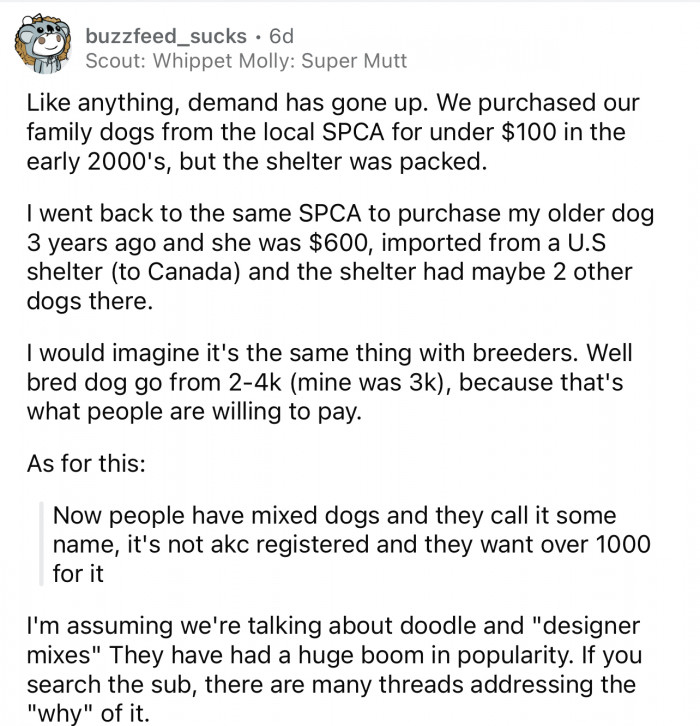
This comment really says it all. This person answered every part of it.
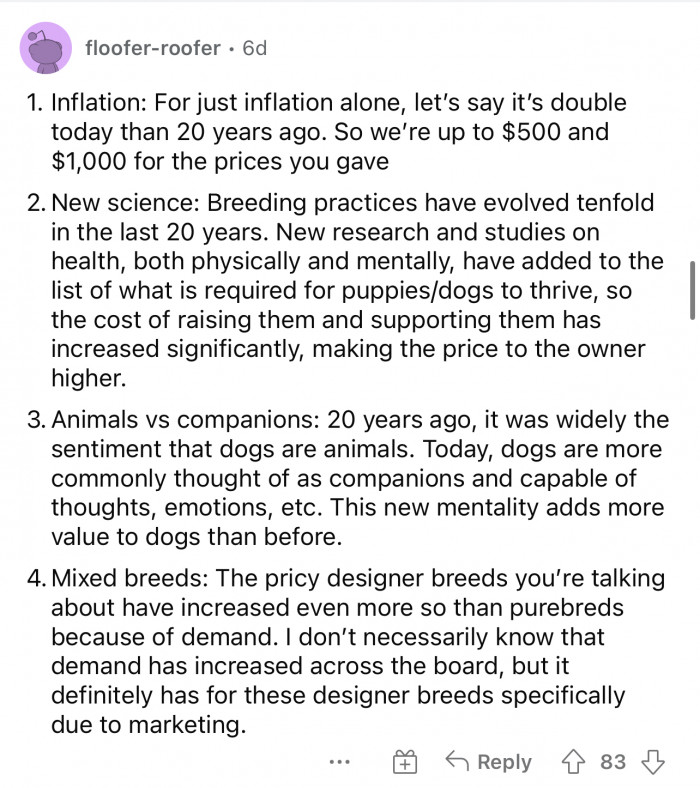
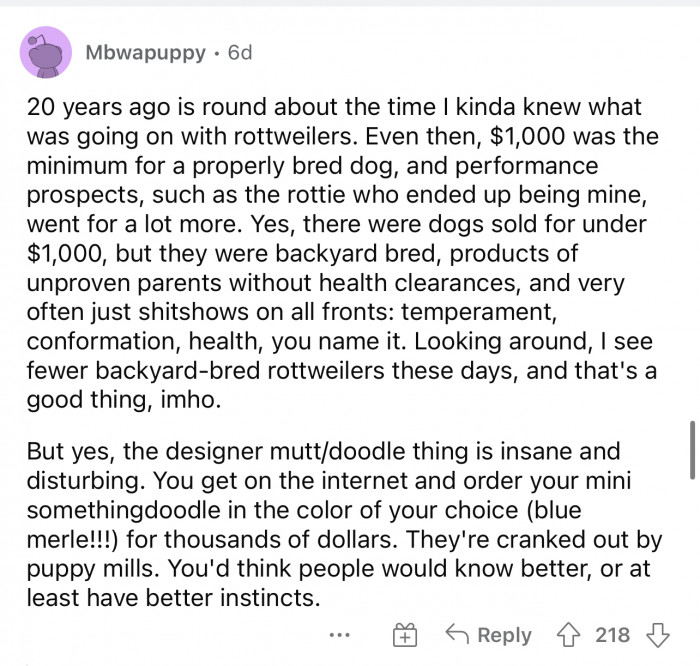
Well-bred dogs were expensive even back then. Maybe not as high as now, but still.
Studies show that emotional decision-making often overrides rational thinking when purchasing pets, leading to hasty commitments based on fleeting feelings of affection (Davis et al., 2017). This can result in individuals buying dogs on impulse, often influenced by the allure of specific breeds that are marketed as 'perfect companions.'
To mitigate impulse purchases, a period of reflection before committing to a dog can help. Prospective owners can benefit from creating a checklist of needs and lifestyle considerations, ensuring that their choice aligns with their long-term goals and household dynamics. This approach not only reduces the likelihood of impulsive decisions but also enhances the compatibility between the pet and the family.
Unfortunately, breeding certain dogs and mixes is a trend and isn’t completely safe.
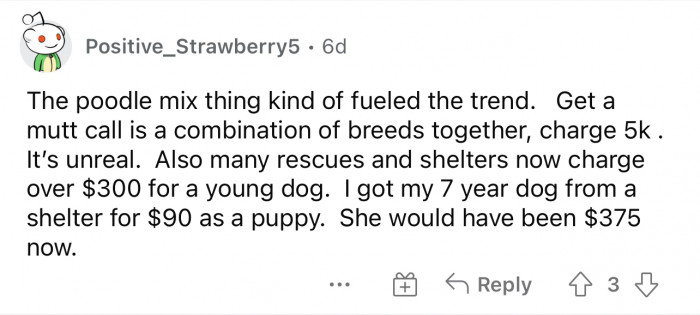
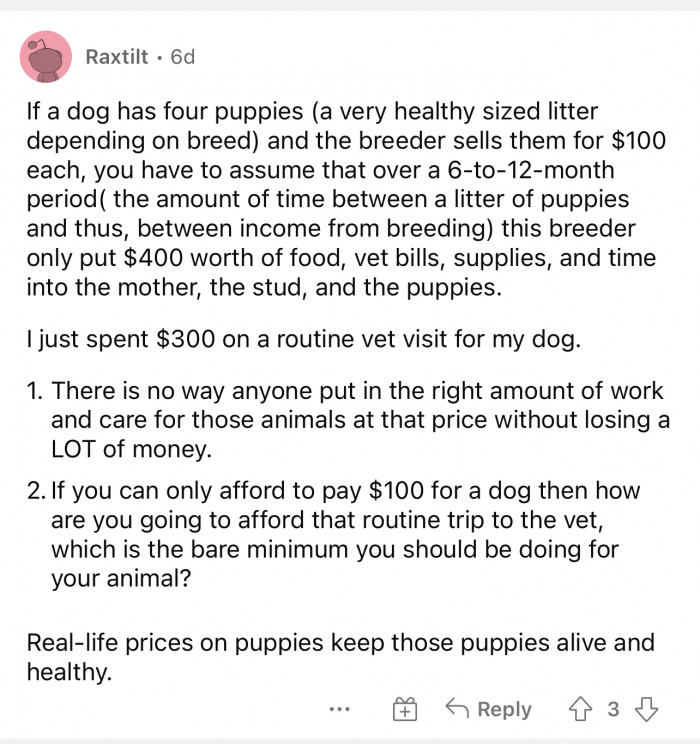
A cheap price could mean an unhealthy dog or not a purebred dog. Paying the price is worth it.
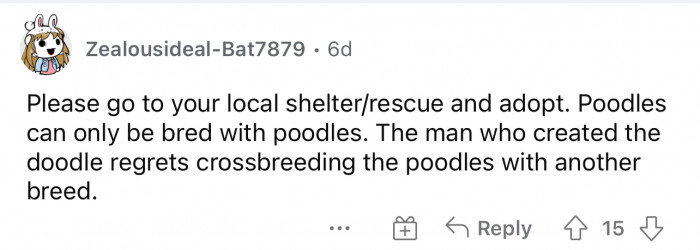
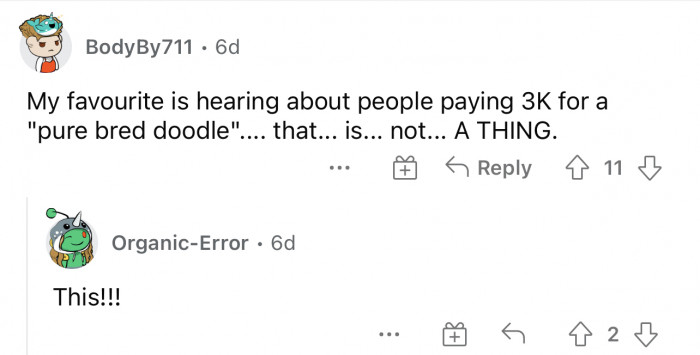
“Purebred” doodles literally can’t exist. I feel like people are just misunderstanding the doodle.
While the breeding market presents significant challenges, the psychological benefits of adopting a dog are well-documented. For many, adopting a pet from a shelter can provide a sense of purpose and fulfillment, contributing positively to their mental health.
To maximize these benefits, individuals considering pet adoption should connect with local shelters or rescue organizations that align with their values. Engaging with these communities can foster a deeper understanding of the responsibilities involved in pet ownership while also promoting emotional connections that enhance the overall experience of bringing a new dog into their lives.
Hearing these people talk about how much they paid for their dog does prove that prices have gone up, but that’s the case for literally everything. Inflation is real and current.
This really proves that adopting from a shelter is the way to go and that buying from a breeder isn’t always the best option. Look into local shelters if you’re looking for a dog.
The dynamics of the dog breeding market exemplify the complex interplay between psychological factors, consumer behavior, and ethical considerations. As highlighted by various studies, understanding these elements can empower potential dog owners to make informed and responsible choices that prioritize both their needs and those of the animals. By considering alternatives such as adoption and being mindful of marketing influences, individuals can navigate the pet ownership landscape in a way that promotes both mental well-being and animal welfare.
Ultimately, with increased awareness and intentionality, we can shift the narrative surrounding pet ownership from one driven by consumerism to one founded on compassion and connection, creating a more sustainable and ethical approach to pet companionship.
For the “purebred for free” chaos, see the screenshot of demands for a free purebred dog.
Share this article:





